


Dubai has set out plans to standardise fire safety testing procedures for building materials such as cladding and cables.
The emirate's Civil Defence said on Monday that suppliers and contractors will be required to have products assessed at its dedicated lab before they can be used in construction projects.
Previously, such tests could be conducted at private facilities.
Companies who have had materials independently assessed must have them analysed again by the Emirates Safety Lab to receive a certificate of compliance which confirms they meet the UAE's safety standards.
They must secure the certificate by October in order to register their products as safe for use in building work.
Dubai Civil Defence said items such as doors, cladding, electrical cables, ducts and wireless alarm systems should be tested at the lab before being installed in towers and houses.
Brig Ali Hassan Al Mutawa, Dubai Civil Defence's assistant director general for fire and rescue affairs, said in a statement that the department met more than 150 suppliers and contractors to review the new requirements.
“Dubai Civil Defence aims to enhance the level of safety in addition to providing competitive prices to manufacturers and project owners,” said Brig Al Mutawa.
“Building materials such as fire-resistant doors, cladding, air ducts and wireless alarm systems should be evaluated and tested in the lab to get the certificate of compliance.”
The authority offered an example of safety testing protocols, citing its policy on fire-resistant cables.
Inspectors take three metres of cables from buildings and submit them to the government lab to be tested.
Dubai Civil Defence bears the cost of the test.
If the cables fail, the manufacturing company must pay for any subsequent tests needed to get approval.
UAE safety campaign
-
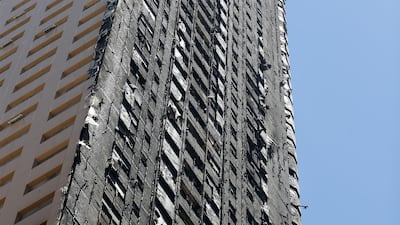
Sharjah is to replace hazardous cladding on buildings, with work starting this week. Such cladding was cited as the cause of a major blaze at Abbco Tower in the emirate in 2020. Chris Whiteoak / The National -
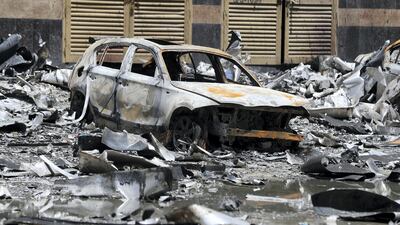
Abbco Tower in Sharjah after the massive fire. Chris Whiteoak / The National -
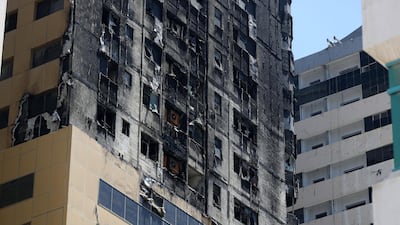
Abbco Tower the morning after the fire. Sharjah. Chris Whiteoak / The National -
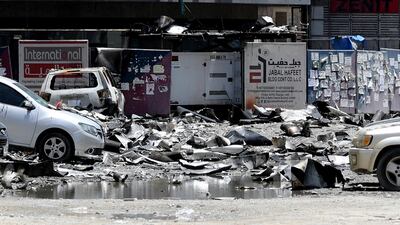
Abbco Tower in Sharjah after the massive fire. Chris Whiteoak / The National -
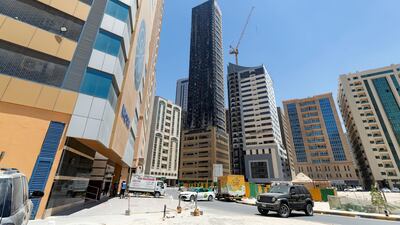
Abbco Tower in Sharjah was gutted in the fire. Chris Whiteoak / The National -
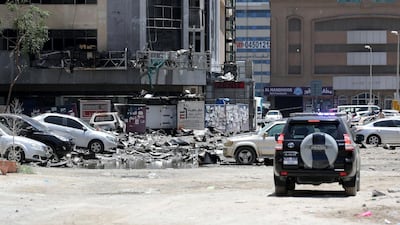
The area around Sharjah's Abbco Tower. Chris Whiteoak / The National -
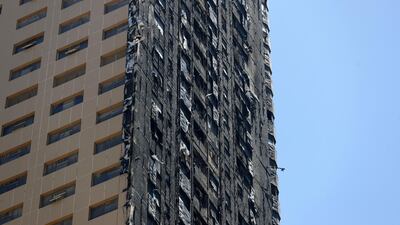
The damaged Abbco Tower after a huge blaze on Tuesday night. The building was fitted with cladding that was banned in 2016. Chris Whiteoak / The National -
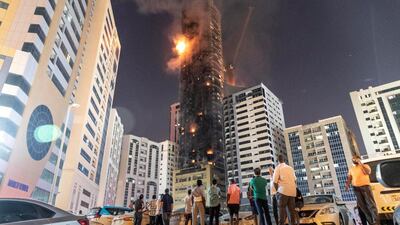
Families watch as flames spread through their building late on Tuesday night. Several surrounding towers were evacuated as a precaution. All photos by Antonie Robertson / The National -
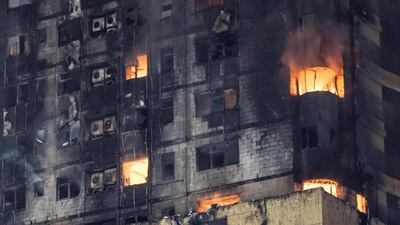
The fire quickly spread through the building, gutting apartments and sending debris raining down on vehicles below. -
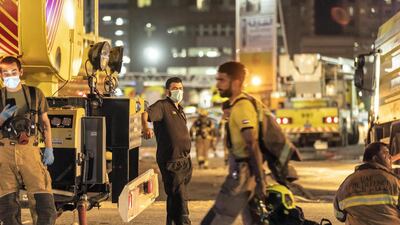
Dozens of firefighters and vehicles were at the scene shortly after the fire was first reported about 8.30pm on Tuesday. -
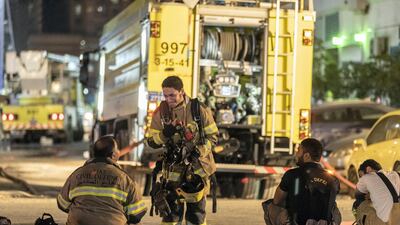
Exhausted crews take a brief break and check their equipment. -
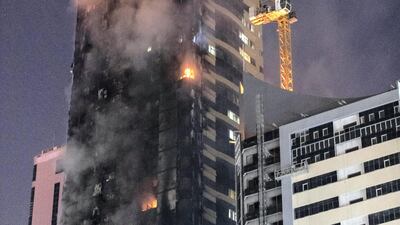
The fire in Sharjah lit up the night sky. -
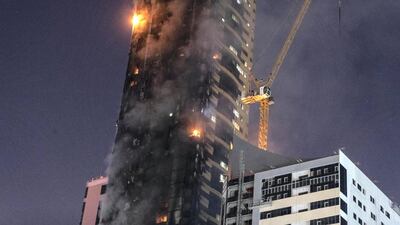
Buildings in the area are tightly packed together and several were evacuated amid fears the blaze could spread. -

Many residents said they did not have home insurance and fear their lost possessions cannot be replaced. -
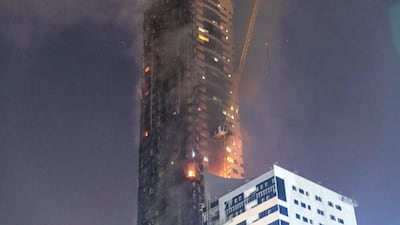
The blaze continued into the night with crews remaining at the scene on Wednesday morning to dampen the building. -
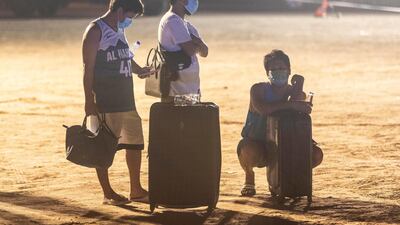
Some tenants managed to grab a handful of possessions before fleeing the tower. -
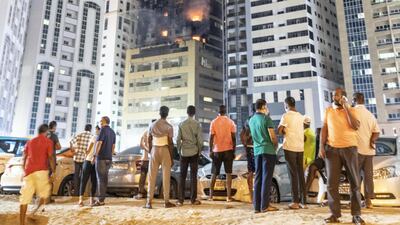
Residents watch on as the fire is contained. -
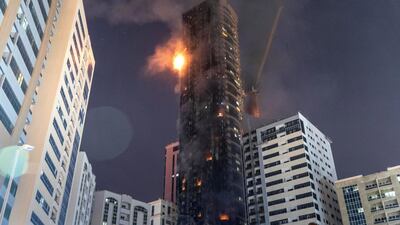
The fire in Sharjah was reported after 8.30pm. -
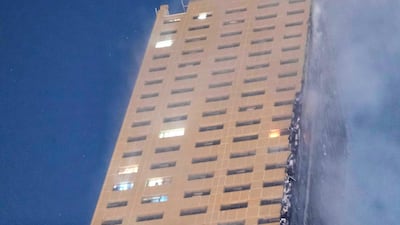
Damage to the rear side of the building was not as severe leading some to hope they can recover their belongings. -
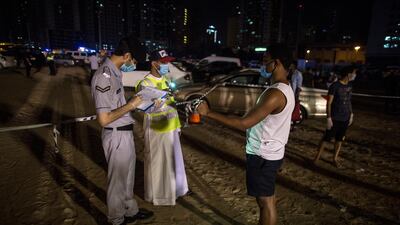
A police officer collects testimonies from the residents. EPA -
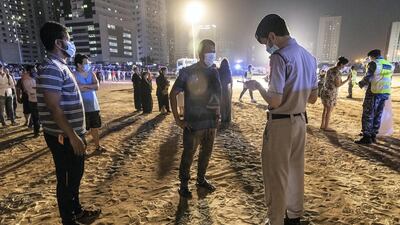
Police officers take residents' details as they try to arrange accommodation. -

There were more than 300 apartments inside the 48-storey building and many are shared by tenants and families. -
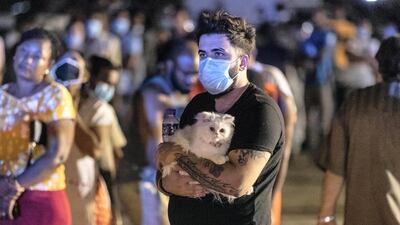
Fadlallahie Hassoun cradles his cat after escaping the building. -
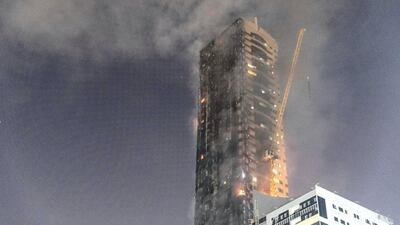
The building burned for several hours before it was brought under control. -
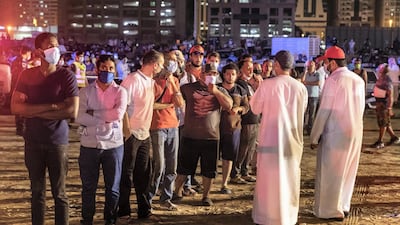
Charity workers from Emirates Red Crescent hand out water and juice and take down details to arrange accommodation. -
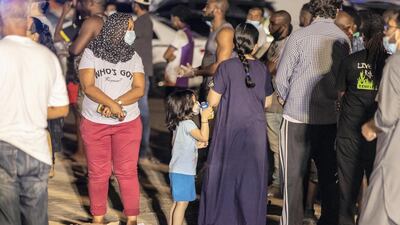
Families fear they will not be allowed to return to collect belongings for days if not weeks. -
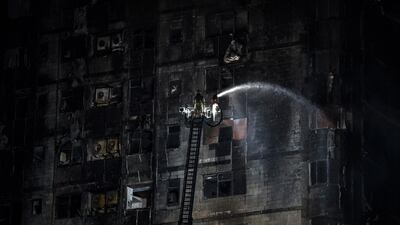
Civil Defence forces extinguish the fire. EPA -
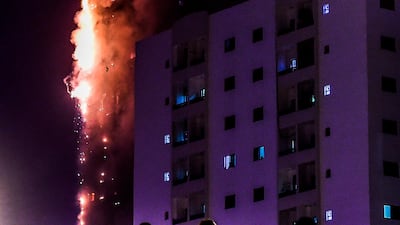
People stand on a bridge and watch a fire that erupts in a 48-storey residential tower in Sharjah. AFP -

Residents of the burning high-rise building look on as fire-fighting efforts continue. EPA


Outdated cladding — which causes fires to spread more quickly — and faulty wiring are common causes of building blazes.
The UAE, due to its large number of high-rise residential and commercial buildings, prioritises fire safety.
Sharjah will begin to remove flammable cladding from 40 high-risk buildings this week at a cost of Dh100m in the first stage of a major safety drive.
Authorities have identified 203 residential towers and commercial buildings, both private and government-owned, where flammable cladding is to be replaced.
New fire-resistant cladding reduces the risk of blazes spreading quickly and gives potentially life-saving additional time for emergency services to respond.
The campaign is being launched under the directive of Sheikh Dr Sultan bin Muhammad Al Qasimi, Ruler of Sharjah.
Aluminium composite-panel cladding was prohibited in the Emirates under the country's Fire and Life Safety Code of Practice, which was introduced in January 2017.
Further updates came into effect the following year.
New buildings must be fitted with advanced non-combustible cladding that stops the spread of flames and is more durable under intense heat.
It is not mandatory for buildings built before the new legislation was introduced.

