

Abu Dhabi’s explosive growth in the 1970s and 1980s left the city with some remarkable modernist architecture.
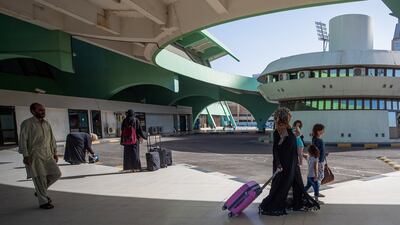
Some buildings have survived, most notably the Cultural Centre and the main bus station, but also other gems like Al Bateen Mall and even a public lavatory in Post Office Park in what used to be called Tourist Club.
Many, though, have gone, no longer fit for the purpose for which they were originally constructed and with the costs of rebuilding less than renovation.
One of the most eye-catching structures was the Omeir Travel Agency building on Khalifa bin Zayed Street and Lulu Street, constructed in the early to mid 1970s. The older photograph was taken a short time later.
-
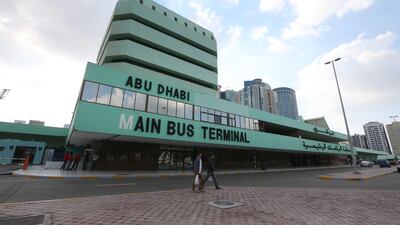
The Abu Dhabi main bus station is one of the city's architectural gems. Fatima Al Marzooqi / The National -
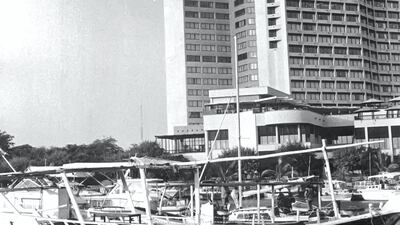
Abu Dhabi's InterContinental. In this photograph, a table for the 1981 GCC summit is being brought in to the hotel by helicopter. Courtesy: Intercontinental Hotel -
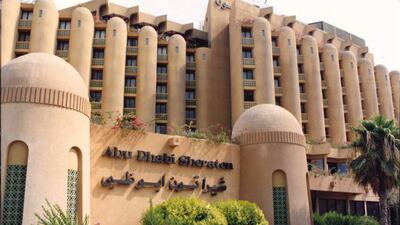
Another classic, the Sheraton hotel in Abu Dhabi opened in 1979. Courtesy: Sheraton Abu Dhabi -

The distinctive Hamed Centre on Sultan bin Zayed the First (Electra Street) in Abu Dhabi. Ravindranath K / The National -

The hotel was built in a modernist style with echoes of a traditional fort. John Dennehy / The National -

The Obeid Al Mazrouei building on Abu Dhabi's Sultan bin Zayed the First (Electra Street) is another gem. Brian Kerrigan / The National -
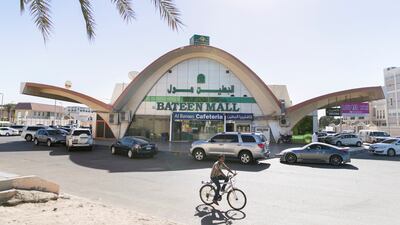
Al Bateen Mall, with its dramatic flying canopies, was once a bus station designed to complement the main terminal. Reem Mohammed / The National -
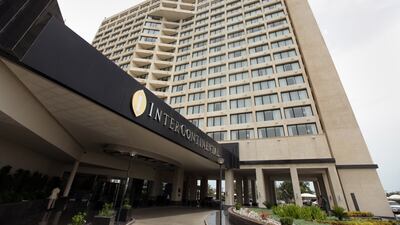
The distinctive exterior of InterContinental Abu Dhabi. Jaime Puebla / The National -
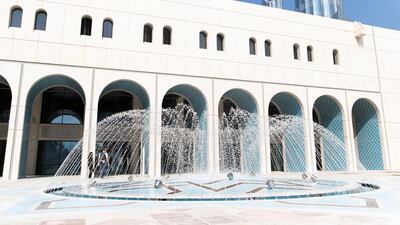
Abu Dhabi's Cultural Foundation is an architectural highlight of Abu Dhabi. Reem Mohammed / The National -
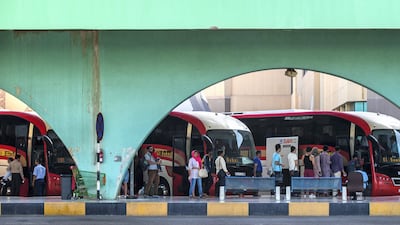
Residents wait for buses under the distinctive arches of the Abu Dhabi main bus terminal. Victor Besa / The National -

The taxi stand in Abu Dhabi. It sits beside the main bus station and was built after that terminal opened. Mona Al Marzooqi / The National -

The Abu Dhabi main bus station is built with four prongs — two at either side — that extend out providing space and shelter for buses and passengers. Lee Hoagland / The National -

Adnoc's classic old headquarters with the new tower beside it. Victor Besa / The National -
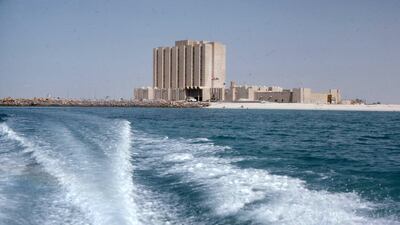
Hilton Abu Dhabi, now Radisson Blu, taken in 1975. It opened in 1973 and then dominated its surroundings. Courtesy: Alain Saint-Hilaire -

Le Meridien under construction in Abu Dhabi. This striking modernist hotel welcomed its first guests in March, 1979 and was formally opened in 1980. Courtesy: Le Meridien -

Abu Dhabi has many impressive buildings such as the Saeed Al Kalili building, known as the Al Ibrahimi building after the restaurant on its ground floor. Courtesy: Department of Culture and Tourism - Abu Dhabi -
It opened in 1989 and its design is all sweeping concrete and curves. Victor Besa / The National -

It was designed by Egyptian architect Farouq El Gohary and is an example of 1980s modernism. Courtesy: Department of Culture and Tourism - Abu Dhabi -

Abu Dhabi Chamber of Commerce and Industry. Courtesy: Department of Culture and Tourism - Abu Dhabi -

An architectural detail on the chamber building. Courtesy: Department of Culture and Tourism - Abu Dhabi


Just a short walk from the new souq - now the World Trade Centre - its confident lines represented the city’s new entrepreneurial spirit.
There is no public record of the architect. The ovals punched in the facade, to provide shade from the apartments behind, are reminiscent of another Abu Dhabi building, the Obeid Al Mazrouei block, which itself is believed to have been borrowed from Beirut’s Koujak-Jaber building, designed by the brilliant Victor Bisharet in 1967.
While the Obeid Al Mazrouei building - popularly known as the “Connect Four building” because it resembles the popular game - still stands, the Omeir building has gone.
It was demolished in the 1990s, to be replaced by the current structure, which still houses the Omeir Travel Agency.
The background to that company is worth a story on its own. It was founded in 1956 by two brothers, Khalifa and Omeir bin Youssef, later expanding from a travel agency to a group of companies that today includes everything from cars to commercial and residential property.
When Khalifa bin Youssef died in 1971, his brother established the Omeir bin Youssef Group, which, at the time this photograph was taken, had more than 100 employees.
Omeir bin Youssef was not just a successful businessman but also a philanthropist who was given a posthumous Abu Dhabi Award in 2007. The citation notes: “His contributions included building houses, sponsoring residents, supporting citizens by covering medical expenses and pilgrimages to Mecca.
“He also personally oversaw regular and mass distribution of food, water and supplies in the emirate.”

