



After three years, China is finally reopening for travel, but as the country experiences its first national wave of Covid-19 cases, what does that mean for travellers going into and flying out of the country?
What is changing in China on January 8?
As it scraps its zero-Covid policy, which has led to the rise in cases, Chinese authorities are lifting several major Covid-related entry restrictions as of Sunday and this includes quarantine requirements for international arrivals.
Before now, foreign travellers needed to quarantine for five days in a hotel and self-isolate three days at home.
Now, anyone heading to China needs to take a nucleic acid test 48 hours before departure and people with negative results no longer have to apply for a green health code from embassies and consulates before entering the country.
Visitors do still need to fill in a customs health declaration form, however, and positive cases cannot travel to China until they're testing negative again.
Can international travellers now fly to China?
Not quite. Borders remain mostly closed to foreign travellers for leisure reasons for now, but an easing of restrictions has been announced, with no clear timeline. For example, the country needs to start issuing tourism visas again and while that's part of the reopening plan, no date has been set for it.
For now, the focus is on visa applications for foreign nationals travelling to the country for business, family reasons, employment and reunions.
This includes Chinese nationals studying or working abroad, who may not have been able to travel home for nearly three years due to the costs of flight tickets or hotel quarantines.
Can people fly out of China?
Yes, the rule that stopped Chinese citizens from going overseas for "non-essential" reasons has also been lifted, allowing international travel for leisure again. Getting back into the country has become much easier, too.

According to global travel service provider Trip.com Group, mainland China's outbound flight bookings on the morning of December 27 — the day after the easing of travel restrictions from January 8 was announced — increased by 254 per cent, when compared to the previous day.
In particular, searches for flights to Singapore, South Korea, Hong Kong, Japan and Thailand led the surge.
China's Ministry of Transport said on Friday that it expects more than two billion passengers to take trips over the next 40 days.
However, as Covid-19 cases soar in the country, international governments have placed restrictions on travellers coming from China.
Qatar, for example, announced it would require people arriving from China to provide a negative Covid-19 result from a test taken within 48 hours of departure, with the measures in place from last Tuesday.
The US, Canada, Australia and the UK imposed PCR testing requirements on any travellers from mainland China from Thursday.
-
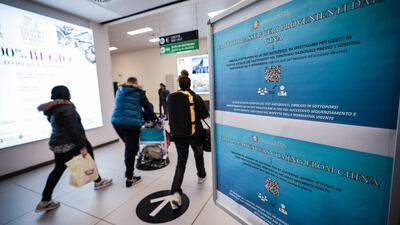
A notice for travellers arriving from China to undergo mandatory Covid tests at Caselle airport, in Turin, Italy. EPA -

Italy on December 29, 2022, became the first European country to officially start testing for Covid-19 among people arriving from China. EPA -
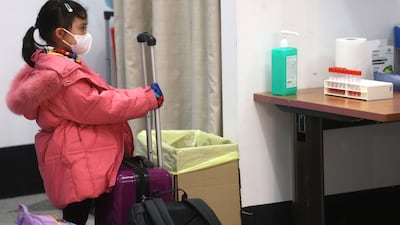
The move came after China's announcement it was set to open its borders, as new variants of coronavirus surged in the Asian country. -
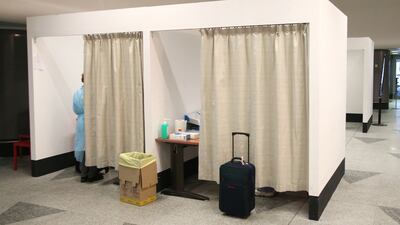
Travellers arriving from China are tested for Covid at Malpensa Airport, in Milan. EPA -

Italy has urged the rest of the EU to follow its lead and test travellers from China, but most of the bloc's members have said they see no need to do so. EPA -
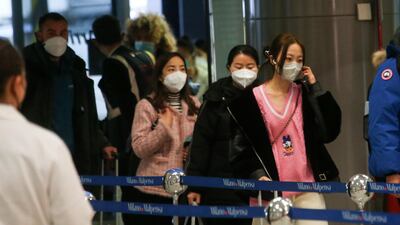
The European Centre for Disease Prevention and Control says it does not currently recommend measures on travellers from China. EPA -
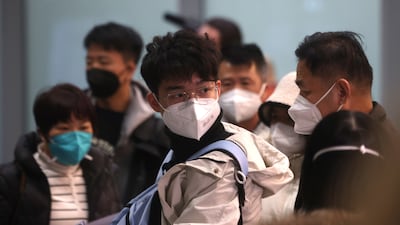
Travellers arriving from China line up for Covid testing in Malpensa Airport, in Milan. EPA -
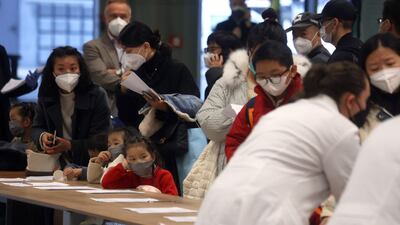
Travellers arriving from China line up for Covid testing in Malpensa Airport, in Milan. EPA -
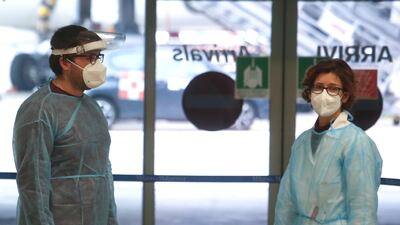
Health workers at Malpensa Airport, in Milan. EPA


Morocco took this one step further by banning all travellers arriving from China, “to avoid a new wave of contaminations in Morocco and all its consequences”, said the foreign ministry.
But the International Air Transport Association called these "knee-jerk reactions".
“Several countries are introducing Covid-19 testing and other measures for travellers from China, even though the virus is already circulating widely within their borders," said Willie Walsh, director general of IATA. "It is extremely disappointing to see this knee-jerk reinstatement of measures that have proven ineffective over the last three years.
"Research undertaken around the arrival of the Omicron variant concluded that putting barriers in the way of travel made no difference to the peak spread of infections. At most, restrictions delayed that peak by a few days. If a new variant emerges in any part of the world, the same situation would be expected.
"That’s why governments should listen to the advice of experts, including the World Health Organisation, that advise against travel restrictions."
What about domestic travel?
While domestic travel within China has been largely allowed throughout the pandemic, its popularity has had peaks and troughs, particularly as movement was restricted thanks to digital health codes. But these are no longer in place.
Chinese travel agencies are reporting spikes in bookings and searches to various destinations, including Beijing, particularly around the Lunar New Year public holiday, which runs from January 21 to 27.
Major attractions across the country, including museums and theme parks, are now welcoming visitors as normal.
What Covid restrictions remain in China?
China scrapped its zero-Covid policy, which it has had in place since the beginning of the pandemic, in December, following public protests.
This included mass testing, home quarantine for people with Covid-19 and sporadic lockdowns.
Currently, there are no government mandates for face mask-wearing and social distancing, although it's strongly encouraged in indoor places and on public transport, where mobile health QR codes are also still required.

