

“Do you know Tom Waits?” asks Ole Gunnar Solskjaer. “It’s 50 years since the debut album. I like him a lot.” In nearly three decades of knowing Solskjaer, it’s the first time conversation has moved away from football, the subject which consumes his life.
Solskjaer, the former Manchester United player, reserve and first-team manager, is listening to the gravelly-voiced Californian singer on a flight between the two giant Indian cities of Mumbai and Delhi. He’s in India for the first time to meet and speak to United fans in three venues over three nights: Bangalore, Mumbai and Delhi. It’s non-stop.
A United fan, Tilak Gaurang Shah, brought the Norwegian over and Solskjaer’s greeted at every airport by hundreds of enthusiastic fans singing his name and asking him to stop for selfies. He obliges as much as he can while surrounded by police. It’s novel to see United fans smiling after an underwhelming season.
Cricket is by a distance the most popular sport in India, but football is growing even though the Indian men’s national team are ranked a lowly 117th in the world. The domestic football league is improving but most fans get their fix from watching European giants like United or the other big English, Spanish or Italian clubs.
“It’s a long way and you’re not sure how the reception is going to be, but it’s humbling when people come up to tell you the stories or hand you a letter,” Solskjaer says.
“It’s almost surreal when grown men come up and they shiver and shake and they’re nervous as they say ‘I need to tell you this story’. That’s quite special. That sticks. The people here are passionate, friendly. I’ll remember this all my life.”
-
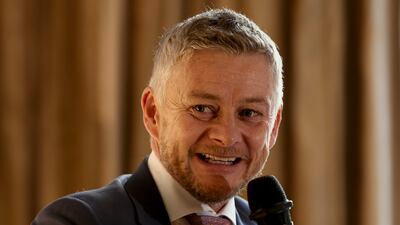
Manchester United legend Ole Gunnar Solskjaer speaks at an event in Bangalore, India. EPA -
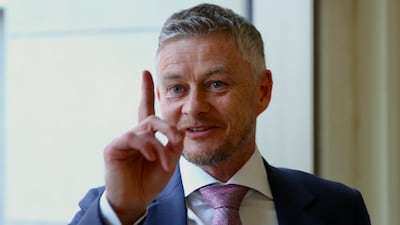
Manchester United legend Ole Gunnar Solskjaer arrives in Bangalore. EPA -
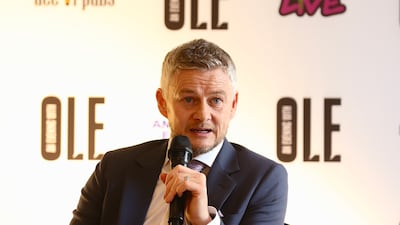
Manchester United legend Ole Gunnar Solskjaer addresses the audience. EPA -
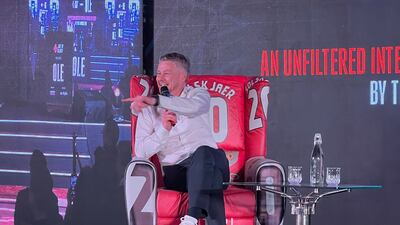
Ole Gunnar Solskjaer on stage during his recent visit to India. Photo: supplied


Solskjaer is at a crossroads. He’s over the stresses of his last job at United, he looks healthy and feels ready to manage again: he’s had some serious offers in the past six months.
There has been serious interest from Saudi Arabia, which is not where he wants to manage. Two offers to manage the national sides of European countries which, after consideration, he passed on. Various European clubs have been in touch. He likes the idea of Spain, but doesn’t speak Spanish. He likes the idea of a big club in Germany – and he does speak German.
He was linked to the Bayern Munich job this week, not because the Bavarians want closure on one of the most painful moments in their history – Solskjaer’s winner in the 1999 Champions League final, but because they saw what he did at Manchester United when their team were bereft of joy.
'I fulfilled my remit at United'
Solskjaer arrived at Old Trafford as caretaker manager in December 2018 and only ever intended to be in charge until the end of that season. He got the players smiling and winning football matches again. Nine on the bounce in one particular purple patch. By that time there was a clamour for him to be made permanent manager at one of the most complicated clubs in the world. He went for it and his team finished second and third in his only full seasons in charge.
Solskjaer lost his job in the third season, with United sixth in the table and not having won a trophy under him. He’s a positive person, but spending time with him, you know that the way he left United stings. He felt that along with his coaches, Michael Carrick and Kieran McKenna, the team would get better, but five defeats in seven saw United drop from first in mid-September to seventh in mid-November – and he was sacked.
Erik ten Hag, Solskjaer’s permanent successor, saw his side lose five games in December 2023 and go out of Europe, but he kept his job. Such is football.
“I didn’t win a trophy at United and I know that matters,” he says. “I was a penalty kick away from winning one against Villarreal [in the 2021 Europa League final].”
He’s not angry how it ended, just disappointed. Football is a game of small margins. Bayern Munich were minutes away from winning the Champions League in 1999 until Teddy Sheringham and Solskjaer scored in one of the most dramatic endings to any game.
“But I fulfilled my initial remit at United,” he adds. “Got people smiling again. Get the team winning. Lay down the foundations for good performances against all teams. And I did that.
"We were unbeaten away from home for 29 games. It’s not easy to do that. We went to places like Manchester City and beat them. We didn’t win the league but, trust me, to finish second and third with the squad I had was an achievement.”

Coaching philosophy
Solskjaer’s fortunate to be financially secure for life, but he also feels he’s got a lot to give to football. So what does an Ole team look like tactically?
“They attack quickly, defend together as a team to win the ball,” he explains. “It doesn’t matter if it’s high or low. You go as high as you can do because if you’re good at the high press it’s shorter to the goal. If they play you deeper then you win the ball and go forward at pace.
"Then you need the players’ decision-making at the end. Can I score? Create a chance? If it’s a yes then go for it, if it’s a no then we keep the ball and keep possession and work the opposition from side to side with tempo and quality because you have to open up the space. Everybody nowadays leaves spaces on the outside so if you move them side to side a little bit, you get the clever ones to play passes through or in behind. My team is also youthful and full of energy.”
Humble roots and family time
Aside from his role as a technical observer for Uefa where he watches games and analyses tactical formations and trends, he’s not worked since leaving Manchester United in November 2021. After a quarter of a century of living away from his home, he felt he owed it to his family to spend some serious time with them. Many is the football manager who regrets not seeing his children grow up.
Life for Solskjaer back in Kristiansund is, in his words, “almost too good”.
“I enjoy having the time with my kids and watching them training,” he says. “I go to Alesund and see my two eldest play there. I coach my youngest, I go out, go to concerts, do anything that I want. It’s different to what I’ve done for 25-26 years.
“Nobody stops me for photos in Kristiansund,” he adds. That’s not the case away from the town where people either a). ask him for photos or b). tell him that he looks like OIe Gunnar Solskjaer.
“My kids love that”, he smiles.
He’s close to his roots. Asked to name the full Clausenengen team where he started out in 1993, he reels off a the entire starting XI with all their positions.
“I stayed at home and lived with my parents until I was 21,” he says. “I dreamed of being a footballer but didn’t really believe in it. I had to do 12 months in the army which took a little toll on my career and development stopped a little bit, but looking back that’s when I also became a man. Eighteen months after playing in front of 50 people in my little town, I was celebrating goals with Eric Cantona, Ryan Giggs and David Beckham. That was a quick development.”

Solskjaer is a football nerd, a man who played football manager on his computer rather than Fifa. He was managing on the streets of Kristiansund age 13, cycling around the town tapping up the best players from rival areas. He obsessed over tactics and followed the trends. Watching the 1982 World Cup finals was a watershed. He loved Zico of Brazil, Diego Maradona of Argentina and the great Italian striker Paulo Rossi. To him, Maradona was the best, Zico his favourite.
“Maradona is the greatest ever player,” he says. “And I was lucky enough to meet him. He didn’t really speak English. It was at Old Trafford when I was the Cardiff manager and watched United v Liverpool. We got battered. Kenny Dalglish and Ian Rush were sat behind me. I put my cap down. I was with my assistant Demps [Mark Dempsey], and he said ‘there’s someone across the table who wants to speak to you'. I looked across and it was Maradona. He came across.”
Solskjaer’s father was famous in another sport.
“My dad was a very good wrestler,” he says. “I wrestled with him and he’d easily beat me because he was strong. I felt he was a big one but when I stand up now my dad is much smaller than me. He was a good influence on me. Only once did he need to have a word and that was when I came home late from a party. My friends were going out a lot. He saw me in the morning and asked, ‘do you think this is the way to make a success of your life?’, I never forgot that.”
Getting back into management
Football remained the passion and he made it his professional life, over three decades of dealing with the pressure, the fame, the adulation – which comes in spades in India. He turned 50 in November. In Mumbai, he’s asked by a fan when he’s going to get back at the wheel.
“It’s not that I’m looking for a job because I’m enjoying my time [off], but I’m ready for a job,” he says. “Something that triggers you, that you fancy, that you can achieve something. I like working with people that share my values. I’m also coaching FC Clausenengen/Kristiansund under 16s. We have an important game on Wednesday. And I’m doing my Uefa stuff analysing games. I watch games all the time but it’s a nice way of keeping your head in that tactical frame.
"Real Madrid are the team who’ve impressed me most this year. I’ve been impressed how they’ve worked Jude Bellingham into that position with the two wide forwards. [Manchester] City are always interesting to watch. It’s not my cup of tea in terms of how many penetrating passes they turn down when they go forward, but they win. And Erling [Haaland] will score more often if they play him, but they might lose the ball more often.”
So, will he experience the buzz of winning again?
“I don’t like to sound arrogant, but when you’ve been the manager of Manchester United you’ve had the highs. You spent your life at United and made enough money – so it’s not about the money, it’s about the challenge.”
He’s still in touch with Roy Keane and Gary Neville. He has far higher opinions of some of his former United players than others.
“I loved a midfield of Fred, Scott [McTominay] and Nemanja [Matic],” he says. “Proper professionals who give it everything. You know what you’re going to get and as a manager it’s nice to know what you’re going to get. It’s the worst thing ever when you don’t know if a team is going to turn up or not.”
The end of the road at United and new beginnings
By the end of his time at United, he felt several players had given up on him.
“There were many lows,” he says. “I’m one of them who looks back at the lows more than the highs. The end at Watford, well you can’t get lower than that. I more or less knew at half time, so my team talk was about enjoying the last 45 minutes together and giving their all.
"Some of them had stopped running, caring. But then in the second half we played well. Donny [Van de Beek] came on and scored. We should have scored more. Then we got a sending off. 2-1 until the 94th minute. It sounds really bad that it was a 4-1 defeat. It was bad to lose against Watford but it wasn’t a 4-1 game.”
Standing alone on the side as your team is losing is a visceral experience.
“It’s the loneliest place in the world, it’s horrible,” says Solskjaer. “You want to sit down. You’re 3-0 down but you’re a bit embarrassed but you have to stand up and never give up. You have to stand up and show that this is your team, you’ve picked the team. And I’ve never shied from that responsibility.”
The day after the Watford defeat, the Norwegian got a text message from the United's lead executive Ed Woodward saying that he needed to see him in his office. After 18 years with the club, he was sacked.
“A very emotional day,” he recalls. “I didn’t think it would be, but it was like leaving your family. I wanted to speak to all the players and say goodbye. I spoke to the coaches and the staff.” Then he went home alone and shed a tear.
Solskjaer has been back to Old Trafford only once for a game. He didn’t want any fuss, he was in Manchester and the team were playing. He still watches United and was gripped by the United's 2-1 win away to Aston Villa on February 11 while in Delhi. He refers to United as "we" and takes pride as players he coached do well.
“Harry, always first to the header,” he says as Maguire helps set up an early goal. He likes players who put the team first. He once made a sacrifice himself, tackling Newcastle United’s Rob Lee to stop him running towards goal. He received a straight red card for his efforts.
“It had to be done,” he says. “There were a couple of games left in the league. We were two points behind Arsenal and had to catch up on them. And I had to catch Rob Lee before he got to the box. Becks [Beckham] came up to me as I was sent off and I said I 'had to'.
“Yet I paid for it after. Sir Alex [Ferguson] hammered me in the dressing room and I was fined two weeks wages the next day. Then he said ‘[goalkeeper] Raimond Van der Gouw was in a good position, son. And Robert Lee has a bad goalscoring record'. How could I think about Robert Lee’s goalscoring record when I saw him running towards goal? I wasn’t going to let him try. I think deep down, Sir Alex knew I did that for the team.”
Ferguson’s management shaped Solskjaer the manager. He feels the manager should be the most important person at a club, with control over his team and who guards against the power sought by some players or their agents who think they’re better than they are, unable to take constructive criticism since they’re surrounded by people beholden to them.
And yet despite his gripes, he’s ready to go again, ready to grasp the wheel of football management once more.

