Liverpool and Egypt star Mohamed Salah with his lawyer and agent Ramy Abbas Issa. UNHCR / Vodafone Foundation


Mohamed Salah’s £1m-a-week deal and an insight into how top footballers are rewarded


  • English
  • Arabic

September 30, 2023

When news broke in the summer that Saudi football side Al Ittihad were chasing Mohamed Salah, but had been turned down, there was considerable sympathy for the player.

Here was a footballer, a true superstar, 31 years old at what might be the start of the down slope of his career, who was being denied the chance by his club to rake in mega-millions. He had given Liverpool years of extraordinary service; few would quibble if he felt the need to move on and cash in.

Reports suggested that the striker was to be paid £1.5 million a week by Al Ittihad, enabling him to join Cristiano Ronaldo and Neymar as the poster boys of the Saudi Pro League. Liverpool were to receive £100m straight away, with another potential £50m coming in add-ons. Still, the English team refused; Salah was theirs and he was going nowhere.

In Liverpool’s start to this season, Salah has been outstanding, playing six matches (before Saturday's game against Spurs), scoring three goals and making four assists. That compares with 38 league games in 2022-23, in which he netted 19 times and made 12 assists. His best season for goals was in 2017-18, when he played 36 and scored 32.

It's the other statistic that has got the commentators purring and the fans cheering. Once a player renowned, perhaps unfairly, for going for goal and missing, when he could have passed, Salah has become more generous. His rate of assists has risen. So much so that if he keeps it up, this season he could make over 20 goals for others. This, in addition to those he scores himself.

In essence, Salah has become more of an all-rounder, which means he is extremely precious indeed. Which is why it should come as no surprise that this rarity of a sportsman is earning at least £1m a week while at Liverpool. Contrast that with the first professional contract he agreed to as a 13-year-old at Al Mokawloon in Cairo, which paid him a monthly salary of 125 Egyptian pounds or around £3.

His added value explains as well why Liverpool were so reluctant to sell him, even for £150m. They could have used that cash to buy two strikers for £75m each – at that price, the new buys would be good. But what the figures are increasingly saying is that there is only one Mo Salah - a player who not only scores but makes telling passes - and currently, he is irreplaceable.

News of his weekly package was revealed by Salah’s lawyer and advisor, Ramy Abbas Issa, in a Harvard Business School report seen by The Guardian. That £1m-a-week is, says Abbas, a “conservative” sum.

The study forms part of Harvard’s entertainment, media and sports programme, run by Professor Anita Elberse. She focused on the Salah transfer negotiations leading to the signing of his new contract with Liverpool in July 2022 (it runs until 2025) with a student, Taher El Moataz Bellah. Uniquely, Abbas and Salah agreed to co-operate.

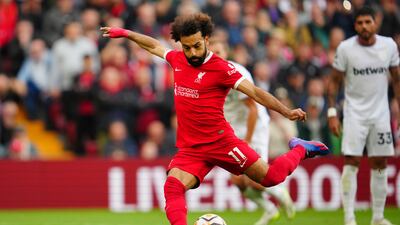
  • Liverpool's Mohamed Salah scores his side's opening goal from the penalty spot against West Ham at Anfield on Sunday, September 24, 2023. AP
    Liverpool's Mohamed Salah scores his side's opening goal from the penalty spot against West Ham at Anfield on Sunday, September 24, 2023. AP
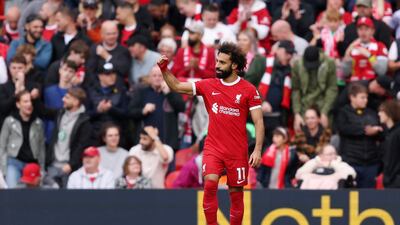
  • Mohamed Salah celebrates after scoring Liverpool's first goal against West Ham. Getty
    Mohamed Salah celebrates after scoring Liverpool's first goal against West Ham. Getty
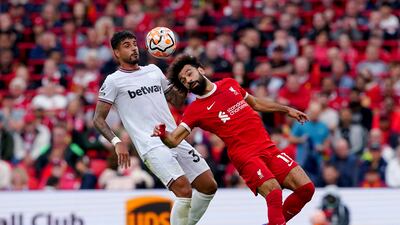
  • Liverpool's Mohamed Salah fights for the ball with West Ham United's Emerson Palmieri. PA
    Liverpool's Mohamed Salah fights for the ball with West Ham United's Emerson Palmieri. PA
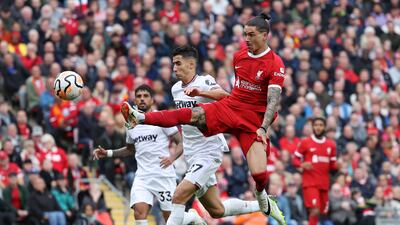
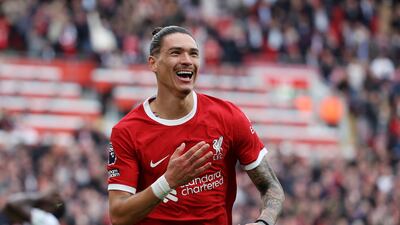
  • Darwin Nunez of Liverpool scores his team's second goal. Getty
    Darwin Nunez of Liverpool scores his team's second goal. Getty
  • Darwin Nunez after scoring Liverpool's second goal. Getty
    Darwin Nunez after scoring Liverpool's second goal. Getty
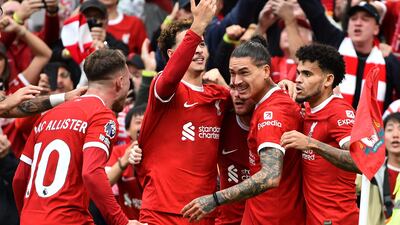
  • Liverpool players celebrate Darwin Nunez's goal. Reuters
    Liverpool players celebrate Darwin Nunez's goal. Reuters
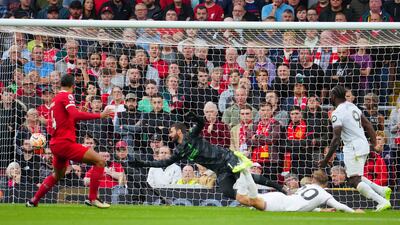
  • West Ham's Jarrod Bowen, bottom, scores his side's opening goal. AP
    West Ham's Jarrod Bowen, bottom, scores his side's opening goal. AP
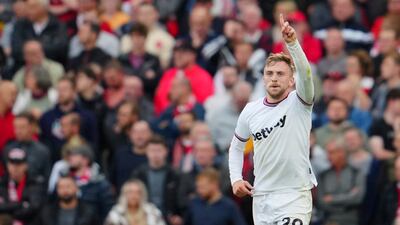
  • West Ham's Jarrod Bowen after scoring at Anfield. AP
    West Ham's Jarrod Bowen after scoring at Anfield. AP
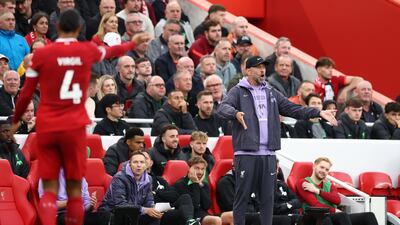
  • Liverpool manager Jurgen Klopp at Anfield on Sunday. EPA
    Liverpool manager Jurgen Klopp at Anfield on Sunday. EPA

Abbas is himself a stand-out, as an adviser to a footballing icon who is not an immediate member of the player’s family and does not have other clients (presumably, Abbas’s percentage of Salah’s remuneration renders that unnecessary).

They met by chance in 2015 when Salah was at Chelsea and Abbas, who was born in Colombia but grew up in the UAE, belonged to a team looking after Juan Cuadrado, the Colombia winger and Salah’s teammate. “Ramy was there with Cuadrado, I remember we met and he spoke to me in Arabic,” Salah says. “I didn’t get it at first – a Colombian speaking Arabic? So, we started having a conversation.”

It resulted in Abbas giving Salah advice on his loan move from Chelsea to Fiorentina and their relationship blossomed from there.

They took part in the Harvard discussion as if the negotiations were continuing, speaking in the present tense. They end with a phone call in June 2022 between Abbas and Salah, before the former made a final, make-or-break counteroffer to Liverpool. Abbas was in Dubai; Salah on holiday in El Gouna, the Egyptian Red Sea resort.

Says Abbas: “If we find a way to get Liverpool to agree to the salary we have in mind and if Mohamed performs at a level he has achieved in the past seasons…”

He adds: “We conservatively expect the total amount received by Mohamed and the image rights companies over the next few years from both his playing contract and his image rights contracts to be somewhere between €54m [£46.8m] and €62m [£53.7m] per year.”

How much, exactly, Liverpool are rewarding the player is not revealed. But Abbas says: “Now, Mohamed’s endorsements are [each] in the €4m [£3.5m] to €7m [£6.1m] range – him joining Liverpool was a game-changer.”

At present, he has commercial ties with the likes of Adidas, Bank of Alexandria, PepsiCo, Gucci and Mountain View. Taking Abbas’s words at face value, Salah is collecting around £25m a year on top of his Liverpool wages.

That would see Liverpool paying him £25m a year or £500,000 a week. It is an eye-watering amount, possibly making him the highest-paid player in the Premiership (only Erling Haaland of Manchester City is likely to be at that level). But the Harvard study makes clear how what Salah receives from Liverpool is broken down, between his guaranteed or fixed pay and his variable or performance-related pay.

Significantly, in the new deal, Liverpool wanted that latter category to represent a higher proportion of his overall package. Abbas used their wish to push up his total worth. “I realise that this would make Mohamed’s contract the highest value contract in the history of Liverpool but he is worth it.”

Abbas adds that “certain team performance bonuses Mohamed receives should be, as Liverpool would prefer, dependent on him scoring a certain number of goals or providing a certain number of assists”.

It leaves Salah as one of the richest players in world football, behind Ronaldo but alongside Kylian Mbappe, Neymar, Haaland and Harry Kane in the uppermost tier.

Liverpool also got what they wanted: a player who not only scores goals but makes assists. Everyone is happy. Except of course, the Saudis, who could yet return with a higher bid when the next transfer window opens. They may go up to £200m, and Liverpool may succumb. For now, though, Salah is staying put, and scoring and passing.

Chris Blackhurst is the author of The World’s Biggest Cash Machine – Manchester United, the Glazers, and the struggle for football’s soul, to be published by Macmillan on October 26, 2023.


The burning issue

The internal combustion engine is facing a watershed moment – major manufacturer Volvo is to stop producing petroleum-powered vehicles by 2021 and countries in Europe, including the UK, have vowed to ban their sale before 2040. The National takes a look at the story of one of the most successful technologies of the last 100 years and how it has impacted life in the UAE. 

Read part four: an affection for classic cars lives on

Read part three: the age of the electric vehicle begins

Read part one: how cars came to the UAE


In numbers: PKK’s money network in Europe

Germany: PKK collectors typically bring in $18 million in cash a year – amount has trebled since 2010

Revolutionary tax: Investigators say about $2 million a year raised from ‘tax collection’ around Marseille

Extortion: Gunman convicted in 2023 of demanding $10,000 from Kurdish businessman in Stockholm

Drug trade: PKK income claimed by Turkish anti-drugs force in 2024 to be as high as $500 million a year

Denmark: PKK one of two terrorist groups along with Iranian separatists ASMLA to raise “two-digit million amounts”

Contributions: Hundreds of euros expected from typical Kurdish families and thousands from business owners

TV channel: Kurdish Roj TV accounts frozen and went bankrupt after Denmark fined it more than $1 million over PKK links in 2013 

Other promotions
  • Deliveroo will team up with Pineapple Express to offer customers near JLT a special treat: free banana caramel dessert with all orders on January 26
  • Jones the Grocer will have their limited edition Australia Day menu available until the end of the month (January 31)
  • Australian Vet in Abu Dhabi (with locations in Khalifa City A and Reem Island) will have a 15 per cent off all store items (excluding medications) 
Ten tax points to be aware of in 2026

1. Domestic VAT refund amendments: request your refund within five years

If a business does not apply for the refund on time, they lose their credit.

2. E-invoicing in the UAE

Businesses should continue preparing for the implementation of e-invoicing in the UAE, with 2026 a preparation and transition period ahead of phased mandatory adoption. 

3. More tax audits

Tax authorities are increasingly using data already available across multiple filings to identify audit risks. 

4. More beneficial VAT and excise tax penalty regime

Tax disputes are expected to become more frequent and more structured, with clearer administrative objection and appeal processes. The UAE has adopted a new penalty regime for VAT and excise disputes, which now mirrors the penalty regime for corporate tax.

5. Greater emphasis on statutory audit

There is a greater need for the accuracy of financial statements. The International Financial Reporting Standards standards need to be strictly adhered to and, as a result, the quality of the audits will need to increase.

6. Further transfer pricing enforcement

Transfer pricing enforcement, which refers to the practice of establishing prices for internal transactions between related entities, is expected to broaden in scope. The UAE will shortly open the possibility to negotiate advance pricing agreements, or essentially rulings for transfer pricing purposes. 

7. Limited time periods for audits

Recent amendments also introduce a default five-year limitation period for tax audits and assessments, subject to specific statutory exceptions. While the standard audit and assessment period is five years, this may be extended to up to 15 years in cases involving fraud or tax evasion. 

8. Pillar 2 implementation 

Many multinational groups will begin to feel the practical effect of the Domestic Minimum Top-Up Tax (DMTT), the UAE's implementation of the OECD’s global minimum tax under Pillar 2. While the rules apply for financial years starting on or after January 1, 2025, it is 2026 that marks the transition to an operational phase.

9. Reduced compliance obligations for imported goods and services

Businesses that apply the reverse-charge mechanism for VAT purposes in the UAE may benefit from reduced compliance obligations. 

10. Substance and CbC reporting focus

Tax authorities are expected to continue strengthening the enforcement of economic substance and Country-by-Country (CbC) reporting frameworks. In the UAE, these regimes are increasingly being used as risk-assessment tools, providing tax authorities with a comprehensive view of multinational groups’ global footprints and enabling them to assess whether profits are aligned with real economic activity. 

Contributed by Thomas Vanhee and Hend Rashwan, Aurifer

Conflict, drought, famine

Estimates of the number of deaths caused by the famine range from 400,000 to 1 million, according to a document prepared for the UK House of Lords in 2024.
It has been claimed that the policies of the Ethiopian government, which took control after deposing Emperor Haile Selassie in a military-led revolution in 1974, contributed to the scale of the famine.
Dr Miriam Bradley, senior lecturer in humanitarian studies at the University of Manchester, has argued that, by the early 1980s, “several government policies combined to cause, rather than prevent, a famine which lasted from 1983 to 1985. Mengistu’s government imposed Stalinist-model agricultural policies involving forced collectivisation and villagisation [relocation of communities into planned villages].
The West became aware of the catastrophe through a series of BBC News reports by journalist Michael Buerk in October 1984 describing a “biblical famine” and containing graphic images of thousands of people, including children, facing starvation.

Band Aid

Bob Geldof, singer with the Irish rock group The Boomtown Rats, formed Band Aid in response to the horrific images shown in the news broadcasts.
With Midge Ure of the band Ultravox, he wrote the hit charity single Do They Know it’s Christmas in December 1984, featuring a string of high-profile musicians.
Following the single’s success, the idea to stage a rock concert evolved.
Live Aid was a series of simultaneous concerts that took place at Wembley Stadium in London, John F Kennedy Stadium in Philadelphia, the US, and at various other venues across the world.
The combined event was broadcast to an estimated worldwide audience of 1.5 billion.

57%20Seconds
%3Cp%3E%3Cstrong%3EDirector%3A%3C%2Fstrong%3E%20Rusty%20Cundieff%0D%3Cbr%3E%3Cstrong%3EStars%3A%20%3C%2Fstrong%3EJosh%20Hutcherson%2C%20Morgan%20Freeman%2C%20Greg%20Germann%2C%20Lovie%20Simone%0D%3Cbr%3E%3Cstrong%3ERating%3A%20%3C%2Fstrong%3E2%2F5%0D%3Cbr%3E%0D%3Cbr%3E%3C%2Fp%3E%0A

Turkish Ladies

Various artists, Sony Music Turkey 

UAE Falcons

Carly Lewis (captain), Emily Fensome, Kelly Loy, Isabel Affley, Jessica Cronin, Jemma Eley, Jenna Guy, Kate Lewis, Megan Polley, Charlie Preston, Becki Quigley and Sophie Siffre. Deb Jones and Lucia Sdao – coach and assistant coach.

 
Inside%20Out%202
%3Cp%3E%3Cstrong%3EDirector%3A%C2%A0%3C%2Fstrong%3EKelsey%20Mann%3C%2Fp%3E%0A%3Cp%3E%3Cstrong%3EStarring%3A%3C%2Fstrong%3E%C2%A0Amy%20Poehler%2C%20Maya%20Hawke%2C%20Ayo%20Edebiri%3C%2Fp%3E%0A%3Cp%3E%3Cstrong%3ERating%3A%20%3C%2Fstrong%3E4.5%2F5%3C%2Fp%3E%0A
Updated: October 01, 2023, 9:54 AM