



Manchester United’s trophyless season will end on Sunday at Selhurst Park, with the club at sixes and sevens set to finish in sixth or seventh.
Sixth will mean Europa League football next term – which is better suited to United’s current level than Champions League, seventh will be the Europa Conference League. There was a time when United fans used to mock sides like Liverpool for playing Europa League football.
Sunday is a big game against a Crystal Palace side who still have the potential to jump from 13th to ninth in the league, a difference of £18 million in prize money. Palace have a superior goal difference to the teams above them, they’ve taken four points off Manchester City and Arsenal this season and lost only four of their last 16 games.
The last time United picked up so few points in England’s top division was 59 in 1990-91 when the team finished sixth. The final game of that season was away to Palace, who finished third and beat United 3-0. United’s minds were on a European Cup Winners’ Cup final in Rotterdam four days later. There have been no such cup distractions this season with exits from all three cups by March – and all at Old Trafford, too.
Erik ten Hag has been keen to start his new job early after leading Ajax to a third Eredivisie league title in four years, but the first time he’ll work with his new team is scheduled to be at the end of June for an August 6 start to the season.
United will fly to Bangkok on July 8 ahead of their first pre-season friendly against Liverpool on July 12. United’s pre-season training is due to start one week earlier than usual in Manchester – the only reason for that is because the competitive season commences early because of November’s World Cup finals in Qatar. International players will come back a week later after they’ve had the minimum three weeks off.
Man United's lowest Premier League points tally ever - in pictures
-
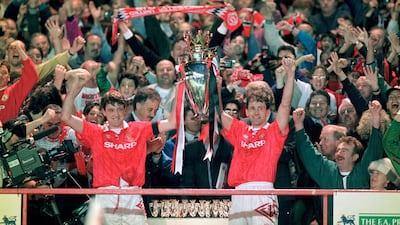
Manchester United captain Steve Bruce and Bryan Robson hold aloft the FA Premier League trophy after the final home game of the 1992-93 season, when they finished as champions with 84 points. Getty -
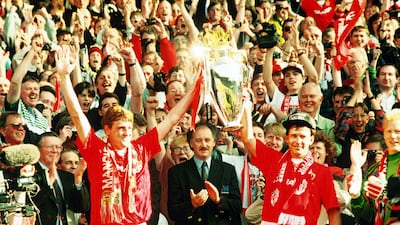
Steve Bruce and Bryan Robson lift the trophy after winning the Premiership in the 1993-94 season with 92 points. Getty -
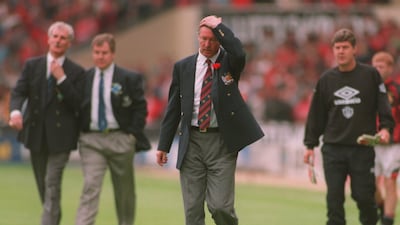
Alex Ferguson's Manchester United finished the 1994-95 season as runners-up with 88 points. Allsport -
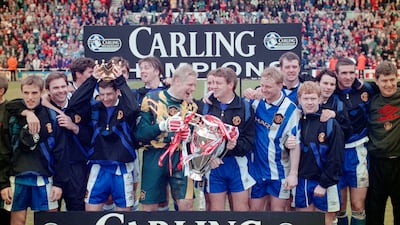
Steve Bruce and goalkeeper Peter Schmeichel celebrate with the 1995-96 Premiership trophy after winning the title with 82 points. Getty -
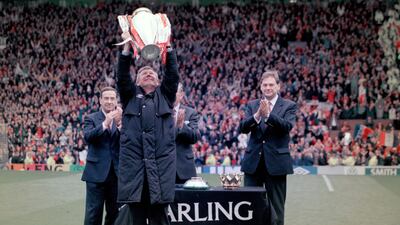
Alex Ferguson holds the Premier League trophy after the final home game of the 1996-97 season, which they won with 75 points. Getty -
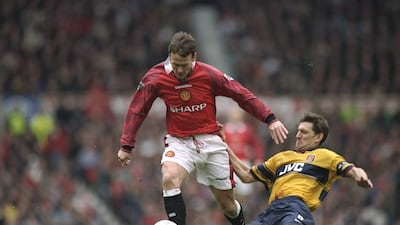
Arsenal's Tony Adams tackles United's Teddy Sheringham in the 1997-98 season. United were runners-up behind the Gunners, with 77 points. Allsport -
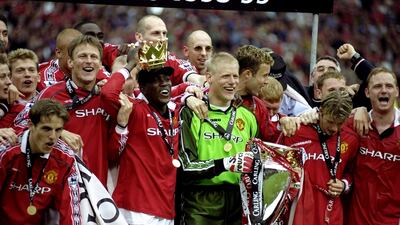
Manchester United players celebrate winning the title in the 1998-99 season with 79 points. Allsport -
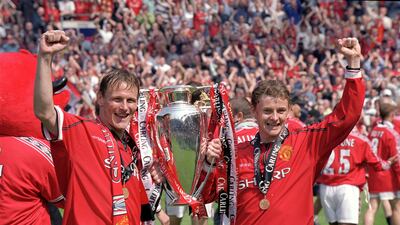
Manchester United's Teddy Sheringham and Ole Gunnar Solskjaer lift the Premier League trophy after winning the title in the 1999-2000 season with 91 points. Allsport -
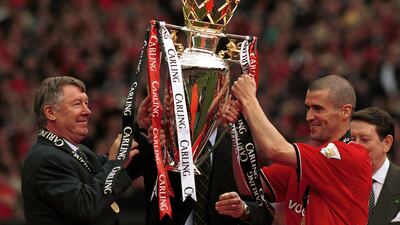
Manager Alex Ferguson and Roy Keane with the Premier League Premiership trophy in 2000-01, a season they won with 80 points. Allsport -

United's Luke Chadwick holds off John McGreal of Ipswich in the 2001-02 season. United finished third with 77 points. Getty -
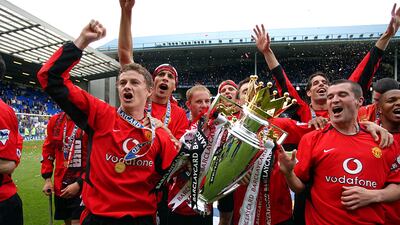
Ole Gunnar Solskjaer and Roy Keane celebrate with the Premier League trophy in 2002-3, when 83 points was enough for the title. Getty -
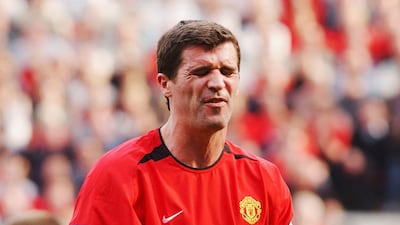
Roy Keane shows his frustration during the 2003-4 season, when United finished third with 75 points. Getty -

Paul Scholes celebrates with Roy Keane and Cristiano Ronaldo during the 2004-05 season, when United finished third with 77 points. Getty -
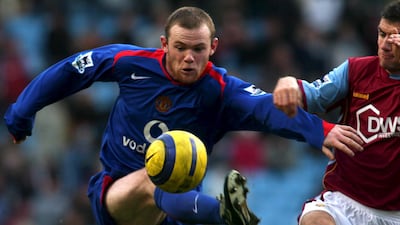
Striker Wayne Rooney in action during the 2005-6 season, when United finished second with 83 points. EPA -

United players celebrate winning the title in the 2006-7 season with 89 points. Getty -
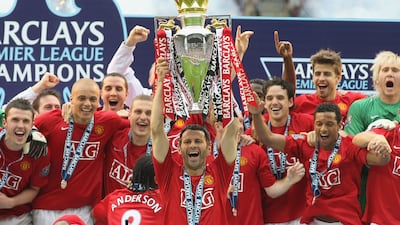
Ryan Giggs lifts the trophy after United's win in the 2007-8 season with 87 points. Getty -
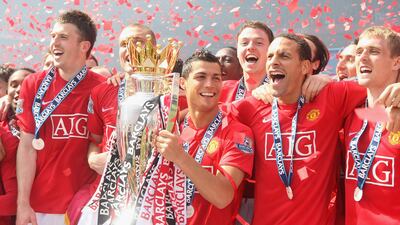
Cristiano Ronaldo celebrates with the Premier League trophy after their triumph in 2008-9 with 90 points. Getty -
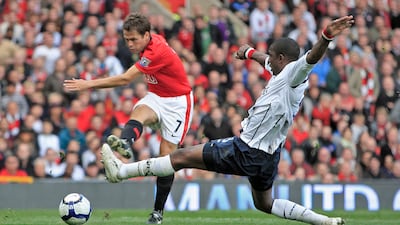
Michael Owen shoots during the 2009-10 season, when United finished as runners-up with 85 points. EPA -
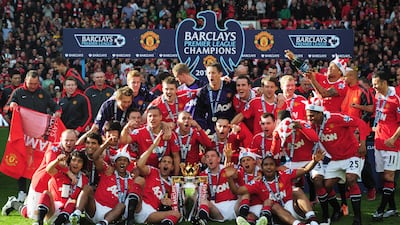
United celebrate with the Premier League trophy in 2010-11, when they won with 80 points. Getty -
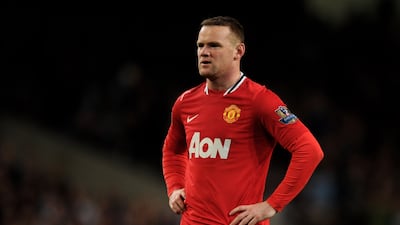
Wayne Rooney looks dejected in the 2011-12 season, when United were runners-up with 89 points. Getty -
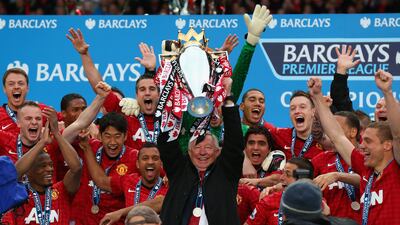
Alex Ferguson lifts the Premier League trophy after the 2012-13 season, when they were crowned with 89 points - the last time Manchester United were champions of England. Getty -
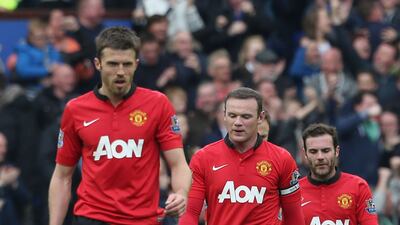
Michael Carrick, Wayne Rooney and Juan Mata show their disappointment during the 2013-14 season, when United finished in seventh with 64 points, currently their lowest ever tally. Getty -
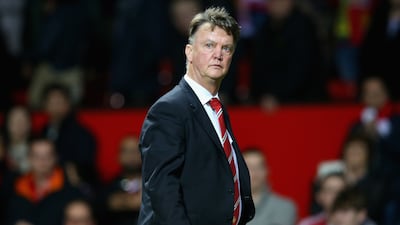
Manager Louis van Gaal leaves the pitch during the 2014-15 season, when United finished fourth with 70 points. Getty -

Wayne Rooney during the 2015-16 season, when United were fifth with 66 points. Getty -
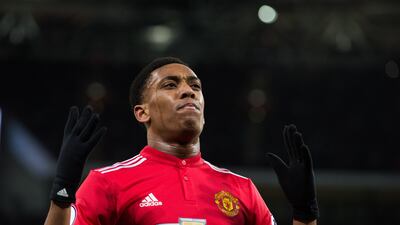
Manchester United's Anthony Martial in 2016-17, when United were sixth with 69 points. Getty -
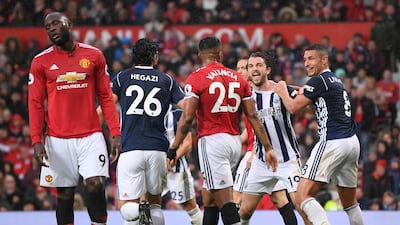
Jay Rodriguez of West Bromwich Albion celebrates after scoring against United in 2017-18, when they were runners-up with 81 points. Getty -
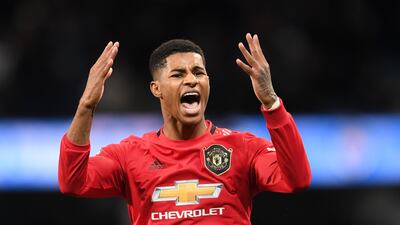
Marcus Rashford during the 2018-19 season, when United finished sixth with 66 points. Getty -
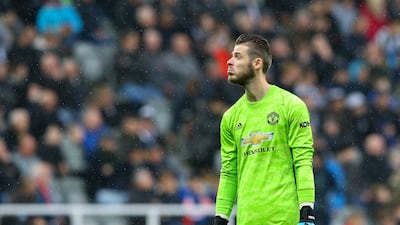
Goalkeeper David de Gea during the 2019-20 season, when United finished third with 66 points. Getty -
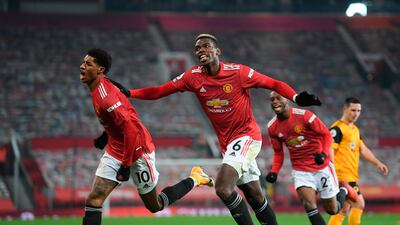
Marcus Rashford celebrates with Paul Pogba during the 2020-21 campaign, when United were runners-up with 74 points. EPA


United are at rock bottom and changes are happening aplenty both on the football side and away from it. Paul Pogba, Nemanja Matic, Juan Mata, Phil Jones, Jesse Lingard and Edinson Cavani are all set to leave, vastly reducing United’s wage bill and freeing up budgets for incoming players. Most of those players were on huge contracts, which were incentivised if the team reached the Champions League. One had a contract that was unchanged whether United played Champions League football or not.
On the coaching side, Rangnick and some of the coaches he brought in will depart. Coach Neil Ryan, a stalwart and son of former assistant manager Jim Ryan, will also leave.
Poor results have meant that negativity has seeped into the dressing room and there are divisions and suspicions. An investigation into leaks from the dressing room was carried out and concluded, with the club satisfied that it will be less of an issue next season.
Ralf Rangnick has failed as interim manager and the idea that he has overseen other decisions at the club in relation to staff or player departures is inaccurate. He had almost no say in the appointment of Ten Hag, he was told to concentrate on coaching the first team at an early stage in his tenure. He’ll become manager of Austria, the 34th ranked team in Europe. Whether his United consultancy becomes a meaningful one, as he hopes, is doubtful.
The players are also culpable. They let Ole Gunnar Solskjaer down in his final two months, but they’re also very frustrated by how they can’t speak out about Rangnick to answer some of the public criticisms he’s putting their way.
Ten Hag needs help and support, but changes continue apace and with that comes shifting plates of power. Since Solskjaer lost his job in November, the following people have left or are about to leave the club: Ed Woodward, the most senior executive, senior coaches Michael Carrick, Martyn Pert and Kieran McKenna; communications chief Charlie Brooks, chief scouts Jim Lawlor and Marcel Bout; director of football negotiations Matt Judge. Some of these exits were the club’s choice, others were not. Days before Judge left, player agents were still being directed to speak to him.
Manchester United 3 Brentford 0 - player ratings
-
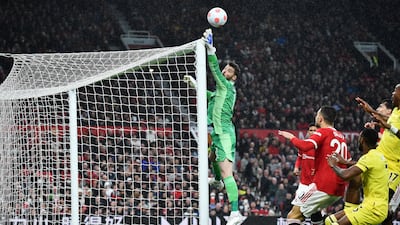
MANCHESTER UNITED RATINGS: David De Gea 7. Awkward high ball dealt with early on in the rain and alert for an Eriksen shot. Saved well from the excellent Eriksen on 55 minutes and again from Toney a few minutes later. EPA -
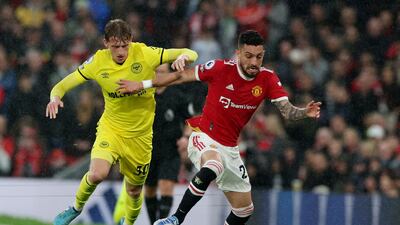
Diogo Dalot 6. Perfect pass to Ronaldo on two minutes and another for Elanga on eight which led to the opening goal. End product questionable but combined well with Ronaldo and hit the cross bar – though offside was given. Reuters -
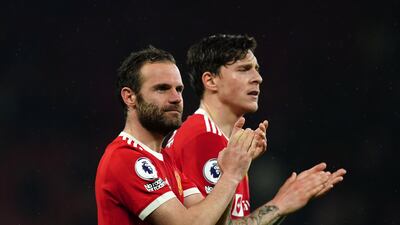
Victor Lindelof 7. A clean sheet for his defence and his best moment was when he read a 56th minute Brentford attack well to head the ball out of danger. PA -
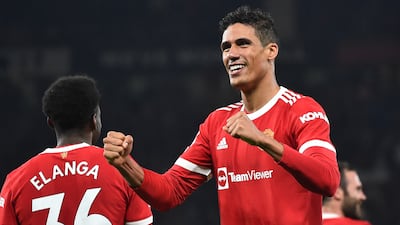
Raphael Varane 7. Toney was a handful for him and Brentford’s players held him back to execute a free-kick. Then scored his first United goal, sweeping in a corner in front of the Stretford End. EPA -
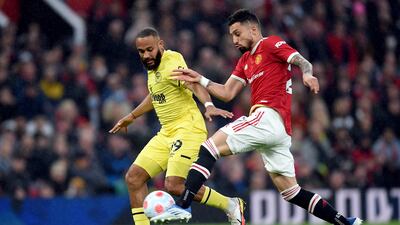
Alex Telles 6. Had to concentrate as Brentford’s wingbacks pushed up against him. Apologised to his teammates after being robbed of the ball in his own area by Toney. Ball headed against his hand and saw penalty appeals, while his corner set up the third. EPA -

Nemanja Matic 7. Reliable in his final appearance at Old Trafford. A lovely scooped pass to Fernandes on 52 minutes was the highlight, that and being applauded off by fans and players. Booked. PA -
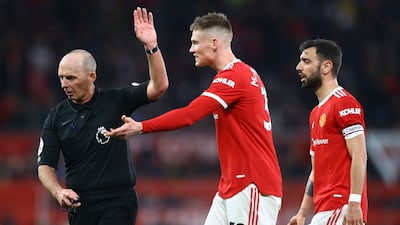
Scott McTominay 5. Passed ball straight to a yellow shirt during Brentford’s best moment of pressure, but then won possession after 79 minutes and drove forward before giving it to Ronaldo when he could have had a shot himself. Getty Images -
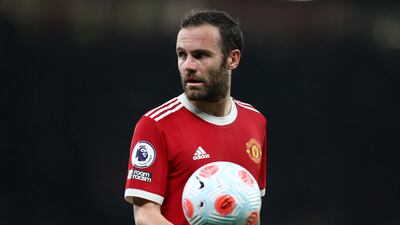
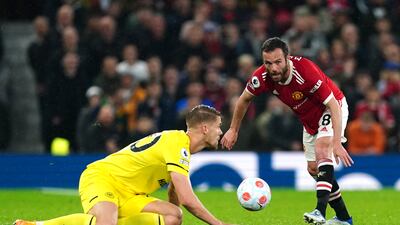
Juan Mata 8. Almost certainly playing at Old Trafford for the last time, he deserved his start after some impressive substitute cameos. Shot wide after being set up by Ronaldo. Then involved in the best move of the match which saw Ronaldo score but it was disallowed. Lovely footballer. Needs to be playing every week. Getty Images -
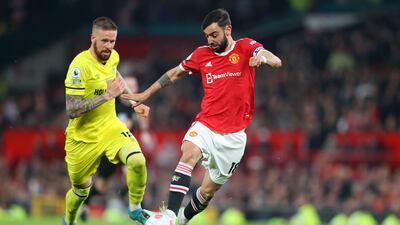
Bruno Fernandes 6. First goal in 11 games and he was up for it. United haven’t scored enough this season and the goal difference is a pitiful five after 35 games. Shot wide having been set up by Ronaldo soon after. Getty Images -
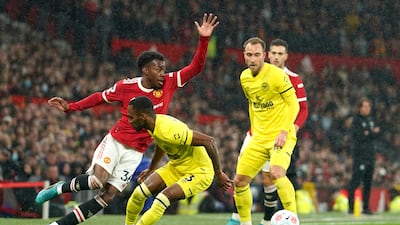
Anthony Elanga 7. Got to the byline to cross to Fernandes for the first goal. Had space against a mediocre Brentford team. Still improving and one of the bright spots for United this season. AP Photo -

Cristiano Ronaldo 9. On it tonight, he even tracked back at one point. Struck a 23rd minute free-kick on target. Cleverly backheeled a chance for Mata on 32. Won a penalty superbly, then converted it in front of the Stretford End for his 18th league of the season. Top performance. Reuters -
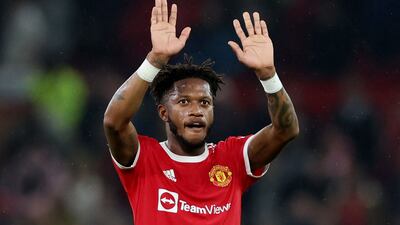
SUBS: Fred 6 (on for Matic). One of the better players in a poor season for United. Positive that he’s back. Reuters -
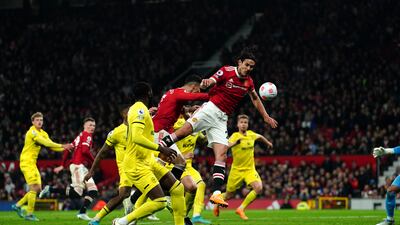
Edinson Cavani 5 (on for Elanga). He’s been a huge disappointment, picking up a vast salary while barely being fit to play. PA -
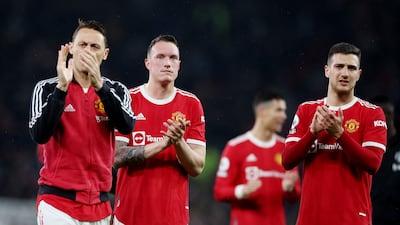
Phil Jones 5 (on for Mata). Likely to be his last appearance at Old Trafford. The fans sang his name, he had a chance to score, but best for all parties that he moves on. Reuters -
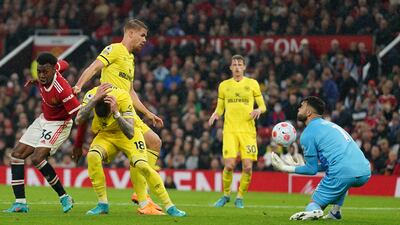
BRENTFORD RATINGS: David Raya - 5, Was lucky to see Ronaldo’s goal ruled out, while his passes put Brentford’s defenders under pressure at times. Made a good save to deny Dalot, although that also turned out to be offside. Had no chance of stopping Ronaldo’s penalty. AP Photo -
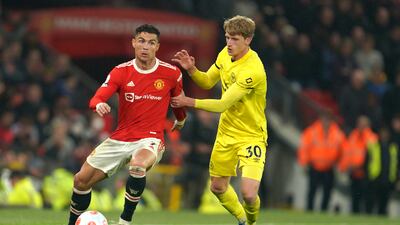
Mads Roerslev - 5, Looked very uncomfortable whenever called upon defensively in the first half, with United’s attackers getting away from him with ease at times. Looked more confident in the second half. AP Photo -
Kristoffer Ajer - 5, Delivered a cross that troubled De Gea but had times where he was caught out with United pushing the ball behind him, including Matic’s ball for a Fernandes chance. PA -
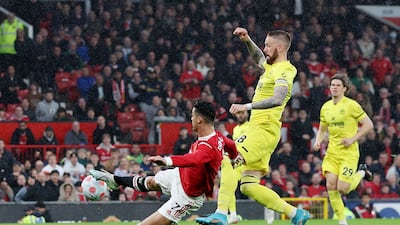
Pontus Jansson - 5, Did well to stop Ronaldo when it looked like he might get through and put good pressure on United’s attackers in the first half. Was grateful for Raya tipping the ball wide after it seemed he might have deflected Ronaldo’s pass into his own net, but wasn’t so lucky when Varane’s shot went in off him moments later. Reuters -
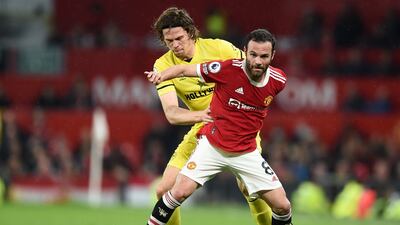
Mads Bech Sorensen - 5, Did enough to stop Elanga reaching a cross in the early stages but couldn’t keep up with him moments later as the Swede assisted the opener. His long throws didn’t cause too many problems on this occasion. EPA -

Rico Henry - 3, Fired an early shot over the crossbar. Had a narrow escape after being put under pressure by Elanga. Was then nudged off the ball by Ronaldo and retaliated by conceding a penalty and wasn’t strong enough when defending against Varane at a corner as the Frenchman scored. Getty Images -
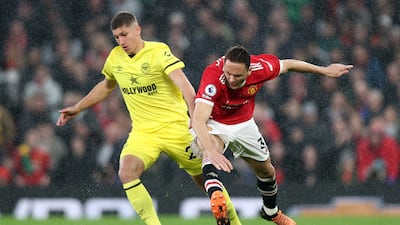
Vitaly Janelt - 6, Put in some good work in the middle and was unlucky to see his pass cut out when trying to lead a counter. Getty Images -
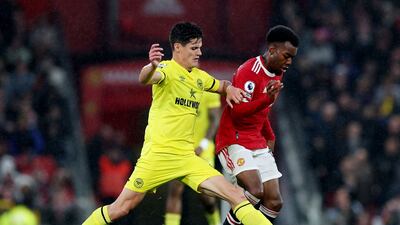
Christian Norgaard - 6, Overhit his pass when a good opportunity opened up for Brentford, but had positive moments including a good pass that created a chance for Toney. Reuters -

Christian Eriksen - 7, Showed an outstanding range of passing from the very beginning as he found Mbeumo, with another picking out Ivan Toney. Saw his free-kick attempt parried away. Didn’t impact the game quite as much in the second period. Getty Images -
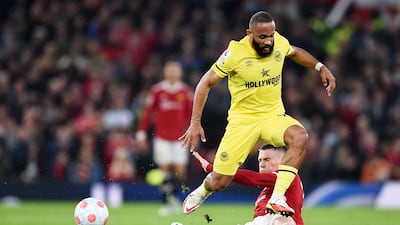
Bryan Mbeumo - 6, Rose well but headed wide and hit the side netting after beating Fernandes. Almost found Eriksen with a good cross. EPA -
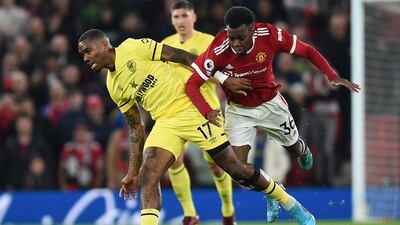
Ivan Toney - 5, Headed a good chance over, but put in a lot of work and linked play well at times. Made a complete mess of his strike after spinning around the back. Saw a decent shot well saved by De Gea, but didn’t manage to connect with Eriksen’s cross in the latter stages. EPA -
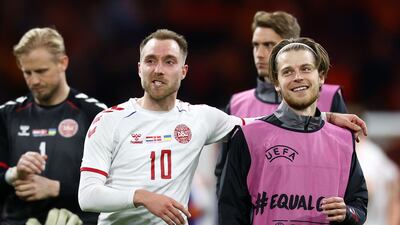
Mathias Jensen (Norgaard, 71’) – N/R, Hit a good shot but it didn’t trouble De Gea as it was blocked well. Getty Images -

Yoane Wissa (Mbeumo, 76) – N/R, Struggled to have much of an impact on the game after being brought on. AP


John Murtough is in a powerful decision-making role, Richard Arnold is his boss and will want to make his improvements on the job done by his friend and former colleague, Ed Woodward, who now has no say in how the club is run, but there will be more people leaving, including some long-standing staffers.
While there is much scope for improvement in several areas at United, new does not necessarily mean better. Hemen Tseayo, for example, very highly regarded as the chief strategist, chose to go last week. Some fans cheer every departure out of the door since they associate them with a failing football team and might ask whether United’s chief strategist had any worthwhile strategy, but it’s not quite so simple. Fans didn’t care that three coaches followed Solskjaer out of the door. The players and Rangnick did.
There had to be changes in some areas and not only on the pitch where United have a goal difference of +1 after 37 games. United’s recruitment has been so poor and not streamlined. Top players like Ngolo Kante or Joao Cancelo are identified, then vetoed rather than signed.
This is a club that baulked at paying £36 million for Jude Bellingham but could pay up to £37m for Amad Diallo, another teenager who has mostly been a substitute for Glasgow Rangers. The Ivorian is 19 and has time to come good at a higher level, but United have wasted hundreds of millions on underperforming players and their salaries.
There were mitigating factors – there always are in football – and Bellingham thought he had a better chance of first-team football at Dortmund. Given he became a mainstay in the team that finished second in the Bundesliga this season, he’s entitled to feel vindicated, but United have missed out on too many talents.
Ten Hag may decide to take on board what Rangnick tells him about the failing collection of footballers he’s managed for half of this season but the Dutchman can pick who he wants to speak to and he’ll choose his own way with his own men. He’s worked with sporting directors in the past, he’s told United that he’s comfortable with the structure that he’s entering at the club. He will have a veto over any signing, just as Solskjaer and previous United managers had.
United have a budget to buy new players but there will be no splurge of money of the kind that West Ham United are asking for Declan Rice. Most football clubs are recovering from Covid-19 and United don’t intend to pay a premium on signings – and that includes Barcelona midfielder Frenkie de Jong. The Dutch midfielder, who played under Ten Hag at Ajax, is of interest to United, but it won’t be an easy deal to do given how much the Catalans paid for him and that his manager Xavi Hernandez wants to keep him. Yet Barcelona still need to raise funds.
Ajax’s defender Jurrien Timber is admired, but midfield and attack are United’s top priorities this summer. There’s a hope that Raphael Varane can have a much better second season in England after arriving from Real Madrid and that captain Harry Maguire can get back to the level he was at a year ago before his injury. Victor Lindelof is also rated at Carrington, but the new manager will have his view on all the players.
United’s transfer budget is also dependent on how much is raised from sales. Goalkeeper Dean Henderson has long had suitors from big Premier League sides. Anthony Martial failed to have an impact on loan at Seville, but he’s worth something. Phil Jones still has a year on his contract and as he showed in his brief performances this season, he’s capable enough to perform in the Premier League.
There’s uncertainty about and the mood has been low at the Carrington training ground, though it was boosted by the news that Ten Hag wants to get started early and the FA Youth Cup success of the under 18s in front of a crowd that was almost twice the size of the previous record for the competition.
The domestic season will end on Sunday, but United will remain in the headlines. There’s a constant demand for news given United’s global support with the prospect of potential new players, owners or technical staff going viral and hotly debated – even if the stories can be based on conjecture or wishful thinking rather than fact. United’s main rivals, meanwhile, make their headlines where it matters most – on the pitch.
Most agents will happily see their players linked to United, many are ringing the club with one of the biggest budgets in world football to offer their players – including some very big names, but United have been down this road so many times and big names haven’t equalled big trophies in the past five years – though there have been second and third places in the Premier League.
Ten Hag will need time, support and patience, but he has to find another way of winning.

