



Nemanja Matic has said Manchester United have already started to adapt to the playing style of new manager Ralf Rangnick, despite the impact of Covid-19 on their festive schedule.
United are unbeaten in three games in all competitions under Rangnick since he arrived at Old Trafford but have had two Premier League games postponed and last played on December 11 — when they defeated Norwich City 1-0, thanks to a late Cristiano Ronaldo penalty.
After that unplanned rest, Rangnick's side travel up to Newcastle United on Monday, followed by Thursday's home game against Burnley. Both opponents are currently in the bottom three and are teams the sixth-placed Red Devils need to beat as they look to close the gap on the top four.
And midfielder Matic believes the squad is getting to grips with the high-pressing, high energy style of their 63-year-old German coach. “Of course, it will take some time, but we have enough talent in the squad to understand quickly and play how he wants us to,” said the Serbian.
“And that means a bit of everything, it isn’t just about pressing. You have to know what to do at this moment or that, and when and where to press.
“You must be physically ready, play well tactically when your chance comes, and we are already adapting to him.
“We understand his ideas and how he wants to play, what he wants from us in every position. Gradually we will be where he wants us to be.
“We are all positive and we’re already adapting to him. It’s only the beginning but we are all positive about things, so we will see in the future.”
Matic also insists that Rangnick has taken over from Ole Gunnar Solskjaer at a point when the quality of players in the English top-flight has never been higher. “I think this is the toughest league so far,” he added.
“When I came over in 2009, it was only Chelsea and Man United who were competing. Now there are a lot of teams who have a chance to win. The smaller ones have improved a lot and buy top-class players.
Norwich 0 Manchester 1: player ratings
-

NORWICH RATINGS: Tim Krul – 7 The Dutchman made a series of crucial saves. He provided a hand on Alex Telles’ free-kick to tip it over the crossbar, comfortably saved a low shot by Dalot and then kept Ronaldo out. He also tipped over a great dipping header by Maguire at the last second just before the break. Went the wrong way for the penalty. PA -

Max Aarons – 7 Made a great interception in the first half followed by a darting run into the centre of the park. He made a great tackle to force a potential ball from Rashford out for a corner but was later punished for handling Ronaldo in the box, who went to ground. Getty Images -

Grant Hanley – N/R, Forced into early action to clear United’s attack but then had to retire early after colliding with Ronaldo and seemingly dislocating his shoulder. Getty Images -

Ozan Kabak – 8 Returned to the backline and looked accomplished beyond his 21 years. He made a great block as United added pressure in the box with a cross by Sancho, and then tracked back to deny Rashford, though the striker was deemed offside. Forced De Gea into making two world-class saves. PA -

Dimitris Giannoulis – 7 With Brandon Williams unable to play against his parent club, the Greek left-back returned to the line-up and looked a man on a mission to keep a starting place with a bright start both attacking and defensively. Getty Images -

Billy Gilmour – 6 Held his own in the midfield for large parts while playing in a deeper position. Improved as the game went on. Had two shots within seconds of each other when the ball rebounded to him, and he narrowly missed out on getting his first for the club in the final 10 minutes. AP Photo -

Lukas Rupp – 7 Was all over the pitch. Made several good runs into the box and always looked to be eyeing up decent positions. Also teed up several opportunities for Pukki. Getty Images -

Kenny McLean – 6 The Scotsman worked hard with Rupp to control play and ensure United didn’t have long on the ball. Reuters -

Josh Sargent – 6 Delivered a great ball which curved into the path of Pukki just before half-time, though United were able to intervene. Looked low in confidence, though. The American had a great chance to shoot following United’s goal, but decided to pull back the ball rather than have a dig himself. Getty Images -
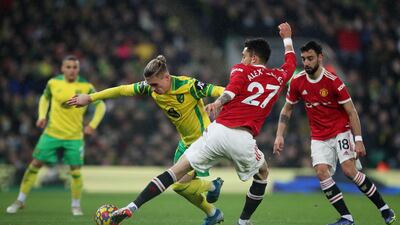
Przemyslaw Placheta – 6 The Polish winger made his full Premier League debut in his first start for the club since February following months out suffering with Covid-19. He showed glimpses of promise after so long out, culminating in a neat one-two and shot just after the break. PA -

Teemu Pukki – 6 Forced a crucial block from McTominay early on as he eyed a cross in the box after having latched onto a great ball and split United’s defence. Later on, he couldn’t quite get his feet right when Rupp flicked a ball into his path, before then forcing a top save from De Gea. Getty Images -
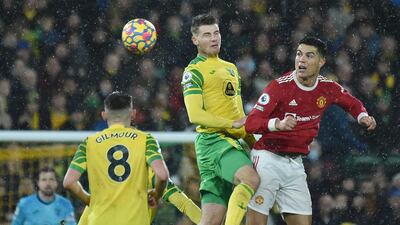
SUB: Jacob Sorensen (Hanley 21’) – 7 The versatile 23-year-old has seen game-time limited since his arrival and he’d only played nine minutes in the Premier League before his introduction at centre-back. Showed a great first touch to hook the ball away from Rashford and spark an attack. AP Photo -

SUB: Todd Cantwell (Placheta 70’) – N/R Didn’t really have much of an impact after coming on. Getty Images -
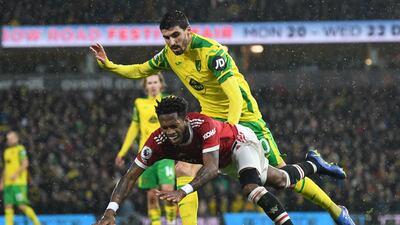
SUB: Pierre Lees-Melou (Rupp 76’) – N/R Found himself straight in the action after his substitution but didn’t have his shooting boots on to level things up. Booked. Reuters -

MAN UNITED RATINGS: David de Gea - 8. Comfortable in the first half. Saved from Pukki on 56 mins as Norwich had their best spell with five corners in as many minutes. Magnificent save on 76 from a header and then again on 90 at the back post, both from Kabak. Getty Images -
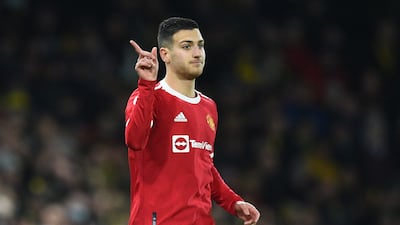
Diogo Dalot – 6. Hit and miss in the first half. Weak shot after 31, but the fact he was in Norwich’s area showed how advanced he was. Covered well for a 39th minute Norwich attack. Booked after 76. Blocked a Gilmour shot on 82. PA -

Harry Maguire – 6. Did well to get his head to a Sancho cross just before half time. Turned by Placheta at start of second half as Norwich went aggressive against United and stopped the pressing game seen against Palace. Outjumped by Kabak for Norwich’s closest effort on goal. PA -

Victor Lindelof – 6. Struggled for Norwich’s best first half chance, but otherwise untroubled. Went off with 20 minutes to play after going down without any contact. Reuters -
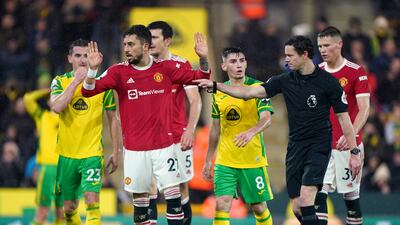
Alex Telles – 7. Starting four league games for the first time. Awful pass back towards Maguire after 8 mins. His free-kick deflected on the cross bar after 14. Won ball off Aarons to start an 85th minute United attack which ended with Ronaldo shooting over in the heavy rain. Reuters -

Scott McTominay – 7. Blocked an early Norwich attack. Set up Ronaldo on 37. Lucky not to get a fifth successive yellow card on 43. Crossed for Ronaldo, which led to United’s penalty. Getty Images -

Fred – 7. Smart ball to McTominay to feed Ronaldo on 37. Passed well through the lines in the narrow 4-2-2-2 formation. It wasn’t impressive, but United got another win and another clean sheet. Getty Images -
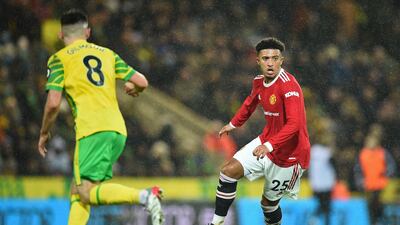
Jadon Sancho – 6. Super cross to Maguire on 45. Some sparks when he got the ball, but, as with the other attackers, too little and too far from the Norwich goal. AFP -
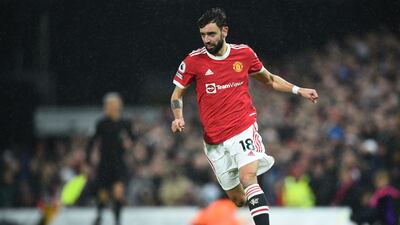
Bruno Fernandes – 5. Had more touches than anyone early one, but too far from goal to be effective and gave the ball away more than anyone. AFP -
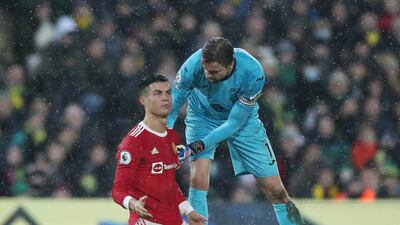
Cristiano Ronaldo – 6. Swung at the ball and couldn’t connect after 15. Better chance on 37 but he paused on his shot. Sent Krul the wrong way to score a penalty, his seventh goal in eight away starts this season. Shot a Rashford cross over on 85. PA -
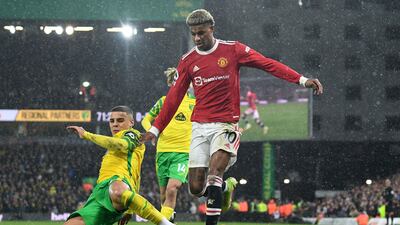
Marcus Rashford – 5. Won a soft early free-kick then complained that he was pulled back when he didn’t get one. Lively but no end product in first half and he lost possession too many times. Zipped a low shot wide on 61. Best move was in 85th minute when he crossed for Ronaldo. Reuters -

SUB: Mason Greenwood – 6. On for Sancho after 67. Ran the ball away from his area on 81 as Norwich tried to equalise. Running helped. Getty Images -

SUB: Eric Bailly – 5. On for Lindelof. Beaten by Sargent as Norwich tried to equalise but recovered to win the ball back. Blocked a Gilmour double shot on 82. Getty Images -

SUB: Donny van de Beek – NA. On for Fernandes after 88. Gave free-kick away in dangerous position on 90. PA


“The Premier League is just very hard … much more than 15 years ago, and of course, every manager who comes to a new club needs a period to adapt.”
Newcastle, meanwhile, head into the game at St James' Park on the back of three dispiriting defeats to Leicester City, Liverpool and Manchester City that have left Eddie Howe's side three points adrift of safety and entrenched in a relegation dogfight.
Howe is expecting another difficult encounter as he pits his wits against Rangnick, a man he knows and respects. “I know he’s had a huge influences on some of the Premier League managers that are currently active and successful in the Premier League,” he said.
“He’s one of the culture-change managers, I’d say, who has brought in a lot of new ideas that a lot of people have followed, a definite pioneer of the game.
“He’s someone I’ve had a couple of conversations with over the years and someone I highly respect and admire.
“He’ll bring in his own way of playing — I’ve already seen that in the two games that they’ve had — and they’re starting to mirror him and his personality, so I would expect a very tough game. I’ve got a lot of resect for Ralf and his work.”
Newcastle 0 Manchester City 4: player ratings
-
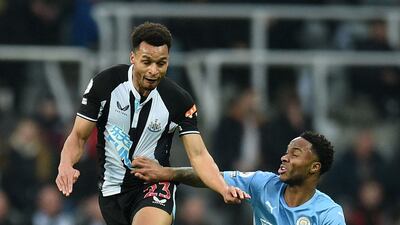
Jacob Murphy - 6: Both of Newcastle’s full-backs are out-of-position wingers but did a fine job keeping Sterling relatively quiet. Skinned by Jesus ahead of fourth goal. AFP -
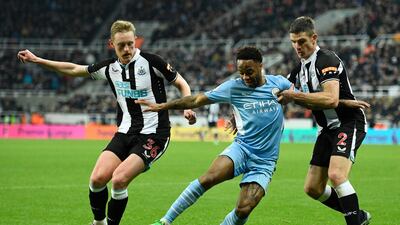
Ciaran Clark - 4: First game since brainless sending off against Norwich and gifted opening goal to Dias after five minutes when, incredibly, he decided not to head away cross. Failed to close down and then turned his back on Cancelo strike for City's second. AFP -

Matt Ritchie - 6: Did fine job on Mahrez for 64 minutes … then lost Algerian who volleyed home third goal. Excellent ball down left to put Saint-Maximin away on run at start of second half. EPA -
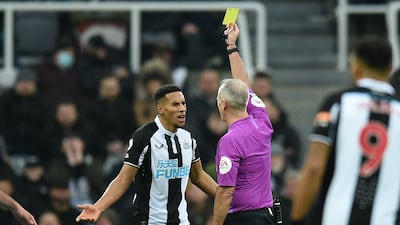
Isaac Hayden - 6: Deserved booking minutes for foul on De Bruyne and now suspended for next game. Left on backside by Cancelo ahead of second goal. Headed corner wide when should have done better in eventful first half for midfielder. AFP -
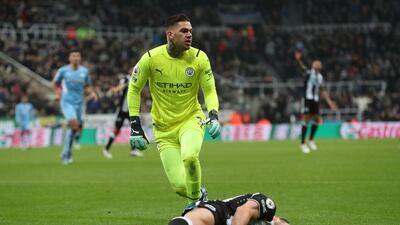
Ryan Fraser - 5: Had shot cleared off line in first half that would have been chalked off anyway for Hayden foul. Should have earned Newcastle penalty after being brought down by Ederson but somehow not given by referee or VAR. Reuters -
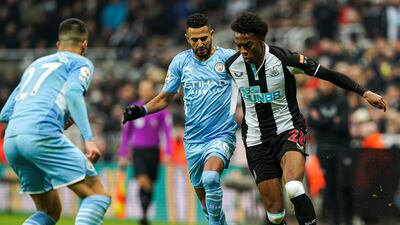
Joe Willock - 4: Left for dead by one piece of Silva quality in first half and then by another from Cancelo before second goal. Hooked at half-time and struggling badly for form this season. PA -
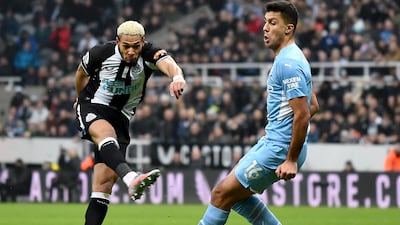
Joelinton - 6: Drilled shot just wide of target from edge of box in 12th minute and good ball into feet of Wilson late in opening half. Brazilian is certainly playing better under Eddie Howe than he ever did under predecessor Steve Bruce – but still lacks cutting edge in terms of goals or assists. EPA -
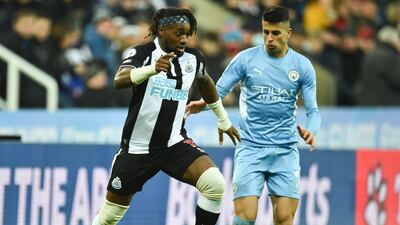
SUBS: Allan Saint-Maximin – (On for Willock 46’) 5: Nearly found Wilson with ball into middle minutes into second half but was his usual mix of dangerous running and wasteful final balls. EPA -
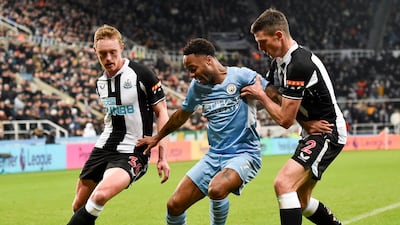
Sean Longstaff – (On for Hayden 61’) 5: Sporting a dubious moustache, Geordie midfielder couldn’t change game City were already dominating. EPA -
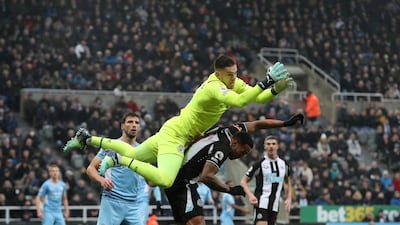
MANCHESTER CITY RATINGS: Ederson - 6: Beaten by Joelinton shot that flew just wide early on and lucky not to concede first-half penalty after clumsy challenge on Fraser. Not the most convincing of days dealing with crosses but one brilliant save from Wilson header. Reuters -
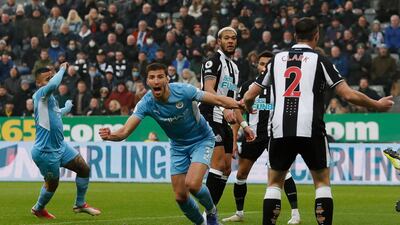
Ruben Dias - 8: Free header to open scoring after woeful Newcastle defending and should have had second but flicked header wide after break. Reuters -

Rodri - 7: Booked for cynical foul on Willock in first half but strolled through rest of match with little problem, sitting in front of defence and such was City’s dominance Pep Guardiola was able to give him a rest in second half. PA -
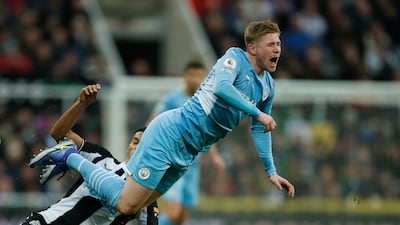
Kevin De Bruyne - 7: Lucky to get away with one after 15 minutes when lost possession in own box, handing chance to Fraser but dubious foul given. No repeat of his brilliant double against Leeds last time out but a fine, controlled passing performance from the Belgian. Reuters -
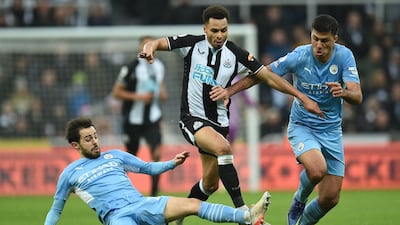
Bernardo Silva - 8: Tremendous run past two players to set-up chance for Zinchenko that Ukrainian wasted. Booked for taking down Joelinton. Superlative tracking back in last 10 minutes to take ball off toes of Wilson in City penalty area. AFP -
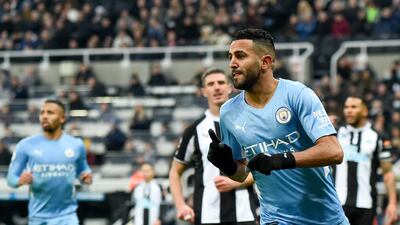
Riyad Mahrez - 7: Strangely subdued in first half but volleyed home emphatically after 64 minutes from excellent Zinchenko ball for his 50th City goal. EPA -

Raheem Sterling - 7: In top form at moment but very little influence in opening half. Shanked volley well wide at start of second before stinging hands of keeper with curling effort just before hour. Tapped home fourth goal from close range. EPA -
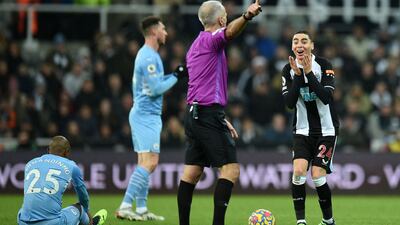
SUBS: Fernandinho – (On for Rodri 68’) 6: Match was well and truly won by the time veteran came on, although he was beaten to one header by Wilson that needed save from Ederson. AFP -

John Stones – (On for Dias 70’) 6: Nice and easy time to come on with score at 3-0. EPA -

Cole Palmer – (On for Mahrez 77’) N/A. Would have made it 5-0 but couldn’t get ball out from under feet and chance went begging. AFP



