

The latest UAE Government briefing on coronavirus told us more about the current state of infection in this country.
This week, officials announced that there had been 1,214 new infections from 114,653 tests in the latest 24-hour reporting period, as well as 741 recoveries and two new deaths. The number of active cases now stands at 4,637.
On several occasions in the past few weeks, although not on Wednesday, recoveries have outpaced new cases and at this point in the progress of the pandemic, active cases may tell the most accurate story of how live the virus is in the country.
Although the number of active infections has risen since the start of this month, when they briefly dipped below 2,000 open cases, they are still back down at the level of infections that were being reported in mid-April.
Furthermore, active cases had been trending downwards for more than a month until the beginning of November. The current number of active cases is around a quarter of the number of infections when the pandemic reached its peak in the UAE in early June.
The broader data released on Tuesday told us that 894,104 tests had been conducted nationwide in the week ending November 10, underlining the country’s commitment to mass testing that has been so evident throughout this crisis.
Approximately 15 million tests have been carried out since the outbreak began in a country with a population of 10 million. With mandatory regular testing in place in several industries and economic sectors, that overall test figure will breach 20 million in December.
Dr Saif Al Dhaheri, spokesperson for the UAE’s National Covid-19 Crisis Recovery Management and Governance Committee, said that the country was on the “right track” on the road to what he termed final recovery. "The health sector is able to control the situation, which is reflected in the number of recoveries,” he added.
That last point is crucial, because medical science and healthcare professionals have helped build out our understanding of effective treatment for the virus and ensured the death rate in this country has remained low. The worst-case scenarios have not transpired. Instead, recovery rates have been growing stronger as the months have passed.

It also helps explain why more elements of society are opening back up, particularly for young people. The final three year groups in Abu Dhabi’s private schools will go back to in-person teaching in January after being on distance-learning programmes since March. Sporting activity for children over 12 years old has more fully opened up in the past few days.
This should give us hope, but there are still obstacles to be negotiated, particularly as the global picture for recovery is mixed.
Covid-19 cases are being reported in record numbers elsewhere in the world, but the race to produce a vaccine has been turbocharged this week by the news that a Pfizer and BioNTech venture has proved 90 per cent effective in clinical trials. The vaccine developed by Sinopharm, meanwhile, has already been administered here to key officials, ministers and workers here in the UAE, along with tens of thousands of volunteers. Other vaccines are in progress in a 21st Century approximation of the so-called space race of the 1960s, which spurred an era of innovation and accomplishment.
The Pfizer/BioNTech news was initially met with great excitement, but the cold reality of what will happen next is beginning to settle in. It will take time and huge amounts of capital to undertake a worldwide vaccination campaign. The cost of such an undertaking with the Pfizer vaccine was initially estimated at $20 a dose and there will be fierce demand for it. It may be years before it truly delivers on its promising headlines.
Perhaps playing to this general point, the National Crisis and Emergency Management Authority, or Ncema, tweeted shortly after the Tuesday night briefing that responsibility for containing the virus “rests with everyone”, which means observing the now well-established safety protocols that are part of our daily routine. There is no magic formula for now.
In parts of the region and in Europe, meanwhile, lockdowns are being re-imposed. Lebanon will enter a two-week lockdown on November 14, with intensive care units in the country nearing capacity. England entered what has been termed "lockdown 2" earlier this month, although as The National reported, "masses of humanity roamed footloose" in the country over the weekend in mild defiance of policymakers.
This is not surprising. Governments need to weigh the potential benefits of locking down their societies against the many downsides, such as increased incidents of anxiety, stress, insomnia and depression that could be triggered by isolation, disconnection and lack of human interaction among those who do not contract the virus and are required to shelter at home. Higher rates of obesity have also been recorded in some countries under restriction of movement orders.
Keeping economies and societies open, while having appropriate guidelines in place to reduce the chances of infection, appears to represent a better path forward than the enforced disconnection of lockdowns, although they still serve a purpose when hospitals and health care sectors become stretched to breaking point and when they are applied strategically.
-

A quiet Trafalgar Square in London. Getty Images -

England today began a second national lockdown to curb a surge in Covid-19 cases, closing pubs, restaurants and an array of shops deemed non-essential. Getty Images -
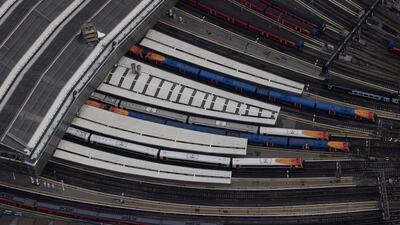
Trains at Waterloo Station. The new rules, which will expire on 2 December, also ban most indoor and outdoor household mixing and grass-roots sports. Getty Images -
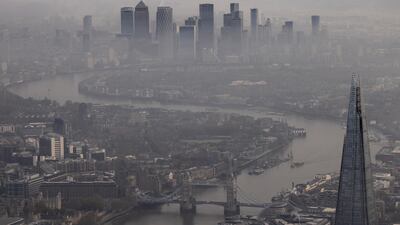
Fog shrouds the Shard and the view towards the Canary Wharf business district. Unlike the first lockdown earlier this year, schools in England will remain open. Getty Images -
People walk through Hyde Park. Getty Images -
Sports pitches near the Barbican. Getty Images -
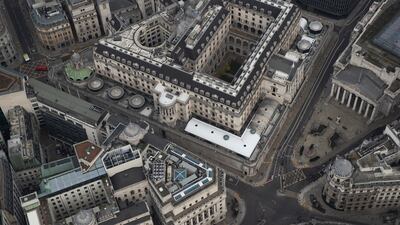
The Bank of England in the City of London's Square Mile. Getty Images -
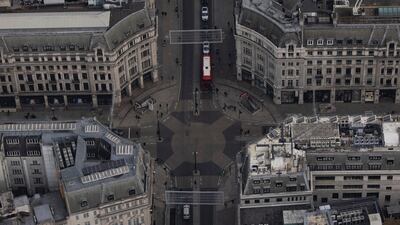
A quiet Oxford Circus. Getty Images -
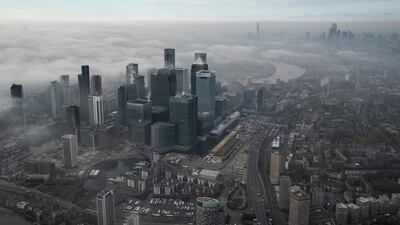
Fog shrouds the Canary Wharf business district. Getty Images -

A quiet Piccadilly Circus. Getty Images -
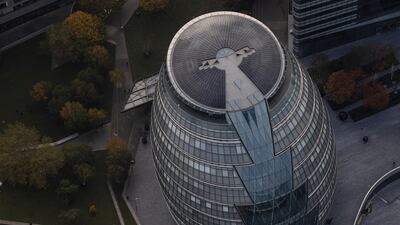
City Hall on the first day of the new national lockdown. Getty Images


A new study has also found that those who recover from coronavirus are more likely to experience psychological stress, which means governments must now also balance containing and constraining the virus with rehabilitation and support for those who have recovered.
This underlines once again that this a vast human crisis and one that extends far beyond how many new cases have been identified on any given day. The pandemic is not just about the right now, it is about tomorrow and the day after.
Nick March is an assistant editor-in-chief at The National

