

Earlier this month, Britain's Telegraph newspaper reported that women affiliated with ISIS had been smuggled out of a detention camp in north-east Syria.
One of the women who escaped, and who claimed to be from the UK, published a video on extremist channels and on a secure messaging platform, Telegram, calling on members of the self-proclaimed caliphate to raise more funds to help others escape the camp.
Others who had apparently fled from Al Hol, a detention facility housing hundreds of ISIS suspects who were trapped in the terrorist group's last redoubt as it faced defeat at the hands of Kurdish militiamen backed by the US-led coalition, included European ISIS supporters who had languished there for months.
The Kurdish militias said late last week that they had foiled another attempt at escape by ISIS-affiliated women who were attempting to smuggle themselves and their children.
These incidents show the short-sightedness of the American and Western strategy in Syria and the cowardice with which some members of the anti-ISIS coalition conducted themselves in the aftermath, refusing to reckon with the crisis of ISIS foreign fighters from their nations.
Their abandonment, instead of repatriating them and putting them on trial, may end up fuelling a resurgence of the group and its fortunes and constitutes a grave moral failure.
In early 2019, the US-led coalition defeated the terrorist group after a gruelling multi-year campaign to reverse its territorial gains. The group lost in its two largest cities, Mosul and Raqqa, in battles led on the ground by Iraqi troops and Syrian Kurdish militias respectively. After the group’s defeat, the US administration of Donald Trump scaled back the American presence, exposing their Kurdish allies.
Hundreds of ISIS prisoners from foreign countries were left to languish in Iraqi courts and jails. In Syria, many of these foreign fighters and their families were left in Kurdish-controlled prisons, filled to capacity, from where some of the more prominent ones pleaded with their home countries to repatriate them. The Kurds did not have the resources to guard these detention centres in the long term.
-
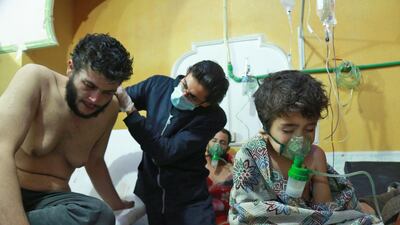
Syrian children and adults receive treatment for a suspected chemical attack at a makeshift clinic on the outskirts of Damascus on February 25, 2018. AFP -

Members of a family from Douma, Syria, who fled after enduring weeks of bombing, near-starvation from a crippling siege and a suspected chemical attack, stand outside a tent in a northern Syrian displaced-persons camp on May 29, 2018. AP -
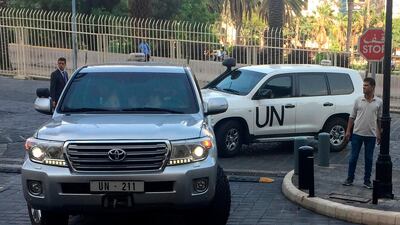
UN vehicles carrying the team of the Organization for the Prohibition of Chemical Weapons arrive at a hotel in Damascus on April 14, 2018, hours after the U.S., France and Britian launched an attack on Syrian facilities for suspected chemical attack against civilians. AP -

Syrian authorities distributed bread, vegetables and pasta to residents of Douma, the site of a chemical weapons attack suspected to have been carried out by the Syrian government, on April 16, 2018. AP Photo -
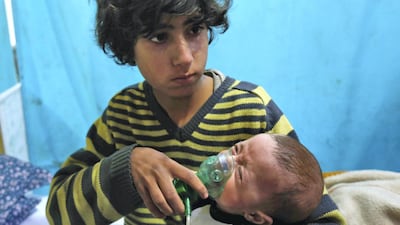
A Syrian boy holds an oxygen mask over the face of an infant at a make-shift hospital following a reported gas attack on the town of Douma, Syria, on January 22, 2018. AFP -
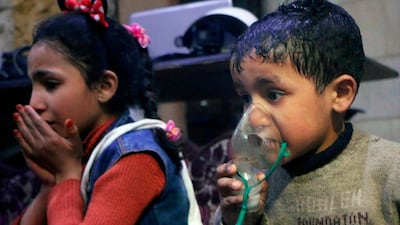
A child receiving oxygen through a respirator following an alleged poison gas attack in Douma on April 8, 2018. Syrian Civil Defense White Helmets via AP -
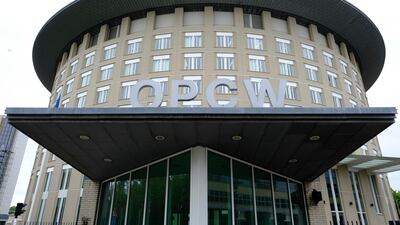
The headquarters of the Organisation for the Prohibition of Chemical Weapons, The Hague, Netherlands. AP -
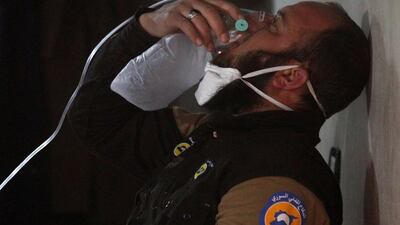
A civil defence member breathes through an oxygen mask after the sarin gas attack on Khan Sheikhoun on April 4, 2017. Reuters


US involvement in the conflict began in earnest because of the televised executions of American journalists and citizens, and ISIS’s surge into Iraq in 2014. The campaign’s original sin was its narrow focus on counter-terrorism, taking great pains to avoid dealing with the actual crisis that created the conditions for the terrorist group’s emergence in the first place – the sheer brutality that Syria’s President Bashar Al Assad meted out to protesters who rose up to demand reforms and dignity, a decision that led to civil war.
Six years after ISIS's deceased leader Abu Bakr Al Baghdadi declared a so-called caliphate spanning a great expanse of territory across Syria and Iraq, the group has been militarily crushed. This is a far cry from its peak, when it was attracting legions of foreign recruits from all corners of the world, aspiring to live out an anarchist, blood-soaked fantasy.
A number of European powers and intelligence services turned a blind eye to these recruits as they travelled through their countries’ capitals to Turkey in order to join the 'caliphate', hoping they would die abroad or become someone else’s problem.
Many of them did either die or become someone else’s problem. While some fighters have been repatriated, many remain in limbo, being left to deal with by America and allies of the West.
-
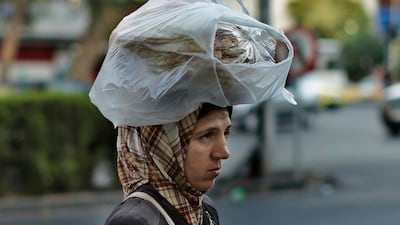
After nearly a decade of war, Syria is crumbling under the weight of a repressive, corrupt ruling elite, a pandemic and an economic downslide compounded by western sanctions. AP Photo -

Souvenir plates bearing the Syrian flag and the portraits of Russian President Vladimir Putin and Syrian President Bashar Al Assad are pictured in a shop in a bazaar in old Damascus. AFP -
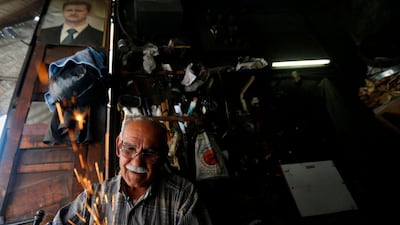
A man works in his metal workshop beneath a portrait of Syrian President Bashar Al Assad in old Damascus earlier this week. AFP -
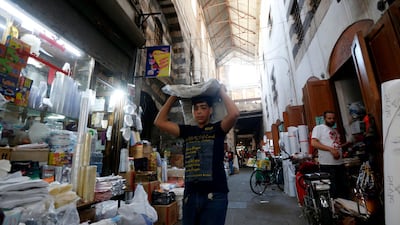
A Syrian boy carrying textiles is pictured in the bazaar in old Damascus. AFP -
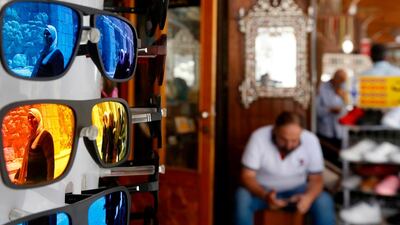
A Syrian shopkeeper waits for customers in a bazaar in old Damascus. AFP -
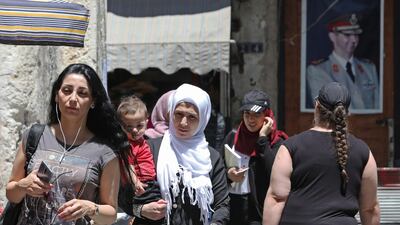
Syrians walk in old Damascus in front of a portrait of Syrian President Bashar Al Assad. AFP -
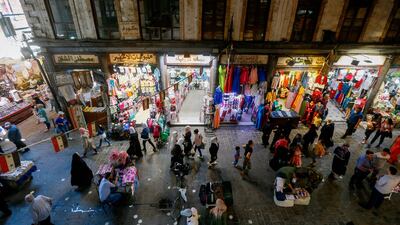
Syrian shoppers walk in the bazaar in old Damascus. AFP -
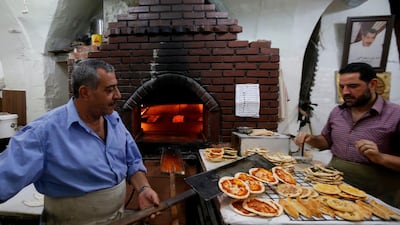
Syrian men work in their bakery in old Damascus. AFP -
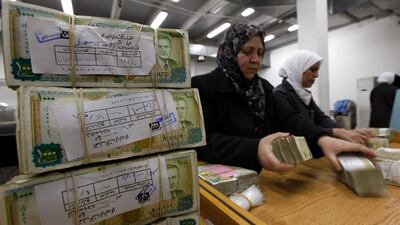
Employees stack packets of the Syrian pound in the Central Syrian Bank in Damascus. AP Photo -

An anti-Assad regime demonstration under way in Suweida, southern Syria, in early June 2020. AFP


Those who have returned to their home countries are only going to be tried for violating their countries' terrorism statutes. Or they will be put through rehabilitation programmes, rather than be made to answer for the crimes they perpetrated during the group’s rampage in the Middle East – little comfort for their Arab, Kurdish, Yazidi, Muslim and Christian victims.
As the coalition went on with its mission, Mr Al Assad and his allies were free to subdue and brutalise his citizens, crushing the rebellion and presiding over a shattered Syria.
No reforms are forthcoming to redress the pain that the Syrian people endured for having the temerity to ask to live in dignity, free from the violations of his security services.
With more than half a million people dead and half of Syria's population dispossessed and displaced, with no justice in sight, it is delusional to think that peace will now prevail, and that the conditions that allowed ISIS to emerge in the first place are now resolved. The group is battered now, but others will replace it if the wrongs persist.
It is high time that the West takes responsibility for its role in the carnage that its own citizens inflicted on the long-suffering populations of Syria and Iraq, by taking back and putting on trial every last foreign fighter who is alive – if not out of moral rectitude then to avoid them becoming foot soldiers of the next caliphate. It is the least they can do.
Kareem Shaheen is a veteran Middle East correspondent in Canada and columnist for The National

