

The anniversary of the Syrian revolution is always a cause for reflection and debate, and this year those debates are laced with even more meaning and profundity. That is because it is exactly a decade since ordinary civilians marched in the streets of the Syrian city of Daraa to demand dignity and freedom, and sparked a popular uprising that turned into a civil war and grinding proxy conflict.
The cost of this simple demand has been astronomical. Half a million dead, half the country displaced, tens of thousands languishing in government jails, death by every conceivable weapon in the modern arsenal (as well as some ancient ones, like starvation sieges), nations and militants from every corner of the world carrying out atrocities on this ancient land. Even now, with a presumptive military victory, a nation has been left destroyed and impoverished, and it will cost hundreds of billions of dollars and perhaps a generation or more to stanch the wounds of this cataclysm.
But with the regime of Bashar Al Assad entrenched in power thanks to its military victories and the support of its allies, it is only natural for Syrians to be asking themselves, did the revolution fail?
-
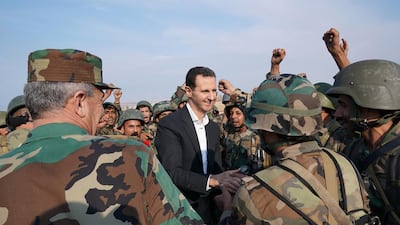
Syrian soldiers are seen cheering President Bashar Al Assad during his visit to Al Habit on the southern edges of the Idlib province, in a picture released on October 22, 2019. AFP / Syrian Presidency Facebook page -
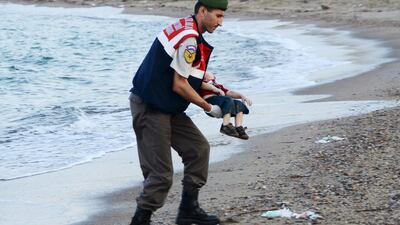
A Turkish gendarme retrieves the body of Syrian refugee Alan Kurdi from a beach in Turkey. Reuters -
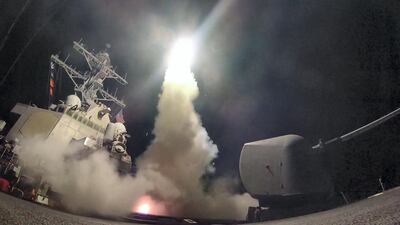
The guided-missile destroyer 'USS Porter' conducts strikes while in the Mediterranean Sea, on April 7, 2017. AFP / US NAVY -
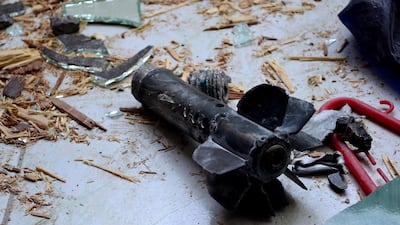
A handout picture released by the official Syrian Arab News Agency on October 31, 2013, shows the remains of a mortar after an alleged mortar attack by rebel fighters on the Damascus mixed Christian-Druze suburb of Jaramana. AFP / Sana -
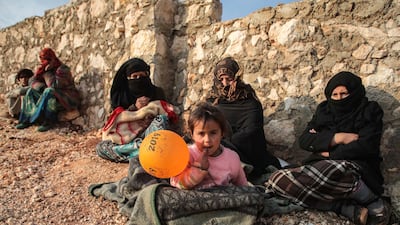
Displaced Syrians from the south of Idlib province sit out in the open in the countryside west of the town of Dana in the north-west Syrian region on December 23, 2019. AFP -
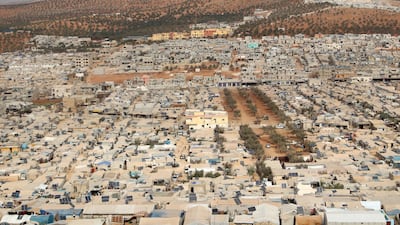
This picture shows a general view of an overcrowded displacement camp near the village of Qah near the Turkish border in Syria's north-west Idlib province, on October 28, 2020, during the coronavirus pandemic crisis. AFP -
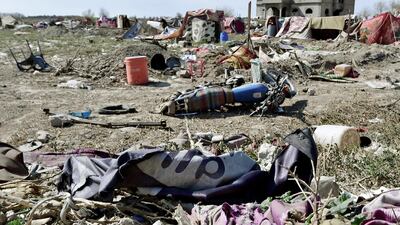
A picture taken on March 23, 2019, shows the last ISIS bastion in the eastern Syrian village of Baghuz after the defeat of the group. The Kurdish-led forces pronounced the end of ISIS regime on March 23, 2019, after flushing out the diehard militants from their very last bastion in eastern Syria. AFP -
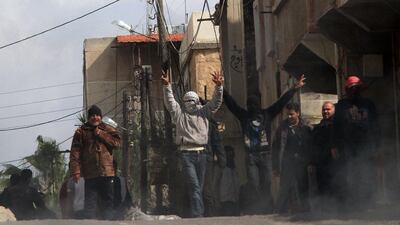
Anti-government activists gesture as they gather on the streets of Daraa, 100 kilometres south of the capital Damascus, on March 23, 2011. AFP -
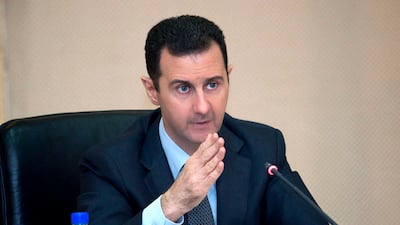
Syria's President Bashar Al Assad heading a cabinet meeting in the presidential palace in Damascus in 2013. Sana / AFP -
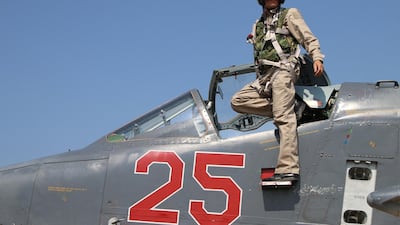
A picture taken on October 3, 2015 shows a Russian army pilot leaving the cockpit of a Russian Sukhoi Su-25 ground attack aircraft at the Hmeimim airbase in the Syrian province of Latakia. AFP -
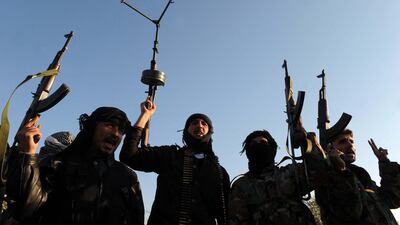
Members of the Free Syrian Army raise their weapons during a patrol in Idlib in north-west Syria on February 18, 2012. AFP -
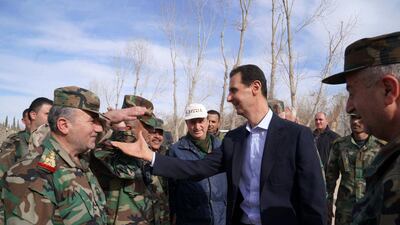
Syrian President Bashar Al Assad is shown shaking hands with government troops in Eastern Ghouta, in the leader's first trip to the former rebel enclave outside Damascus in years, in this handout picture released by the Syrian Presidency on March 18, 2018. Syrian Presidency Facebook page / AFP -
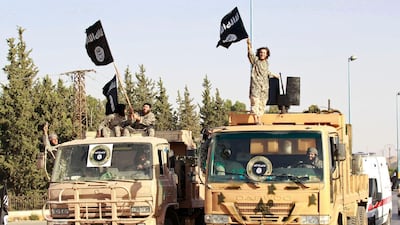
Militant fighters wave flags as they take part in a military parade along the streets of Syria's northern Raqqa province, on June 30, 2014. Reuters


This is the essence of many of the conversations and debates that have been swirling around on social media, particularly on Clubhouse, a new platform consisting of audio chat rooms, where Syrians have been very active in recent weeks.
Something about the conversational nature of the platform, combined with the ease with which members of the diaspora, immigrants and refugees, can interact even if they don't know each other, as well as the fact that the coronavirus pandemic has starved everyone of human contact, allows for a much more engaging, personal and civil exchange of stories.
Over the past few days, I’ve listened with rapt attention to people sharing intimate stories of their participation in the early protests, the music they wrote in response to the events unfolding at home, how they lost loved ones and how they’ve sought to reconcile that with the conflict’s progression, how they survived and grappled with torture in regime prisons and how the struggle for a more just and equitable country animated their every day, injecting them with energy to carry on living through their worst nightmares. People wrestled with survivor’s guilt, with what they could have done differently and what they might do next. One told a story of how he broke down in prison when a cat snuck in through the bars of their jail and watched them from a beam up above, because he realised the detainees were in a kind of zoo in reverse, with the animals looking in. It puts the popular slogan, “I am a Syrian, not an animal” in stark relief.
By practical, objective measures, the Syrian revolution failed. Its goal of transforming the brutal police state of the Assads into a democratic system has not been achieved. Few of the activists who helped organise the early protest movements remain – they mostly have either been killed, tortured and disappeared, fled the country or been overtaken by the armed militias than now rule parts of it.
And yet, this narrow definition of defeat and victory does not account for the experiences of these individuals sharing their stories and traumas. It does not account for the breaking of a barrier of fear that endured for decades. It does not account for the thriving civil society, even in exile, that took hold, laying down the roots for grassroots activism. It does not account for the sacrifices made, for the baring of the brutality of this regime for the whole world to see, for all the Syrians in the diaspora who have and will make new lives for themselves, enriching nations in all four corners of the world. It does not account for all the stories, the breadth and beauty of the tapestry that is the Syrian experience.
Gaming out different scenarios for how the revolution might have unfolded at crucial inflection points is an exercise in futility. Things might have turned out differently, yes. It is hard to conceive of a greater unadulterated disaster if someone had done something, anything, to end it.
-
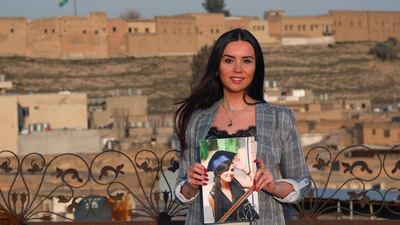
Dima Al Kaed, 29, a Syrian journalist and refugee living in Erbil, capital of the Iraqi Kurdistan region, holds a photo of herself dating from 2013 when she graduated from Damascus University. During the war, Kaed lost her parents and her home. She arrived in Erbil at the end of 2020 without hope of returning. "I dreamt of changing the world, but instead the war changed mine," she said. AFP -
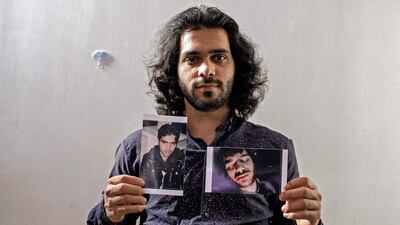
Anas Ali, 27, a Syrian citizen journalist and refugee poses for a picture in Paris, while holding photos of himself - including one when was injured in 2013 while covering fighting between rebel and government sides. Originally from the town of Kafr Batna in the long-time rebel enclave of Eastern Ghouta on the doorstep of Damascus, Ali has lived in France as a refugee since 2019. AFP -

Samer Al Sawwan, 33, is seen in the Syrian capital Damascus on March 1, 2021, while holding a photo of himself from ten years prior standing on a beach in the coastal resort of Latakia. Sawwan's vehicle was pierced by a bullet while driving in 2011, sending the vehicle into a barrel roll that paralysed him forever. "I passed out with two legs, and woke up in a wheelchair," he says. "My ambitions and dreams have changed." AFP -

Abu Anas, 26, reportedly blinded in the aftermath of government shelling, poses for a picture in the rebel-held northwestern city of Idlib, while holding a photograph of himself when he was 16. Originally from the town of Saqba in the countryside of the capital Damascus, Abu Anas was displaced from his home in 2018. He was then injured during artillery shelling in 2020 and lost his eyesight. He was recently married and has no children. He is currently a 4th year student in law and Sharia at Idlib University. AFP -

Mohammed Al Hamid, 28, a former Syrian rebel fighter and amputee, poses for a picture while leaning on crutches in the rebel-held northern city of Idlib on March 6, 2021. Hamid says he was wounded in a 2016 battle against government forces in Latakia, where his brother also died in his arms. That same year, he learnt three other siblings had died in prison after they were detained two years earlier. In 2017, war planes bombarded his home in Idlib, killing his daughter. AFP -
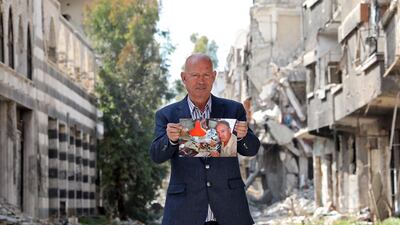
Mohammed Al Rakouia, 70, a Palestinian refugee painter from the ravaged Yarmouk camp for Palestinian refugees south of Syria's capital Damascus, stands along an alley by damaged buildings in the camp on March 7, 2021, while holding a picture of himself working in his former studio dating from ten years prior. Al Rakouia laments his losses saying "nothing can make up" for them. "My studio has been destroyed, my paintings have been stolen, and my colours have been scattered all over the place." AFP -
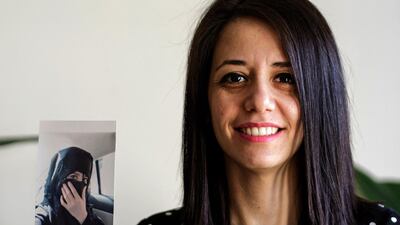
Rukaia Alabadi, 32, a journalist and refugee, poses for a picture in France's capital Paris on February 27, 2021, while holding a photo of herself in 2011 when she was an economics student at Al Furat University in he hometown of Deir Ezzor in eastern Syria. Alabadi arrived in Paris as a refugee in 2018 after escaping threats over her reporting about the reality of life in the eastern province of Deir Ezzor under ISIS. Before that, she had been detained for months over working as a media activist. AFP -

Bakri Al Debs, 29, a Syrian medic and amputee, poses for a picture in the town of Ihsim in Syria's rebel-held northwestern Idlib province on March 6, 2021, while holding a picture of himself in a similar pose from ten years prior at Tishrin University in Latakia where he studied Sociology, before losing his leg in a government air strike in 2015. AFP -
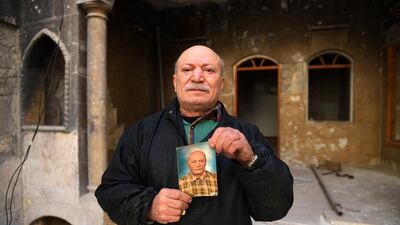
Ahmed Nashawi, also known as Abu Abdo, poses with a portrait of himself from ten prior ago outside his destroyed house in Syria's northern city of Aleppo on February 22, 2021. The man in his fifties, once one of the city's most popular fishmongers, said his home and shop on Sahat Al Hatab square were obliterated in clashes between rebels and pro-government fighters in 2015. AFP -

Fahad Al Routayban, 30, a Syrian refugee, poses for a picture the building where he works as a concierge, in Lebanon's northern port city of Tripoli on February 23, 2021, while holding a phone showing a photo of himself from 11 years prior as a Syrian army soldier. Routayban fled his hometown of Raqa to Lebanon in 2013. He finally settled in Tripoli where he got married to a relative, another Syrian refugee, fathering two sons. AFP


But as I listened in on those stories, it occurred to me that I was contemplating the wrong question. The failure in question was not one that belonged to Syrians. One can, of course, debate endlessly issues like the wisdom of non-violence versus armed resistance, or whether a foreign power should have intervened, or the sort of pressure that might have worked to alleviate some of the suffering, or how Mr Al Assad should have responded to the early protests, or how a militia here or there should have conducted a military campaign.
But this all detracts from the central issue: Syrians rose up to demand freedom from oppression, and were met with indescribable cruelty from their leader and his allies, and betrayal and apathy from the international community. The price we will all pay is a world that is less just, a world that is willing to normalise and put up with the fact that hospitals were bombed, chemical weapons were used, starvation was weaponised, civilians were killed indiscriminately and, in cases, discriminately, based on their ethnic or religious affiliations. All because a people demanded dignity.
The Syrian revolution failed for now, yes. But that’s on all of us.
Kareem Shaheen is a veteran Middle East correspondent in Canada and a columnist for The National

