

On Friday, Pope Francis will conduct his first foreign visit since the beginning of the coronavirus pandemic – to Iraq.
The pontiff's multi-city tour will take him to the capital, Baghdad, and Erbil, as well as to the holy city of Najaf, where he will meet Grand Ayatollah Ali Al Sistani. He will also travel to the town of Qaraqosh, whose Christians were forcibly exiled when ISIS militants invaded the Nineveh plains and declared their so-called caliphate in 2014. In keeping with his focus on interfaith dialogue, the Pope will travel to Nasiriya for an interreligious meeting at the Plain of Ur, believed to be the birthplace of the prophet Abraham. It is his first foray to the Middle East since signing the Declaration of Fraternity in Abu Dhabi with Grand Imam of Al Azhar Mosque in Egypt, Dr Ahmed Al Tayeb, in 2019.
The visit is laced with both great symbolism and great danger. The entire Vatican delegation travelling with the Pope has been vaccinated against the coronavirus, which is raging throughout Iraq at the moment and, two weeks ago, forced another national lockdown (over 700,000 cases of the virus have been recorded over the past year). From a security standpoint, while Iraq is much safer than it was when ISIS was rampaging throughout the country, it has continued to endure confrontations between various Iran-backed militias and the US, in addition to occasional terrorist bombings. The events and masses that the Pope will hold will be an enormous challenge to secure.
-
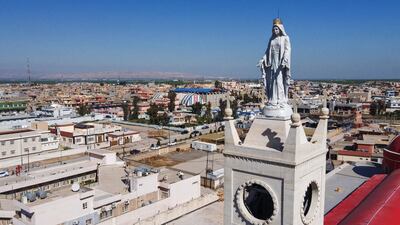
The statue of the Virgin Mary at the Syriac Catholic Church of the Immaculate Conception, or Al-Tahira Al-Kubra church, in the predominantly Christian town of Qaraqosh in Iraq. AFP -
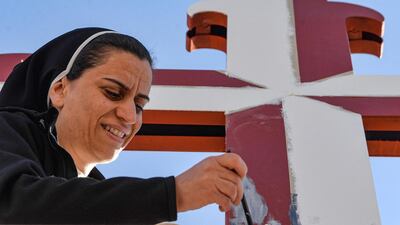
A nun adds a coat of paint to the crucifix at the Immaculate Mary Convent in Qaraqosh, in preparation for the visit of Pope Francis in March. AFP -

Policemen stand guard as maintenance work is carried out at the Church of the Immaculate Conception in Qaraqosh before the Pope's visit. EPA -

A fighter from the Nineveh Plain Protection Units, an Assyrian Christian militia, stands guard outside the Church of the Immaculate Conception in Qaraqosh. AFP -
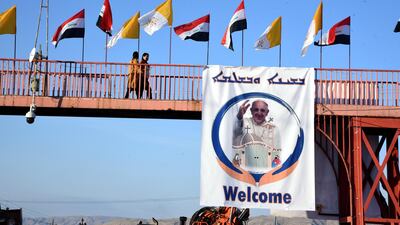
Iraqi and Vatican flags and a picture of Pope Francis in Qaraqosh, about 30 kilometres east of Mosul in northern Iraq. EPA -

A sign welcoming Pope Francis hangs outside the Syriac Catholic Church of St Thomas in Qaraqosh. AFP -
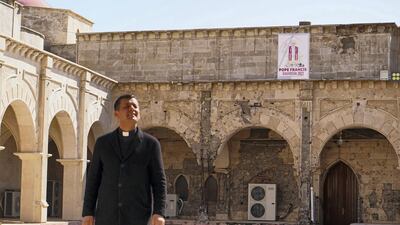
Father Ammar Yako, head of the Church of the Immaculate Conception, walks past a poster of Pope Francis days before his historic visit to Iraq. Getty -
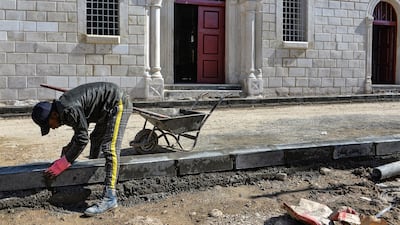
Workers prepare a path at the Church of the Immaculate Conception in Qaraqosh, Iraq. AFP -
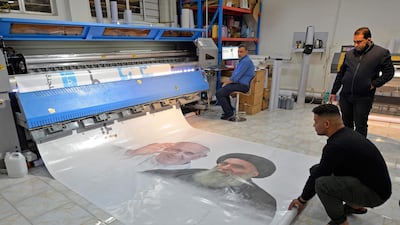
Iraqi men print a banner of Pope Francis and Shiite cleric Grand Ayatollah Ali Sistani at a factory in Najaf, before the first papal visit to Iraq. AFP -
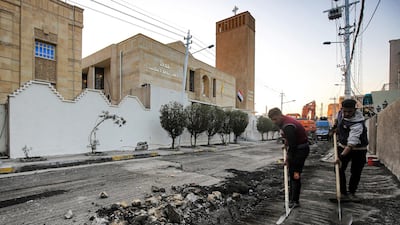
Municipal workers pave the road outside the Chaldean Catholic Church of St Joseph in preparation for the Pope's visit to Baghdad. AFP -
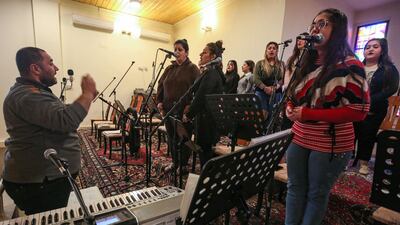
Members of a Christian choir rehearse at the Chaldean Catholic Church of St Joseph before the visit of Pope Francis. AFP -
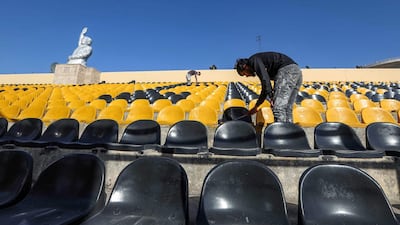
Workers prepare Franso Hariri Stadium in Erbil for the arrival of Pope Francis. AFP -
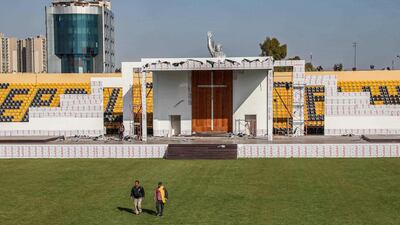
A stage has been set up at Franso Hariri Stadium in preparation for the papal visit to Iraq. AFP -
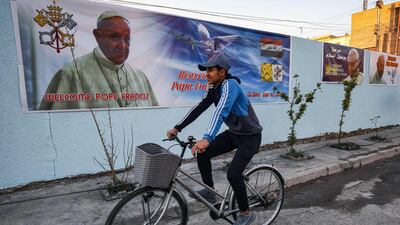
A poster of Pope Francis on the wall of the Chaldean Catholic Church of St Joseph in Baghdad. AFP -
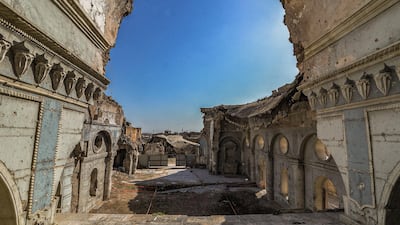
Al Tahera Syriac Catholic Church in the northern Iraqi city of Mosul, which was severely damaged by ISIS in 2017. Pope Francis is expected to pray there during his March visit. AFP -
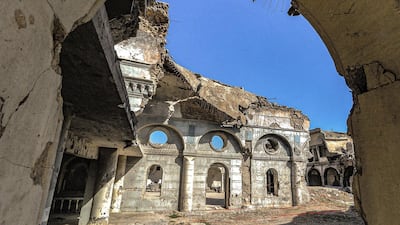
Al Tahera Syriac Catholic Church in Mosul was damaged by ISIS as the extremists were forced out of the city. AFP -
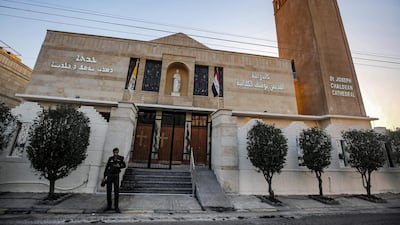
The Chaldean Catholic Church of St Joseph in Iraq's capital Baghdad. The Pope will visit the city in March. AFP -
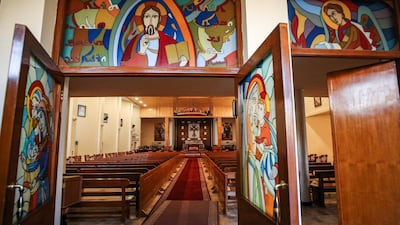
Inside the Chaldean Catholic Church of St Joseph in Baghdad. AFP -
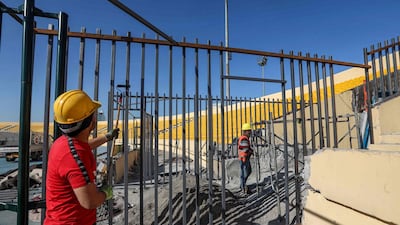
Workers at Franso Hariri Stadium in Erbil, the capital of Iraq's northern autonomous Kurdish region. The Pope will hold a Mass at the stadium in March. AFP -
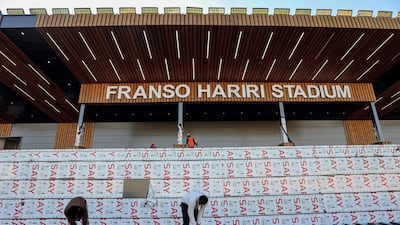
Workers finalise preparations for the Pope's visit to Franso Hariri Stadium in Erbil. AFP -
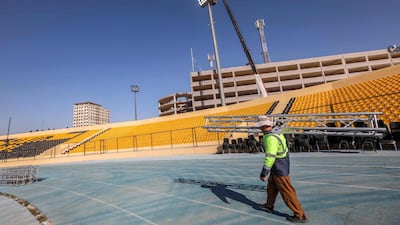
Pope Francis will hold a Mass at Franso Hariri Stadium in Erbil, the capital of Iraq's northern autonomous Kurdish region. AFP


The visit is also crucial to building on the Abu Dhabi declaration, after a year of pandemic, but is also an important signal of support for Christians of the East, many of whom fled in the course of ISIS's reign of terror in Iraq and Syria, forced to abandon ancestral homelands, their houses of worship defaced or destroyed. I interviewed Iraqi Chaldeans in 2014 in Beirut, where a few thousand had sought refuge, and few I met wanted to stay in the Middle East, traumatised by the betrayal of some of their neighbours, who had found common cause with the militants. They hoped Lebanon would be a stopover to safer shores in Europe or North America.
I am particularly struck, however, by one element of the Pope’s itinerary, and that is his planned visit to Hosh Al Bieaa (Church Square) in Mosul, to recite a “prayer of suffrage” for victims of ISIS. Mosul was the crown jewel of the so-called caliphate, and its most populous city. The city was fully liberated after a gruelling, months-long battle in July 2017, but not before ISIS committed numerous atrocities against its citizens and numerous civilians were killed in the crossfire.
In addition to the Christians who were exiled from or killed in Iraq, ISIS claimed victims of multiple faiths and denominations. They slaughtered Shia civilians and army cadets, enslaved, killed and raped Yazidis and tortured and murdered Sunnis. Yet for all the pain and suffering visited upon the Middle East’s peoples, one key element is often lacking in the cultural conversation: a simple acknowledgment of this suffering.
Justice has, of course, been elusive for a long time in the region. Nobody has or will pay for their part in some of the bloodiest conflicts of the last century or even the last decade in Syria, Libya, Yemen and elsewhere, notwithstanding individual cases of prosecutions in some European countries.
-

Christian volunteers hold Iraqi and Vatican flags as they decorate streets ahead of the planned visit of Pope Francis, in Qaraqosh, Iraq. Reuters -
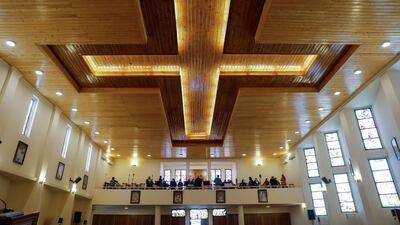
Choir members practise at St Joseph Chaldean Cathedral, where Pope Francis will hold a mass, in Baghdad. Reuters -
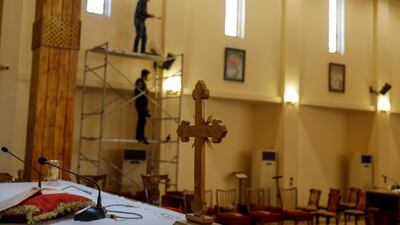
Workers at St Joseph Chaldean Cathedral. The visit from March 5 to 8 will be the first trip abroad by Pope Francis since the outbreak of the coronavirus pandemic. Reuters -
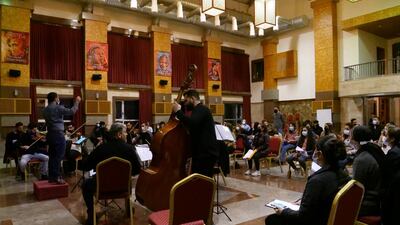
People practise hymns that will be played during the Mass to be held by the pontiff in Erbil, Iraq. Reuters -
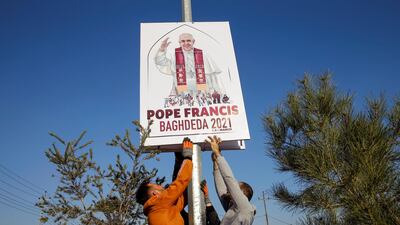
The visit will also be the first time Iraq welcomes the sovereign of the Vatican City. Reuters -
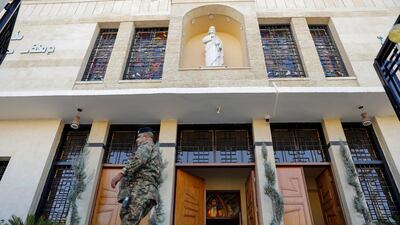
A soldier passes the entrance of St Joseph Chaldean Cathedral, where Pope Francis will hold Mass. Reuters -
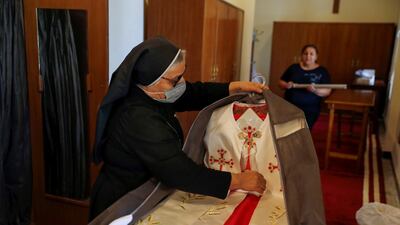
From about 1.5 million Christians prior to the US-led invasion, only an estimated 250,000 remain in the country today.. Reuters


But in the absence of that kind of accountability and transitional justice, what source of succour is there for victims and their families who seek closure and a simple affirmation of their pain? When was the last time a government or individual in the region acknowledged and apologised for their role in perpetrating a crime against their fellow citizens? Where are the memorials for the victims of torture in Syria’s dungeons, the refugees who drowned in the Mediterranean, those who died in Lebanon’s suicide bombings in the mid-2010s, the people killed or displaced by the various militias in Iraq, the Palestinians who died in various Israeli offensives over the past 20 years or the Libyans and Yemenis killed by their countrymen or agents of foreign powers? The government in Lebanon is so adamantly opposed to any kind of reckoning with the recent cataclysmic explosion in Beirut that, rather than find some way to help those who were rendered homeless by it or lost their loved ones in it, it is instead actively undermining the judicial investigation.
If you think even this simple acknowledgment is of no value, consider how much pain Turkey’s refusal to recognise the mass killing of Armenians continues to elicit a century later. Arguments over the label of “genocide” ignore the suffering of victims and their families, while failing to address the crimes of the past.
I don’t know why we are so reluctant to acknowledge the wounds of our fellow human beings. Perhaps it flies in the face of the heroic resistance narrative or our masculine and patriarchal self-image, or because acknowledging past mistakes may create a moral or legal imperative to act to lift the distress of citizens (what a novel concept) when the region’s powerful can instead hide behind exhortations to steadfastness and resilience. Or perhaps they fear that acknowledging the sins of the past will reopen wounds they thought cauterised.
But if the past traumatic decade has taught us anything, it should have taught us that these wounds are rarely closed. When papered over, they simply continue to fester below the surface, ready to rage again.
Kareem Shaheen is a veteran Middle East correspondent in Canada and a columnist for The National

