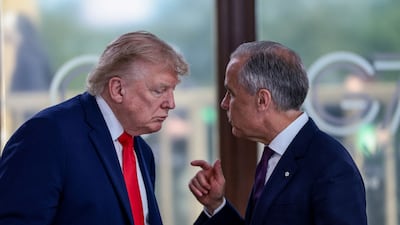

During his visit to Europe this week, Canadian Prime Minister Mark Carney has the opportunity to put flesh on the bones of a call he made in January for an “alliance of middle powers”. The idea of countries beyond the big two – China and the US – setting their own global agenda and making a worldwide impact is attractive on many levels.
The announcement last week that a dozen states, including Britain, Canada and France, were backing a push to ban trade with Israel settlements in the West Bank was a good example of what could be done. The move was both co-ordinated at a wide level and deep enough to adopt a clear set of common measures that is likely to hurt the intended target.
This collective move not only helped overcome the inertia that has been evident at the EU level, particularly when it comes to Israeli violations, but it was also a proactive response to the domestic pressures that each of the leaders involved have been facing.
When Mr Carney called for a middle powers’ alliance to respond to what he saw as the fracturing of the US-led world order, the natural scepticism of worried globalists dominated the reaction. But on his plane across the Atlantic, Mr Carney will no doubt review the areas in which his agenda might next roll out.
-
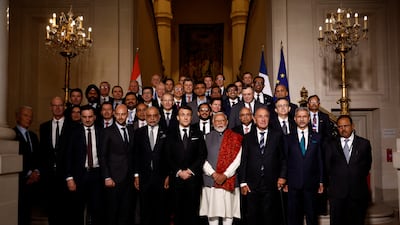
French President Emmanuel Macron and Indian Prime Minister Narendra Modi with participants at the Franco-Indian Economic Forum after the AI Action Summit in Paris. Reuters -

Mr Macron delivers a speech during a plenary session of the AI Action Summit. EPA -
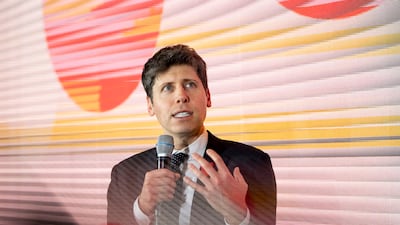
Sam Altman, chief executive officer of OpenAI Inc, speaks during the summit. Bloomberg -

US Vice President JD Vance and Mr Modi attend a bilateral meeting. AFP -

Mr Macron takes photographs with participants at the AI Action Summit. AFP -
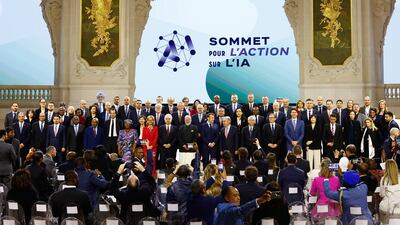
Mr Macron, Mr Modi and UN Secretary General Antonio Guterres pose for a family photo at the end of a plenary session. EPA -
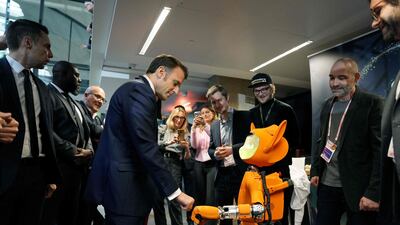
Mr Macron interacts with a robot. AFP -

Mr Macron at the presentation of AI-related artwork 'Agoria', by digital artist and Johan Lescure, on the opening day of the Artificial Intelligence Action Summit at the Grand Palais. AFP -

Mr Macron delivers a speech to help close the first day of the summit, attended by world leaders and tech executives. AFP -

Canadian Prime Minister Justin Trudeau addresses delegates at the summit, where world leaders are to discuss the applications of AI. AP -

Mr Macron, centre, with European leaders at the Elysee Palace in Paris. EPA -
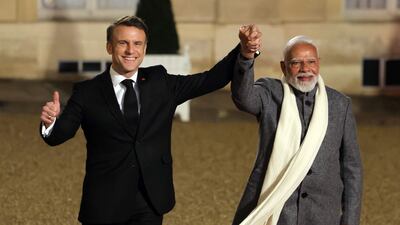
The summit is being co-hosted by Mr Macron and Indian Prime Minister Narendra Modi. AFP -

Delegates gather for the AI summit in Paris. Bloomberg -

Sundar Pichai, chief executive of Google, is among the tech leaders who have travelled to Paris. Bloomberg -
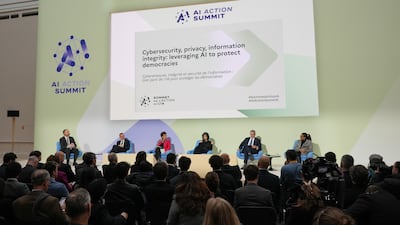
Meredith Whittaker, centre, president of the non-profit Signal Foundation, speaks at a panel event in Paris. Bloomberg -

France is set to announce it will invest €109 billion ($112.59 billion) in AI projects in the country. Bloomberg -
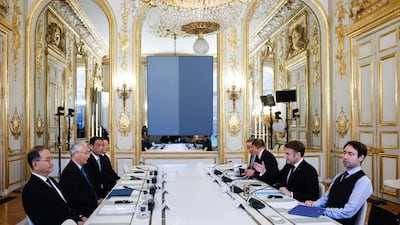
China's Vice Premier Zhang Guoqing and Mr Macron hold talks at the Elysee Palace. AFP -
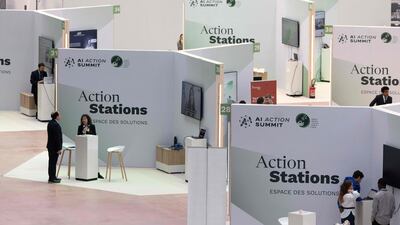
Booths set up at the Grand Palais, the venue for the AI summit. AFP


One role for middle powers that is much discussed in London is how to carve out a position of strength on AI at a time when so much of the industry and its frontier development are concentrated outside their borders. The idea that a range of countries that have strengths on an individual level can pool together and not only protect those advantages but also project them together is exerting a powerful pull for lawmakers and top officials.
At the weekend, US President Donald Trump brought a big clumping fist down on worries in the AI industry – backed by Anthropic’s Dario Amodei, OpenAI’s Sam Altman and SpaceXAI’s Elon Musk – that there should be controls on the race to artificial superintelligence. As Mr Carney observed in launching his alliance idea in January, the “old order is not coming back” and Mr Trump’s actions affirm that he sees little need to act in concert with America’s allies.
The UK remains the third-largest player in AI behind the US and China. The French AI firm Mistral has just completed a mega fundraising round of $3.5 billion for its data centre ambitions. That announcement included a commitment to buy its compute from some of the biggest European digital services players. The Netherlands-based ASML produces extreme ultraviolet lithography systems that are as vital to the AI tech boom as Nvidia’s chips. European firms are encouraged to add local sovereignty considerations to how they adapt to AI.
By concentrating on homegrown advantages to seek leverage, countries are scrambling to ensure that their data remains an asset that can maintain full access to the top models. Anthropic, for the first time, did not grant the UK AI Safety Institute access to its latest offering earlier this summer.
The space for Mr Carney’s initiative is certainly growing.
Last week, one British Labour MP who has a background in technology discussed how acting together is becoming imperative for middle powers. Speaking at the think tank Institute for Government, Emily Darlington said the appeal of Mr Carney’s push is the promise of a trusted network that “creates peace, security and economic opportunity”.
She pointed out Canada’s mineral wealth makes it important not only in the development of technologies but also the international defence build-up that Nato governments have promised. One of the specific agenda items that Mr Carney is bringing to Europe is his proposal for a “Defence Bank” that would help fund the industry growth needed to power that expansion.
To Ms Darlington, the current AI debate shows that such ideas are important because dependence on US or Chinese giants is a vulnerability. “We can be clear that we are not going to get access to things they don’t want us to have access to,” she said. “Now that completely links into our defence. Defence is about the only budget that’s going to go up consistently over the next 10 years.
“Where are the questions of sovereignty and AI within our defence strategy and our defence spending?” That is the kind of topic where Mr Carney hopes to provide answers on new partnership and ways of doing business.
There could even be a new type of international structure behind it. Mr Carney is talking about an association agreement for Canada with the EU. That could be an idea that helps the post-Brexit UK overcome its competitiveness problems stemming from having quit the EU’s single market.
The trade announcement pertaining to Palestine and Israel earlier this month demonstrated that strong steps can be taken when countries come together. But there many more difficult choices ahead before sympathetic countries can claim they have forged a true working alliance.

