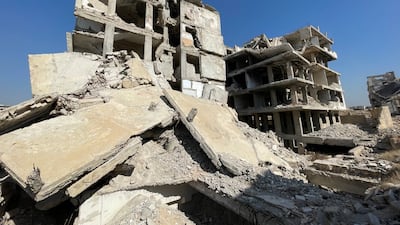
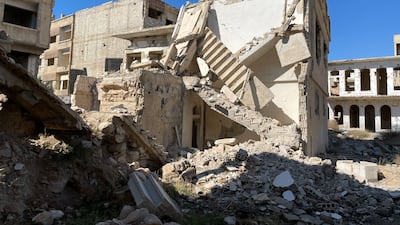
After more than a decade of vicious conflict, Syria stands on the precipice of a new chapter – one that holds both risk and promise. This month’s horrific killing of predominantly Alawites along the coastal areas – the UN reported that entire families were slaughtered – is a heartbreaking reminder of how fragile their peace is.
But it also shows us how much work needs to be done for real transformation, and how much support Syria needs.
First, the historical context of this shattered country must be understood. As a nation and as a people, Syria has experienced a collective trauma over four decades. From the very beginning, the Assad dynasty, with its Alawite roots, relied on sectarian divisions to consolidate power.
The regime was one of the world’s most savage. It exploited religious and ethnic tension to its own advantage, but also to keep a terrifying grip on the nation. Daily life for those who were not part of the privileged Assad world were punished. Crimes were carried out with impunity: enforced disappearance, torture and rape.
Syria's civil war, which began in 2011 as a hopeful demand for reform, spiralled into a cataclysmic, multi-faceted conflict with deep regional and international entanglements. Half a million people were killed, 14 million displaced. Countries do not recover from those kinds of losses easily.
Returning from my first trip to Syria since 2015 this month, I found a country crippled by economic sanctions, soaring prices and a vast collective memory of pain.
Survivors of the Assad government’s chemical attacks gave me testimonies of losing everything – entire families, but also having to lie and spin a narrative fed by the government that the rebels, not the government’s bombs, had killed their loved ones. Men emerging from prison described to me years of torture, isolation and fear. Most I spoke to were sent to hell for decades of their lives simply for belonging to the wrong prayer group at a mosque.
The Assad government’s attempts to stamp out opponents in the 1980s and 1990s ended up in the mass slaughter of civilians in Hama. The number of dead are still not known. Hotels were built over mass graves to cover up the crimes. That kind of legacy of a regime is not easily erased.
Every post-conflict story is different. Countries emerge from the shrouds of war in unique ways. But there are parallels between what is happening in Syria and the fall of Saddam Hussein in Iraq in 2003. In the aftermath of Saddam’s fall, there was an uprising that unfortunately led to kidnappings, car bombs and sectarian violence. Syria must avoid this kind of deadly spiral at all costs. It must do this now.
Syrian civil society can play a huge role in the transformation: throughout the war, they worked tirelessly to document not just the Assad government’s crimes but also to bolster the population
With the formation of a new government in Damascus, the country now faces an unprecedented opportunity for real change. But the government is shaky and needs help. It needs unwavering support from the international community, the same kind of support that the world offers to Ukraine. One hopes that during Monday’s Syria donor conference in Brussels there was also a discussion on how to protect all civilians, including refugees and internally displaced people seeking to return home.
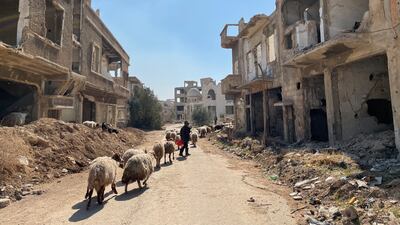
Returning is difficult as cities and towns were brutalised. In parts of Homs, I saw entire streets wiped out – the buildings hit by bombs and tanks. In 2019, a study by the UN showed that more than 13,000 buildings in Homs had been destroyed.
In suburbs such as Daraya, Douma and Tadamon, government forces punished the people for rising up against them by flattening their buildings. Throughout many parts of the country, the infrastructure is shattered. Most places have no electricity or clean water; many can’t afford solar panels or generators. The price of food is insanely expensive. Traders buy petrol from Lebanon, then sell it by the side of the road in plastic bottles at jacked-up prices.
There is the important question of finding the dead. There are 150,000 people still missing. Most likely, they are in the many mass graves around Syria where bodies were casually dumped. People disappeared and were either lost in the former government’s cruel prison system or executed and buried.
Touring the suburbs of Damascus, such as Daraya, where uprisings were put down with extreme force, people are still hunting for their loved ones’ remains. Organisations such as the White Helmets – who worked throughout the war digging people out of the rubble after bombings – and the International Committee for Missing Persons – who originated in Sarajevo after the Srebrenica genocide – are already in Damascus, attempting to locate the missing.
But how to prevent sectarianism? The recent surge in Alawite killings is a heartbreaking reflection of this ongoing violence. These murders are not only an indictment of the extremism that has infected both the opposition and certain factions within the former regime, but they are also emblematic of the terrible human cost of sectarianism.
As the Alawite community struggles with its ongoing victimisation, one cannot ignore the fact that its suffering is a direct consequence of the very dynamics that the international community allowed to fester.
When then US president Barack Obama turned away from Syria in 2013 with his false “red line”, the war spiralled with new actors: ISIS and other radical groups such as Jabhat Al Nusra. We cannot make the same mistake now.
In light of these realities, it is crucial to recognise the significance of the new government. They are trying. International advisers are being brought in – many from the wide Syrian diaspora. The national dialogue, which took place in Damascus last month, was a start to draft a new constitution. Hundreds of delegates arrived in Damascus to discuss inclusion, rule of law, economic policy and human rights. But given the mixed response to the new constitution that was unveiled last week, it is still a work in progress.
Syrian civil society can play a huge role in the transformation: throughout the war, they worked tirelessly to document not just the Assad government’s crimes but also to bolster the population. These actors should be used.
For the first time in over a decade, Syria has an opportunity to emerge from the shadow of authoritarian rule, to rebuild itself from the ruins of war, and to chart a path towards stability and peace. The new government was born out of the wreckage of the civil war. But they are not just a continuation of the old regime – they are an attempt to forge a more inclusive future.
The challenges Syria faces are monumental. It is a wounded place. But this is its moment. And the international community – particularly Europe – must step in to fill the void that the US has left. They need to show a firm commitment to peace, justice and reconciliation.
What can the rest of the world do to help Syria’s transformation? Justice is imperative. We must look to the past to try to help Syria heal by ensuring that there is accountability for the vast number of the previous government’s crimes. Domestic courts can be bolstered but international justice mechanisms and tribunals can also be used.
Sanctions must be lifted, as well as diplomatic isolation. The international community can also offer economic aid, political support and assistance in security reform.
If the international community remains hesitant or – worse, punitive – it risks condemning Syria to a prolonged cycle of instability. It cannot allow the fractured political landscape to widen. It cannot risk the possibility that the people of Syria – Alawites and others – will endure the cost of international inaction.
Janine di Giovanni is also the author of two books about Syria - The Morning They Came for Us and The Vanishing

MATCH INFO
Uefa Champions League, semi-final result:
Liverpool 4-0 Barcelona
Liverpool win 4-3 on aggregate
Champions Legaue final: June 1, Madrid
((Disclaimer))
The Liechtensteinische Landesbank AG (“Bank”) assumes no liability or guarantee for the accuracy, balance, or completeness of the information in this publication. The content may change at any time due to given circumstances, and the Liechtensteinische Landesbank AG is under no obligation to update information once it has been published. This publication is intended for information purposes only and does not constitute an offer, a recommendation or an invitation by, or on behalf of, Liechtensteinische Landesbank (DIFC Branch), Liechtensteinische Landesbank AG, or any of its group affiliates to make any investments or obtain services. This publication has not been reviewed, disapproved or approved by the United Arab Emirates (“UAE”) Central Bank, Dubai Financial Services Authority (“DFSA”) or any other relevant licensing authorities in the UAE. It may not be relied upon by or distributed to retail clients. Liechtensteinische Landesbank (DIFC Branch) is regulated by the DFSA and this advertorial is intended for Professional Clients (as defined by the DFSA) who have sufficient financial experience and understanding of financial markets, products or transactions and any associated risks.
The President's Cake
Director: Hasan Hadi
Starring: Baneen Ahmad Nayyef, Waheed Thabet Khreibat, Sajad Mohamad Qasem
Rating: 4/5
Company profile
Name: Thndr
Started: October 2020
Founders: Ahmad Hammouda and Seif Amr
Based: Cairo, Egypt
Sector: FinTech
Initial investment: pre-seed of $800,000
Funding stage: series A; $20 million
Investors: Tiger Global, Beco Capital, Prosus Ventures, Y Combinator, Global Ventures, Abdul Latif Jameel, Endure Capital, 4DX Ventures, Plus VC, Rabacap and MSA Capital
Global state-owned investor ranking by size
|
1.
|
United States
|
|
2.
|
China
|
|
3.
|
UAE
|
|
4.
|
Japan
|
|
5
|
Norway
|
|
6.
|
Canada
|
|
7.
|
Singapore
|
|
8.
|
Australia
|
|
9.
|
Saudi Arabia
|
|
10.
|
South Korea
|
Zayed Sustainability Prize
T20 WORLD CUP QUALIFIERS
Qualifier A, Muscat
(All matches to be streamed live on icc.tv)
Fixtures
Friday, February 18: 10am Oman v Nepal, Canada v Philippines; 2pm Ireland v UAE, Germany v Bahrain
Saturday, February 19: 10am Oman v Canada, Nepal v Philippines; 2pm UAE v Germany, Ireland v Bahrain
Monday, February 21: 10am Ireland v Germany, UAE v Bahrain; 2pm Nepal v Canada, Oman v Philippines
Tuesday, February 22: 2pm Semi-finals
Thursday, February 24: 2pm Final
UAE squad:Ahmed Raza(captain), Muhammad Waseem, Chirag Suri, Vriitya Aravind, Rohan Mustafa, Kashif Daud, Zahoor Khan, Alishan Sharafu, Raja Akifullah, Karthik Meiyappan, Junaid Siddique, Basil Hameed, Zafar Farid, Mohammed Boota, Mohammed Usman, Rahul Bhatia
How much sugar is in chocolate Easter eggs?
- The 169g Crunchie egg has 15.9g of sugar per 25g serving, working out at around 107g of sugar per egg
- The 190g Maltesers Teasers egg contains 58g of sugar per 100g for the egg and 19.6g of sugar in each of the two Teasers bars that come with it
- The 188g Smarties egg has 113g of sugar per egg and 22.8g in the tube of Smarties it contains
- The Milky Bar white chocolate Egg Hunt Pack contains eight eggs at 7.7g of sugar per egg
- The Cadbury Creme Egg contains 26g of sugar per 40g egg
THE%C2%A0SPECS
%3Cp%3E%3Cstrong%3EEngine%3A%20%3C%2Fstrong%3E2.4-litre%20four-cylinder%0D%3Cbr%3E%3Cstrong%3EPower%3A%3C%2Fstrong%3E%20210hp%0D%3Cbr%3E%3Cstrong%3ETorque%3A%3C%2Fstrong%3E%20320Nm%0D%3Cbr%3E%3Cstrong%3EPrice%3A%3C%2Fstrong%3E%20Starting%20from%20Dh89%2C900%0D%3Cbr%3E%3Cstrong%3EOn%20sale%3A%20%3C%2Fstrong%3ENow%0D%3Cbr%3E%3C%2Fp%3E%0A
The%20specs%3A%202024%20Mercedes%20E200
%3Cp%3E%3Cstrong%3EEngine%3A%20%3C%2Fstrong%3E2.0-litre%20four-cyl%20turbo%20%2B%20mild%20hybrid%0D%3Cbr%3E%3Cstrong%3EPower%3A%20%3C%2Fstrong%3E204hp%20at%205%2C800rpm%20%2B23hp%20hybrid%20boost%0D%3Cbr%3E%3Cstrong%3ETorque%3A%20%3C%2Fstrong%3E320Nm%20at%201%2C800rpm%20%2B205Nm%20hybrid%20boost%0D%3Cbr%3E%3Cstrong%3ETransmission%3A%20%3C%2Fstrong%3E9-speed%20auto%0D%3Cbr%3E%3Cstrong%3EFuel%20consumption%3A%20%3C%2Fstrong%3E7.3L%2F100km%0D%3Cbr%3E%3Cstrong%3EOn%20sale%3A%20%3C%2Fstrong%3ENovember%2FDecember%0D%3Cbr%3E%3Cstrong%3EPrice%3A%20%3C%2Fstrong%3EFrom%20Dh205%2C000%20(estimate)%3C%2Fp%3E%0A
Mohammed bin Zayed Majlis
SPECS
%3Cp%3E%3Cstrong%3EEngine%3A%20%3C%2Fstrong%3E2.4-litre%204-cylinder%20turbo%20hybrid%0D%3Cbr%3E%3Cstrong%3EPower%3A%3C%2Fstrong%3E%20366hp%0D%3Cbr%3E%3Cstrong%3ETorque%3A%20%3C%2Fstrong%3E550Nm%0D%3Cbr%3E%3Cstrong%3ETransmission%3A%20%3C%2Fstrong%3ESix-speed%20auto%0D%3Cbr%3E%3Cstrong%3EPrice%3A%3C%2Fstrong%3E%20From%20Dh360%2C000%0D%3Cbr%3E%3Cstrong%3EAvailable%3A%20%3C%2Fstrong%3ENow%0D%3C%2Fp%3E%0A
The specs
Engine: 4.0-litre V8 twin-turbocharged and three electric motors
Power: Combined output 920hp
Torque: 730Nm at 4,000-7,000rpm
Transmission: 8-speed dual-clutch automatic
Fuel consumption: 11.2L/100km
On sale: Now, deliveries expected later in 2025
Price: expected to start at Dh1,432,000
'Top Gun: Maverick'
Rating: 4/5
Directed by: Joseph Kosinski
Starring: Tom Cruise, Val Kilmer, Jennifer Connelly, Jon Hamm, Miles Teller, Glen Powell, Ed Harris
Tree of Hell
Starring: Raed Zeno, Hadi Awada, Dr Mohammad Abdalla
Director: Raed Zeno
Rating: 4/5
Ten tax points to be aware of in 2026
1. Domestic VAT refund amendments: request your refund within five years
If a business does not apply for the refund on time, they lose their credit.
2. E-invoicing in the UAE
Businesses should continue preparing for the implementation of e-invoicing in the UAE, with 2026 a preparation and transition period ahead of phased mandatory adoption.
3. More tax audits
Tax authorities are increasingly using data already available across multiple filings to identify audit risks.
4. More beneficial VAT and excise tax penalty regime
Tax disputes are expected to become more frequent and more structured, with clearer administrative objection and appeal processes. The UAE has adopted a new penalty regime for VAT and excise disputes, which now mirrors the penalty regime for corporate tax.
5. Greater emphasis on statutory audit
There is a greater need for the accuracy of financial statements. The International Financial Reporting Standards standards need to be strictly adhered to and, as a result, the quality of the audits will need to increase.
6. Further transfer pricing enforcement
Transfer pricing enforcement, which refers to the practice of establishing prices for internal transactions between related entities, is expected to broaden in scope. The UAE will shortly open the possibility to negotiate advance pricing agreements, or essentially rulings for transfer pricing purposes.
7. Limited time periods for audits
Recent amendments also introduce a default five-year limitation period for tax audits and assessments, subject to specific statutory exceptions. While the standard audit and assessment period is five years, this may be extended to up to 15 years in cases involving fraud or tax evasion.
8. Pillar 2 implementation
Many multinational groups will begin to feel the practical effect of the Domestic Minimum Top-Up Tax (DMTT), the UAE's implementation of the OECD’s global minimum tax under Pillar 2. While the rules apply for financial years starting on or after January 1, 2025, it is 2026 that marks the transition to an operational phase.
9. Reduced compliance obligations for imported goods and services
Businesses that apply the reverse-charge mechanism for VAT purposes in the UAE may benefit from reduced compliance obligations.
10. Substance and CbC reporting focus
Tax authorities are expected to continue strengthening the enforcement of economic substance and Country-by-Country (CbC) reporting frameworks. In the UAE, these regimes are increasingly being used as risk-assessment tools, providing tax authorities with a comprehensive view of multinational groups’ global footprints and enabling them to assess whether profits are aligned with real economic activity.
Contributed by Thomas Vanhee and Hend Rashwan, Aurifer
Hotel Silence
Auður Ava Ólafsdóttir
Pushkin Press
Fixtures and results:
Wed, Aug 29:
- Malaysia bt Hong Kong by 3 wickets
- Oman bt Nepal by 7 wickets
- UAE bt Singapore by 215 runs
Thu, Aug 30: UAE v Nepal; Hong Kong v Singapore; Malaysia v Oman
Sat, Sep 1: UAE v Hong Kong; Oman v Singapore; Malaysia v Nepal
Sun, Sep 2: Hong Kong v Oman; Malaysia v UAE; Nepal v Singapore
Tue, Sep 4: Malaysia v Singapore; UAE v Oman; Nepal v Hong Kong
Thu, Sep 6: Final
Election pledges on migration
CDU: "Now is the time to control the German borders and enforce strict border rejections"
SPD: "Border closures and blanket rejections at internal borders contradict the spirit of a common area of freedom"
The Melbourne Mercer Global Pension Index
Mazen Abukhater, principal and actuary at global consultancy Mercer, Middle East, says the company’s Melbourne Mercer Global Pension Index - which benchmarks 34 pension schemes across the globe to assess their adequacy, sustainability and integrity - included Saudi Arabia for the first time this year to offer a glimpse into the region.
The index highlighted fundamental issues for all 34 countries, such as a rapid ageing population and a low growth / low interest environment putting pressure on expected returns. It also highlighted the increasing popularity around the world of defined contribution schemes.
“Average life expectancy has been increasing by about three years every 10 years. Someone born in 1947 is expected to live until 85 whereas someone born in 2007 is expected to live to 103,” Mr Abukhater told the Mena Pensions Conference.
“Are our systems equipped to handle these kind of life expectancies in the future? If so many people retire at 60, they are going to be in retirement for 43 years – so we need to adapt our retirement age to our changing life expectancy.”
Saudi Arabia came in the middle of Mercer’s ranking with a score of 58.9. The report said the country's index could be raised by improving the minimum level of support for the poorest aged individuals and increasing the labour force participation rate at older ages as life expectancies rise.
Mr Abukhater said the challenges of an ageing population, increased life expectancy and some individuals relying solely on their government for financial support in their retirement years will put the system under strain.
“To relieve that pressure, governments need to consider whether it is time to switch to a defined contribution scheme so that individuals can supplement their own future with the help of government support,” he said.
Specs
Engine: 3.0L twin-turbo V6
Gearbox: 10-speed automatic
Power: 405hp at 5,500rpm
Torque: 562Nm at 3,000rpm
Fuel economy, combined: 11.2L/100km
Price: From Dh292,845 (Reserve); from Dh320,145 (Presidential)
On sale: Now
Day 5, Abu Dhabi Test: At a glance
Moment of the day When Dilruwan Perera dismissed Yasir Shah to end Pakistan’s limp resistance, the Sri Lankans charged around the field with the fevered delirium of a side not used to winning. Trouble was, they had not. The delivery was deemed a no ball. Sri Lanka had a nervy wait, but it was merely a stay of execution for the beleaguered hosts.
Stat of the day – 5 Pakistan have lost all 10 wickets on the fifth day of a Test five times since the start of 2016. It is an alarming departure for a side who had apparently erased regular collapses from their resume. “The only thing I can say, it’s not a mitigating excuse at all, but that’s a young batting line up, obviously trying to find their way,” said Mickey Arthur, Pakistan’s coach.
The verdict Test matches in the UAE are known for speeding up on the last two days, but this was extreme. The first two innings of this Test took 11 sessions to complete. The remaining two were done in less than four. The nature of Pakistan’s capitulation at the end showed just how difficult the transition is going to be in the post Misbah-ul-Haq era.
More from Aya Iskandarani
The Prison Letters of Nelson Mandela
Edited by Sahm Venter
Published by Liveright
MATCH INFO
West Ham United 2 (Antonio 73', Ogbonna 90 5')
Tottenham Hotspur 3 (Son 36', Moura 42', Kane 49')
SRI LANKA SQUAD
Upul Tharanga (captain), Dinesh Chandimal, Niroshan Dickwella
Lahiru Thirimanne, Kusal Mendis, Milinda Siriwardana
Chamara Kapugedara, Thisara Perera, Seekuge Prasanna
Nuwan Pradeep, Suranga Lakmal, Dushmantha Chameera
Vishwa Fernando, Akila Dananjaya, Jeffrey Vandersay
MATCH INFO
Real Madrid 2 (Benzema 13', Kroos 28')
Barcelona 1 (Mingueza 60')
Red card: Casemiro (Real Madrid)
More on Quran memorisation:
The years Ramadan fell in May
Key figures in the life of the fort
Sheikh Dhiyab bin Isa (ruled 1761-1793) Built Qasr Al Hosn as a watchtower to guard over the only freshwater well on Abu Dhabi island.
Sheikh Shakhbut bin Dhiyab (ruled 1793-1816) Expanded the tower into a small fort and transferred his ruling place of residence from Liwa Oasis to the fort on the island.
Sheikh Tahnoon bin Shakhbut (ruled 1818-1833) Expanded Qasr Al Hosn further as Abu Dhabi grew from a small village of palm huts to a town of more than 5,000 inhabitants.
Sheikh Khalifa bin Shakhbut (ruled 1833-1845) Repaired and fortified the fort.
Sheikh Saeed bin Tahnoon (ruled 1845-1855) Turned Qasr Al Hosn into a strong two-storied structure.
Sheikh Zayed bin Khalifa (ruled 1855-1909) Expanded Qasr Al Hosn further to reflect the emirate's increasing prominence.
Sheikh Shakhbut bin Sultan (ruled 1928-1966) Renovated and enlarged Qasr Al Hosn, adding a decorative arch and two new villas.
Sheikh Zayed bin Sultan (ruled 1966-2004) Moved the royal residence to Al Manhal palace and kept his diwan at Qasr Al Hosn.
Sources: Jayanti Maitra, www.adach.ae
Read more about the coronavirus
Killing of Qassem Suleimani