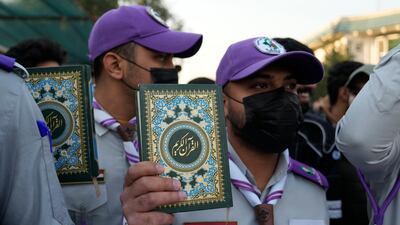
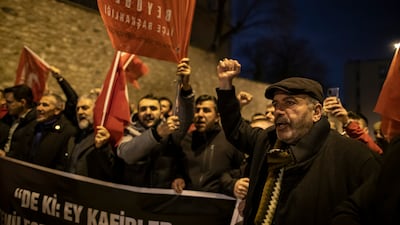
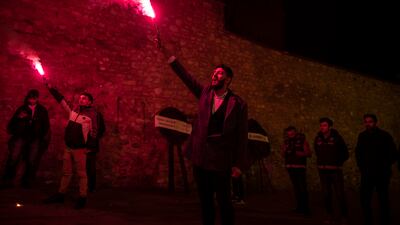
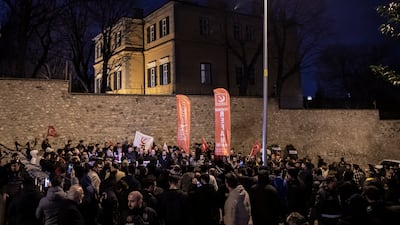
A protest in front of the Swedish embassy after Rasmus Paludan, leader of Danish far-right political party Hard Line, burned a copy of the Quran near the Turkish Embassy in Stockholm, in Kuala Lumpur, Malaysia, on January 27. Reuters
A protest in front of the Swedish embassy after Rasmus Paludan, leader of Danish far-right political party Hard Line, burned a copy of the Quran near the Turkish Embassy in Stockholm, in Kuala Lumpur,


It's not anti-western to say that burning holy books should be illegal


  • English
  • Arabic

February 01, 2023

Who would want to protect the far-right anti-Islam agitator Rasmus Paludan? Who would want to give him permission to burn copies of the Quran in public, first in front of the Turkish embassy in Stockholm, Sweden, on January 21, and then last Friday in Denmark, in front of a mosque as well as the Turkish embassy in Copenhagen?

Because, to be clear, he had to apply to commit this heinous act in Sweden, and the authorities knew what he was planning in Denmark – and in both countries he did so, astoundingly, under police protection.

The authorities’ allowance of these appalling acts that caused outrage across the Muslim world was not about freedom of speech. There was no discussion. No point was made, beyond aiming to be as needlessly provocative and hurtful as possible.

No. This was a manifestation of a phenomenon widespread across European countries that are on their way to becoming post-Christian – only nine percent of the population in Sweden go to church at least once a month, and 10 percent in Denmark. These are societies that have completely lost the concept of the sacrilegious.

There are just some things that you do not do, and should not be allowed to do

When religiosity in European native communities is so low – it is frequently quite a different matter among immigrant populations – a false equivalence is sometimes made. There is a school of commentators who say: if we wouldn't try to stop you from burning a Bible, why can’t others respect our cultural norms? But this is indifference masquerading as tolerance. When these commentators have little attachment to faith, it simply doesn’t matter to them if a holy book is burned in the way that it does to a religious person.

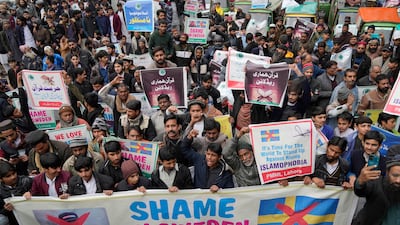
  • A protest in Lahore, Pakistan, against the burning of the Quran in Sweden by far-right politician Rasmus Paludan. AP
    A protest in Lahore, Pakistan, against the burning of the Quran in Sweden by far-right politician Rasmus Paludan. AP
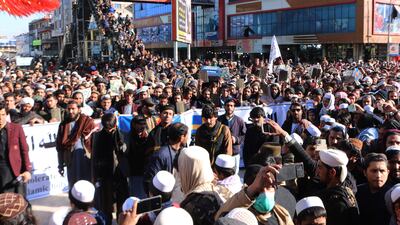
  • Protesters gather in Khost, Afghanistan. AFP
    Protesters gather in Khost, Afghanistan. AFP
  • More protests in Khost. AFP
    More protests in Khost. AFP
  • Iraqis demonstrate in Baghdad. Reuters
    Iraqis demonstrate in Baghdad. Reuters
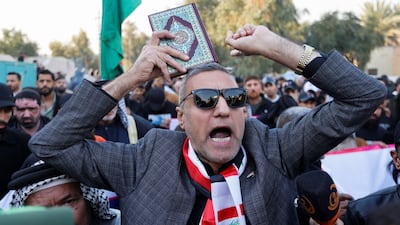
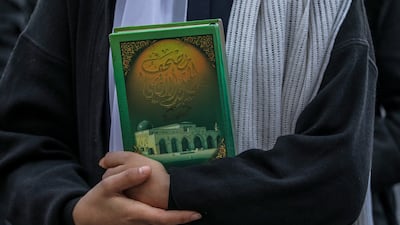
  • Protesters in Baghdad hold up the Quran. AP
    Protesters in Baghdad hold up the Quran. AP
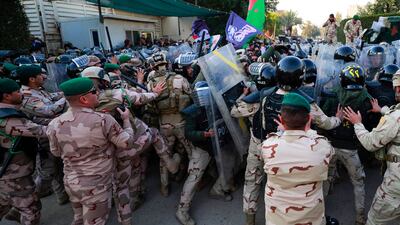
  • Security forces try to disperse Baghdad protesters. AP
    Security forces try to disperse Baghdad protesters. AP
  • The protest happened outside the Swedish embassy in Baghdad. AFP
    The protest happened outside the Swedish embassy in Baghdad. AFP
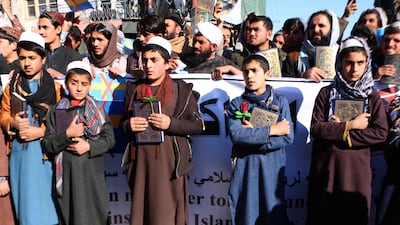
  • One of the pupils holds a copy of the Quran during the protest. EPA
    One of the pupils holds a copy of the Quran during the protest. EPA
  • More protests in Amman. AP
    More protests in Amman. AP
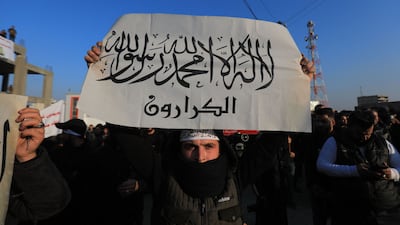
  • Syrians also took the streets in the city of Al Bab. AFP
    Syrians also took the streets in the city of Al Bab. AFP
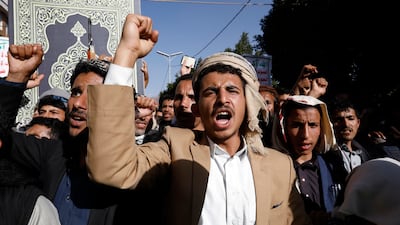
  • Yemenis protest in Sanaa. EPA
    Yemenis protest in Sanaa. EPA
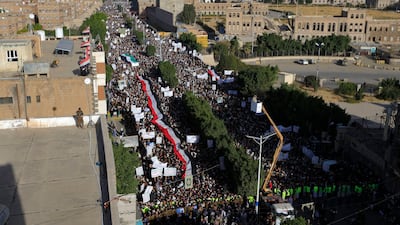
  • Thousands turned out to protest in Sanaa. AFP
    Thousands turned out to protest in Sanaa. AFP
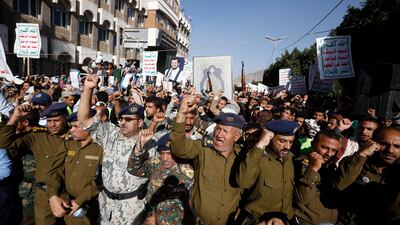
  • More protests in Sanaa. EPA
    More protests in Sanaa. EPA
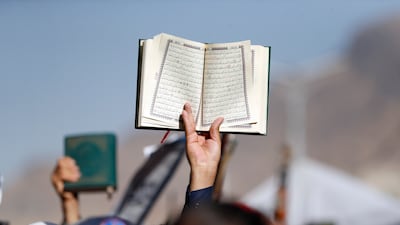
  • A Yemeni protester holds up a copy of the Quran. EPA
    A Yemeni protester holds up a copy of the Quran. EPA
  • Protesters outside the Consulate General of Sweden in Istanbul, Turkey. EPA
    Protesters outside the Consulate General of Sweden in Istanbul, Turkey. EPA
  • Sweden should not expect Turkey’s support for its Nato application, President Recep Tayyip Erdogan said on Monday. EPA
    Sweden should not expect Turkey’s support for its Nato application, President Recep Tayyip Erdogan said on Monday. EPA
  • Sweden and Finland applied to join Nato following Russia's invasion of Ukraine last year. EPA
    Sweden and Finland applied to join Nato following Russia's invasion of Ukraine last year. EPA

The Cambridge dictionary defines sacrilegious as “treating something holy or important without respect” and it is a concept that used to be both widely understood and deeply felt in Europe. I have an older relative, for instance, who was upset by the routines involving Catholic priests that the Irish comedian Dave Allen used to perform on his UK television show in the 1980s, even though they were mostly pretty harmless. I recall one in which a priest leans against a pew, which rolls over, causing all the other pews to fall like dominoes. To my relative, however, it was simple: you did not mock the church.

He has never, and will never, watch Monty Python’s Life of Brian, which was considered by many to be blasphemous when it came out in 1979 and was banned in several countries. He would understand the deep significance of burning any holy book. He would understand that the imperative to act with decorum in any church, mosque or synagogue is not just a question of being polite to others, which is what plenty of well-meaning people in Europe may think nowadays. My relative would know that the prohibition against disrespectful behaviour is so strong because they are Houses of God. Anyone even mildly religious would feel that the slightest violation of those spaces would risk baleful consequences. But to what extent do societies such as those in Sweden and Denmark genuinely understand or have any time for such concepts anymore?

The burning of holy books may not be illegal in those two countries, but maybe it should be. In Malaysia, prime minister Anwar Ibrahim recently stated that the burning of any religious book or text, including the Quran, the Bible or the Hindu holy texts, will not be tolerated – with very good reason in a country with such diverse faiths and ethnicities.

In 2010, a high court judge banned the burning of religious books in South Africa. Has anyone noticed any diminution of freedom of speech or expression in the country because of that ruling since? Of course not. The following year, a UK court jailed a man for burning the Quran in public, and the Racial and Religious Hatred Act 2006 made “stirring up hatred on racial or religious grounds” an offence. If there has been any restriction on free speech in Britain since, it has been due to the online pile-ons of the wokerati, not to the law just mentioned.

For the liberty granted to Rasmus Paludan is one without virtue or purpose, other than the fomentation of hatred and the causing of the utmost gratuitous offence. It is a worthless liberty, one that Sweden and Denmark should pass laws to curtail.

Such a law would do nothing to impede Europeans continuing with their own tradition of free speech. It is worth noting that Britain’s 2006 Act specifically declares that “nothing… shall be read or given effect in a way which prohibits or restricts discussion, criticism or expressions of antipathy, dislike, ridicule, insult or abuse of particular religions or the beliefs or practices of their adherents.” The scurrilous French magazine Charlie Hebdo, in other words, would have nothing to fear from similar legislation.

There are just some things that you do not do, and should not be allowed to do – which is something the new illiberal left in Europe know very well, even if they have forgotten the concept of sacrilege. And really, does anyone want to argue that the cornerstone of their freedoms is the ability to burn holy books? Surely the notion of liberty stands for something more noble than that.


Mercer, the investment consulting arm of US services company Marsh & McLennan, expects its wealth division to at least double its assets under management (AUM) in the Middle East as wealth in the region continues to grow despite economic headwinds, a company official said.

Mercer Wealth, which globally has $160 billion in AUM, plans to boost its AUM in the region to $2-$3bn in the next 2-3 years from the present $1bn, said Yasir AbuShaban, a Dubai-based principal with Mercer Wealth.

Within the next two to three years, we are looking at reaching $2 to $3 billion as a conservative estimate and we do see an opportunity to do so,” said Mr AbuShaban.

Mercer does not directly make investments, but allocates clients’ money they have discretion to, to professional asset managers. They also provide advice to clients.

“We have buying power. We can negotiate on their (client’s) behalf with asset managers to provide them lower fees than they otherwise would have to get on their own,” he added.

Mercer Wealth’s clients include sovereign wealth funds, family offices, and insurance companies among others.

From its office in Dubai, Mercer also looks after Africa, India and Turkey, where they also see opportunity for growth.

Wealth creation in Middle East and Africa (MEA) grew 8.5 per cent to $8.1 trillion last year from $7.5tn in 2015, higher than last year’s global average of 6 per cent and the second-highest growth in a region after Asia-Pacific which grew 9.9 per cent, according to consultancy Boston Consulting Group (BCG). In the region, where wealth grew just 1.9 per cent in 2015 compared with 2014, a pickup in oil prices has helped in wealth generation.

BCG is forecasting MEA wealth will rise to $12tn by 2021, growing at an annual average of 8 per cent.

Drivers of wealth generation in the region will be split evenly between new wealth creation and growth of performance of existing assets, according to BCG.

Another general trend in the region is clients’ looking for a comprehensive approach to investing, according to Mr AbuShaban.

“Institutional investors or some of the families are seeing a slowdown in the available capital they have to invest and in that sense they are looking at optimizing the way they manage their portfolios and making sure they are not investing haphazardly and different parts of their investment are working together,” said Mr AbuShaban.

Some clients also have a higher appetite for risk, given the low interest-rate environment that does not provide enough yield for some institutional investors. These clients are keen to invest in illiquid assets, such as private equity and infrastructure.

“What we have seen is a desire for higher returns in what has been a low-return environment specifically in various fixed income or bonds,” he said.

“In this environment, we have seen a de facto increase in the risk that clients are taking in things like illiquid investments, private equity investments, infrastructure and private debt, those kind of investments were higher illiquidity results in incrementally higher returns.”

The Abu Dhabi Investment Authority, one of the largest sovereign wealth funds, said in its 2016 report that has gradually increased its exposure in direct private equity and private credit transactions, mainly in Asian markets and especially in China and India. The authority’s private equity department focused on structured equities owing to “their defensive characteristics.”

MOUNTAINHEAD REVIEW

Starring: Ramy Youssef, Steve Carell, Jason Schwartzman

Director: Jesse Armstrong

Rating: 3.5/5

Stamp duty timeline

December 2014: Former UK finance minister George Osbourne reforms stamp duty, replacing the slab system with a blended rate scheme, with the top rate increasing to 12 per cent from 10 per cent:
Up to £125,000 - 0%; £125,000 to £250,000 – 2%; £250,000 to £925,000 – 5%; £925,000 to £1.5m: 10%; Over £1.5m – 12%

April 2016: New 3% surcharge applied to any buy-to-let properties or additional homes purchased.

July 2020: Rishi Sunak unveils SDLT holiday, with no tax to pay on the first £500,000, with buyers saving up to £15,000.

March 2021: Mr Sunak decides the fate of SDLT holiday at his March 3 budget, with expectations he will extend the perk unti June.

April 2021: 2% SDLT surcharge added to property transactions made by overseas buyers.

Polarised public

31% in UK say BBC is biased to left-wing views

19% in UK say BBC is biased to right-wing views

19% in UK say BBC is not biased at all

Source: YouGov

Western Region Asia Cup T20 Qualifier

Sun Feb 23 – Thu Feb 27, Al Amerat, Oman

The two finalists advance to the Asia qualifier in Malaysia in August


Group A

Bahrain, Maldives, Oman, Qatar


Group B

UAE, Iran, Kuwait, Saudi Arabia

Iftar programme at the Sheikh Mohammed Centre for Cultural Understanding

Established in 1998, the Sheikh Mohammed Centre for Cultural Understanding was created with a vision to teach residents about the traditions and customs of the UAE. Its motto is ‘open doors, open minds’. All year-round, visitors can sign up for a traditional Emirati breakfast, lunch or dinner meal, as well as a range of walking tours, including ones to sites such as the Jumeirah Mosque or Al Fahidi Historical Neighbourhood.

Every year during Ramadan, an iftar programme is rolled out. This allows guests to break their fast with the centre’s presenters, visit a nearby mosque and observe their guides while they pray. These events last for about two hours and are open to the public, or can be booked for a private event.

Until the end of Ramadan, the iftar events take place from 7pm until 9pm, from Saturday to Thursday. Advanced booking is required.

For more details, email openminds@cultures.ae or visit www.cultures.ae


THE%20SPECS
%3Cp%3EBattery%3A%2060kW%20lithium-ion%20phosphate%3Cbr%3EPower%3A%20Up%20to%20201bhp%3Cbr%3E0%20to%20100kph%3A%207.3%20seconds%3Cbr%3ERange%3A%20418km%3Cbr%3EPrice%3A%20From%20Dh149%2C900%3Cbr%3EAvailable%3A%20Now%3C%2Fp%3E%0A
Retail gloom

Online grocer Ocado revealed retail sales fell 5.7 per cen in its first quarter as customers switched back to pre-pandemic shopping patterns.

It was a tough comparison from a year earlier, when the UK was in lockdown, but on a two-year basis its retail division, a joint venture with Marks&Spencer, rose 31.7 per cent over the quarter.

The group added that a 15 per cent drop in customer basket size offset an 11.6. per cent rise in the number of customer transactions.

Company Profile

Name: Thndr
Started: 2019
Co-founders: Ahmad Hammouda and Seif Amr
Sector: FinTech
Headquarters: Egypt
UAE base: Hub71, Abu Dhabi
Current number of staff: More than 150
Funds raised: $22 million

Updated: February 01, 2023, 7:32 AM