


As a Syrian journalist, I followed very closely the decade-long civil war that devastated my country. It was a traumatic experience for everyone involved, right from when the uprising that predated the war began in 2011.
Like many of my compatriots, I wept for every life lost during those early weeks. But it got worse by the day, especially as we learnt about the atrocities conducted by both government forces and some opposition armed groups. What ISIS did in the following years is, of course, beyond anyone’s comprehension.
As a reporter with access to disturbing and heart-wrenching footage of these atrocities, I came to brace myself for the tragedy that had unfolded in Syria over the years. But at one point, I stopped watching such clips, even though the odd one did slip through the cracks. It was partly because I felt I wasn't emotionally strong enough to fathom what was going on, but also due to a helplessness I felt in the face of untold suffering for mothers, fathers and their children. How could any human being sustain such intense suffering, which included bereavement, destruction, bombing and evacuation, and still keep going?
These videos were so traumatic to watch that several media organisations even offered counselling sessions for their staff whose job it was to watch and verify them. One cannot even imagine, then, how people living in Syria felt as they witnessed a number of horrors first hand.
-
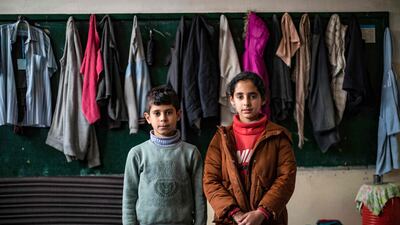
Twins Maha, right, and Mohammad Al Obaid, 11, were born in 2011, the year the Syrian war started. Displaced from Ras Al Ain in north-east Syria three years ago, they are pictured at a school on the outskirts of north-eastern city Hassakeh. All photos: AFP -
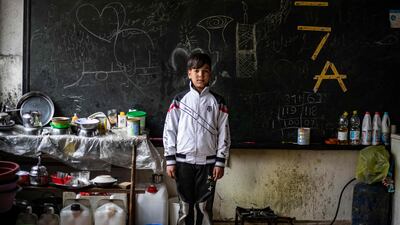
Nimr Alaywi, 11, who was also displaced from Ras Al Ain three years ago, at a school near Hassakeh. -
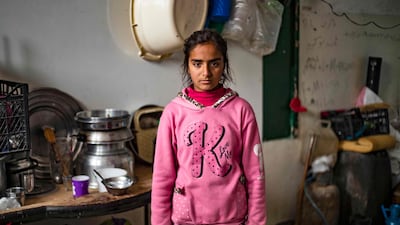
Amani Mahmud, 11, whose family fled Ras Al Ain, pictured at the school near Hassakeh. According to some estimates, 13.3 million Syrians have fled their homes since the civil war began on March 15, 2011. -
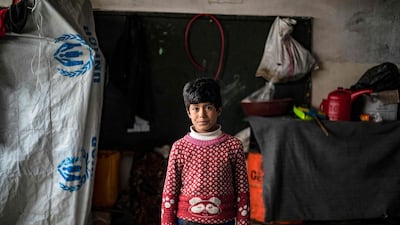
Mohammad Issa, 11, who was also displaced from Ras Al Ain, at the school near Hassakeh. -
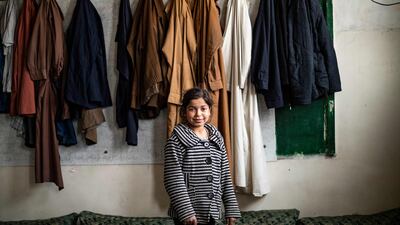
Assil Alaywi, 11, whose family also fled Ras Al Ain for Hassakeh three years ago. Ras Al Ain was the scene of heavy fighting for much of the conflict. -
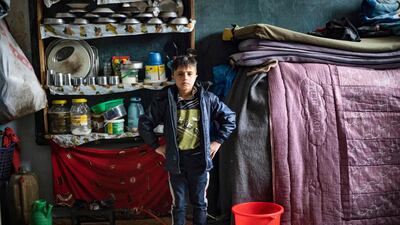
Yazan Khodr, 11, at the school near Hassakeh, after his family fled Ras Al Ain. Various groups, including Syrian government forces, extremists and Kurdish fighters, vied for control of Ras Al Ain. -
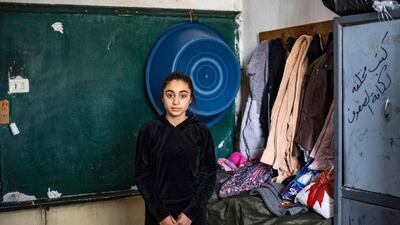
Liana Ali, 11, in the school building on the outskirts of Hassakeh. -

Manaf Mahmud, 11, pictured at the school near Hassakeh. Around four million people, at least half of them displaced, now live in the northern region. -
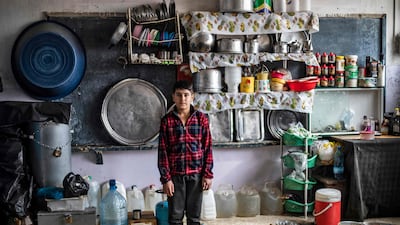
Ahmad Abderrazzak, 11, at the school near Hassakeh. -
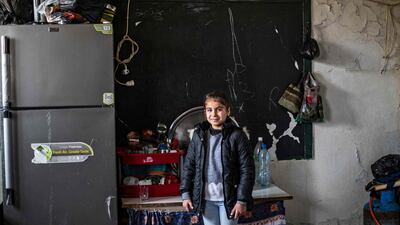
Fatima Barkal, 11, at the school near Hassakeh. -
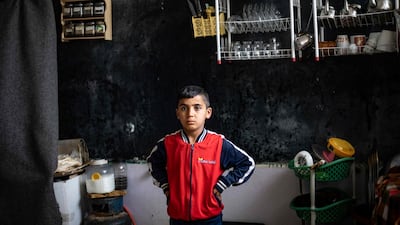
Ammar Al Khodr, 11, at the school near Hassakeh. -
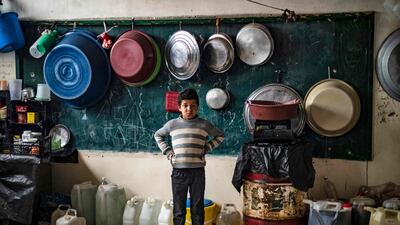
Majd Hassan, 11, at the school near Hassakeh, north-east Syria.


One such horror was recently documented in a report published by The Guardian newspaper. The report is based on a leaked video, date-stamped April 16, 2013, of an army officer shooting and killing more than 40 civilians and throwing them into a pit. It also tells the story of how two academics tracked down the alleged perpetrators, interviewed one of them, and smuggled the footage out of the country.
Once the report was out, I braced myself to watch the video of how one human could mock and kill several of his fellow human beings. In it, I saw the man in question ordering people who were blindfolded and with their hands tied behind their backs to walk a certain distance before he shot them. I stopped watching after the first man fell to his death, but later learnt that seven women and 12 children faced the same fate.
The Tadamon Massacre, as it was called (named after the neighbourhood in Damascus), has reminded Syrians of the many such instances over the past decade. The methods may have been different, whether they were barrel bombs, chemical weapons or simply guns, but the result was the same.
On the first day of Eid last week, Syrians watched another series of heart-wrenching videos, showing a sea of people eagerly awaiting the release of some 300 prisoners who were given amnesty by the authorities.
These included families desperately hoping to see their children emerge so that they could hold them tight after what seemed like an eternity.

Some families, who were told that their sons had died in prison a long time ago, were seen outside the prison gates hoping against hope that there might have been a mistake. Some mothers flashed pictures of their missing children asking those coming out of jail to recall if they had seen them inside. Some of those who were released had experienced memory loss and failed to recognise their families.
One man was heard shouting out for his six children, reported to have gone missing inside the prison. "I had six, just give me back one. Anyone of them," he said.
Today, many Syrians have little hope of any accountability or justice. They have little or no faith in any international body to help them reconcile with their suffering. They have been left alone to deal with their losses, traumas and injustices.
Meanwhile, the man shown in the video shooting the civilians in Tadamon is said to be living in the country. Will he, and several other officers like him, face the consequences of their actions? And even if they do, will ordinary Syrians ever recover from the tragedy that has visited them over the past 11 years?
Perhaps one day, but at least in the near future it seems unlikely.

