Lina Sinjab is a Middle East correspondent based in Beirut and a columnist for The National
May 06, 2022
As a Syrian journalist, I followed very closely the decade-long civil war that devastated my country. It was a traumatic experience for everyone involved, right from when the uprising that predated the war began in 2011.
Like many of my compatriots, I wept for every life lost during those early weeks. But it got worse by the day, especially as we learnt about the atrocities conducted by both government forces and some opposition armed groups. What ISIS did in the following years is, of course, beyond anyone’s comprehension.
As a reporter with access to disturbing and heart-wrenching footage of these atrocities, I came to brace myself for the tragedy that had unfolded in Syria over the years. But at one point, I stopped watching such clips, even though the odd one did slip through the cracks. It was partly because I felt I wasn't emotionally strong enough to fathom what was going on, but also due to a helplessness I felt in the face of untold suffering for mothers, fathers and their children. How could any human being sustain such intense suffering, which included bereavement, destruction, bombing and evacuation, and still keep going?
These videos were so traumatic to watch that several media organisations even offered counselling sessions for their staff whose job it was to watch and verify them. One cannot even imagine, then, how people living in Syria felt as they witnessed a number of horrors first hand.
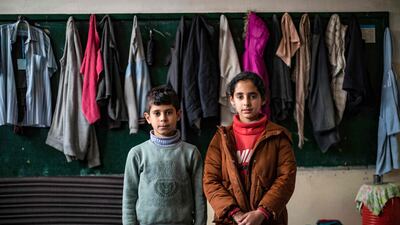
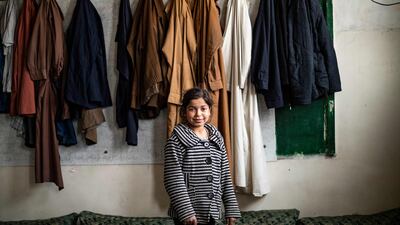
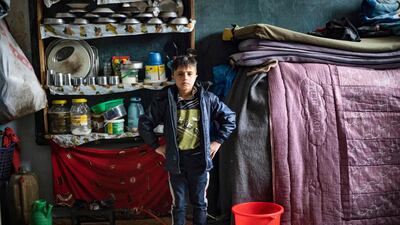
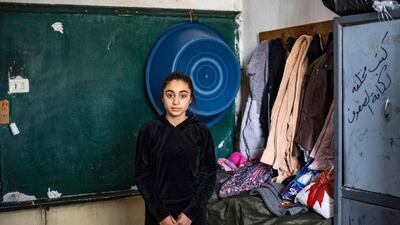
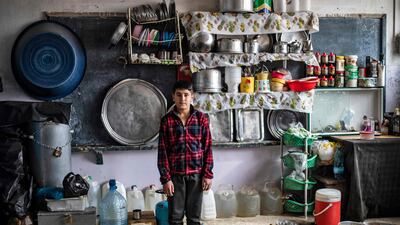
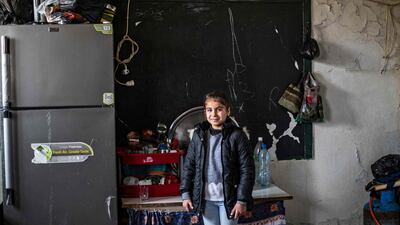
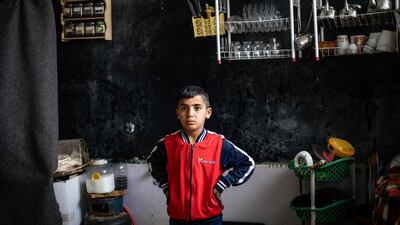
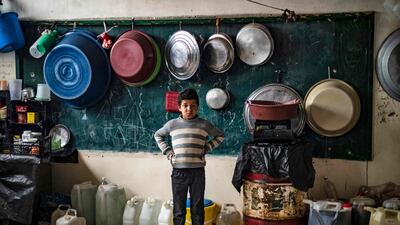
Twins Maha, right, and Mohammad Al Obaid, 11, were born in 2011, the year the Syrian war started. Displaced from Ras Al Ain in north-east Syria three years ago, they are pictured at a school on the outskirts of north-eastern city Hassakeh. All photos: AFP
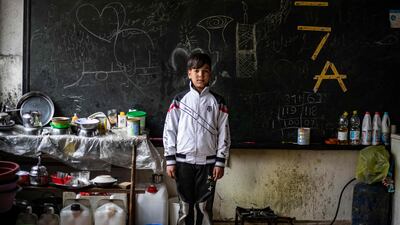
Nimr Alaywi, 11, who was also displaced from Ras Al Ain three years ago, at a school near Hassakeh.
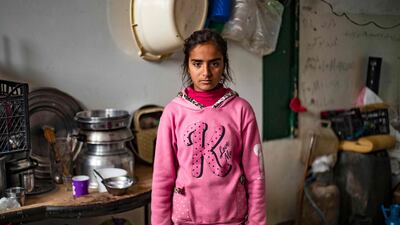
Amani Mahmud, 11, whose family fled Ras Al Ain, pictured at the school near Hassakeh. According to some estimates, 13.3 million Syrians have fled their homes since the civil war began on March 15, 2011.
Mohammad Issa, 11, who was also displaced from Ras Al Ain, at the school near Hassakeh.
Assil Alaywi, 11, whose family also fled Ras Al Ain for Hassakeh three years ago. Ras Al Ain was the scene of heavy fighting for much of the conflict.
Yazan Khodr, 11, at the school near Hassakeh, after his family fled Ras Al Ain. Various groups, including Syrian government forces, extremists and Kurdish fighters, vied for control of Ras Al Ain.
Liana Ali, 11, in the school building on the outskirts of Hassakeh.
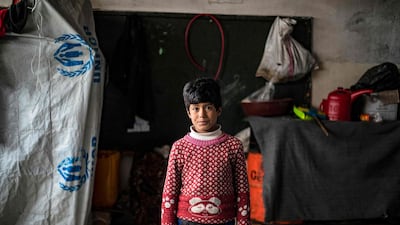
Manaf Mahmud, 11, pictured at the school near Hassakeh. Around four million people, at least half of them displaced, now live in the northern region.
Ahmad Abderrazzak, 11, at the school near Hassakeh.
Fatima Barkal, 11, at the school near Hassakeh.
Ammar Al Khodr, 11, at the school near Hassakeh.
Majd Hassan, 11, at the school near Hassakeh, north-east Syria.
One such horror was recently documented in a report published by The Guardian newspaper. The report is based on a leaked video, date-stamped April 16, 2013, of an army officer shooting and killing more than 40 civilians and throwing them into a pit. It also tells the story of how two academics tracked down the alleged perpetrators, interviewed one of them, and smuggled the footage out of the country.
Once the report was out, I braced myself to watch the video of how one human could mock and kill several of his fellow human beings. In it, I saw the man in question ordering people who were blindfolded and with their hands tied behind their backs to walk a certain distance before he shot them. I stopped watching after the first man fell to his death, but later learnt that seven women and 12 children faced the same fate.
The Tadamon Massacre, as it was called (named after the neighbourhood in Damascus), has reminded Syrians of the many such instances over the past decade. The methods may have been different, whether they were barrel bombs, chemical weapons or simply guns, but the result was the same.
On the first day of Eid last week, Syrians watched another series of heart-wrenching videos, showing a sea of people eagerly awaiting the release of some 300 prisoners who were given amnesty by the authorities.
These included families desperately hoping to see their children emerge so that they could hold them tight after what seemed like an eternity.
The UN records 350,000 deaths in the Syrian civil war, although it says the real number is likely to be higher. AFP
Some families, who were told that their sons had died in prison a long time ago, were seen outside the prison gates hoping against hope that there might have been a mistake. Some mothers flashed pictures of their missing children asking those coming out of jail to recall if they had seen them inside. Some of those who were released had experienced memory loss and failed to recognise their families.
One man was heard shouting out for his six children, reported to have gone missing inside the prison. "I had six, just give me back one. Anyone of them," he said.
Today, many Syrians have little hope of any accountability or justice. They have little or no faith in any international body to help them reconcile with their suffering. They have been left alone to deal with their losses, traumas and injustices.
Meanwhile, the man shown in the video shooting the civilians in Tadamon is said to be living in the country. Will he, and several other officers like him, face the consequences of their actions? And even if they do, will ordinary Syrians ever recover from the tragedy that has visited them over the past 11 years?
Perhaps one day, but at least in the near future it seems unlikely.

Spending an excessive amount of time on the phone.
Neglecting personal, social, or academic responsibilities.
Losing interest in other activities or hobbies that were once enjoyed.
Having withdrawal symptoms like feeling anxious, restless, or upset when the technology is not available.
Experiencing sleep disturbances or changes in sleep patterns.
What are the guidelines?
Under 18 months: Avoid screen time altogether, except for video chatting with family.
Aged 18-24 months: If screens are introduced, it should be high-quality content watched with a caregiver to help the child understand what they are seeing.
Aged 2-5 years: Limit to one-hour per day of high-quality programming, with co-viewing whenever possible.
Aged 6-12 years: Set consistent limits on screen time to ensure it does not interfere with sleep, physical activity, or social interactions.
Teenagers: Encourage a balanced approach – screens should not replace sleep, exercise, or face-to-face socialisation.
Source: American Paediatric Association
Score
Third Test, Day 2
New Zealand 274
Pakistan 139-3 (61 ov)
Pakistan trail by 135 runs with 7 wickets remaining in the innings
• Scientists estimate there could be as many as 3 million fungal species globally • Only about 160,000 have been officially described leaving around 90% undiscovered • Fungi account for roughly 90% of Earth's unknown biodiversity • Forest fungi help tackle climate change, absorbing up to 36% of global fossil fuel emissions annually and storing around 5 billion tonnes of carbon in the planet's topsoil
Our legal consultant
Name: Hassan Mohsen Elhais
Position: legal consultant with Al Rowaad Advocates and Legal Consultants.
Eldarir had arrived at JFK in January 2020 with three suitcases, containing goods he valued at $300, when he was directed to a search area. Officers found 41 gold artefacts among the bags, including amulets from a funerary set which prepared the deceased for the afterlife. Also found was a cartouche of a Ptolemaic king on a relief that was originally part of a royal building or temple. The largest single group of items found in Eldarir’s cases were 400 shabtis, or figurines.
Khouli conviction
Khouli smuggled items into the US by making false declarations to customs about the country of origin and value of the items. According to Immigration and Customs Enforcement, he provided “false provenances which stated that [two] Egyptian antiquities were part of a collection assembled by Khouli's father in Israel in the 1960s” when in fact “Khouli acquired the Egyptian antiquities from other dealers”. He was sentenced to one year of probation, six months of home confinement and 200 hours of community service in 2012 after admitting buying and smuggling Egyptian antiquities, including coffins, funerary boats and limestone figures.
For sale
A number of other items said to come from the collection of Ezeldeen Taha Eldarir are currently or recently for sale. Their provenance is described in near identical terms as the British Museum shabti: bought from Salahaddin Sirmali, "authenticated and appraised" by Hossen Rashed, then imported to the US in 1948.
- An Egyptian Mummy mask dating from 700BC-30BC, is on offer for £11,807 ($15,275) online by a seller in Mexico
- A coffin lid dating back to 664BC-332BC was offered for sale by a Colorado-based art dealer, with a starting price of $65,000
- A shabti that was on sale through a Chicago-based coin dealer, dating from 1567BC-1085BC, is up for $1,950
Founders: Mounir Nakhla, Ahmed Mohsen and Mohamed Aboulnaga
Based: Cairo, Egypt
Sector: transport and logistics
Size: 150 employees
Investment: approximately $8 million
Investors include: Singapore’s Battery Road Digital Holdings, Egypt’s Algebra Ventures, Uber co-founder and former CTO Oscar Salazar
Profile box
Company name: baraka
Started: July 2020
Founders: Feras Jalbout and Kunal Taneja
Based: Dubai and Bahrain
Sector: FinTech
Initial investment: $150,000
Current staff: 12
Stage: Pre-seed capital raising of $1 million
Investors: Class 5 Global, FJ Labs, IMO Ventures, The Community Fund, VentureSouq, Fox Ventures, Dr Abdulla Elyas (private investment)
Tailors and retailers miss out on back-to-school rush
Tailors and retailers across the city said it was an ominous start to what is usually a busy season for sales.
With many parents opting to continue home learning for their children, the usual rush to buy school uniforms was muted this year.
“So far we have taken about 70 to 80 orders for items like shirts and trousers,” said Vikram Attrai, manager at Stallion Bespoke Tailors in Dubai.
“Last year in the same period we had about 200 orders and lots of demand.
“We custom fit uniform pieces and use materials such as cotton, wool and cashmere.
“Depending on size, a white shirt with logo is priced at about Dh100 to Dh150 and shorts, trousers, skirts and dresses cost between Dh150 to Dh250 a piece.”
A spokesman for Threads, a uniform shop based in Times Square Centre Dubai, said customer footfall had slowed down dramatically over the past few months.
“Now parents have the option to keep children doing online learning they don’t need uniforms so it has quietened down.”
Document everything immediately; including dates, times, locations and witnesses
Seek professional advice from a legal expert
You can report an incident to HR or an immediate supervisor
You can use the Ministry of Human Resources and Emiratisation’s dedicated hotline
In criminal cases, you can contact the police for additional support
England Test squad
Ben Stokes (captain), Joe Root, James Anderson, Jonny Bairstow, Stuart Broad, Harry Brook, Zak Crawley, Ben Foakes, Jack Leach, Alex Lees, Craig Overton, Ollie Pope, Matthew Potts
What is dialysis?
Dialysis is a way of cleaning your blood when your kidneys fail and can no longer do the job.
It gets rid of your body's wastes, extra salt and water, and helps to control your blood pressure. The main cause of kidney failure is diabetes and hypertension.
There are two kinds of dialysis — haemodialysis and peritoneal.
In haemodialysis, blood is pumped out of your body to an artificial kidney machine that filter your blood and returns it to your body by tubes.
In peritoneal dialysis, the inside lining of your own belly acts as a natural filter. Wastes are taken out by means of a cleansing fluid which is washed in and out of your belly in cycles.
It isn’t an option for everyone but if eligible, can be done at home by the patient or caregiver. This, as opposed to home haemodialysis, is covered by insurance in the UAE.