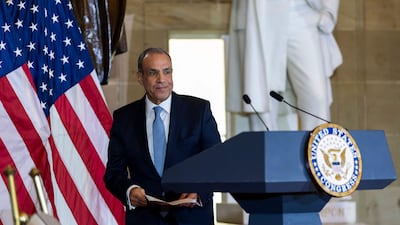

The US and Iran could still reach a deal, the Egyptian Foreign Minister said on Sunday, as Cairo and regional partners worked to bring both sides back to the negotiating table.
“I believe that there is a possibility for dialogue, for reaching a deal, for reaching a compromise,” said Badr Abdelatty. A deal reached in Islamabad in June was the basis for an agreement, he added.
Egypt is working with Pakistan, Saudi Arabia and Turkey to revive negotiations and is co-ordinating daily with Qatar, the minister said.
“I believe that there is a mutual interest of the two countries to work out a deal based on the previous understanding in the MoU of Islamabad, and I believe that that's possible,” he added.
He said Cairo was pressing for a political settlement because it believed there was room for compromise.
“We are hopeful for that,” he said of the prospects for a deal.
Mr Abdelatty did not give a timetable for talks to resume or specify what those measures would involve, but warned that a return to military action could be more dangerous than the previous round of fighting and could have even more severe consequences for countries across the region.
He also described the war’s economic and social impact as “devastating”, saying Gulf countries had been hit hard and Egypt was paying a heavy price.
“Suez Canal alone lost $20 billion of its revenues because of the decrease of the revenue, and this is a direct impact of the tensions in the region, also the surging prices of oil, gas and wheat. Egypt is number one net importer of wheat and grain in the world,” he said.
Former national security adviser Jake Sullivan, who served under former US president Joe Biden, called current American leader Donald Trump to end the war.
He said the US blockade was unlikely to force Tehran into a deal while Tehran could still disrupt shipping through the Strait of Hormuz and keep oil prices high.
Mr Sullivan told CNN the Trump administration appeared to be betting that cutting off Iran's energy revenue would damage its economy enough to force concessions.
“If you honestly ask the Trump administration what is their pathway to what they perceive to be a victory, it basically goes like this: We're going to keep the blockade in place. We're going to keep starving Iran of energy revenue. Its economy will get weaker and weaker and eventually it'll come out with its hands up,” he said.
“That is not going to happen because the Iranians have cards to play too.”
Iran could keep pressure on Washington by threatening energy sites and US military installations in the Gulf, and that continued disruption in the strait could keep oil and diesel prices high, Mr Sullivan said. Mr Trump would eventually have to accept that he could not get the agreement he wanted, he added.
“It would be better for the US to end the war, regroup, and come forward in a different way than to keep kind of throwing good money after bad the way this policy is working right now,” he said.
Michigan senator-elect Abdul El-Sayed told NBC that Congress should exercise its authority over war spending.
He accused Mr Trump of putting the conflict ahead of lowering petrol and food prices and protecting US service members.

