An ancient Egyptian artefact passed through the hands of two smugglers before it was bought by the British Museum. Alamy

British Museum's Egyptian figurine linked to smuggler caught at JFK airport


Tariq Tahir
  • English
  • Arabic

Spread out on a table by US Homeland Security staff, the collection of 590 ancient Egyptian artefacts was a treasure trove of antiquities – including gold amulets, figurines and tablets.

Suspicious customs officers at New York’s JFK Airport had been met by the smell of wet earth the moment they undid the bubble-wrapped items. Sand and loose dirt spilt out, all "indicative of recent illicit excavation".

The passenger who brought them in suitcases from Cairo to the US, Ashraf Eldarir, insisted they were family heirlooms and he had paperwork in Arabic to prove his grandfather was an antiquities collector in the 1920s.

The artefacts seized from Ashraf Omar Eldarir at JFK airport. Photo: US Department Of Homeland Security

Eldarir's story failed to convince and he now faces up to 20 years in prison when he is sentenced in June, after admitting to four counts of smuggling. But his tactic, using fake provenance documents in the hope of convincing buyers that the items were discovered decades ago, set experts on the hunt for other relics that he may have sold.

An investigation by The National has uncovered that an artefact the British Museum bought from a convicted smuggler, as reported previously, was supposedly from the collection of Eldarir’s grandfather. It has led to questions over whether the institution had fallen for what one archaeologist dubbed the “dead dad provenance” trick, or “grandfathering”, as it is often known in the trade. The seemingly trivial purchase, for just $400, could prove embarrassing for the museum.

The smuggler

Eldarir had arrived at JFK in January 2020 with three suitcases, containing goods he valued at $300, when he was directed to a search area.
Officers found 41 gold artefacts among the bags, including amulets from a funerary set which prepared the deceased for the afterlife.
Also found was a cartouche of a Ptolemaic king on a relief that was originally part of a royal building or temple. 
The largest single group of items found in Eldarir’s cases were 400 shabtis, or figurines.

“Anyone can fake an old document and use whatever names they want on them,” said Paul Barford, a British archaeologist who researches artefact hunting and the market for antiquities. “I’d take that with a huge pinch of salt unless there was independent evidence to support it.”

Shabti sale

The shabti, or figurine, now belonging to the British Museum is described as having “eyes with heavy lids and an unsmiling mouth” and a rare combination of attributes. The museum does not mention that it was bought from a convicted smuggler.

According to the ownership history on the museum’s website, the shabti was bought in Egypt in 1946 by Ezz el-Din Taha El Dharir, and then taken to the US two years later. Ezz el-Din is Ashraf Eldarir's grandfather and his name is more commonly transliterated as Ezeldeen Taha Eldarir.

The museum's website says that “in 1948, the two shabtis and many other Egyptian antiquities travelled from Cairo to Brooklyn, where they have remained within the family ever since".

Egyptian shabtis in the British Museum like the one that was bought from a convicted smuggler. Alamy

The notes state it was sold in 2017 by “Dr Ashraf el-Dharir, a collector resident in Brooklyn”, using a different transliteration from Arabic of Eldarir’s name, to antiques dealer Morris Khouli, who runs the Palmyra Heritage Gallery in New York. In the latter half of that year, there were at least two Palmyra auctions featuring Egyptian antiquities from the “el-Dharir collection”.

Khouli is a convicted smuggler who also tried to use the dead dad trick when he offered a US collector two Egyptian antiquities he falsely said came from his father’s collection.

Morris Khouli is a convicted smuggler from whom the British Museum bought an artefact.

Regarding the shabti’s provenance, the museum's website states: “Morris Khouli of Palmyra has sent scans of a four-page Arabic document recording the family’s original purchase of 125 antiquities, including both shabtis, on 3 November 1946. The buyer, an ancestor of Ashraf, was Ezz el-Din Taha el-Dharir. The 1946 vendor is identified as a Salah el-Din Sirmali."

Khouli conviction

Khouli smuggled items into the US by making false declarations to customs about the country of origin and value of the items.
According to Immigration and Customs Enforcement, he provided “false provenances which stated that [two] Egyptian antiquities were part of a collection assembled by Khouli's father in Israel in the 1960s” when in fact “Khouli acquired the Egyptian antiquities from other dealers”.
He was sentenced to one year of probation, six months of home confinement and 200 hours of community service in 2012 after admitting buying and smuggling Egyptian antiquities, including coffins, funerary boats and limestone figures.

The museum adds that the item was authenticated at that time by an expert called Hussein Rashed, who is described as the head of a "House of Egyptian Antiquities".

Checkability

Mr Barford has been writing about both Eldarir and Khouli for a number of years. He questions why the museum has not looked at the original provenance documents.

"Where is the original of the document, what paper is it written on? Note that the museum only reports that ‘scans’ were ‘seen'," he said.

He is concerned that a provenance document can be easily concocted by a seller trying to account for how he came to obtain an item.

As well as fostering an image of legitimate purchase, the benefit of being able to say it belonged to a deceased relative allows sellers to get around rules introduced in recent decades to control the export of antiquities from Egypt, said Mr Barford.

A mask said to have been imported by Ezeldeen Taha Eldarir, the grandfather of convicted smuggler Ashraf Omar Eldarir.

He said the dealer is then in charge of the “checkability” of the information. “Unfortunately that person who had it earlier is almost always no longer around,” he said.

Angelika Hellweger, a lawyer and art crime expert, said: “What I find interesting is Eldarir seems to have used this statement that it was from a private collection because in 1983 Egypt introduced a prohibition on the export of antiquities without approval.”

Ms Hellweger, legal director at London's Rahman Ravelli law firm, added she "would not be surprised if Eldarir and Khouli, who are both collectors with a criminal past" had been in cahoots.

For sale

A number of other items said to come from the collection of Ezeldeen Taha Eldarir are currently or recently for sale.
Their provenance is described in near identical terms as the British Museum shabti: bought from Salahaddin Sirmali, "authenticated and appraised" by Hossen Rashed, then imported to the US in 1948.

- An Egyptian Mummy mask dating from 700BC-30BC, is on offer for £11,807 ($15,275) online by a seller in Mexico

- A coffin lid dating back to 664BC-332BC was offered for sale by a Colorado-based art dealer, with a starting price of $65,000

- A shabti that was on sale through a Chicago-based coin dealer, dating from 1567BC-1085BC, is up for $1,950

“Most buyers still do not ask any questions. They ask ‘is it real?’ and if something has a whiff of being illegally excavated, that is an additional argument for authenticity. It is as simple as that,” Mr Barford said.

He said the Unesco 1970 Convention, a treaty aimed at battling the illegal trade in cultural items, states that documentation accompanying artefacts should fulfil certain conditions. This followed a situation where for "years and years, antiquities were collected in a way that deliberately obscured where they actually came from".

"But dealers and collectors still refused to treat documenting origins with any seriousness and just chucked away receipts and shipping documents. Now we are beginning to take more notice and such ‘documents’ appear with dealers and collectors claiming they really had been curating them all this time. But how true is that?"

Museum in the spotlight

Chris Marinello, a leading expert in recovering stolen, looted and missing works of art, said items are often sold between dealers who already have probable customers lined up. Thorough questions are not always asked, he said, as “it’s a small community” and they “trust each other”.

The British Museum is home to the shabti. Getty Images

He believes the British Museum should not have bought the shabti as the provenance was dubious. He suggested the museum should also tighten up their collection management procedures and security measures, pointing out that one of its curators was dismissed for gross misconduct in July last year after more than 1,800 items were found to be missing, stolen or damaged.

When The National contacted the British Museum about the shabti, it said the artefact has been the subject of a criminal investigation by the US authorities since 2019.

A request made under the UK’s freedom of information law to the museum to disclose the efforts it has made to establish the provenance of the shabti was rejected. It cited the exemption from disclosure due to the item being subject to law enforcement and legal proceedings.

The US Department of Homeland Security Investigations confirmed it has been conducting an inquiry but would not reveal any further details.

The museum says it is continuing to research the provenance of the object, is always willing to work with law enforcement and has engaged with US authorities to support inquiries.

“Establishing the provenance of an object is an integral part of the Museum’s acquisition process and this process undergoes regular review,” said a representative. "The most recent updates were in 2024 and ensure that the museum only acquires objects where it has undertaken satisfactory due diligence and made all reasonable enquiries.”

Mr Khouli has been approached for comment directly and Ashraf Omar Eldarir through his lawyer.

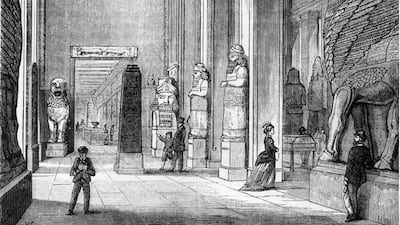
  • The Nineveh Gallery at the British Museum in London in 1852. All photos: Getty Images
    The Nineveh Gallery at the British Museum in London in 1852. All photos: Getty Images
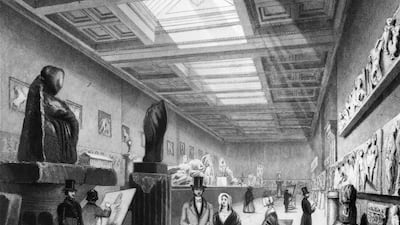
  • The Elgin Room at the British Museum in 1840
    The Elgin Room at the British Museum in 1840
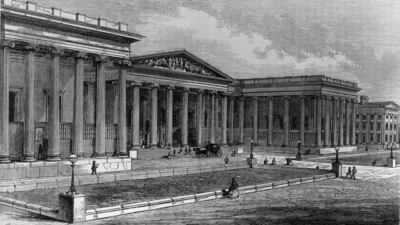
  • The neo-classical exterior of the British Museum in 1865
    The neo-classical exterior of the British Museum in 1865
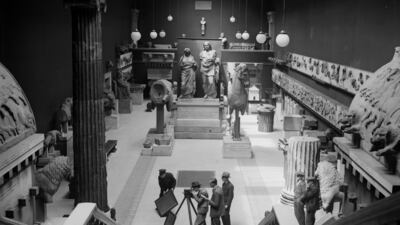
  • Filming takes place in the British Museum in 1928
    Filming takes place in the British Museum in 1928
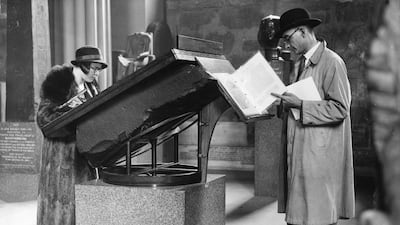
  • Visitors reading information concerning the Rosetta Stone, from the top of the stone itself, in the Egyptian Gallery in 1932
    Visitors reading information concerning the Rosetta Stone, from the top of the stone itself, in the Egyptian Gallery in 1932
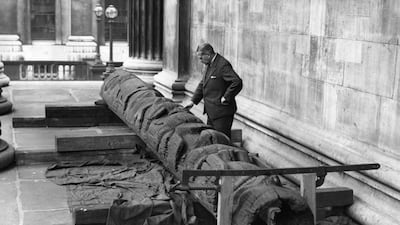
  • A man examines a totem pole which was purchased from a village in British Columbia and brought to the museum in 1933
    A man examines a totem pole which was purchased from a village in British Columbia and brought to the museum in 1933
  • The Reading Room in 1937
    The Reading Room in 1937
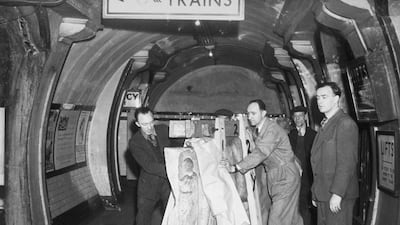
  • 'Operation Elgin' is carried out in 1945, when 100 tonnes of priceless Elgin Marbles were moved from their wartime hideout in Aldwych Tube station to the British Museum
    'Operation Elgin' is carried out in 1945, when 100 tonnes of priceless Elgin Marbles were moved from their wartime hideout in Aldwych Tube station to the British Museum
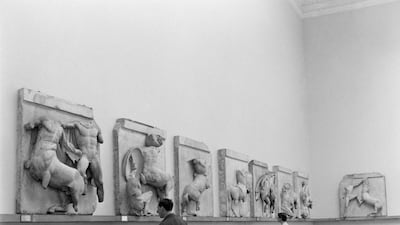
  • Visitors viewing the Parthenon Sculptures, also known as the Elgin Marbles, in the Egyptian Galleries in 1954
    Visitors viewing the Parthenon Sculptures, also known as the Elgin Marbles, in the Egyptian Galleries in 1954
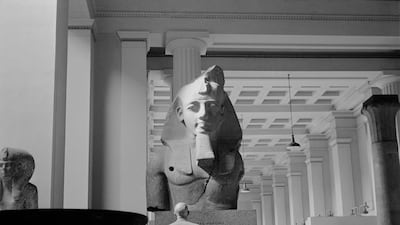
  • A statue of Egyptian pharaoh Rameses II in 1954
    A statue of Egyptian pharaoh Rameses II in 1954
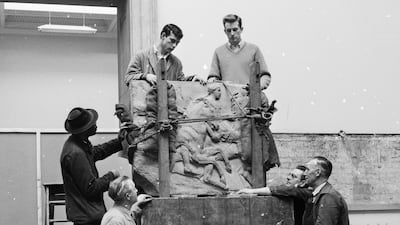
  • Workmen unload a portion of the Parthenon frieze before affixing it to the wall in the new Elgin Marbles room in 1961
    Workmen unload a portion of the Parthenon frieze before affixing it to the wall in the new Elgin Marbles room in 1961
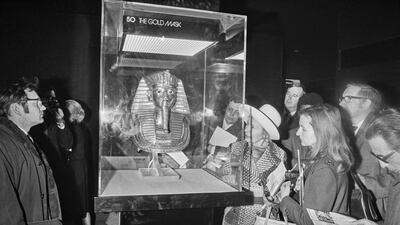
  • The gold death mask of Egyptian pharaoh Tutankhamun on display in 1972
    The gold death mask of Egyptian pharaoh Tutankhamun on display in 1972
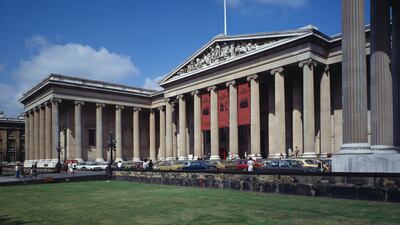
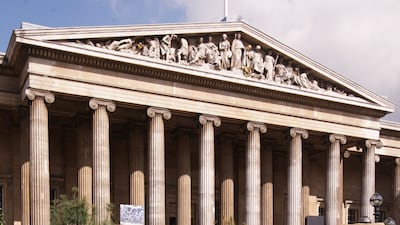
  • The exterior of the museum in 1980
    The exterior of the museum in 1980
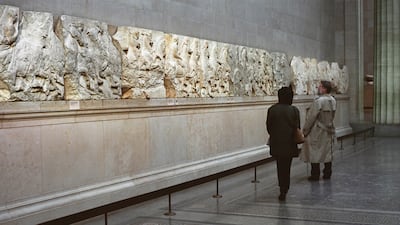
  • A frieze which forms part of the Elgin Marbles, taken from the Parthenon in Athens almost 200 years ago, on display in 2002
    A frieze which forms part of the Elgin Marbles, taken from the Parthenon in Athens almost 200 years ago, on display in 2002
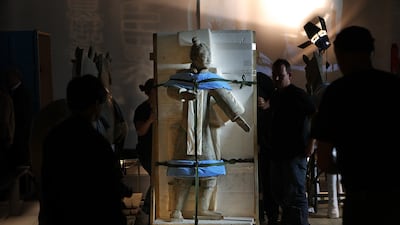
  • A Terracotta Warrior statue, wrapped in protective foam, is moved into place in the Reading Room in 2007
    A Terracotta Warrior statue, wrapped in protective foam, is moved into place in the Reading Room in 2007
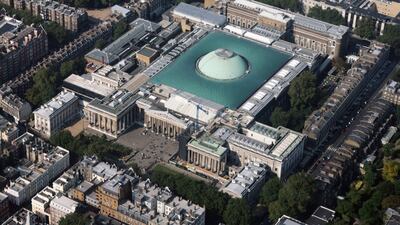
  • An aerial view in 2008
    An aerial view in 2008
  • Gardeners from the Royal Botanic Gardens at Kew prune the foliage in an Indian-themed garden on the west lawn of the British Museum in 2009
    Gardeners from the Royal Botanic Gardens at Kew prune the foliage in an Indian-themed garden on the west lawn of the British Museum in 2009
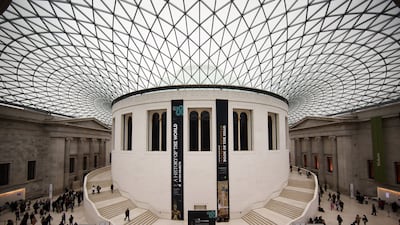
  • Visitors walk in The Great Court of the museum in 2011
    Visitors walk in The Great Court of the museum in 2011
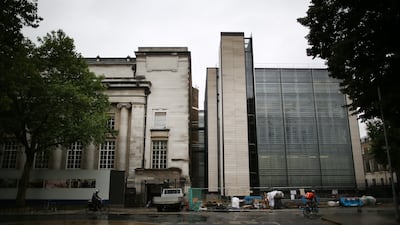
  • The British Museum's new World Conservation and Exhibitions Centre, right, adjoining the original building, in 2014
    The British Museum's new World Conservation and Exhibitions Centre, right, adjoining the original building, in 2014
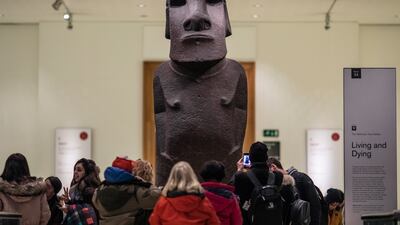
  • A basalt Easter Island Head figure, known as Hoa Hakananai'a, on display in 2018
    A basalt Easter Island Head figure, known as Hoa Hakananai'a, on display in 2018
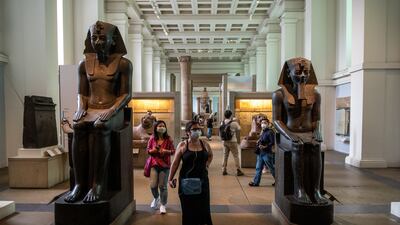
  • Visitors wearing face masks walk through the Egyptian exhibition as the museum reopened to the public after being closed for 163 days due to Covid lockdowns
    Visitors wearing face masks walk through the Egyptian exhibition as the museum reopened to the public after being closed for 163 days due to Covid lockdowns
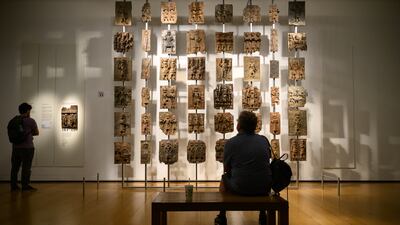
  • Items from a collection of metal plaques and sculptures taken from modern-day Nigeria in 1897, commonly referred to as the Benin Bronzes, are seen in a gallery of African relics in 2023
    Items from a collection of metal plaques and sculptures taken from modern-day Nigeria in 1897, commonly referred to as the Benin Bronzes, are seen in a gallery of African relics in 2023

Rick St Hilaire, a cultural heritage lawyer, former chief prosecutor and past presidential appointee to the US Cultural Property Advisory Committee, points to the alarm bells that should ring for anyone checking the provenance of an artefact.

Mr St Hilaire said auction houses, major museums, owners, dealers and collectors must do due diligence.

“It starts with knowing the person you're dealing with. Second, listening to their story carefully. And it doesn't stop there. Get verifiable documents, photos and affidavits.

“Fake provenance is common, and the invention of tall tales is only limited by the imagination. In my experience, the bigger the tale, the more sceptical I am,” he told The National. "My rule is simple - if someone starts talking about their uncle’s dad’s brother’s stepson who found an object, I’m not buying it.”


Desert Warrior

Starring: Anthony Mackie, Aiysha Hart, Ben Kingsley

Director: Rupert Wyatt

Rating: 3/5

The%20specs
%3Cp%3E%3Cstrong%3EEngine%3A%3C%2Fstrong%3E%201.8-litre%204-cyl%20turbo%0D%3Cbr%3E%3Cstrong%3EPower%3A%20%3C%2Fstrong%3E190hp%20at%205%2C200rpm%0D%3Cbr%3E%3Cstrong%3ETorque%3A%3C%2Fstrong%3E%20320Nm%20from%201%2C800-5%2C000rpm%0D%3Cbr%3E%3Cstrong%3ETransmission%3A%20%3C%2Fstrong%3ESeven-speed%20dual-clutch%20auto%0D%3Cbr%3E%3Cstrong%3EFuel%20consumption%3A%3C%2Fstrong%3E%206.7L%2F100km%0D%3Cbr%3E%3Cstrong%3EPrice%3A%3C%2Fstrong%3E%20From%20Dh111%2C195%0D%3Cbr%3E%3Cstrong%3EOn%20sale%3A%20%3C%2Fstrong%3ENow%3C%2Fp%3E%0A
THE%20SWIMMERS
%3Cp%3E%3Cstrong%3EDirector%3A%20%3C%2Fstrong%3ESally%20El-Hosaini%3C%2Fp%3E%0A%3Cp%3E%3Cstrong%3EStars%3A%20%3C%2Fstrong%3ENathalie%20Issa%2C%20Manal%20Issa%2C%20Ahmed%20Malek%20and%20Ali%20Suliman%C2%A0%3C%2Fp%3E%0A%3Cp%3E%3Cstrong%3ERating%3A%20%3C%2Fstrong%3E4%2F5%3C%2Fp%3E%0A
RESULTS


Catchweight 63.5kg: Shakriyor Juraev (UZB) beat Bahez Khoshnaw (IRQ). Round 3 TKO (body kick)

Lightweight: Nart Abida (JOR) beat Moussa Salih (MAR). Round 1 by rear naked choke

Catchweight 79kg: Laid Zerhouni (ALG) beat Ahmed Saeb (IRQ). Round 1 TKO (punches)

Catchweight 58kg: Omar Al Hussaini (UAE) beat Mohamed Sahabdeen (SLA) Round 1 rear naked choke

Flyweight: Lina Fayyad (JOR) beat Sophia Haddouche (ALG) Round 2 TKO (ground and pound)

Catchweight 80kg: Badreddine Diani (MAR) beat Sofiane Aïssaoui (ALG) Round 2 TKO

Flyweight: Sabriye Sengul (TUR) beat Mona Ftouhi (TUN). Unanimous decision

Middleweight: Kher Khalifa Eshoushan (LIB) beat Essa Basem (JOR). Round 1 rear naked choke

Heavyweight: Mohamed Jumaa (SUD) beat Hassen Rahat (MAR). Round 1 TKO (ground and pound)

Lightweight: Abdullah Mohammad Ali Musalim (UAE beat Omar Emad (EGY). Round 1 triangle choke

Catchweight 62kg: Ali Taleb (IRQ) beat Mohamed El Mesbahi (MAR). Round 2 KO

Catchweight 88kg: Mohamad Osseili (LEB) beat Samir Zaidi (COM). Unanimous decision

French business

France has organised a delegation of leading businesses to travel to Syria. The group was led by French shipping giant CMA CGM, which struck a 30-year contract in May with the Syrian government to develop and run Latakia port. Also present were water and waste management company Suez, defence multinational Thales, and Ellipse Group, which is currently looking into rehabilitating Syrian hospitals.

The biog

Age: 46

Number of Children: Four

Hobby: Reading history books

Loves: Sports

Specs

Engine: Dual-motor all-wheel-drive electric

Range: Up to 610km

Power: 905hp

Torque: 985Nm

Price: From Dh439,000

Available: Now

MATCH INFO

Uefa Champions League final:

Who: Real Madrid v Liverpool
Where: NSC Olimpiyskiy Stadium, Kiev, Ukraine
When: Saturday, May 26, 10.45pm (UAE)
TV: Match on BeIN Sports

Gifts exchanged
  • King Charles - replica of President Eisenhower Sword
  • Queen Camilla -  Tiffany & Co vintage 18-carat gold, diamond and ruby flower brooch
  • Donald Trump - hand-bound leather book with Declaration of Independence
  • Melania Trump - personalised Anya Hindmarch handbag
Company profile

Date started: December 24, 2018

Founders: Omer Gurel, chief executive and co-founder and Edebali Sener, co-founder and chief technology officer

Based: Dubai Media City

Number of employees: 42 (34 in Dubai and a tech team of eight in Ankara, Turkey)

Sector: ConsumerTech and FinTech

Cashflow: Almost $1 million a year

Funding: Series A funding of $2.5m with Series B plans for May 2020

The smuggler

Eldarir had arrived at JFK in January 2020 with three suitcases, containing goods he valued at $300, when he was directed to a search area.
Officers found 41 gold artefacts among the bags, including amulets from a funerary set which prepared the deceased for the afterlife.
Also found was a cartouche of a Ptolemaic king on a relief that was originally part of a royal building or temple. 
The largest single group of items found in Eldarir’s cases were 400 shabtis, or figurines.

Khouli conviction

Khouli smuggled items into the US by making false declarations to customs about the country of origin and value of the items.
According to Immigration and Customs Enforcement, he provided “false provenances which stated that [two] Egyptian antiquities were part of a collection assembled by Khouli's father in Israel in the 1960s” when in fact “Khouli acquired the Egyptian antiquities from other dealers”.
He was sentenced to one year of probation, six months of home confinement and 200 hours of community service in 2012 after admitting buying and smuggling Egyptian antiquities, including coffins, funerary boats and limestone figures.

For sale

A number of other items said to come from the collection of Ezeldeen Taha Eldarir are currently or recently for sale.
Their provenance is described in near identical terms as the British Museum shabti: bought from Salahaddin Sirmali, "authenticated and appraised" by Hossen Rashed, then imported to the US in 1948.

- An Egyptian Mummy mask dating from 700BC-30BC, is on offer for £11,807 ($15,275) online by a seller in Mexico

- A coffin lid dating back to 664BC-332BC was offered for sale by a Colorado-based art dealer, with a starting price of $65,000

- A shabti that was on sale through a Chicago-based coin dealer, dating from 1567BC-1085BC, is up for $1,950

Updated: April 15, 2025, 2:48 PM