


Almost 200 English universities are predicted to be in the red next year, following a £3.4 billion plunge in net income across the sector, a new report has found.
The paper, published on Friday by the Office for Students, the independent regulator of higher education in England, found that 194, or 72 per cent, of universities could be in deficit by 2025-26.
The figure takes account of the inflation-linked rise in undergraduate tuition fees recently announced by the government from April, which is forecast to bring in £371 million more in fees, as well as the increase to employer National Insurance contributions, which is expected to cost the sector more than that – an additional £430 million each year from 2025-26.
The report found that although acceptances of undergraduate students via Ucas increased slightly, by 1.3 per cent, the recruitment of international students has decreased “significantly”, with a 16 per cent decline in applications for visas between January and September 2024 compared to the same period in 2023.
“The number of international students from certain countries that send significant numbers to study in the UK has decreased significantly,” the report said. “The number of students from some of these countries has decreased by more than 40 per cent.
“Providers’ financial exposure to overreliance on recruitment of students from particular countries continues to be a concern,” it added.
Nigeria recorded the largest decline in applications with 25,897, representing a fall of 44.6 per cent, followed by Bangladesh with a 41.2 per cent drop. Other countries with significant reductions in applications include Sri Lanka (down 23.7 per cent), India (down 20.4 per cent), and Malaysia (down 12.7 per cent).
Visa restrictions introduced at the start of the year to prevent most international students from bringing dependants to the UK are seen as one cause of the declining application numbers.
The Migration Advisory Committee estimates the ban on dependants could lead to a fall of 120,000 in annual migration, and Home Office data shows 62,600 fewer students and dependants applied for study visas in the first six months of 2024 compared to the same period last year.
Figures released on Thursday showed the decline has escalated, with 405,000 applications for UK study visas in the year to October, which was down from 499,000 the year before, representing a fall of around 19 per cent.
Top 10 UK universities – in pictures
-
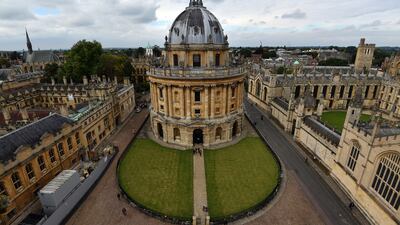
1. University of Oxford. Getty -

2. University of Cambridge. Getty -

3.London School of Economics and Political Science. Getty -
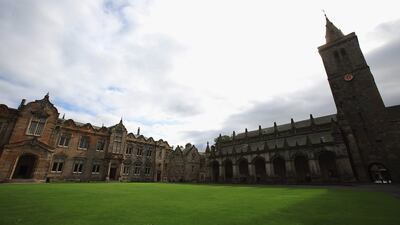
4. University of St Andrews. Getty -
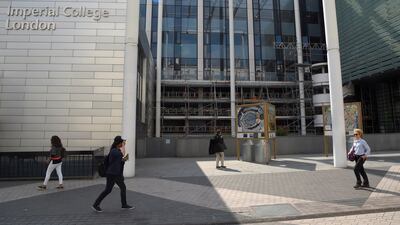
5. Imperial College London. Reuters -

6. Durham University. Alamy -

7. Loughborough University. Getty -

8. UCL (University College London). Alamy -
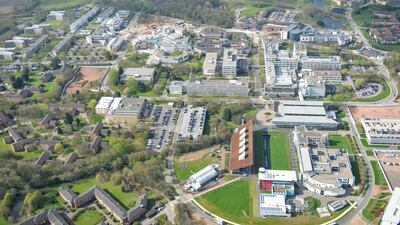
9. University of Warwick. Alamy -
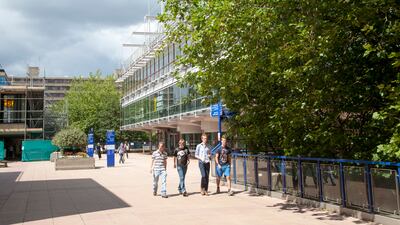
10. University of Bath. Getty


Office for Students estimated that about 100 institutions failed to achieve their UK undergraduate recruitment forecasts for 2024-25. “We estimate that around 150 providers may have failed to achieve forecast levels of international recruitment, with those providers that focus on postgraduate taught courses relying on international student growth being of particular concern,” said the report.
The regulator’s modelling suggests there will be a net reduction in annual income across the sector of £3.4 billion by 2025-26 – compared to a previously forecasted increase of £1.8 billion. The figures include the additional NI contributions costing the sector £133 million in 2024-25 and then £430 million each year from 2025-26.
“Our modelling suggests that the number of providers in deficit could be three times the number shown in providers’ 2025-26 forecasts, if they do not take mitigating action or such action is ineffective. This means that, if the modelling holds, the average provider could face more significant financial challenges than anticipated,” says the report.
British universities have repeatedly appealed to the government to lift visa restrictions on international students in a bid to save the struggling institutions.
The previous government raised the cap on university tuition fees in England to £9,000 ($11,650) a year in 2012 but it has been fixed at £9,250 since 2017. It will rise by £285 to £9,535 per year for courses starting after April 2025.

