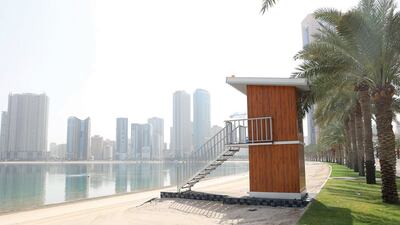
Sharjah on Wednesday announced the temporary closure of all beaches as a precaution against marine pollution from an oil spill off the coast of Umm Al Quwain.
The measure comes as authorities across the Northern Emirates take action after a supertanker oil spill in the Arabian Gulf.
Specialised teams in Sharjah are acting to protect the emirate’s coastline and keep pollution from reaching its beaches, the media office said.

The public and those heading out to sea have been urged to follow official instructions, rely on information from authorities and avoid spreading rumours.
A Ministry of Climate Change and Environment team detected marine pollution from the spill and confirmed it on October 22. Umm Al Quwain Municipality intensified efforts to limit pollution and protect marine habitats. The civic body said teams immediately started clean-up, containment, cordoning and remediation work to limit the environmental impact.
All beaches and coastal areas in Umm Al Quwain were temporarily closed while technical teams assessed the situation and determined the measures needed to protect the public and the marine environment.
Sharjah previously closed Al Hamriyah Beach as a precaution to prevent pollution from reaching the coast. Ras Al Khaimah authorities announced on Saturday that all public beaches in the emirate would remain closed until further notice.
Authorities have not identified the tanker involved or confirmed the spill's cause. But in recent days, UAE residents have reported a strong, acrid fuel smell in the air. The Environment Ministry said the odour posed no health risk, but advised the public to stay away from any oil that washes ashore.
Satellite images from the EU’s Copernicus Earth observation programme showed the oil slick widening between October 19 and last Saturday, with oil spreading towards the Umm Al Quwain coastline, Reuters reported on Monday.
While authorities worked to contain the spill and monitor the situation to determine the extent of the pollution, experts told The National that swift containment was vital to limit damage to the environment and the UAE's marine ecosystems.
When dealing with oil slicks, preventing pollution from reaching the coast is typically a top priority.
If that happens, clean-up becomes harder, and habitats can suffer lasting harm.
“Once it hits the shoreline, you have to do a lot of clean-up and remediation,” said Rob Mortimer, chief executive of Dubai-based Fuelre4m, which supplies substances used to disperse oil slicks.
He said the initial priority should be “to keep it all together” using floating barriers known as booms, allowing as much as possible to be recovered from the sea surface.
Prof Richard Thompson, director of the Marine Institute at the University of Plymouth, said cleaning a wide, sandy beach would typically be a less complex task than dealing with a rocky shoreline.
“If you have intertidal habitats with a large range of organisms, it’s going to make it more difficult to clean than if you can capture it [the oil] at the sea surface,” he said.
“If it’s among rocks or mangroves or seagrass, it’s going to be very difficult to clean … Ideally what you’re trying to do is catch it before you get the encounters between the creatures and the oil.”