Lessons learnt from the Covid-19 pandemic are keeping the UAE’s food supplies well stocked in the face of the threat from Iran, say experts.
The Iranian missile attacks, which began on February 28, initially led to some residents panic buying essential goods.
However, supermarkets were quick to get the message out there was no need to panic buy as the country’s food supplies were in good health and could last for a long time.

This is despite the country being heavily reliant on imports due to the harsh desert climate, which has led to some scepticism about growing fresh fruit and vegetables locally.
Businesses such as Pure Harvest Smart Farms are understandably keen to change that perception and prove the importance of the UAE's agriculture sector going forward.
The vulnerability of international supply chains was laid bare during the Covid-19 pandemic. This highlighted the importance of local food production and of not being reliant on importing from only one or two markets.
“After the shock of Covid, which was quite sustained and problematic, the UAE invested even more in its supply chain infrastructure,” said Sky Kurtz, founder and chief executive of Pure Harvest Smart Farms.
Investment in domestic agribusinesses and diplomacy with neighbouring countries has increased the nation's food security resilience, he said.
“The country is able to absorb a shock like this. There's a relatively small population, plenty of wealth to solve it, and there are many other borders,” he said. “There's trucks, and people are forgetting you can truck freight from Turkey and countries in the Levant and in many areas.
“There are many ways to get goods into the country or to freight them into your neighbour and then truck them from there.
“There are many ways to supply this population. The country not only has plans in place, they have the will to do it as they've openly stated.”
Local growers' role
-

The National paid a visit to the Pure Harvest Smart Farm in Al Ain. Victor Besa / The National -

Pure Harvest Smart Farms chief grower Jan Prins (right) explains how the company produces 120,000kg of fruit each week. Victor Besa / The National -
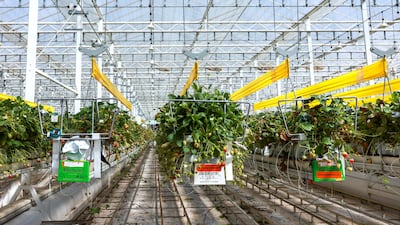
Experts told The National that efforts to boost the country's food stocks are helping food security in the region. Victor Besa / The National -
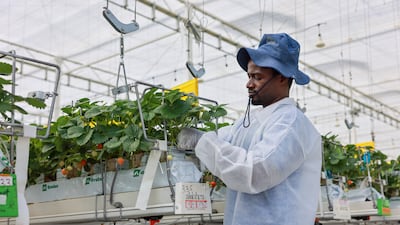
Lessons learnt during the Covid-19 pandemic are helping to boost food security in the UAE and wider GCC. Victor Besa / The National -
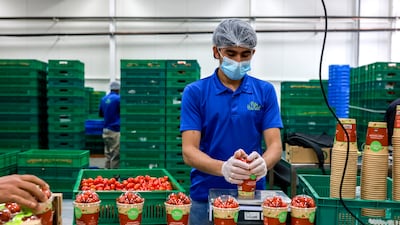
Candy tomatoes being produced in Al Ain. Victor Besa / The National -

The UAE has vastly expanded the amount of home grown food since the pandemic. Victor Besa / The National -
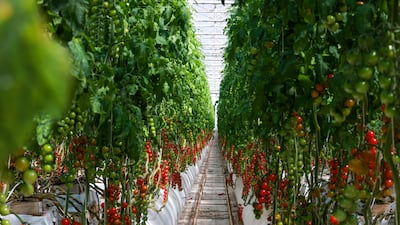
Farms in the UAE are playing a key role in boosting food security. Victor Besa / The National


The National visited Pure Harvest's Al Dahra Farm in Al Ain, where tomatoes, strawberries, blackberries and other fruit are grown.
Although there have been obvious challenges, production continues at a steady pace. The company has three farms in the UAE, producing 120,000kg of fruit each week.
“These tomato plants, they keep on growing, whatever happens around us, although our supply chain has been disturbed,” chief grower Jan Prins said. “We're also depending on things like fertilisers and beneficial insects such as bumblebees, which are normally coming by air [freight].
“So what we're trying to do at the moment is to review our supply chain and see if we can produce beneficial insects here in the UAE so that we're less dependent on imports.”
Mr Kurtz said the country is well stocked for months, not least because of the time of year.
“We're lucky that this conflict is happening during the winter, which is when ground farming and seasonal farming is in full force, and that's not only for us but all of our neighbours – Jordan, Saudi Arabia, Oman,” he said.
“So typically, we have seasonal excess production of fruit and veg and some oranges and other things as well.”
Companies such as Sharaf Group saw the potential for a food logistics infrastructure during the pandemic and invested $1 billion in the food corridor.
The Plant the Emirates initiative in 2024 established a national centre for the promotion of local farming, hoping to increase agricultural output by one fifth over the following five years to reduce imports.
Emirates Development Bank launched the UAE’s first agri-tech financing programme in mid-2023 which allocated Dh100 million to agricultural start-ups in the country.
Preparation is key
“Everybody learnt to be prepared,” said Jeanette Kristensen, general manager at Emirates Bustanica, a vertical farm being run by Emirates Flight Catering in the Dubai desert.
“Everybody learnt to have sufficient stock, know your supply chain, know what's going to happen if it gets affected. Never keep one supplier. If you have your main supplier in Europe, keep one local as well.
“Make sure that you have at least six months' stock of your most important input, so you are able to weather the first hit that will come.”
Another expert believes the confidence in the UAE’s food security is in no small part down to the relationships built with neighbours during the pandemic.
During the Covid-19 pandemic, when borders were closed, it was difficult to import food and the GCC countries acted as a trade corridor to allow certain goods to be traded throughout the region, said Maja Kent, non-resident research fellow at the Centre for Climate Diplomacy at Anwar Gargash Diplomatic Academy.
“For the GCC, food security has long been high on the agenda.”