
The UAE is facing a surplus of skilled professionals in many job roles, particularly at the middle and senior management levels, experts told The National.
The Emirates' population is booming and job seekers in many professions now far outstrip the number of available roles, which is reshaping the hiring experience for candidates and employers alike, HR professionals said.
"While there’s still a shortage of specific skills, there’s also an observable oversupply of professionals in certain roles, creating an imbalance between job seekers and actual openings, particularly at the mid-to-senior level," Vivek Arora, managing director of the Society for Human Resource Management MENA.
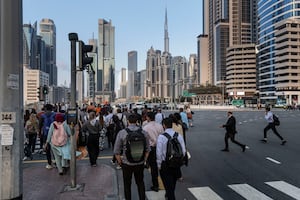
This oversupply is especially pronounced in the legal, finance, and property sectors. In contrast, areas like technology and supply chain still face skill shortages.
What is causing it?
The UAE’s attractive lifestyle and tax-free salaries continue to draw skilled professionals from around the world.
Earlier this week, data from the Statistics Centre in Abu Dhabi revealed that the emirate's population crossed four million for the first time after a 7.5 per cent surge in 2024. The other emirates, particularly Dubai, Sharjah and Ras Al Khaimah, are witnessing similar influxes.
"Each job posting in the UAE today attracts hundreds of applications," Thomas Ogilvie, chief human resources officer at DHL Group, said. "And while the volume is high, finding the right skill set and personal fit to the job remains a task."
Mr Ogilvie said, on average, each role at DHL locally receives between 600 and 900 applications, depending on seniority, and that “over the past two years, the volume has grown by approximately 50 per cent”.
Dubai-based career guidance consultant Shazia Bharuchi echoed this, saying she’s observed that “one job application, one job advert, will attract 1,000 individuals”.
'Lowball offers'
For many, the consequences are both professional and personal. Ms Bharuchi described how “people who are coming in and taking jobs just to get their foot in the door... are taking them for very low salaries".
The result is that “people are looking to hire senior people for junior salaries”, she added.
One communications professional The National spoke to, who wished to remain anonymous, has been searching for a new role for the past 18 months.
Out of five offers he got, three were “not up to the mark” in terms of fair compensation. “On top of that, they want you to do 20 things in one.”
At the same time, he said there’s a clear lack of decisiveness among employers, with many leaving him waiting for long periods before reverting back with an answer, or just not responding at all.
“Some of the businesses don’t know what they want because of the abundance of choice,” he added. “Maybe they’re scared to pull the trigger.”
Employers faced with a flood of qualified applicants are indeed becoming more selective and cautious, said Mr Arora.
Companies are “focusing on hiring fewer, highly critical roles rather than wide-scale recruitment, particularly mid- and senior-level roles,” he said, adding that salary growth is also slowing.
Because of this, there is an increased reliance on short-term contracts, freelancers and offering trial roles to test fit before making a commitment, Mr Arora added.
Employers are also placing greater emphasis on UAE market experience and cultural fit, as well as soft skills, given the abundance of technically qualified candidates.
The rise of AI
Another reason for the oversupply of skilled job seekers is “unconscious bias”, Mr Ogilvie said.
Older employees and job seekers in the 40-plus age bracket are increasingly reporting difficulties getting hired in the UAE. Ms Bharuchi said some employers often perceive older workers as “more expensive” and “set in their ways”.
Mr Ogilvie said DHL faces issues around discrimination by training HR teams and line managers to “recognise and mitigate unconscious bias”.
For candidates over 40, he said, “the conversation is rarely about whether they have the skills – because they normally do. At that stage in a career, what matters more is cultural fit and mindset. Do they bring the right leadership qualities? Are they commercially minded, results-driven and do they promote a culture of respect in the teams they operate in?”
The rise of AI and automation is also reshaping the landscape, by changing the nature of available roles and by slowing hiring in some sectors.
“Artificial intelligence is changing the profile of tasks and, at the same time, creating new jobs,” Mr Ogilvie said.
Ms Bharuchi agreed, adding: “You have to now think of yourself as a lifelong learner. Things are so adaptable now, so you have to continue to upskill right and be a leader, but with a sort of junior mindset... It’s really important now that we not fear AI, but actually collaborate with it to make sure that we secure our future.”
A global market
For job seekers, particularly those with long tenures in the UAE, the adjustment has been jarring. Ms Bharuchi has had clients in senior roles, with plenty of local experience, who are struggling to get hired.
Often, this is down to their CVs being outdated or not tailored for automatic screening systems, she said, emphasising the importance of understanding applicant tracking systems (ATS) and ensuring your applications are targeted and relevant.
Networking, personal branding and adaptability are also increasingly important, said Mr Arora.
Mr Ogilvie, meanwhile, said it is important for candidates to “stay authentic, specific and honest while tailoring your application to suit the requirement of the job you are applying for”.
He added that it is important to highlight your contributions over responsibilities, what goals you have helped achieve in previous roles and the kind of impact you have had on businesses.
“You’re competing in a global market, because everybody wants to come here,” Ms Bharuchi said.

Why your domicile status is important
Your UK residence status is assessed using the statutory residence test. While your residence status – ie where you live - is assessed every year, your domicile status is assessed over your lifetime.
Your domicile of origin generally comes from your parents and if your parents were not married, then it is decided by your father. Your domicile is generally the country your father considered his permanent home when you were born.
UK residents who have their permanent home ("domicile") outside the UK may not have to pay UK tax on foreign income. For example, they do not pay tax on foreign income or gains if they are less than £2,000 in the tax year and do not transfer that gain to a UK bank account.
A UK-domiciled person, however, is liable for UK tax on their worldwide income and gains when they are resident in the UK.
Things Heard & Seen
Directed by: Shari Springer Berman, Robert Pulcini
Starring: Amanda Seyfried, James Norton
2/5
Mercer, the investment consulting arm of US services company Marsh & McLennan, expects its wealth division to at least double its assets under management (AUM) in the Middle East as wealth in the region continues to grow despite economic headwinds, a company official said.
Mercer Wealth, which globally has $160 billion in AUM, plans to boost its AUM in the region to $2-$3bn in the next 2-3 years from the present $1bn, said Yasir AbuShaban, a Dubai-based principal with Mercer Wealth.
“Within the next two to three years, we are looking at reaching $2 to $3 billion as a conservative estimate and we do see an opportunity to do so,” said Mr AbuShaban.
Mercer does not directly make investments, but allocates clients’ money they have discretion to, to professional asset managers. They also provide advice to clients.
“We have buying power. We can negotiate on their (client’s) behalf with asset managers to provide them lower fees than they otherwise would have to get on their own,” he added.
Mercer Wealth’s clients include sovereign wealth funds, family offices, and insurance companies among others.
From its office in Dubai, Mercer also looks after Africa, India and Turkey, where they also see opportunity for growth.
Wealth creation in Middle East and Africa (MEA) grew 8.5 per cent to $8.1 trillion last year from $7.5tn in 2015, higher than last year’s global average of 6 per cent and the second-highest growth in a region after Asia-Pacific which grew 9.9 per cent, according to consultancy Boston Consulting Group (BCG). In the region, where wealth grew just 1.9 per cent in 2015 compared with 2014, a pickup in oil prices has helped in wealth generation.
BCG is forecasting MEA wealth will rise to $12tn by 2021, growing at an annual average of 8 per cent.
Drivers of wealth generation in the region will be split evenly between new wealth creation and growth of performance of existing assets, according to BCG.
Another general trend in the region is clients’ looking for a comprehensive approach to investing, according to Mr AbuShaban.
“Institutional investors or some of the families are seeing a slowdown in the available capital they have to invest and in that sense they are looking at optimizing the way they manage their portfolios and making sure they are not investing haphazardly and different parts of their investment are working together,” said Mr AbuShaban.
Some clients also have a higher appetite for risk, given the low interest-rate environment that does not provide enough yield for some institutional investors. These clients are keen to invest in illiquid assets, such as private equity and infrastructure.
“What we have seen is a desire for higher returns in what has been a low-return environment specifically in various fixed income or bonds,” he said.
“In this environment, we have seen a de facto increase in the risk that clients are taking in things like illiquid investments, private equity investments, infrastructure and private debt, those kind of investments were higher illiquidity results in incrementally higher returns.”
The Abu Dhabi Investment Authority, one of the largest sovereign wealth funds, said in its 2016 report that has gradually increased its exposure in direct private equity and private credit transactions, mainly in Asian markets and especially in China and India. The authority’s private equity department focused on structured equities owing to “their defensive characteristics.”
Hili 2: Unesco World Heritage site
The site is part of the Hili archaeological park in Al Ain. Excavations there have proved the existence of the earliest known agricultural communities in modern-day UAE. Some date to the Bronze Age but Hili 2 is an Iron Age site. The Iron Age witnessed the development of the falaj, a network of channels that funnelled water from natural springs in the area. Wells allowed settlements to be established, but falaj meant they could grow and thrive. Unesco, the UN's cultural body, awarded Al Ain's sites - including Hili 2 - world heritage status in 2011. Now the most recent dig at the site has revealed even more about the skilled people that lived and worked there.
Classification of skills
A worker is categorised as skilled by the MOHRE based on nine levels given in the International Standard Classification of Occupations (ISCO) issued by the International Labour Organisation.
A skilled worker would be someone at a professional level (levels 1 – 5) which includes managers, professionals, technicians and associate professionals, clerical support workers, and service and sales workers.
The worker must also have an attested educational certificate higher than secondary or an equivalent certification, and earn a monthly salary of at least Dh4,000.
The 24-man squad:
Goalkeepers: Thibaut Courtois (Chelsea), Simon Mignolet (Liverpool), Koen Casteels (VfL Wolfsburg).
Defenders: Toby Alderweireld (Tottenham), Thomas Meunier (Paris Saint-Germain), Thomas Vermaelen (Barcelona), Jan Vertonghen (Tottenham), Dedryck Boyata (Celtic), Vincent Kompany (Manchester City).
Midfielders: Marouane Fellaini (Manchester United), Axel Witsel (Tianjin Quanjian), Kevin De Bruyne (Manchester City), Eden Hazard (Chelsea), Nacer Chadli (West Bromwich Albion), Leander Dendoncker (Anderlecht), Thorgan Hazard (Borussia Moenchengladbach), Youri Tielemans (Monaco), Mousa Dembele (Tottenham Hotspur).
Forwards: Michy Batshuayi (Chelsea/Dortmund), Yannick Carrasco (Dalian Yifang), Adnan Januzaj (Real Sociedad), Romelu Lukaku (Manchester United), Dries Mertens (Napoli).
Standby player: Laurent Ciman (Los Angeles FC).
SPEC%20SHEET%3A%20SAMSUNG%20GALAXY%20Z%20FOLD%204
%3Cp%3E%3Cstrong%3EMain%20display%3A%3C%2Fstrong%3E%207.6%22%20QXGA%2B%20Dynamic%20Amoled%202X%2C%202176%20x%201812%2C%2021.6%3A18%2C%20374ppi%2C%20HDR10%2B%2C%20up%20to%20120Hz%3C%2Fp%3E%0A%3Cp%3E%3Cstrong%3ECover%20display%3A%3C%2Fstrong%3E%206.2%22%20HD%2B%20Dynamic%20Amoled%202X%2C%202316%20x%20904%2C%2023.1%3A9%2C%20402ppi%2C%20up%20to%20120Hz%3C%2Fp%3E%0A%3Cp%3E%3Cstrong%3EProcessor%3A%3C%2Fstrong%3E%20Qualcomm%20Snapdragon%208%2B%20Gen%201%2C%204nm%2C%20octa-core%3B%20Adreno%20730%20GPU%3C%2Fp%3E%0A%3Cp%3E%3Cstrong%3EMemory%3A%3C%2Fstrong%3E%2012GB%3C%2Fp%3E%0A%3Cp%3E%3Cstrong%3ECapacity%3A%3C%2Fstrong%3E%C2%A0256%2F512GB%20%2F%201TB%3C%2Fp%3E%0A%3Cp%3E%3Cstrong%3EPlatform%3A%3C%2Fstrong%3E%20Android%2012%2C%20One%20UI%204.1.1%3C%2Fp%3E%0A%3Cp%3E%3Cstrong%3EMain%20camera%3A%3C%2Fstrong%3E%20Triple%2012MP%20ultra-wide%20(f%2F2.2)%20%2B%2050MP%20wide%20(f%2F1.8)%20%2B%2010MP%20telephoto%20(f%2F2.4)%2C%20dual%20OIS%2C%203x%20optical%20zoom%2C%2030x%20Space%20Zoom%2C%20portrait%2C%20super%20slo-mo%3C%2Fp%3E%0A%3Cp%3E%3Cstrong%3EVideo%3A%3C%2Fstrong%3E%208K%4024fps%2C%204K%4030%2F60fps%2C%20full-HD%4030%2F60fps%2C%20HD%4030fps%3B%20slo-mo%4060%2F240%2F960fps%3B%20HDR10%2B%3C%2Fp%3E%0A%3Cp%3E%3Cstrong%3ECover%20camera%3A%3C%2Fstrong%3E%2010MP%20(f%2F2.2)%3C%2Fp%3E%0A%3Cp%3E%3Cstrong%3EInner%20front%20camera%3A%3C%2Fstrong%3E%20Under-display%204MP%20(f%2F1.8)%3C%2Fp%3E%0A%3Cp%3E%3Cstrong%3EBattery%3A%3C%2Fstrong%3E%204400mAh%2C%2025W%20fast%20charging%2C%2015W%20wireless%20charging%2C%20reverse%20wireless%20charging%2C%20'all-day'%20life%3C%2Fp%3E%0A%3Cp%3E%3Cstrong%3EConnectivity%3A%3C%2Fstrong%3E%205G%3B%20Wi-Fi%2C%20Bluetooth%205.2%2C%20NFC%20(Samsung%20Pay)%3C%2Fp%3E%0A%3Cp%3E%3Cstrong%3EI%2FO%3A%3C%2Fstrong%3E%20USB-C%3C%2Fp%3E%0A%3Cp%3E%3Cstrong%3ECards%3A%3C%2Fstrong%3E%20Nano-SIM%20%2B%20eSIM%3B%202%20nano-SIMs%20%2B%20eSIM%3B%202%20nano-SIMs%3C%2Fp%3E%0A%3Cp%3E%3Cstrong%3EColours%3A%3C%2Fstrong%3E%20Graygreen%2C%20phantom%20black%2C%20beige%2C%20burgundy%20(online%20exclusive)%3C%2Fp%3E%0A%3Cp%3E%3Cstrong%3EIn%20the%20box%3A%3C%2Fstrong%3E%20Fold%204%2C%20USB-C-to-USB-C%20cable%3C%2Fp%3E%0A%3Cp%3E%3Cstrong%3EPrice%3A%3C%2Fstrong%3E%20Dh6%2C799%20%2F%20Dh7%2C249%20%2F%20Dh8%2C149%3C%2Fp%3E%0A
Ziina users can donate to relief efforts in Beirut
Ziina users will be able to use the app to help relief efforts in Beirut, which has been left reeling after an August blast caused an estimated $15 billion in damage and left thousands homeless. Ziina has partnered with the United Nations High Commissioner for Refugees to raise money for the Lebanese capital, co-founder Faisal Toukan says. “As of October 1, the UNHCR has the first certified badge on Ziina and is automatically part of user's top friends' list during this campaign. Users can now donate any amount to the Beirut relief with two clicks. The money raised will go towards rebuilding houses for the families that were impacted by the explosion.”
Avatar: Fire and Ash
Director: James Cameron
Starring: Sam Worthington, Sigourney Weaver, Zoe Saldana
Rating: 4.5/5
THE BIO
Ms Davison came to Dubai from Kerala after her marriage in 1996 when she was 21-years-old
Since 2001, Ms Davison has worked at many affordable schools such as Our Own English High School in Sharjah, and The Apple International School and Amled School in Dubai
Favourite Book: The Alchemist
Favourite quote: Failing to prepare is preparing to fail
Favourite place to Travel to: Vienna
Favourite cuisine: Italian food
Favourite Movie : Scent of a Woman
More on Quran memorisation:
Padmaavat
Director: Sanjay Leela Bhansali
Starring: Ranveer Singh, Deepika Padukone, Shahid Kapoor, Jim Sarbh
3.5/5
The Perfect Couple
Starring: Nicole Kidman, Liev Schreiber, Jack Reynor
Creator: Jenna Lamia
Rating: 3/5
Sleep Well Beast
The National
4AD
Sole survivors
- Cecelia Crocker was on board Northwest Airlines Flight 255 in 1987 when it crashed in Detroit, killing 154 people, including her parents and brother. The plane had hit a light pole on take off
- George Lamson Jr, from Minnesota, was on a Galaxy Airlines flight that crashed in Reno in 1985, killing 68 people. His entire seat was launched out of the plane
- Bahia Bakari, then 12, survived when a Yemenia Airways flight crashed near the Comoros in 2009, killing 152. She was found clinging to wreckage after floating in the ocean for 13 hours.
- Jim Polehinke was the co-pilot and sole survivor of a 2006 Comair flight that crashed in Lexington, Kentucky, killing 49.
Key figures in the life of the fort
Sheikh Dhiyab bin Isa (ruled 1761-1793) Built Qasr Al Hosn as a watchtower to guard over the only freshwater well on Abu Dhabi island.
Sheikh Shakhbut bin Dhiyab (ruled 1793-1816) Expanded the tower into a small fort and transferred his ruling place of residence from Liwa Oasis to the fort on the island.
Sheikh Tahnoon bin Shakhbut (ruled 1818-1833) Expanded Qasr Al Hosn further as Abu Dhabi grew from a small village of palm huts to a town of more than 5,000 inhabitants.
Sheikh Khalifa bin Shakhbut (ruled 1833-1845) Repaired and fortified the fort.
Sheikh Saeed bin Tahnoon (ruled 1845-1855) Turned Qasr Al Hosn into a strong two-storied structure.
Sheikh Zayed bin Khalifa (ruled 1855-1909) Expanded Qasr Al Hosn further to reflect the emirate's increasing prominence.
Sheikh Shakhbut bin Sultan (ruled 1928-1966) Renovated and enlarged Qasr Al Hosn, adding a decorative arch and two new villas.
Sheikh Zayed bin Sultan (ruled 1966-2004) Moved the royal residence to Al Manhal palace and kept his diwan at Qasr Al Hosn.
Sources: Jayanti Maitra, www.adach.ae
