

The UAE on Tuesday announced the launch of a major humanitarian project aimed at preventing 300,000 deaths in childbirth in sub-Saharan Africa over the next five years as part of a $600 million healthcare strategy.
The Beginnings Fund is the first flagship project unveiled by the Mohamed bin Zayed Foundation for Humanity, a philanthropic organisation established last month to deliver a crucial lifeline to needy communities.
The fund will work in partnership with African governments, national organisations and experts to provide access to quality care for 34 million mothers and babies by 2030.
It will operate in 10 African countries – Ethiopia, Ghana, Kenya, Malawi, Lesotho, Nigeria, Rwanda, Tanzania, Uganda and Zimbabwe – to help improve maternal and newborn survival rates.
The Beginnings Fund has been established under a joint $600 million commitment, which includes $100 million in direct financing for its mission.
The funding pledge was enabled by a $125 million grant from the Mohamed bin Zayed Foundation for Humanity, with additional funding from each of the Children’s Investment Fund Foundation, Delta Philanthropies, The ELMA Foundation, and Gates Foundation, with further support from Horace W. Goldsmith Foundation, Patchwork Collective and others.
The programme will focus on strengthening workforces and equipping facilities with the expertise needed to improve patient outcomes.
The launch of the scheme was held at Kanad Hospital in Al Ain, the first modern hospital established in the emirate of Abu Dhabi.

The event was attended by Sheikh Theyab bin Mohamed, deputy chairman of the Presidential Court for Development and Fallen Heroes’ Affairs, and chairman of Erth Zayed Philanthropies, and Sheikh Shakhbout bin Nahyan, Minister of State at the Ministry of Foreign Affairs, as well as a number of African health ministers.
“Through the Mohamed bin Zayed Foundation for Humanity, we are honoured to support the Beginnings Fund in giving more mothers and children the opportunity of a healthy start," said Sheikh Theyab.
"In the earliest days of the UAE, our nation faced high maternal and newborn mortality rates. This journey taught us the profound importance of quality health care that is available to all, at every stage of life, and this knowledge continues to guide us today.
"Through this partnership, we further our dedication to working hand-in-hand with governments and partners to build a healthier, more hopeful future for generations to come.”
Life-saving intervention
Newborn deaths in the first month of life are the single biggest driver of mortality in sub-Saharan Africa, where 70 per cent of maternal deaths also occur, the Mohamed bin Zayed Foundation for Humanity said.
It said "without transformative action", 182,000 women and 1.2 million newborns in sub-Saharan Africa will continue to die each year from preventable causes, in addition to 950,000 stillbirths.
The international effort has won the support of the World Health Organisation.
“The world has made real progress on reducing the number of maternal and child deaths in the last two decades, thanks to dedicated health workers and governments, backed by investment and technical know-how,” said Dr Tedros Adhanom Ghebreyesus, the WHO's director general.
“But still, every seven seconds a mother or baby dies a preventable death. We welcome the launch of the Beginnings Fund and look forward to working closely with all those involved to end these preventable tragedies.”
Mohamed bin Zayed Foundation for Humanity - in pictures
-
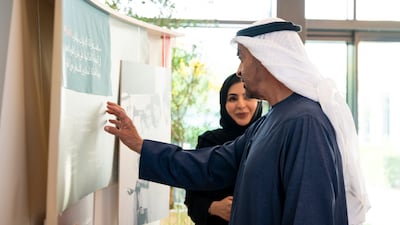
President Sheikh Mohamed reviews plans for the recently established Mohamed bin Zayed Foundation For Humanity at Al Shati Palace in Abu Dhabi. All photos: Abdulla Al Bedwawi / UAE Presidential Court -
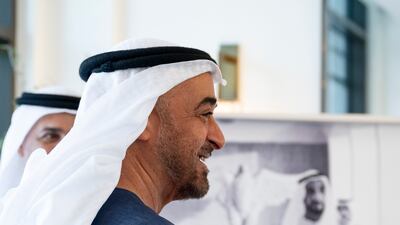
The foundation aims to advance human potential, support global health priorities, and expand opportunities for the most vulnerable communities around the world -

The foundation will focus on advancing sustainable efforts in global health and inclusive development by investing in innovative solutions that empower individuals and communities, driving prosperity and progress -
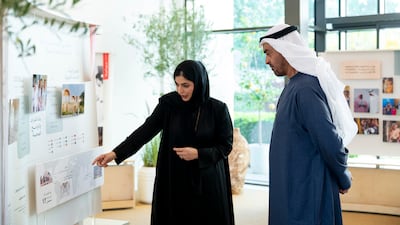
Sheikh Mohamed is briefed on the foundation’s mission -
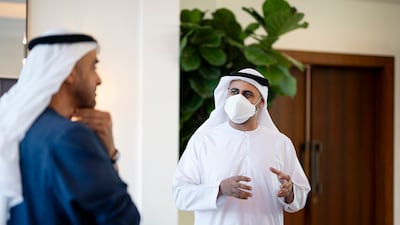
Sheikh Mohamed and Sheikh Theyab bin Mohamed, Chairman of the Office of Development and Martyrs Families Affairs at the Presidential Court -
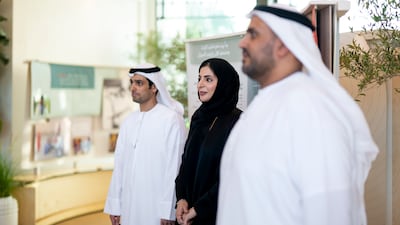
Over the next five years, the Mohamed Bin Zayed Foundation for Humanity aims to reach more than 500 million people across more than 50 countries, spanning Asia, Africa, and the Middle East


Tala Al Ramahi, spokeswoman for the Mohamed bin Zayed Foundation for Humanity, told of the importance of the UAE-backed campaign.
"The Beginnings Fund is the first major anchor programme launched by the Mohamed bin Zayed Foundation for Humanity after its establishment," she said.
"It is a unique philanthropic initiative aimed at improving the lives of women and babies in Sub-Saharan Africa, specifically to prevent deaths during childbirth."
Ms Al Ramahi said dedicated teams are working closely with national and district-level health partners to develop tailored country plans, ensuring resources are targeted where they are needed most.
Tsitsi Masiyiwa, executive chairwoman and co-founder of Delta Philanthropies, said the major investment plan would be key to providing better training for health workers.
“Although infrastructure existed – medical schools, nursing colleges, and partnerships with institutions such as those in the UK – the actual translation of training materials into practice was missing due to lack of funding," she told The National.
"Materials would gather dust in offices because there were no resources to run training programmes for specialists, nurses and auxiliary staff. This is why the investment from the Beginnings Fund is so critical. it has become a real game-changer.”
Ms Masiyiwa said further financial assistance is needed to strengthen the health sector in parts of the continent.
“Sub-Saharan Africa, from east to west to central to southern Africa, faces dilapidated health systems and limited maternal health investments.
"The plan is to continue fund-raising, bringing on board both large investors and smaller contributors, including local philanthropists within each country.”

