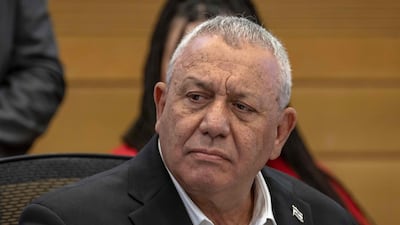
Gadi Eisenkot, leader of Israel's centre-right Yashar party, and Prime Minister Benjamin Netanyahu met on Sunday for talks on a possible unity government, but discussions appeared to end without progress and with no further meetings planned.
Rather than forming an alliance with Mr Netanyahu, Mr Eisenkot, a former military chief, seems more likely to form a governing coalition with parties seeking to oust the veteran incumbent leader following an inconclusive October 27 election, political analysts have said.
Sunday's meeting was the second between Netanyahu and Eisenkot this month, although the first had been described as a security briefing.

"The discussion was businesslike, with both sides seeking to bridge the substantial differences between them," Mr Netanyahu and Mr Eisenkot said in a joint statement, without elaborating.
Israel's Channel 12 news later reported there were no plans for any further meetings, and it cited Mr Eisenkot as telling Mr Netanyahu: "I'm committed to my partners in the (opposition) bloc. You're welcome to join after the government is formed."
The meeting came after Mr Netanyahu offered Mr Eisenkot the chance to lead the government first in a proposed power-sharing and rotating-leadership agreement.
A coalition led by his Likud party won 53 seats in the October 27 election, but fell short of the 61 needed to govern on its own, forcing Mr Netanyahu to seek a deal.
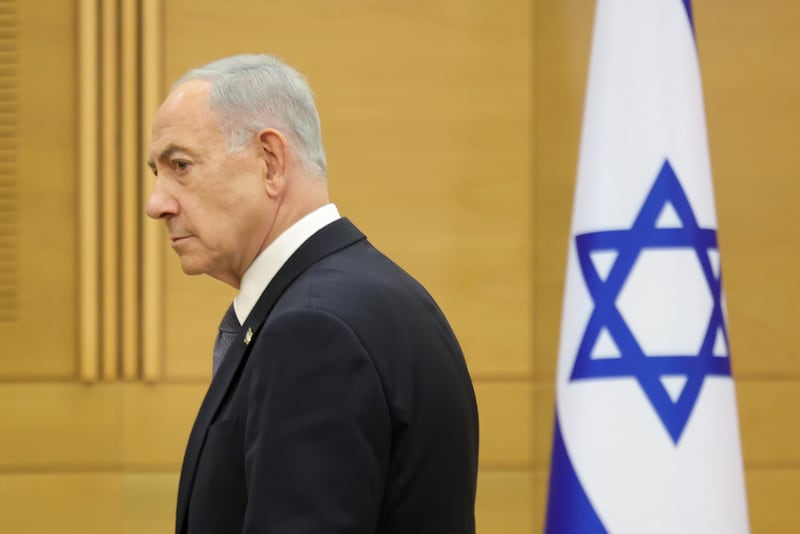
Mr Eisenkot on Sunday appeared to downplay the prospects of forming a unity government with Mr Netanyahu.
Mr Eisenkot's centrist Yashar party and three other opposition parties won a combined 48 seats in the 120-member Knesset, compared with 53 for Mr Netanyahu's bloc. Neither side has enough seats to govern alone.
Two Arab-led political alliances won a combined 19 seats, giving them potential influence over government formation. Most Jewish parties, however, have ruled out relying on their support.
Mr Eisenkot, tasked by Israel's president to form a coalition government, has until December 6 to do so, though there is the possibility of a 14-day extension.
Last week, Mr Eisenkot signed coalition deals with the left-wing Democrats and the right-wing Yisrael Beiteinu party, whose support could bring him closer to a majority in the Knesset.
After meeting Netanyahu on Sunday, Mr Eisenkot held talks with Naftali Bennett, head of the B'Yachad party.
"The two discussed efforts to form a government and the negotiations between their parties’ teams, which are still underway," Mr Eisenkot's party said in a statement. He is yet to sign a coalition agreement with Bennett.

