
A Syrian official has denied reports that Saudi Arabia asked Damascus to send troops to support the kingdom against the Houthis in Yemen.
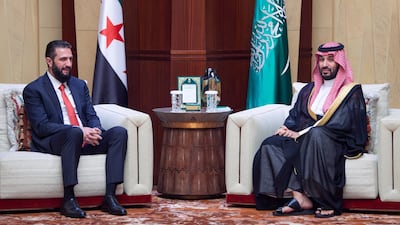
Ahmad Zaidan, media adviser to Syrian President Ahmad Al Shara, described reports in recent days of plans to send troops to Saudi Arabia or Yemen as “lies”. Mr Al Shara met Saudi Crown Prince Mohammed bin Salman in Riyadh during an official visit on Tuesday.
“The security of the Kingdom of Saudi Arabia, and the security of the Gulf, is inseparable from the security of Syria,” Mr Zaidan wrote on X. Saudi Arabia has been repeatedly targeted by Houthi rebels who have stepped up escalation in Yemen.

“But what some media outlets are promoting about the kingdom's request to send Syrian forces to Saudi Arabia or Yemen is a lie and has no basis in truth,” he added.
The denial was also backed by Syrian Response, the official English-language account of Syria’s Foreign Media Department on X.
“Syria’s position is clear: we stand firmly with Saudi Arabia against threats to its security and stability. At the same time, Syria’s policy in the region is focused on stability, peace and co-operation, not opening new fronts,” Syrian Response wrote.
“Our priority is Syria: rebuilding the country, strengthening its institutions, working with our partners on reconstruction and improving the lives of Syrians. Any military co-operation with partner countries would take place only through official channels and existing bilateral frameworks,” it added.
Reuters reported on Wednesday that Syria was considering providing military assistance to Saudi Arabia, citing a US official and a Syrian military official.
It reported that options being considered included defensive aid to protect the kingdom from attacks, or deployment of forces in an offensive capacity to help Saudi-backed Yemeni troops fight the Houthis.
The Houthi attacks on Saudi Arabia have brought the Makkah Joint Defence Agreement between the kingdom, Pakistan and Turkey into focus, raising questions about how the collective security alliance could be realised on the ground.
Earlier this week, Turkey and Pakistan agreed to provide “military forces and capabilities” to Saudi Arabia.
The text of the Makkah pact has not been made public but a joint statement from the three countries when it was signed in August said it was intended to strengthen collective deterrence. Similar to Nato's Article 5 on collective defence, an attack on one country would be considered an attack on all.
Syria on Thursday “strongly condemned Houthi militia attacks targeting vital facilities and civilian sites in Saudi Arabia”, including this week's attacks on Abha International Airport and King Khalid International Airport that killed three people and injured 36 more.
Syria's Ministry of Foreign Affairs said “the attacks on civilian facilities and infrastructure and the endangerment of civilian lives constitute a blatant violation of international law and relevant international rules and conventions”, warning that “such attacks pose a direct threat to Saudi Arabia’s security and the stability of the region”.
The ministry also reaffirmed “Syria’s full solidarity with Saudi Arabia and its support for all legitimate measures taken by the kingdom to protect its security and stability and ensure the safety of its citizens and residents”.
The Saudi Press Agency said Mr Al Shara and the Crown Prince discussed bilateral relations on Tuesday during their meeting in Riyadh and “promising opportunities for developing these relations in various fields”. They also discussed the latest developments in the region.