The first humanitarian convoy entered the Druze-majority city of Sweida in southern Syria on Sunday, after a week of deadly clashes.
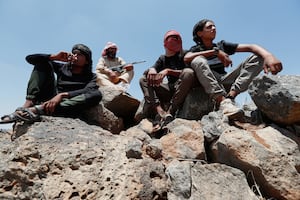
A fragile ceasefire appeared to be holding after Druze fighters reasserted control of their heartland of Sweida city and government troops were sent to the province.
Suwayda 24, a network of citizen journalists, said Syrian Red Crescent convoys had entered the city. “It's the first convoy to enter after the recent events, and it has arrived and is now inside Sweida,” Syrian Red Crescent media and communications official Omar Al Malki told AFP.
The aid group had said earlier on Sunday that it dispatched convoys carrying aid to the city that witnessed bloody clashes since Sunday that killed more than 1,000 people, according to UK-base Syrian Observatory for Human Rights (SOHR).
The convoy of 32 vehicles was carrying basics including food, medical and fuel supplies as well as body bags, Mr Al Malki said.
Residents of Sweida have been holed up in their homes without electricity and water, and food supplies have been scarce.
He said the convoy came “in co-ordination with the government bodies and the local authorities in Sweida”, which are controlled by the Druze.
'Sweida experiences cautious calm'
The Syrian Foreign Ministry had said that its own convoy of more than 40 lorries was unable to enter Sweida. “Outlawed armed militias loyal to Hikmat Al Hijri denied the entry of the convoy”, the ministry said, referring to one of the most influential Druze religious leaders.
Mr Al Hijri welcomed “all humanitarian aid” and called for a complete end to the clashes.
“Sweida has been experiencing a cautious calm”, Sohr said, adding government security troops had blocked roads leading to the province in order to prevent tribal fighters from going there.
The monitor, Druze factions and witnesses have accused government troops of taking the side of Bedouin fighters and carrying out executions in the city.
A ceasefire announced by Syrian President Ahmad Al Shara on Saturday ended days of sectarian clashes that killed hundreds from both sides.
Sources in neighbouring Jordan told The National on Sunday that the violence had subsided considerably, except for in one pocket near a stretch of Road 109 that connects Sweida to the bordering Deraa province.
Syria at 'critical juncture'
The Interior Ministry said overnight that Sweida city was “evacuated of all tribal fighters, and clashes within the city's neighbourhoods were halted”.
The UN migration agency said more than 128,000 people in Sweida province have been displaced by the violence.
US special envoy to Syria Tom Barrack said on Sunday that the country stood at a “critical juncture”, adding that “peace and dialogue must prevail and prevail now”.
Mr Barrack had announced a ceasefire between Syria and Israel the day before, after Israeli strikes bombed government troops in Sweida and Damascus in the last week. Israel claims to be protecting the Druze community – which it also hosts and members enrol in the army – but analysts and diplomats have expressed scepticism over Israeli intentions to use the minority to weaken the Syrian government.
US Secretary of State Marco Rubio on Saturday urged the Syrian government's security troops to prevent jihadists from entering and “carrying out massacres” in the south, and called on Damascus to “bring to justice anyone guilty of atrocities including those in their own ranks”.

