


Thousands of families fled Sudan's civil war in the weeks after the conflict erupted in April last year, with many making their way to Egypt's southern town of Aswan. Arriving with little more than the clothes on their backs, they found themselves stranded without food, medical aid or other emergency assistance.
One Sudanese refugee who escaped five years ago stepped up to help. Nada Fadol, 31, mobilised a team of more than 100 volunteers, including refugees from Sudan, Syria and Yemen, along with Egyptians. The group set up temporary shelters, safe play areas for children and skills training facilities in Aswan to help refugees find employment. They also co-ordinated with Egyptian doctors to provide free healthcare services.
Her efforts won Ms Fadol the prestigious UNHCR Nansen Refugee Award for 2024, which was presented to her and four others by Filippo Grandi, the UN High Commissioner for Refugees, at a ceremony in Geneva on Monday.
Established in 1954 in honour of Norwegian humanitarian Fridtjof Nansen, the award recognises outstanding contributions to helping refugees and displaced people. Previous laureates include Eleanor Roosevelt and Angela Merkel. Ms Fadol won this year's award for the Middle East region, while Brazilian nun Rosita Milesi was honoured as the global laureate for her four decades of work in the field.

"I could not first believe it. I did not expect anything," Ms Fadol told The National. "It is a big responsibility. It also means that all of us have to do more than what we are doing. It is not enough."
Pain of displacement
Having fled northern Sudan for Alexandria in 2019 due to poverty and insecurity, Ms Fadol said she understands the challenges of starting anew. “You don’t know anyone. You don't know the language, or have a job or money. That’s a difficult starting point.”
She began offering lessons to the children of other refugees, fostering a sense of community. She now works at a community health centre in Alexandria.
After the fighting broke out in Khartoum in April last year, she was devastated to see her homeland descend into civil war. “That was not Sudan I left behind. There was hope that someday I could return,” she said. The “horror stories” of rape, massacres and looting she heard from the refugees shocked her.
The conflict has claimed at least 20,000 lives and displaced more than 11 million people, according to the UN, pushing Sudan into one of the worst displacement crises in recent history. Ms Fadol's parents and two siblings have been displaced within Sudan.
An estimated 500,000 Sudanese refugees have registered in Egypt since the conflict began, the UNHCR says, with more than one million arriving in total. As thousands of Sudanese poured into neighbouring countries, Ms Fadol knew that every helping hand could make a difference. Two of her friends went to Aswan to assess the situation while she raised funds and mobilised volunteers in Alexandria.
Ms Fadol and her team distributed food, medicine and emergency kits to the refugees. “Many were traumatised and in need of mental health care; others were injured,” she said.
They also connected the new arrivals with families willing to provide accommodation. “People were incredibly kind and welcoming and offered their homes as temporary shelters,” she added.
Every hand helps
As the number of refugees surged from hundreds to thousands, Ms Fadol and her volunteers launched the Rouh Initiative, transforming the three-bedroom Alexandria apartment where they were living into a multipurpose centre.
“Rouh means soul in Arabic. Our message is that we are all one soul, regardless of our nationality,” she said.
The centre serves as a one-stop shop for refugees, offering training in sewing, crafts, and lessons for children. Twice a month, the Egyptian Red Crescent provides free healthcare services. At night, the centre becomes a temporary shelter for families seeking a safe place until they find permanent housing.
Ms Fadol said that when communities become the first responders to a refugee crisis, it makes a great impact. While international agencies with millions in funding are helping, grass roots initiatives like hers can also make a big difference.
Ms Fadol hopes to establish two more Rouh centres in Aswan and Cairo with the $25,000 cash prize.
"We must do more," she said. "I hope I can reach as many people as I can, not just in Egypt but even outside."
-
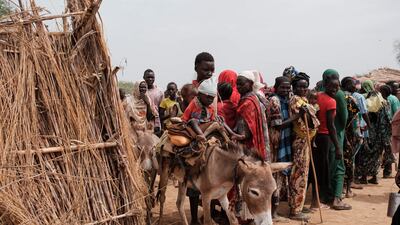
Malnourished Sudanese children are carried by a donkey through a camp in North Kordofan state for people displaced by the war raging across the country. All photos: AFP -
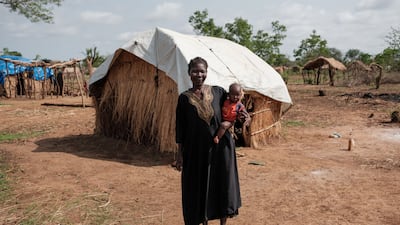
The conflict has displaced more than 10 million people within Sudan, the International Organisation for Migration says. -
The UN estimates that five million Sudanese are suffering from extreme hunger, with countries hosting refugees from the war also facing a lack of food. -
The US has warned hunger in Sudan could reach levels last seen in Ethiopia in the 1980s, when famine killed 1.2 million. -
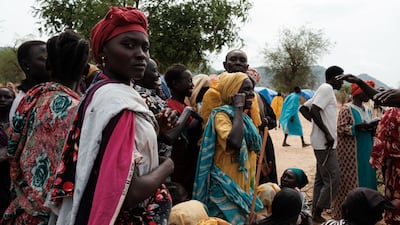
People wait to receive food cards a camp for internally displaced people in North Kordofan. Sudan's military and the paramilitary Rapid Support Forces have been fighting since April last year. -
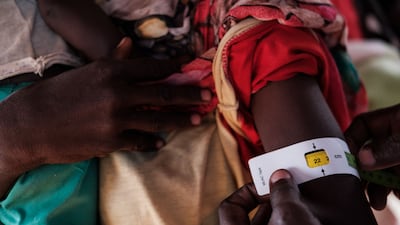
The UN refugee agency has called for humanitarian access to Sudan to be increased, as the threat of famine looms. -
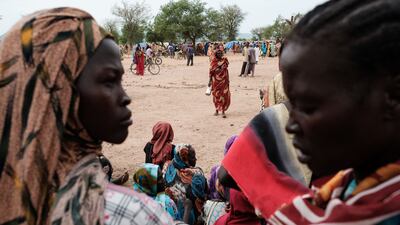
The UN has warned Sudan faces the world's worst displacement crisis, with little progress in efforts to secure a ceasefire. -
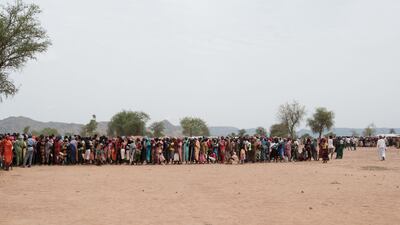
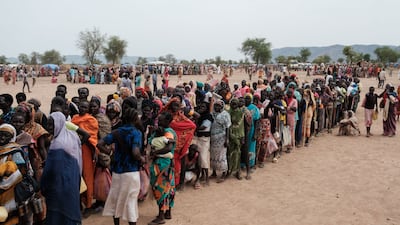
People queue to register for a potential food aid delivery in North Kordofan. Doctors Without Borders says there are 'extreme levels of suffering' across Sudan. -
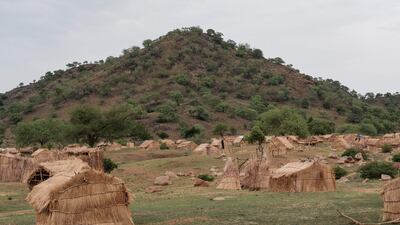
Huts to provide shelter for displaced people in Rabang. The war has killed tens of thousands in Sudan. -
More than 7.2 million have fled their homes since the war broke out between the military and the RSF, International Organisation for Migration says. -
The US recently pledged $315 million in aid to Sudan and warned the country faces a historic famine. -

A woman braids her sister's hair in the Rabang displacement camp. -
The US is among the countries to push to restart ceasefire talks. -
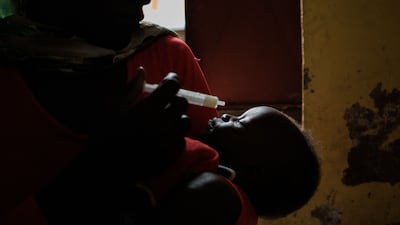
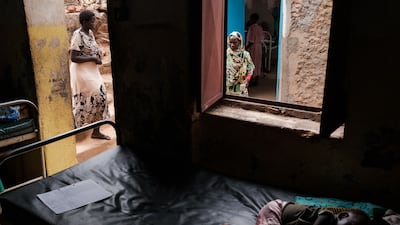
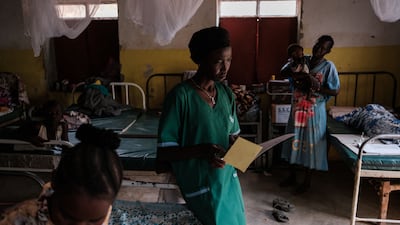
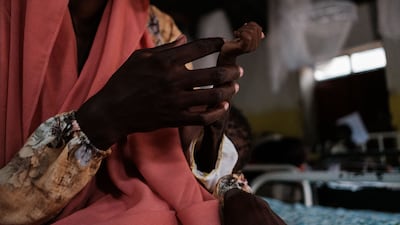
A child is fed at the malnutrition ward of a hospital in the Nuba Mountains. Sudan is facing the world's worst humanitarian crisis in decades, Doctors Without Borders has warned. -
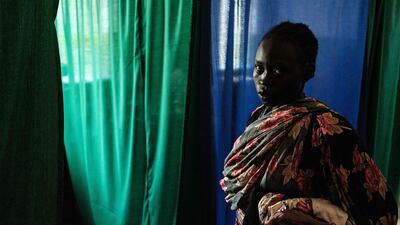
Global agencies have warned millions are on the brink of starvation in Sudan. -
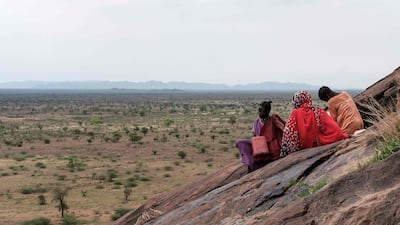
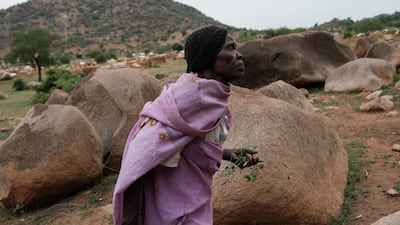
Girls collect water from a hill after heavy rain near the Rabang displacement camp. -

The family of a bride celebrate in the Nuba Mountains as they prepare to deliver a dowry of porridge and a fermented beverage known as merisa. -
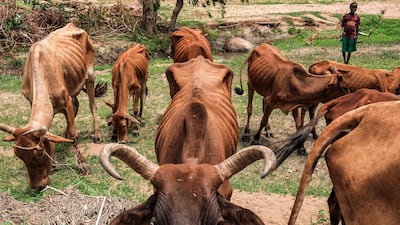
Sudan's worsening hunger crisis has also affected livestock. -
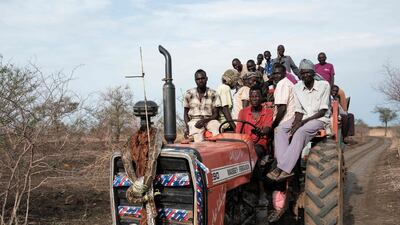
People take the body of a large snake to the Rabang camp. International agencies have issued dire warnings about the threat of famine in Sudan. -
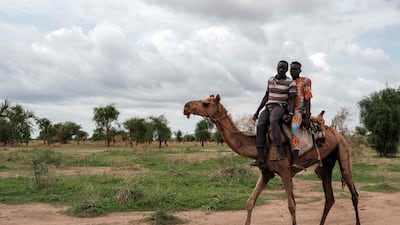
Men ride a camel in South Kordofan state. UN High Commissioner for Refugees Filippo Grandi says more food and aid is needed to help people 'that otherwise risk starvation'.



