Live updates: Follow the latest on Israel-Gaza
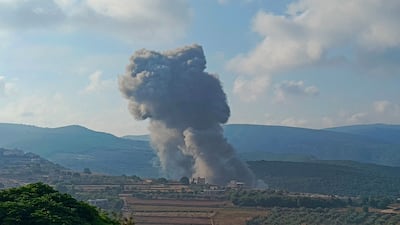
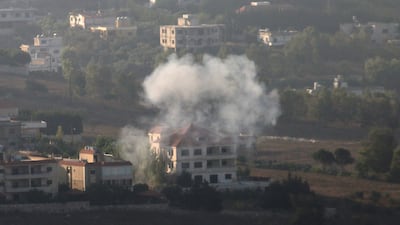
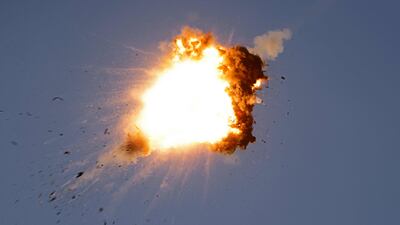
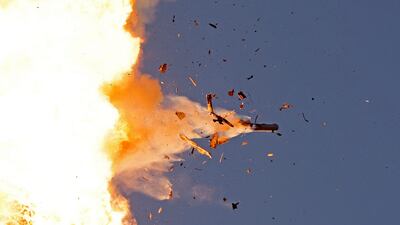
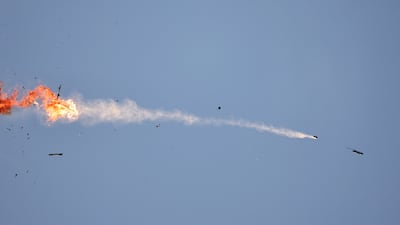
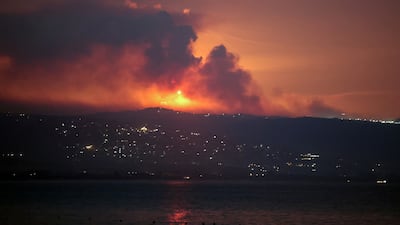
Hezbollah attacked Israel with hundreds of rockets and drones, and the Israeli army responded with a series of strikes against targets in several Lebanese villages, marking some of the most intense phases of the war that the Iran-backed group started ten months ago in support of its ally Hamas.
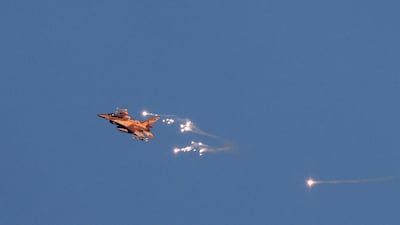
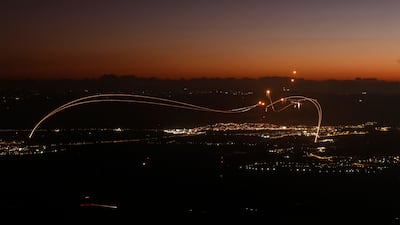
But the dramatic scenes of rockets and drones being intercepted in Israel's skies and the hits against Lebanon appeared to reflect a calculated and controlled attempt by both sides to showcase their deterrence capabilities while steering away from a full-scale war in a Middle East already engulfed by Israel’s devastating war in Gaza.
“Hezbollah's attack is intended to reinstate the deterrence balance that Israel has been trying to undermine in recent days through its attacks deep inside Lebanon,” a source close to the Iran-backed group told The National.
“Hezbollah, with what it did today, raises the level of the confrontation, but at the same time does not declare an open battle with no rules or limits,” explained the source, who spoke on condition of anonymity.
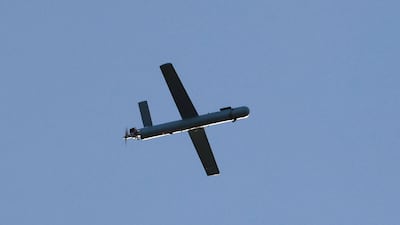
The Lebanese militant group claimed to have targeted 11 Israeli military sites, including a military site near Tel Aviv, with more than 320 Katyusha rockets and drones, as a retaliation for the assassination of its senior commander Fouad Shukr.
The attack was preceded by pre-emptive Israeli strikes, followed by targeted hits on various locations and positions in Lebanon, which Hezbollah said were evacuated in anticipation of the strikes. The Iran-backed group then added in a later statement that its military operation for Sunday was over.
“Israel must understand that Hezbollah is keen not to expand the confrontation,” affirmed the source.
What occurred behind the scenes and led to the controlled actions wasn't immediately clear.
Earlier this month, political sources in Beirut told The National that Hezbollah and its allies in Lebanon have been indirectly offered “incentives” by western envoys to ensure that the retaliation to Israel’s assassination of the group’s senior military commander does not lead to a full-scale war.
'Saving face'
In recent weeks, diplomatic efforts have intensified in anticipation of retaliation by Iran and Hezbollah against Israel, aiming to ensure that the response does not lead to a major escalation.
Tensions peaked in the region since Iran launched an unprecedented drone and missile barrage against Israel in April in a retaliatory strike to an attack on its Damascus consular section. Two senior generals were killed in the strike, which Tehran blamed on Israel.
An Arab security official told The National that the Israeli and Hezbollah strikes on Sunday were clearly designed to avoid a full-scale war. The official pointed out that the deepest targets of Hezbollah rockets were about 100 kilometres inside Israel and that the group avoided Israeli civilian targets as well as a “spectacular” hit by reaching Tel Aviv.
“It is a more intense Hezbollah attack than usual, but still aimed at saving face and remaining within the same calibrated cycle,” he said.
Mr Shukr and an Iranian military associate were killed in an Israeli strike on a densely populated neighbourhood in Beirut's southern suburbs last month. Hours later, Hamas leader Ismail Haniyeh was assassinated in Tehran. Hezbollah’s Hassan Nasrallah warned that the “red lines” crossed by Israel will usher in a “new phase” of the multifront conflict that will make Israel “weep”.
The two killings marked an escalation with major repercussions for the Middle East in general and the Gaza ceasefire talks in particular. Israel, Iran and Hamas rushed to affirm that they are not seeking a wider war, but the vows of retaliation against Israel suggested a fiercer cycle of violence in parts of the region, particularly as efforts to secure a ceasefire in Gaza have remained unsuccessful.
The Israeli Ministry of Defence declared a state of emergency across the entire territory of Israel for 48 hours after HJezbollah's attacks and the Israeli Prime Minister Benjamin Netanyahu said that the Israeli army has “destroyed thousands of rockets” and that “what happened today is not the end of the story”.
“For Hezbollah, too, this isn’t the end, and the Israelis should expect high-level attacks in the future,” warned the source close to Hezbollah.
However, despite the dramatic scenes, a western diplomatic source said that Hezbollah's attempt to re-establish deterrence appears to have failed with the interception of the rockets and drones, potentially paving the way for further escalation in the long run.
“Of course, Hezbollah will adopt a narrative of victory, but it doesn't align with the reality on the ground," the diplomatic source added.
On Sunday evening, Hezbollah leader Hassan Nasrallah denied in a speech that Israel managed to thwart his group's attack, insisting that a significant number of drones and rockets reached their military targets. He added that his group will assess the attack's impact and decide later if a bigger retaliation is needed.
“At this stage, our country can breath and relax,” he said.

COMPANY%20PROFILE
%3Cp%3E%3Cstrong%3EName%3A%20%3C%2Fstrong%3EEjari%3Cbr%3E%3Cstrong%3EBased%3A%20%3C%2Fstrong%3ERiyadh%2C%20Saudi%20Arabia%3Cbr%3E%3Cstrong%3EFounders%3A%20%3C%2Fstrong%3EYazeed%20Al%20Shamsi%2C%20Fahad%20Albedah%2C%20Mohammed%20Alkhelewy%20and%20Khalid%20Almunif%3Cbr%3E%3Cstrong%3ESector%3A%20%3C%2Fstrong%3EPropTech%3Cbr%3E%3Cstrong%3ETotal%20funding%3A%20%3C%2Fstrong%3E%241%20million%3Cbr%3E%3Cstrong%3EInvestors%3A%20%3C%2Fstrong%3ESanabil%20500%20Mena%2C%20Hambro%20Perks'%20Oryx%20Fund%20and%20angel%20investors%3Cbr%3E%3Cstrong%3ENumber%20of%20employees%3A%20%3C%2Fstrong%3E8%3C%2Fp%3E%0A
Killing of Qassem Suleimani
Tips to keep your car cool
- Place a sun reflector in your windshield when not driving
- Park in shaded or covered areas
- Add tint to windows
- Wrap your car to change the exterior colour
- Pick light interiors - choose colours such as beige and cream for seats and dashboard furniture
- Avoid leather interiors as these absorb more heat
COMPANY%20PROFILE
%3Cp%3E%3Cstrong%3EName%3A%3C%2Fstrong%3E%20Floward%0D%3Cbr%3E%3Cstrong%3EBased%3A%20%3C%2Fstrong%3ERiyadh%2C%20Saudi%20Arabia%0D%3Cbr%3E%3Cstrong%3EFounders%3A%20%3C%2Fstrong%3EAbdulaziz%20Al%20Loughani%20and%20Mohamed%20Al%20Arifi%0D%3Cbr%3E%3Cstrong%3ESector%3A%20%3C%2Fstrong%3EE-commerce%0D%3Cbr%3E%3Cstrong%3ETotal%20funding%3A%20%3C%2Fstrong%3EAbout%20%24200%20million%0D%3Cbr%3E%3Cstrong%3EInvestors%3A%20%3C%2Fstrong%3EAljazira%20Capital%2C%20Rainwater%20Partners%2C%20STV%20and%20Impact46%0D%3Cbr%3E%3Cstrong%3ENumber%20of%20employees%3A%20%3C%2Fstrong%3E1%2C200%3C%2Fp%3E%0A
Imperial%20Island%3A%20A%20History%20of%20Empire%20in%20Modern%20Britain
%3Cp%3EAuthor%3A%20Charlotte%20Lydia%20Riley%3Cbr%3EPublisher%3A%20Bodley%20Head%3Cbr%3EPages%3A%20384%3C%2Fp%3E%0A
Mercer, the investment consulting arm of US services company Marsh & McLennan, expects its wealth division to at least double its assets under management (AUM) in the Middle East as wealth in the region continues to grow despite economic headwinds, a company official said.
Mercer Wealth, which globally has $160 billion in AUM, plans to boost its AUM in the region to $2-$3bn in the next 2-3 years from the present $1bn, said Yasir AbuShaban, a Dubai-based principal with Mercer Wealth.
“Within the next two to three years, we are looking at reaching $2 to $3 billion as a conservative estimate and we do see an opportunity to do so,” said Mr AbuShaban.
Mercer does not directly make investments, but allocates clients’ money they have discretion to, to professional asset managers. They also provide advice to clients.
“We have buying power. We can negotiate on their (client’s) behalf with asset managers to provide them lower fees than they otherwise would have to get on their own,” he added.
Mercer Wealth’s clients include sovereign wealth funds, family offices, and insurance companies among others.
From its office in Dubai, Mercer also looks after Africa, India and Turkey, where they also see opportunity for growth.
Wealth creation in Middle East and Africa (MEA) grew 8.5 per cent to $8.1 trillion last year from $7.5tn in 2015, higher than last year’s global average of 6 per cent and the second-highest growth in a region after Asia-Pacific which grew 9.9 per cent, according to consultancy Boston Consulting Group (BCG). In the region, where wealth grew just 1.9 per cent in 2015 compared with 2014, a pickup in oil prices has helped in wealth generation.
BCG is forecasting MEA wealth will rise to $12tn by 2021, growing at an annual average of 8 per cent.
Drivers of wealth generation in the region will be split evenly between new wealth creation and growth of performance of existing assets, according to BCG.
Another general trend in the region is clients’ looking for a comprehensive approach to investing, according to Mr AbuShaban.
“Institutional investors or some of the families are seeing a slowdown in the available capital they have to invest and in that sense they are looking at optimizing the way they manage their portfolios and making sure they are not investing haphazardly and different parts of their investment are working together,” said Mr AbuShaban.
Some clients also have a higher appetite for risk, given the low interest-rate environment that does not provide enough yield for some institutional investors. These clients are keen to invest in illiquid assets, such as private equity and infrastructure.
“What we have seen is a desire for higher returns in what has been a low-return environment specifically in various fixed income or bonds,” he said.
“In this environment, we have seen a de facto increase in the risk that clients are taking in things like illiquid investments, private equity investments, infrastructure and private debt, those kind of investments were higher illiquidity results in incrementally higher returns.”
The Abu Dhabi Investment Authority, one of the largest sovereign wealth funds, said in its 2016 report that has gradually increased its exposure in direct private equity and private credit transactions, mainly in Asian markets and especially in China and India. The authority’s private equity department focused on structured equities owing to “their defensive characteristics.”
Buy farm-fresh food
The UAE is stepping up its game when it comes to platforms for local farms to show off and sell their produce.
In Dubai, visit Emirati Farmers Souq at The Pointe every Saturday from 8am to 2pm, which has produce from Al Ammar Farm, Omar Al Katri Farm, Hikarivege Vegetables, Rashed Farms and Al Khaleej Honey Trading, among others.
In Sharjah, the Aljada residential community will launch a new outdoor farmers’ market every Friday starting this weekend. Manbat will be held from 3pm to 8pm, and will host 30 farmers, local home-grown entrepreneurs and food stalls from the teams behind Badia Farms; Emirates Hydroponics Farms; Modern Organic Farm; Revolution Real; Astraea Farms; and Al Khaleej Food.
In Abu Dhabi, order farm produce from Food Crowd, an online grocery platform that supplies fresh and organic ingredients directly from farms such as Emirates Bio Farm, TFC, Armela Farms and mother company Al Dahra.
Fixtures
Friday Leganes v Alaves, 10.15pm; Valencia v Las Palmas, 12.15am
Saturday Celta Vigo v Real Sociedad, 8.15pm; Girona v Atletico Madrid, 10.15pm; Sevilla v Espanyol, 12.15am
Sunday Athletic Bilbao v Getafe, 8.15am; Barcelona v Real Betis, 10.15pm; Deportivo v Real Madrid, 12.15am
Monday Levante v Villarreal, 10.15pm; Malaga v Eibar, midnight
Who's who in Yemen conflict
Houthis: Iran-backed rebels who occupy Sanaa and run unrecognised government
Yemeni government: Exiled government in Aden led by eight-member Presidential Leadership Council
Southern Transitional Council: Faction in Yemeni government that seeks autonomy for the south
Habrish 'rebels': Tribal-backed forces feuding with STC over control of oil in government territory
Paatal Lok season two
Directors: Avinash Arun, Prosit Roy
Stars: Jaideep Ahlawat, Ishwak Singh, Lc Sekhose, Merenla Imsong
Rating: 4.5/5
TRAP
Starring: Josh Hartnett, Saleka Shyamalan, Ariel Donaghue
Director: M Night Shyamalan
Rating: 3/5
Name: Peter Dicce
Title: Assistant dean of students and director of athletics
Favourite sport: soccer
Favourite team: Bayern Munich
Favourite player: Franz Beckenbauer
Favourite activity in Abu Dhabi: scuba diving in the Northern Emirates
TO A LAND UNKNOWN
Director: Mahdi Fleifel
Starring: Mahmoud Bakri, Aram Sabbah, Mohammad Alsurafa
Rating: 4.5/5
The%20Roundup%20%3A%20No%20Way%20Out
%3Cp%3E%3Cstrong%3EDirector%3A%3C%2Fstrong%3E%20Lee%20Sang-yong%3Cbr%3E%3Cstrong%3EStars%3A%3C%2Fstrong%3E%20Don%20Lee%2C%20Lee%20Jun-hyuk%2C%20Munetaka%20Aoki%3Cbr%3E%3Cstrong%3ERating%3A%20%3C%2Fstrong%3E3%2F5%3Cbr%3E%3Cbr%3E%3C%2Fp%3E%0A
IF YOU GO
The flights: FlyDubai offers direct flights to Catania Airport from Dubai International Terminal 2 daily with return fares starting from Dh1,895.
The details: Access to the 2,900-metre elevation point at Mount Etna by cable car and 4x4 transport vehicle cost around €57.50 (Dh248) per adult. Entry into Teatro Greco costs €10 (Dh43). For more go to www.visitsicily.info
Where to stay: Hilton Giardini Naxos offers beachfront access and accessible to Taormina and Mount Etna. Rooms start from around €130 (Dh561) per night, including taxes.
The specs
Engine: 2.0-litre 4cyl turbo
Power: 261hp at 5,500rpm
Torque: 405Nm at 1,750-3,500rpm
Transmission: 9-speed auto
Fuel consumption: 6.9L/100km
On sale: Now
Price: From Dh117,059