EU foreign policy chief Josep Borrell, left, and Saudi Foreign Minister Prince Faisal bin Farhan during the EU-GCC Forum on Regional Security and Co-operation in Luxembourg, on Monday. EPA

EU announces five-year Schengen visas for Saudi, Omani and Bahraini citizens


Mona Farag
  • English
  • Arabic

The EU has announced five-year Schengen visas for citizens of Saudi Arabia, Oman and Bahrain that allow them to visit the bloc several times during the period.

The announcement was made by EU foreign policy chief, Josep Borrell, during the opening session of the first high-level Forum on Regional Security and Co-operation between the bloc and the GCC in Luxembourg.

“I welcome a decision adopted by the European Commission this morning to harmonise the rules for granting multiple-entry visas for the citizens of the GCC countries,” he said.

The visa regulations have been standardised for all GCC countries whose citizens require permits to visit the Schengen Area.

The changes are a significant step forward in strengthening relations between the EU and Gulf countries.

UAE citizens do not need a visa to travel to the Schengen Area and are allowed to stay for up to three months at a time. However, Qataris are required to apply for the visa.

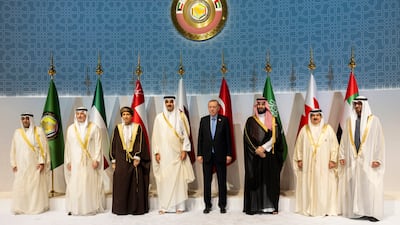
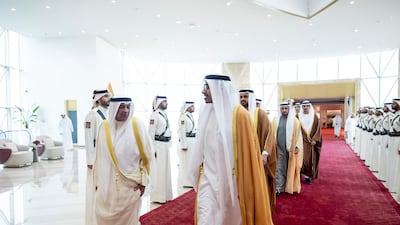
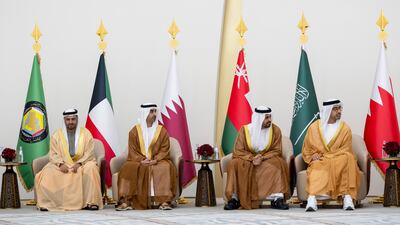
  • President Sheikh Mohamed, Bahrain's King Hamad, Saudi Arabia's Crown Prince Mohamed bin Salman, Turkish President Recep Tayyip Erdogan, Sheikh Tamim bin Hamad Al Thani, Emir of Qatar, Oman's Deputy Prime Minister Sayyed Fahd bin Mahmoud, Kuwaiti Foreign Minister Salem Abdullah Al Sabah and Jasem Mohamed Al Budaiwi, Secretary General of the GCC at the summit in Doha. Abdulla Al Neyadi / Presidential Court
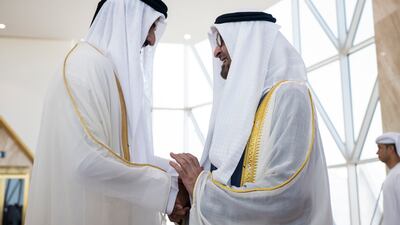
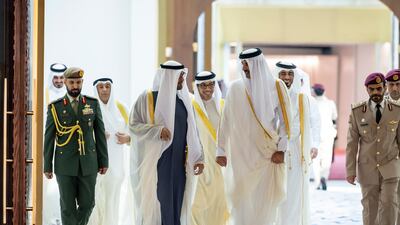
    President Sheikh Mohamed, Bahrain's King Hamad, Saudi Arabia's Crown Prince Mohamed bin Salman, Turkish President Recep Tayyip Erdogan, Sheikh Tamim bin Hamad Al Thani, Emir of Qatar, Oman's Deputy Prime Minister Sayyed Fahd bin Mahmoud, Kuwaiti Foreign Minister Salem Abdullah Al Sabah and Jasem Mohamed Al Budaiwi, Secretary General of the GCC at the summit in Doha. Abdulla Al Neyadi / Presidential Court
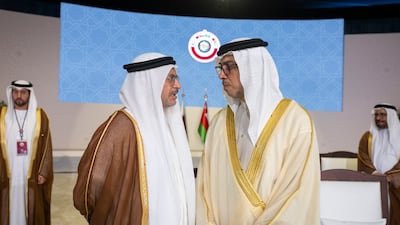
  • Dr Anwar Gargash, diplomatic adviser to the President, speaks to Sheikh Mansour bin Zayed, Vice President, Deputy Prime Minister and Chairman of the Presidential Court, at the 44th GCC Summit in Qatar. Abdulla Al Neyadi / Presidential Court
    Dr Anwar Gargash, diplomatic adviser to the President, speaks to Sheikh Mansour bin Zayed, Vice President, Deputy Prime Minister and Chairman of the Presidential Court, at the 44th GCC Summit in Qatar. Abdulla Al Neyadi / Presidential Court
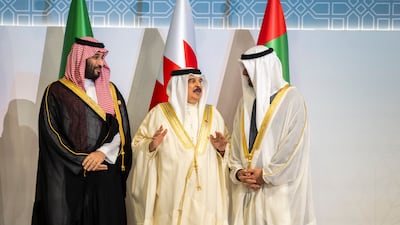
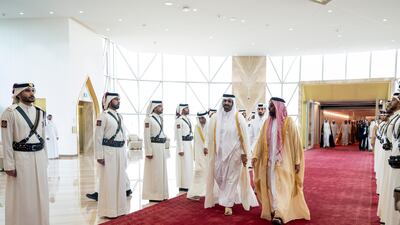
  • Sheikh Mohamed with King Hamad of Bahrain and Crown Prince Mohamed. Abdulla Al Neyadi / Presidential Court
    Sheikh Mohamed with King Hamad of Bahrain and Crown Prince Mohamed. Abdulla Al Neyadi / Presidential Court
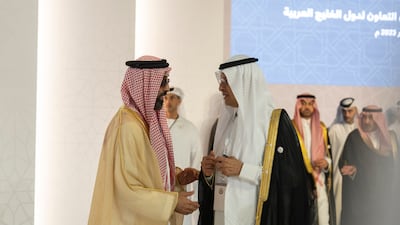
  • Sheikh Tahnoun bin Zayed, UAE National Security Adviser and Deputy Ruler of Abu Dhabi, speaks to Prince Abdulaziz bin Salman, Saudi Arabia's Minister of Energy. Abdulla Al Neyadi / Presidential Court
    Sheikh Tahnoun bin Zayed, UAE National Security Adviser and Deputy Ruler of Abu Dhabi, speaks to Prince Abdulaziz bin Salman, Saudi Arabia's Minister of Energy. Abdulla Al Neyadi / Presidential Court
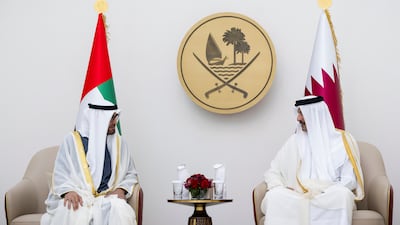
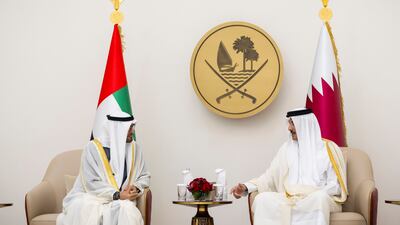
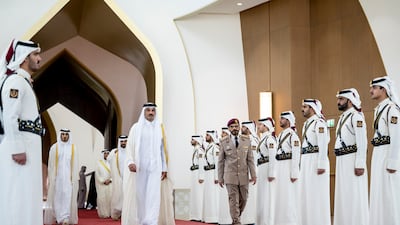
  • President Sheikh Mohamed is received by Qatari Emir Sheikh Tamim in Doha. Mohamed Al Hammadi / Presidential Court
    President Sheikh Mohamed is received by Qatari Emir Sheikh Tamim in Doha. Mohamed Al Hammadi / Presidential Court
  • Recent Gulf diplomacy has focused on securing a quick end to Israel's war in Gaza and a return to a multilateral peace process. Mohamed Al Hammadi / Presidential Court
    Recent Gulf diplomacy has focused on securing a quick end to Israel's war in Gaza and a return to a multilateral peace process. Mohamed Al Hammadi / Presidential Court
  • Sheikh Mohamed is leading the UAE delegation, which includes Sheikh Mansour bin Zayed, Vice President, Deputy Prime Minister and Chairman of the Presidential Court, Sheikh Tahnoun bin Zayed, National Security Adviser and Deputy Ruler of Abu Dhabi, and Sheikh Abdullah bin Zayed, Minister of Foreign Affairs. Mohamed Al Hammadi / Presidential Court
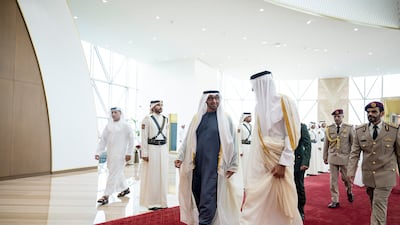
    Sheikh Mohamed is leading the UAE delegation, which includes Sheikh Mansour bin Zayed, Vice President, Deputy Prime Minister and Chairman of the Presidential Court, Sheikh Tahnoun bin Zayed, National Security Adviser and Deputy Ruler of Abu Dhabi, and Sheikh Abdullah bin Zayed, Minister of Foreign Affairs. Mohamed Al Hammadi / Presidential Court
  • Sheikh Mansour is welcomed by Sheikh Tamim upon his arrival in Doha. Mohamed Al Hammadi / Presidential Court
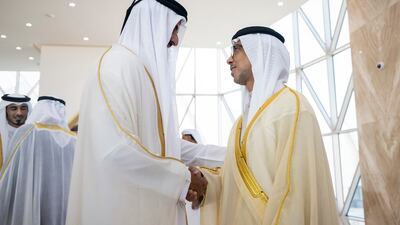
    Sheikh Mansour is welcomed by Sheikh Tamim upon his arrival in Doha. Mohamed Al Hammadi / Presidential Court
  • Sheikh Abdullah with GCC secretary general Jasem Al Budaiwi in Doha. Mohamed Al Hammadi / UAE Presidential Court
    Sheikh Abdullah with GCC secretary general Jasem Al Budaiwi in Doha. Mohamed Al Hammadi / UAE Presidential Court
  • Sheikh Abdullah, Sheikh Theyab bin Mohamed, chairman of the Office of Development and Martyrs' Families Affairs at the Presidential Court, Sheikh Hamdan bin Mohamed and Sheikh Mohamed bin Hamad, private affairs adviser in the Presidential Court, attend a reception in Doha. Mohamed Al Hammadi / Presidential Court
    Sheikh Abdullah, Sheikh Theyab bin Mohamed, chairman of the Office of Development and Martyrs' Families Affairs at the Presidential Court, Sheikh Hamdan bin Mohamed and Sheikh Mohamed bin Hamad, private affairs adviser in the Presidential Court, attend a reception in Doha. Mohamed Al Hammadi / Presidential Court
  • Sheikh Tahnoun is received by Sheikh Abdullah bin Hamad upon his arrival in Doha. Mohamed Al Hammadi / Presidential Court
    Sheikh Tahnoun is received by Sheikh Abdullah bin Hamad upon his arrival in Doha. Mohamed Al Hammadi / Presidential Court
  • Other topics on the agenda of the GCC meeting include the Gulf railway project. Mohamed Al Hammadi / Presidential Court
    Other topics on the agenda of the GCC meeting include the Gulf railway project. Mohamed Al Hammadi / Presidential Court
  • GCC leaders are also expected to discuss tourist visa strategies for the period 2023 to 2030. Mohamed Al Hammadi / Presidential Court
    GCC leaders are also expected to discuss tourist visa strategies for the period 2023 to 2030. Mohamed Al Hammadi / Presidential Court
  • Sheikh Tamim urged the UN Security Council to press Israel to return to the negotiating table. Mohamed Al Hammadi / UAE Presidential Court
    Sheikh Tamim urged the UN Security Council to press Israel to return to the negotiating table. Mohamed Al Hammadi / UAE Presidential Court
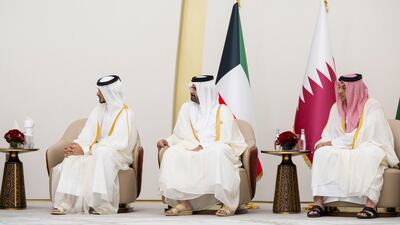
  • Dr Khalid Al Attiyah, Qatar's Deputy Prime Minister and Minister of State for Defence Affairs, and Sheikh Jasem bin Hamad attend a reception for Sheikh Mohamed before the start of the GCC meeting. Mohamed Al Hammadi / Presidential Court
    Dr Khalid Al Attiyah, Qatar's Deputy Prime Minister and Minister of State for Defence Affairs, and Sheikh Jasem bin Hamad attend a reception for Sheikh Mohamed before the start of the GCC meeting. Mohamed Al Hammadi / Presidential Court

In 2022, EU announced plans to offer visa-free travel to Kuwaitis and Qataris.

However, a new visa “cascade” regime was unveiled for Kuwaiti only last September, allowing eligible applicants, including first-time travellers, to obtain five-year permits.

The Schengen Area, which includes 29 European countries, was expanded last February to include Bulgaria and Romania, eliminating all air and maritime border controls.

Citizens from the UAE, Qatar, Bahrain, Jordan, Kuwait, Oman, Saudi Arabia have been exempted from the UK's pre-entry visa requirements.

In November, Gulf countries announced plans for a unified tourist visa similar to the Schengen permit in a move to ease travel for residents and tourists.


UAE currency: the story behind the money in your pockets
Points to remember
  • Debate the issue, don't attack the person
  • Build the relationship and dialogue by seeking to find common ground
  • Express passion for the issue but be aware of when you're losing control or when there's anger. If there is, pause and take some time out.
  • Listen actively without interrupting
  • Avoid assumptions, seek understanding, ask questions
UAE currency: the story behind the money in your pockets
BULKWHIZ PROFILE

Date started: February 2017

Founders: Amira Rashad (CEO), Yusuf Saber (CTO), Mahmoud Sayedahmed (adviser), Reda Bouraoui (adviser)

Based: Dubai, UAE

Sector: E-commerce 

Size: 50 employees

Funding: approximately $6m

Investors: Beco Capital, Enabling Future and Wain in the UAE; China's MSA Capital; 500 Startups; Faith Capital and Savour Ventures in Kuwait

Ten tax points to be aware of in 2026

1. Domestic VAT refund amendments: request your refund within five years

If a business does not apply for the refund on time, they lose their credit.

2. E-invoicing in the UAE

Businesses should continue preparing for the implementation of e-invoicing in the UAE, with 2026 a preparation and transition period ahead of phased mandatory adoption. 

3. More tax audits

Tax authorities are increasingly using data already available across multiple filings to identify audit risks. 

4. More beneficial VAT and excise tax penalty regime

Tax disputes are expected to become more frequent and more structured, with clearer administrative objection and appeal processes. The UAE has adopted a new penalty regime for VAT and excise disputes, which now mirrors the penalty regime for corporate tax.

5. Greater emphasis on statutory audit

There is a greater need for the accuracy of financial statements. The International Financial Reporting Standards standards need to be strictly adhered to and, as a result, the quality of the audits will need to increase.

6. Further transfer pricing enforcement

Transfer pricing enforcement, which refers to the practice of establishing prices for internal transactions between related entities, is expected to broaden in scope. The UAE will shortly open the possibility to negotiate advance pricing agreements, or essentially rulings for transfer pricing purposes. 

7. Limited time periods for audits

Recent amendments also introduce a default five-year limitation period for tax audits and assessments, subject to specific statutory exceptions. While the standard audit and assessment period is five years, this may be extended to up to 15 years in cases involving fraud or tax evasion. 

8. Pillar 2 implementation 

Many multinational groups will begin to feel the practical effect of the Domestic Minimum Top-Up Tax (DMTT), the UAE's implementation of the OECD’s global minimum tax under Pillar 2. While the rules apply for financial years starting on or after January 1, 2025, it is 2026 that marks the transition to an operational phase.

9. Reduced compliance obligations for imported goods and services

Businesses that apply the reverse-charge mechanism for VAT purposes in the UAE may benefit from reduced compliance obligations. 

10. Substance and CbC reporting focus

Tax authorities are expected to continue strengthening the enforcement of economic substance and Country-by-Country (CbC) reporting frameworks. In the UAE, these regimes are increasingly being used as risk-assessment tools, providing tax authorities with a comprehensive view of multinational groups’ global footprints and enabling them to assess whether profits are aligned with real economic activity. 

Contributed by Thomas Vanhee and Hend Rashwan, Aurifer

Updated: April 23, 2024, 7:34 AM