


French unions representing public sector workers are threatening strikes over pay and working conditions as they face dealing with millions of visitors during the Paris Olympics this summer.
The prospect of potentially embarrassing protest action disrupting the showpiece event when the eyes of the world will be on the city has prompted the government of President Emmanuel Macron to begin offering bonuses to police and other workers.
According to some estimates, 15.9 million people could visit Paris and the surrounding region from July to September, the period of the Olympics and Paralympics.
The games are likely to increase strain in Paris, which has already been stretched by heightened security threats and chronic staffing shortages at hospitals and on the transport network.
Leading the way in threatening strikes is the CGT union, whose general secretary Sophie Binet has said it will provide notice for the public-sector workers they represent to walk out during July and August, coinciding with the scheduled dates of the games.
Among the groups of workers it represents who could strike are hospital staff, customs officers and those in the cultural sector.
One expert The National spoke to said the government has been slow to clarify whether workers will be paid more for the longer hours needed to keep Paris running during the games.
Paul Smith, from Nottingham University, said President Macron will be hoping to appeal to workers not to “ruin the party” and that the fractured nature of France’s unions will blunt any action.
“But the people who are there to make the magic happen are not feeling very magical at the moment,” he said.
Ms Binet called on the government to inject more funding into hospitals, which she claimed are in a “catastrophic” state if France wants to be able to deal with the influx of visitors.
“We are very, very, very worried about how it will be this summer,” she said.
“It won’t be possible to blackmail staff once again by asking them to work more overtime and call into question their paid leave. They are exhausted and can’t take it any more. We need a recruitment plan.”

The union leader said the government has yet to explain “how are we going to accommodate all the workers who will have to come for the Olympics?”.
“How are we going to take care of their children when they’re the ones who have to work? What kind of bonuses will they get?”
Ms Binet said “it’s getting very tiresome” calling on the government to ensure pay and conditions are sorted in time.
“We want the government to take immediate action to ensure the success of the Games,” she said.
The union is currently involved in a pay dispute with the Paris transport operator RATP, which is scheduled to continue until September.
François-Xavier Arouls, one of the leaders of the Solidaires union at RATP, said if “workers are no longer willing to make sacrifices for what the government says is the greater good”, but added that if properly paid “we will be there and help make the country proud during the games”.
Meanwhile the Force Ouvrière union, France’s third largest, said it was also looking at potential strike action during the period covering the games.
But general secretary of the CFDT union, Marylise Léon, said is “no desire to spoil this festive moment of the Olympic Games”.

In response, the government has agreed police officers posted during the Olympics will receive bonuses of up to €1,900 ($2,050). Other workers have also been offered up to €350 in subsidies for childcare as well as 1,000 reserved places for their children to go to camp.
Dr Smith said that “outwardly it would be an embarrassment” to President Macron’s government if there were to be strikes during the Olympics.
“The joke is of course that the French will excel at their national sport which is going on strike, and they will get a gold medal for it,” he said.
“But the trade unions need to be careful because the government can always flip it around and say ‘we’ve invited the world to our games and you’re the ones screwing up the party’.”
Dr Smith explained “there is a feeling in Paris and not just in people in unions that the whole Olympics business has been poorly organised”.
“People working in the private sector are unsure what the situation is about holidays is and what the compensation will be. There has been a lack of clarity from the government and these things could have been sorted at out before. It’s not as if they didn’t know the games were coming.”
“You listen to French ministers on the radio talking on a marco level about their plans but for many individuals, it’s not clear to them what’s happening.”
Paris prepares for Olympic Games - in pictures
-
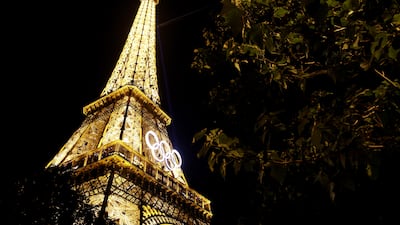
The Olympic rings are illuminated on the Eiffel Tower before the start of the 2024 Olympic Games in Paris. Getty Images -
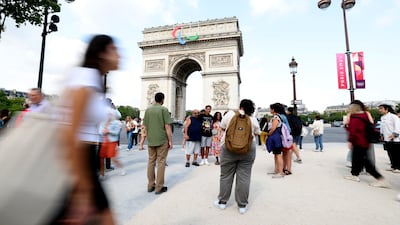
The Arc de Triomphe adorned with the Paralympic logo. Getty Images -
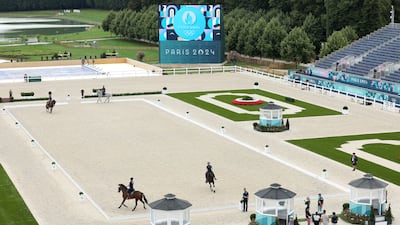
Riders and horses from Team Ireland practise dressage during an equestrian eventing training session at Chateau de Versailles. Getty Images -
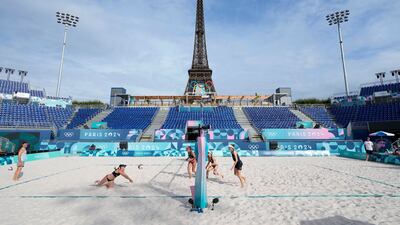
A beach volleyball practice match at the Eiffel Tower Stadium. AP -
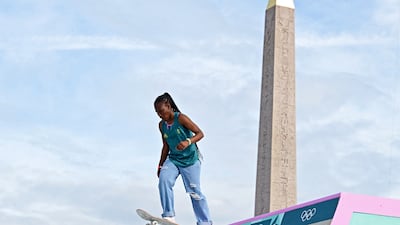
Boipelo Awuah of South Africa during skateboard training at La Concorde. Reuters -
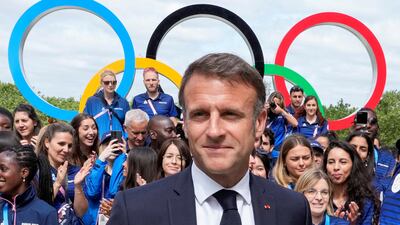
French President Emmanuel Macron with athletes during a visit to the Olympic village. Reuters -

A view of the beach volleyball venue in Paris. AP -
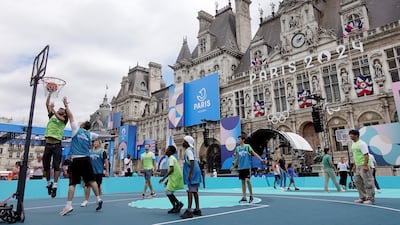
People play basketball in front of the Hotel de Ville. Getty Images -
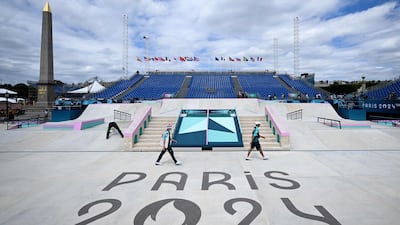
The skateboarding venue at La Concorde. AFP -
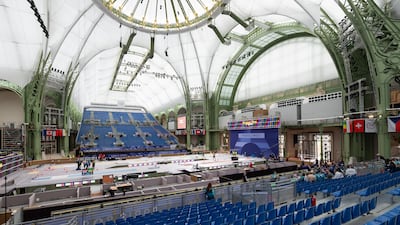
The interior of the Grand Palais, where fencing and taekwondo competitions will take place. Getty Images -
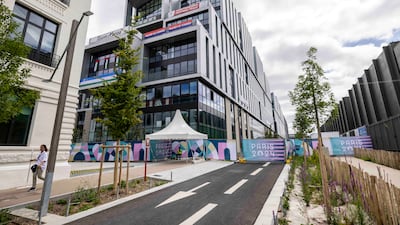
The Olympic village, as seen from the Village plaza in Saint-Denis. Getty Images -

French judoka Clarisse Agbegnenou holds the Olympic Torch next to Tony Estanguet, president of the organising committee of the 2024 Games, at the Eiffel Tower. AFP -
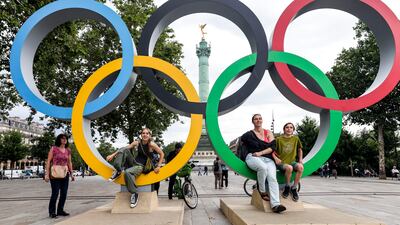
The Olympic Games logo at Bastille Square in Paris. EPA -
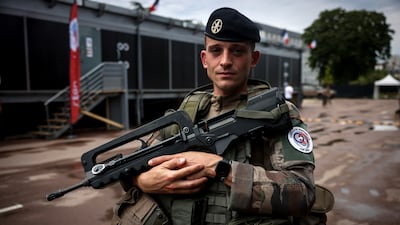
A soldier at a military camp in the Vincennes forest, on the outskirts of Paris. The camp will house 4,500 soldiers who will provide additional security during the Games. AP -

Torchbearers pose with the Olympic flame and dancers outside The Moulin Rouge. Reuters -
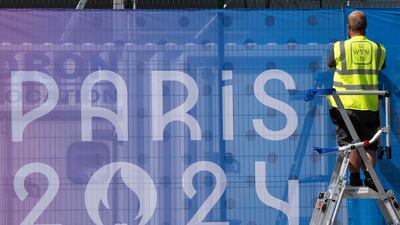
A banner bearing the Paris 2024 Olympic Games logo, at the Trocadero in Paris. AFP -
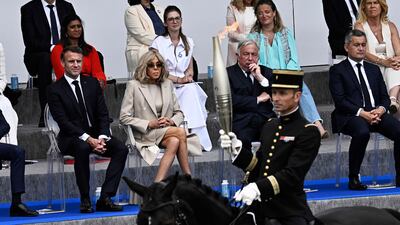
Lt Gen Christophe Abad, the Military Governor of Paris, holds the Olympic torch as he rides past officials including President Emmanuel Macron and his wife Brigitte during the Bastille Day military parade. AFP -

The Eiffel Tower Stadium as workers prepare the venue that will host beach volleyball events. Getty Images -
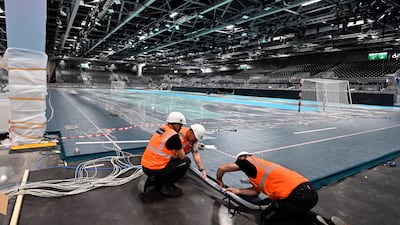
Workers set up internet cables inside the handball arena in Paris. Getty Images -
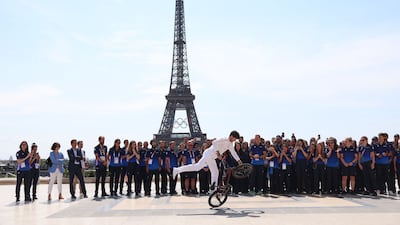
Torch bearer and French BMX world champion Matthias Dandois performs after holding the Olympic flame at the Trocadero in front of the Eiffel Tower. AFP -
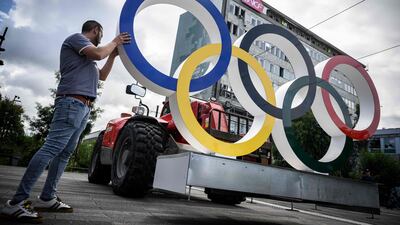
Olympic rings are installed in front of the Nantes train station. AFP -
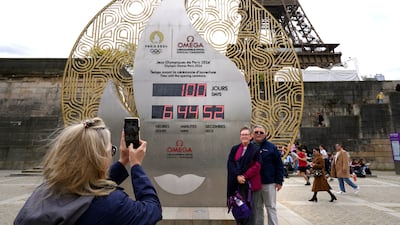
Members of the public take photos in front of the countdown clock for the Games at Port de la Bourfonnais, near the Eiffel Tower, in Paris. PA -

Stands are constructed at Place de la Concorde ahead of the Games. PA -
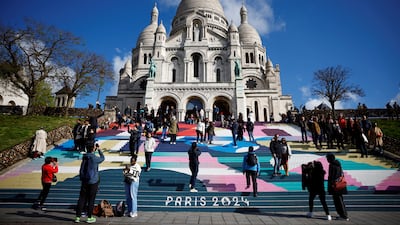
Tourists stand on the Sacre-Coeur Basilica stairs painted with the Paris 2024 Olympic and Paralympic Games colours. Reuters -
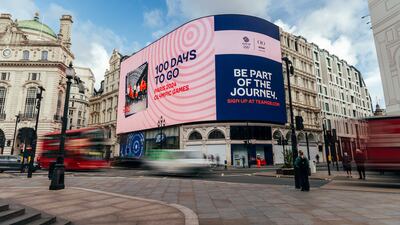
The big screens at Piccadilly Circus in London marking 100 days to go before the Games begin. PA -
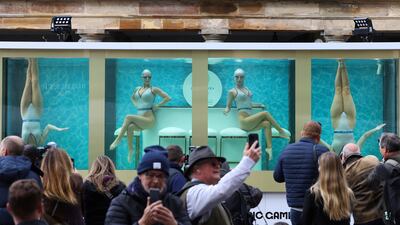
People watch as former British Olympic artistic swimmers Asha George, Katie Clark, Sisy Wang and Emily Kuhl perform in a water tank in London to mark 100 days before the Games. Reuters -
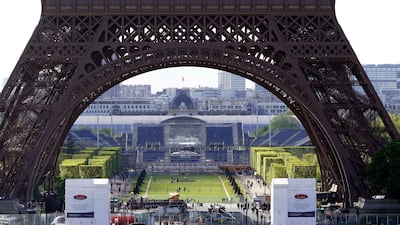
Stands are constructed on the Champ-de-Mars, near the Eiffel Tower. PA -
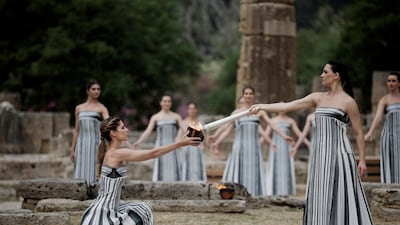
Greek actress Mary Mina, playing the role of High Priestess, lights the flame during the Olympic Flame lighting ceremony in Greece for the Paris 2024 Olympics. Reuters -
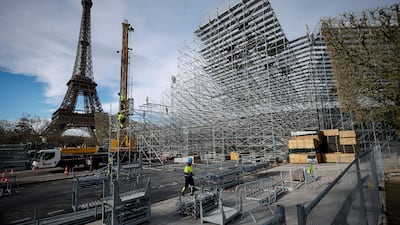
Workers build stands for this summer's Olympic Games on the Champ-de-Mars, beside the Eiffel Tower in Paris. AP -
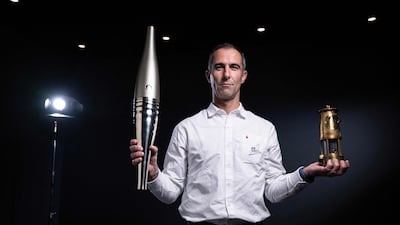
French skipper Armel Le Cleac'h poses with the Olympic torch and the Olympic lantern, in Paris. Navigator Mr Le Cleac'h will carry the Olympic flame from Brest to the Antilles next June in the ocean torch relay, which will visit six French overseas territories. AFP -

Workers construct banks of seating in front of the obelisk at the La Concorde Urban Park site in central Paris. AFP -
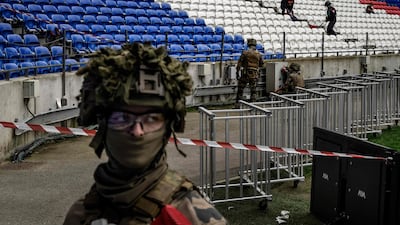
Police officers, military personnel, rescue workers and firefighters take part in an exercise simulating a terrorist attack at the Groupama Stadium in Decines-Charpieu, eastern France. AFP -
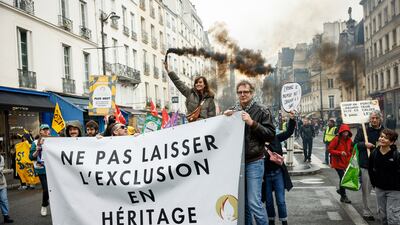
Activists hold a banner that translates to: 'Do not leave exclusion as a legacy', during a protest to raise awareness of the social impact of the Olympics in Paris. AP -
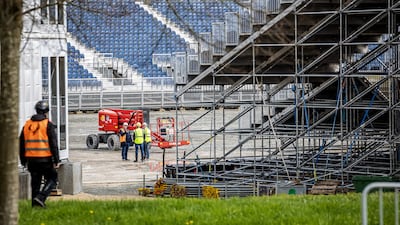
Grandstands are set up in the gardens of Chateau de Versailles, where equestrian events and the modern pentathlon will be held. EPA -
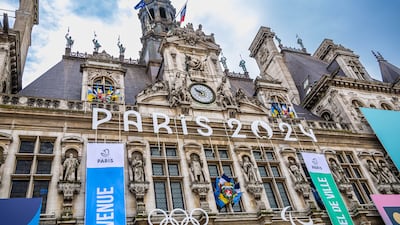
The facade of Paris City Hall is decorated with the Olympic rings. EPA -

Some of the French capital's Metro stations have changed their name for Olympic year. EPA -

Maintenance work is carried out at the swimming pools in the Aquatics Centre, built for the Olympics in Saint Denis. AFP -
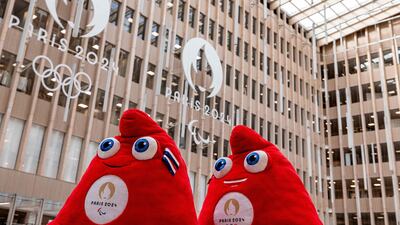
Two official Olympic 'Phryges' mascots on parade at the headquarters of the Paris 2024 Olympic and Paralympic Organising Committee. AFP -
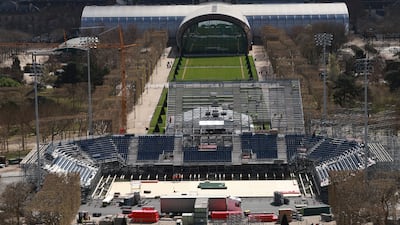
The Champ-de-Mars Arena is taking shape. It will host judo, para judo, wrestling and wheelchair rugby, with beach volleyball held nearby. AP -
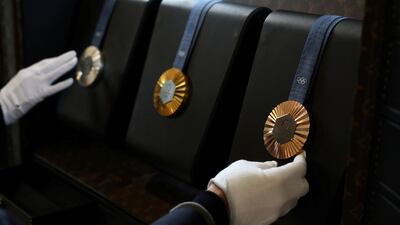
Olympic gold, silver and bronze medals in a Louis Vuitton medals trunk, which will transport and protect the gongs. Reuters -
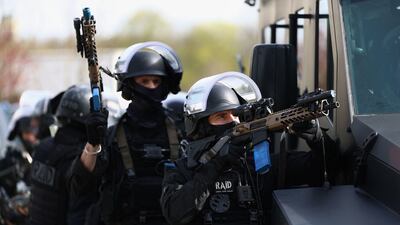
Members of the French National Police elite unit take part in an exercise drill in the Paris suburb of Draveil. AFP -
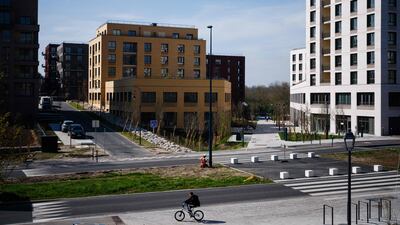
The Media Village that will host journalists from around the world, in Le Bourget. AFP -

Activists pose with Olympic rings outside the Orsay Museum in Paris, during a demonstration to draw attention to social inequality they say will be exacerbated by the coming event. AFP -
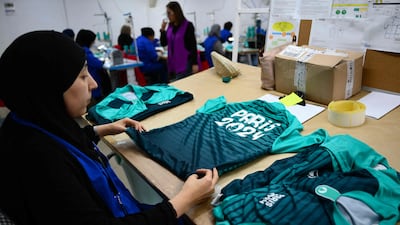
Employees work on outfits for volunteers at a manufacturing workshop in Marseille. AFP -
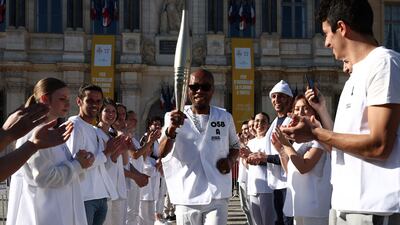
A test for the Olympic torch relay in Troyes. Reuters -
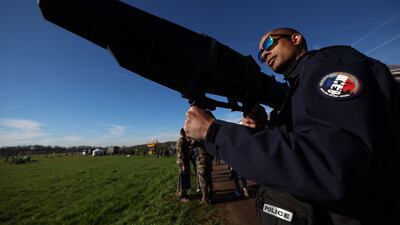
A French police officer demonstrates how an anti-drone gun works during a media presentation of security systems at a military base in Velizy-Vallacoublay, south-west of Paris. AFP



