


A man who last week held up a bank in the Lebanese capital of Beirut said on Thursday he would begin negotiations to recover the rest of his savings.
Bassam Al Sheikh Hussein was able to negotiate the withdrawal of $35,000 of his own savings from the Federal Bank of Lebanon after a tense, seven-hour standoff.
Armed with a rifle and a gas canister, he threatened to kill hostages and self-immolate if the bank did not return the full amount of his savings, about $200,000.
The hold-up quickly amassed popular support for Mr Al Sheikh Hussein, with demonstrators gathering outside the branch to condemn Lebanon’s banking system.
“I’m demanding the full amount," Mr Al Sheikh Hussein told The National after a press conference on the matter. "I don’t mind if they give it to me in instalments, whatever, but I want the full amount.”
He said the Federal Bank for months had refused to allow his withdrawal of $400 per month, which is authorised by a Central Bank Circular.
Lebanon’s commercial banks imposed informal capital controls in late 2019, severely limiting withdrawals of hard currency.
This effectively means people can only take out limited quantities of their own money.
On August 11, Mr Al Sheikh Hussein said his attempt to withdraw the permissible amount of $400 a month was once again blocked by the bank’s manager.
“I asked for my money, he said there’s no money,” he told The National. "I asked to speak to his manager, he told me he’s the manager. Every month I come in, he kicks me out.
“He made me feel like I was a beggar … but it’s my own money.”
-
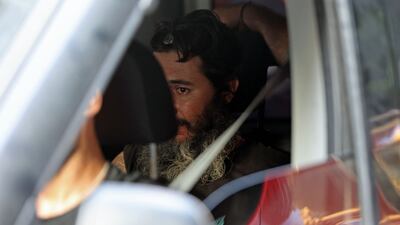
Bassam Al Sheikh Hussein, an armed man who took hostages at a Federal Bank branch in Beirut, sits in a police car after his arrest. AFP -
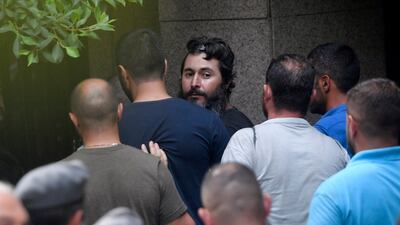
He was arrested as he left the bank. EPA -
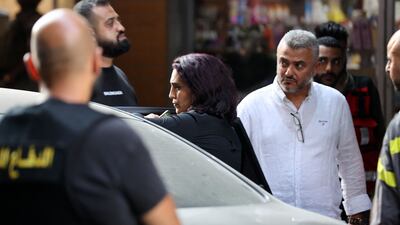
He held several customers hostage as he demanded the return of his bank deposits so that he could pay his father's medical bills. AFP -
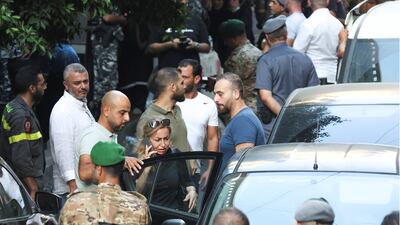
A woman who was held hostage inside the Federal bank of Lebanon enters a car after her release. Reuters -
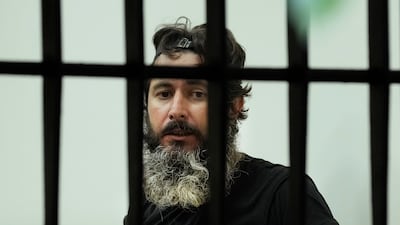
Mr Al Sheikh Hussein was reportedly armed with a rifle and is said to have doused the interior of the bank with petrol. AP -
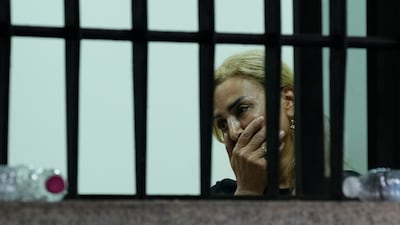
A woman held hostage in the bank cries. AP -
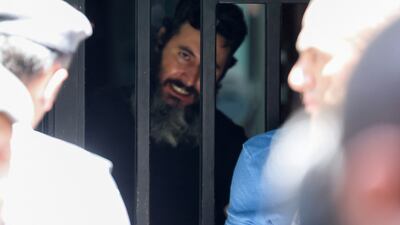
The siege ended without violence eight hours later on Thursday when the gunman reportedly left the bank and was arrested. Reuters -
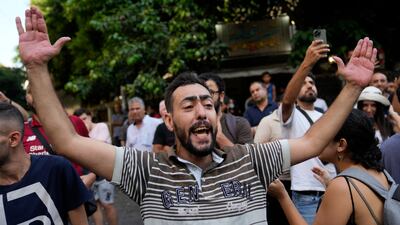
Many sympathised with Mr Al Sheikh Hussein and took part in protests outside the bank as they denounced local lenders and chanted 'We are all Bassam'. AP -
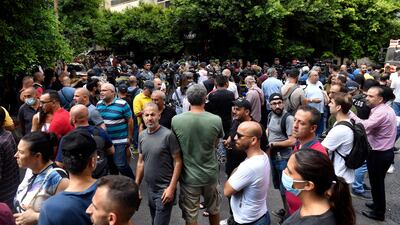
Lebanese bank customers stand near the bank where the armed man took customers and employees hostage. EPA -
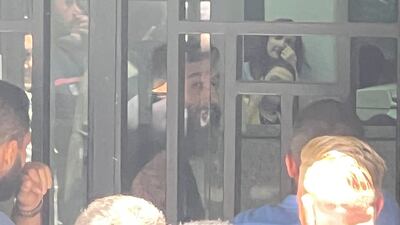
A Lebanese security official said Mr Al Sheikh Hussein was threatening to set himself ablaze unless he received his savings. AP -
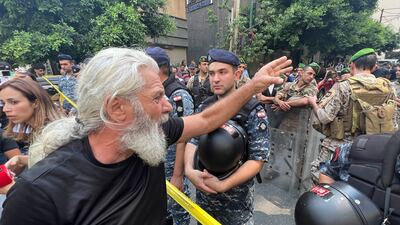
The demonstrations grew more heated, with protesters facing off against security forces dressed in riot gear. AP -
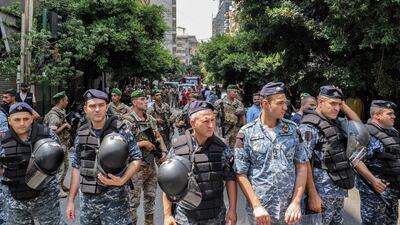
Army soldiers, behind, and security forces, front, stand guard outside the bank in Beirut. AFP -
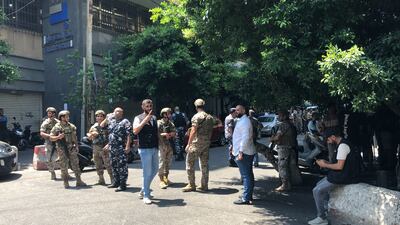
The incident is the latest between local banks and angry depositors unable to access their savings because of informal capital controls. Jamie Prentis / The National -
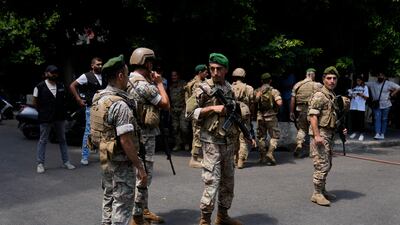
At least two shots were heard after the man entered the branch just before noon, according to witnesses and local media. Some customers managed to escape before he shut the branch doors. AP -

The Lebanese Red Cross on standby outside the bank, which was cordoned off by security forces. Reuters -

Lebanon’s National News Agency reported that Mr Al Sheikh Hussein was demanding to withdraw $210,000 and had threatened to set himself ablaze and kill everyone at the bank. Reuters -
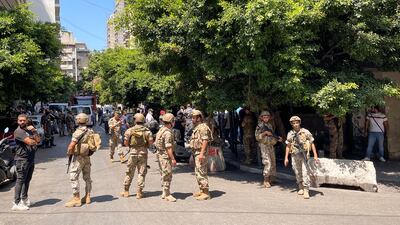
His father was in hospital and required $50,000 worth of treatment, according to the Association of Depositors in Lebanon. Reuters


That was his breaking point, and the moment he decided to hold up the bank. With a rifle retrieved from his car, Mr Al Sheikh Hussein said he told customers at the bank to leave, then locked up the remaining employees — including the bank’s branch manager, Hassan Halawi.
Mr Halawi last week told The National that the bank policy imposed on Mr Al Sheikh Hussein was the same one imposed on all other customers. He declined to answer whether the Federal Bank of Lebanon’s Hamra branch was abiding by Central Bank circular 158, which permits withdrawals of up to $400.
None of the hostages were hurt during the hold-up. Mr Al Sheikh Hussein said on Thursday he had told the bank customers to leave, locking only bank employees inside.
Lebanon’s Internal Security Forces (ISF), under the auspices of the Interior Ministry, negotiated with Mr Al Sheikh Hussein. He eventually agreed to surrender when the ISF promised him $35,000 cash in hand plus $400 a day after that, and guarantees that he would not be arrested.
Mr Al Sheikh Hussein surrendered. He was given the $35,000, which he wanted for his father's medical care, and bundled into a white government vehicle.
But he was immediately detained despite the ISF’s promises, and remained in detention for four days. On Tuesday, the charges were dropped and he was released.
Fouad Debs, a lawyer for Mr Al Sheikh Hussein and co-founder of the Lebanese Depositors Union, has argued that the hold-up was not a robbery but a last resort, because Mr Al Sheikh Hussein had repeatedly tried to free his savings through legal means.
“We’ve seen the state of the judiciary — they are not even accepting lawsuits because they are on strike,” Mr Debs had told The National last week. "And even when they were [working], they weren’t giving judgment according to law and were biased towards the banks."
The bank standoff swept the nation and turned Mr Al Sheikh Hussein into an icon overnight. His plight mirrors that of all Lebanese, whose money has been trapped in banks since 2019. For the last three years, Lebanon has been mired in a steep economic crisis that the World Bank says is one of the worst in the modern world. The local currency has plummeted in value by more than 90 per cent and inflation has soared exponentially, making everyday life essentially unaffordable for many Lebanese. More than three quarters of Lebanon's population has been plunged below the poverty line, the UN says.
If the Federal Bank of Lebanon refuses to release Mr Al Sheikh Hussein’s full savings to him — about $137,000 — “I’ll go to the judiciary and demand my legal right. And if there’s no solution there, I’ll go back down to the bank, and do it all over again.”

