


Iraqi Prime Minister Mohammed Shia Al Sudani this week identified pervasive corruption as the main threat to the country, but his newly installed government also faces other problems that need to be tackled after a year of bitter political deadlock.
Mr Al Sudani’s government was sworn in on October 27 and begins its work under the cloud of two major corruption scandals.
A former minister revealed last month that 3.7 trillion Iraqi dinars (almost $2.5 billion) was embezzled from the tax authority in what is being described locally as “the theft of the century”.
On Wednesday, the National Security Service announced the arrest of a criminal network that siphoned crude oil from pipelines in remote areas of southern Iraq and smuggled it out of the county. Senior interior ministry and intelligence officers were allegedly involved.
In his first press conference on Tuesday, Mr Al Sudani called corruption "a serious threat to the Iraqi state, more dangerous than all other threats that have weighed on Iraq".
He vowed to tackle the problem. "The citizens want to feel that there is a sense of responsibility, and that looted money is returned," he said.
Speaking at the annual Middle East Research Institute Forum in Erbil, the UN Special Representative for Iraq Jeanine Hennis-Plasschaert described the corruption as “pervasive, structural and systemic”.
Ms Hennis-Plasschaert warned that in “the absence of tackling corruption any attempt to push through serious reform will not succeed. This is really the cause by now of Iraq’s dysfunctionality”.
She blamed the informal power-sharing arrangement — called Muhasasa in Arabic — that was established after the overthrow of dictator Saddam Hussein in the 2003 US-led invasion.
Under the arrangement, which has been the basis for all subsequent Iraqi governments, Shiites are entitled to 12 ministries, Sunnis six, Kurds four and the rest distributed among other religious and ethnic groups, regardless of election results.
“That arrangement turned into a quite closed community, a community of collusion and a community of corruption protection,” Ms Hennis-Plasschaert said.
“I think that it hinders the development of Iraq because it distracts state resources that are meant for national development and now are diverted to private and partisan interests,” she said.
Iraq is considered one of most corrupt countries in the world, ranking 157 out of 180 in Transparency International's corruption perceptions index.
The widespread corruption has crippled the country’s efforts to recover from decades of war and UN-imposed economic sanctions.
Last year, former president Barham Salih estimated that Iraq had lost $150bn to embezzlement since 2003.
More heat, less water
Corruption aside, Mr Al Sudani’s government must also deal with economic, security and environmental issues amid bitter political divisions that delayed the formation of a new government for more than a year after the 2021 general election.
Iraq is the fifth most vulnerable country in the world to the effects of climate change, according to the UN Environment Programme.
Over the past three years, the country has experienced record temperatures that exceeded 50°C in many places during summer, insufficient and diminishing rainfall and frequent sand and dust storms.
Coupled with the reduced water flow of its two main rivers after passing through Turkey and Iran, the extreme weather has intensified droughts and water scarcity in Iraq.
Desertification affects 39 per cent of the country and 54 per cent of its agricultural land has been degraded, mainly due to soil salinity caused by historically low river levels, less rain and rising sea levels.
Beside domestic measures against climate change, Mr Al Sudani’s government needs to convince Turkey and Iran to give Iraq a fair share of river water, something previous governments failed to do. Turkey and Iran argue that they, too, are suffering from a scarcity of water and say Iraq is following outdated irrigation methods.
On Wednesday, Minister of Water Resources Aoun Diab discussed the issue with Faysal Aroglu, the special envoy of the Turkish president on water, who promised to “co-operate with Iraq and exchange visits to reach understandings for a fair share” of water, according to the ministry’s statement.
-
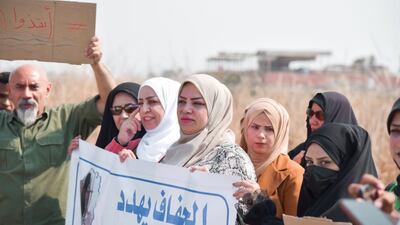
The marshes residents and activists hold a protest in the southern Thi Qar province, home to huge parts of marshes, as part the newly launched National Campaign to Save the Marshes, calling for fair share of water and financial aid. Photo: Environmental Activist Jassim Al Asadi. -

The marshes residents and activists hold a protest in the southern Thi Qar province, home to huge parts of marshes, as part the newly launched National Campaign to Save the Marshes, calling for fair share of water and financial aid. Photo: Environmental Activist Jassim Al Asadi. -
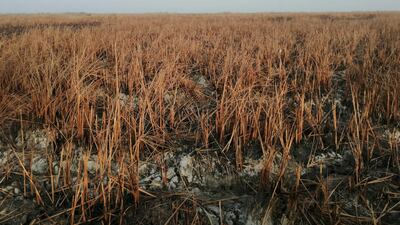
Drought ravages Iraq’s marshes in the south with water covering less than 8 per cent of the 2005 target of 5,560 square kilometres. Photos: Environmental Activist Ayad Al Asadi. -
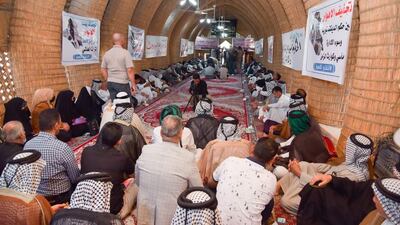
The marshes residents and activists hold a protest in the southern Thi Qar province, home to huge parts of marshes, as part the newly launched National Campaign to Save the Marshes, calling for fair share of water and financial aid. Photo: Environmental Activist Jassim Al Asadi. -
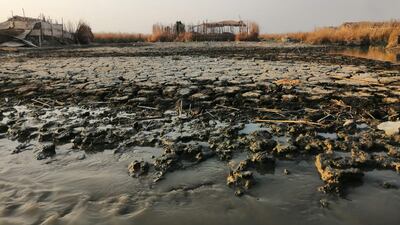
Drought ravages Iraq’s marshes in the south with water covering less than 8 per cent of the 2005 target of 5,560 square kilometres. Photos: Environmental Activist Ayad Al Asadi. -

The marshes residents and activists hold a protest in the southern Thi Qar province, home to huge parts of marshes, as part the newly launched National Campaign to Save the Marshes, calling for fair share of water and financial aid. Photo: Environmental Activist Jassim Al Asadi. -
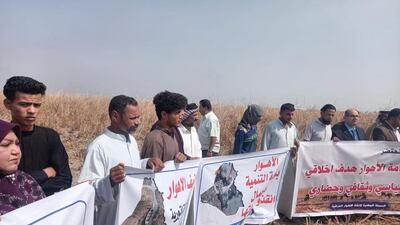
The marshes residents and activists hold a protest in the southern Thi Qar province, home to huge parts of marshes, as part the newly launched National Campaign to Save the Marshes, calling for fair share of water and financial aid. Photo: Environmental Activist Jassim Al Asadi. -

The marshes residents and activists hold a protest in the southern Thi Qar province, home to huge parts of marshes, as part the newly launched National Campaign to Save the Marshes, calling for fair share of water and financial aid. Photo: Environmental Activist Jassim Al Asadi. -
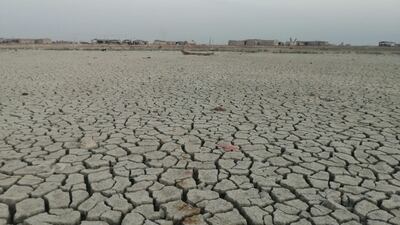
Drought ravages Iraq’s marshes in the south with water covering less than 8 per cent of the 2005 target of 5,560 square kilometres. Photos: Environmental Activist Ayad Al Asadi. -
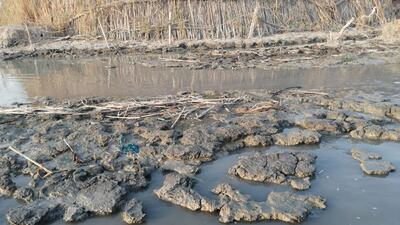
Drought ravages Iraq’s marshes in the south with water covering less than 8 per cent of the 2005 target of 5,560 square kilometres. Photos: Environmental Activist Ayad Al Asadi.


Oil dependence
Opec’s second-largest producer, Iraq has for decades depended on oil revenues for at least 90 per cent of its income.
There have been no serious attempts to diversify the economy, strengthen the private sector or improve the business investment climate since 2003.
As a result, the economy takes a hit when oil prices fall or fluctuate in the international market, forcing the government to introduce austerity measures.
Thanks to a rise in oil prices; the devaluation of the currency in December 2020; and a limit on spending imposed on the caretaker government since the election, the country's foreign reserves stand at $85bn, the highest since 2003.
With the monthly oil revenue hovering around, and sometimes exceeding, $10bn in some months, the reserves are expected to increase to $90bn by the end of the year, the central bank said.
The country also boosted its gold reserves to 130.4 tonnes last month, it said.
Poverty and lack of services
Despite its oil wealth, decades of war, corruption, mismanagement and political fighting have left Iraq with poor public services and dilapidated infrastructure.
Despite the billions of dollars earned from oil revenue since 2003, Iraqis are still complaining about poor roads, dilapidated hospitals and broken schools.
Many Iraqis receive only a few hours of state electricity a day and buy the rest of their needs from private generators. According to the previous prime minister, the country has spent at least $60bn on the power sector since 2003.
Although Iraq sits on vast oil reserves, the country has in recent years experienced an alarming rise in poverty levels, exacerbated by the coronavirus pandemic.
The most recent government report said an additional 4.5 million Iraqis were pushed into poverty in 2020.
The increase pushed the national poverty rate to 31.7 per cent, up from 20 per cent in 2018, and raised the total number of Iraq’s poor to 11.4 million ― more than a quarter of its population of about 40 million.

