


Shiite cleric Moqtada Al Sadr has called on Iraqis to join a million-man demonstration in Baghdad in what he called the “end of the last chance” for reform.
Iraq has sunk into a political deadlock since October's national elections. Political rivalry, mainly among Shiite parties, has prevented consensus over forming a new government.
Mr Al Sadr wants to dissolve Parliament and hold snap elections, while his Iran-backed rivals, the Co-ordination Framework, seek the leading role in forming government.
-
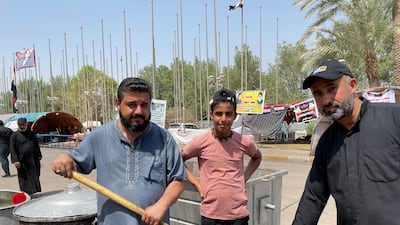
Ali Al Safi (left), 35, travelled from the southern province of Thi Qar to serve the protesters with food. All photos: Sinan Mahmoud/The National -
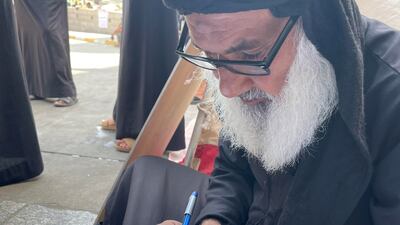
Mohammed Jassim Saad, 60, signs the lawsuit to be sent to the Supreme Federal Court in which he demands that parliament is dissolved and early elections are held. -
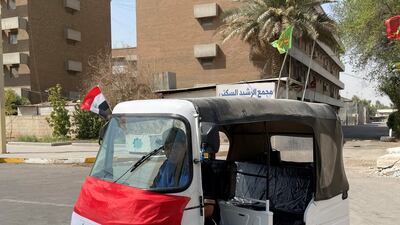
Three-wheeled rickshaws, known as tuk-tuks, shuttle followers of Shiite cleric Moqtada Al Sadr to and from the parliament building. -
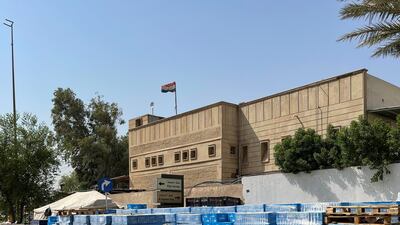
Packs of bottled water and food are stacked outside the parliament building, sent by volunteers for the protesters. -
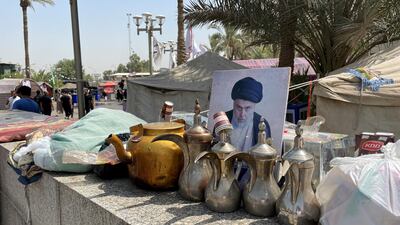
The sit-in outside the parliament is the latest chapter in Iraq’s 10-month political deadlock over forming the new government since elections in October. -
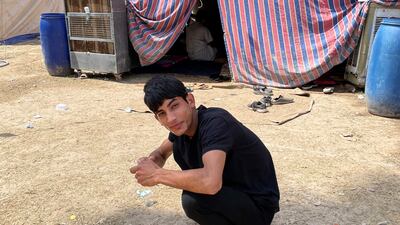
Murtadha Riyadh, 19, splashes cold water on his face to beat the heat outside the tent he and others sleep in. -
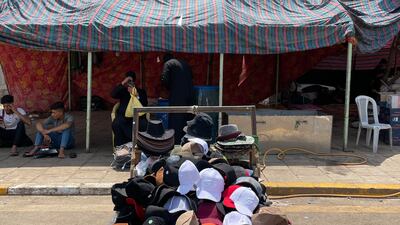
Caps are up for grabs outside the parliament. -
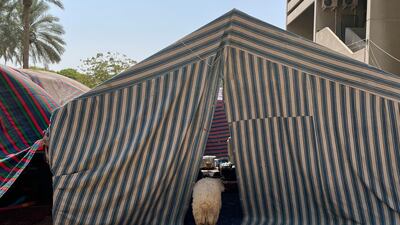
Sheep and cows are tied up outside the parliament to feed the protesters. -
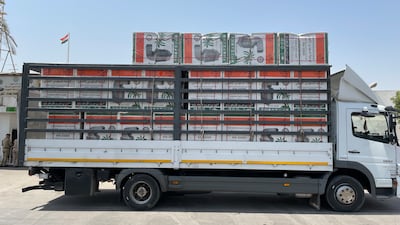
A lorry full of air coolers outside the parliament for the protesters. -
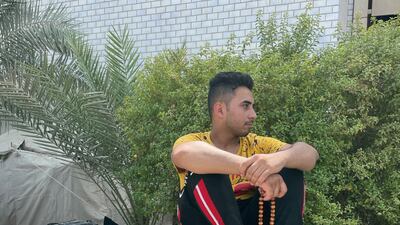
A protester sits outside the parliament next to an announcement that urges followers of Mr Al Sadr to follow his statements on Twitter. -
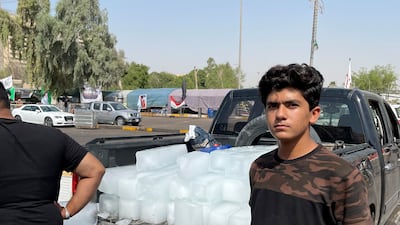
Volunteers unload ice blocks from a pick-up truck for the protesters.


Both camps have staged sit-in protests inside and outside the Green Zone in Baghdad, home to key government offices, the parliament building, politicians' homes and foreign embassies.
“I count on you,” Mr Al Sadr told Iraqis through a statement issued by his close aide Salih Mohammed Al Iraqi on Saturday.
He said the demonstration, on a date yet to be announced, will be to “support Iraq for the sake of reform and to save what is left from it in order not to be an easy target for corruption, injustice, militias and authoritarian corrupt parties”.
“I see your courage and hope not to be let down by you. It is the end of the last chance,” the statement added.
Mr Al Sadr called on Iraqis to converge at Baghdad’s Tahrir Square in a “united, peaceful and million-man demonstration” and then to cross the bridge to the Green Zone to join his followers who have been encamped around the parliament building for the past three weeks.
In a bid to increase pressure on his rivals, Mr Al Sadr on Wednesday asked the Supreme Judiciary Council to dissolve Parliament by the end of the coming week and set a date for early elections or face unspecific consequences.
The Iraqi constitution requires a vote passed by an absolute majority to dissolve Parliament, and that vote can only be requested by a third of lawmakers or by the prime minister with the president's approval.
But Mr Al Sadr says the judiciary can consider his request because Parliament has missed the constitutional deadlines for appointing a new president and prime minister after an election. He also asked his supporters to file lawsuits over the issue with the Supreme Federal Court.
On Sunday, the Supreme Judiciary Council rejected the request.
"We agree with Al Sadr in diagnosing the negative reality of the political situation the country is going through and the continuous constitutional violations," the Council said in statement.
But, "the Council has no power to dissolve the Council of Representatives," it said.
Although a political grouping endorsed by Mr Al Sadr emerged from the elections with the largest number of MPs — 73 seats in the 329-seat parliament — it failed to form a majority government with other leading Sunni and Kurdish parties. Their short-lived alliance attempted to keep the Co-ordination Framework out of the government formation.
But the Framework — an umbrella group that consists of Tehran-allied militias and political parties — along with some smaller parties not directly aligned to Tehran, derailed Mr Al Sadr’s efforts.
He ordered his MPs to resign last month after a series of legal challenges and parliamentary boycotts — combined with alleged intimidation tactics — prevented parliament from electing his bloc's candidates for president — a vital step in government formation.
The resignations put the Framework in pole position to form the government. Mr Al Sadr rallied his supporters his objections when the Framework nominated Shiite politician Mohammed Shia Al Sudani for the role of prime minister.
In a new escalation, the Framework launched counter-protests on Friday outside the Green Zone and an open-ended sit-in pressing for a new government to be formed quickly to end months of deadlock.
Both camps, who command heavily armed militias, also organised protests in some provinces in a show of force.
The political impasse, now in its tenth month, is the longest in the country since the 2003 US-led invasion reset the political order.

