


Iraq has gone through an eventful year, with the hopes raised by it hosting its first papal visit and its first election under revamped electoral laws tempered by increasing extremist attacks and bitter divisions among major political players.
The year kicked off with ISIS staging a bombing in central Baghdad for the first time since the extremist group was declared defeated in late 2017. More than 30 civilians were killed and 100 wounded when two suicide bombers detonated their explosives on January 26.
Weeks later, hopes for peace were rising amid preparations to receive a special guest: Pope Francis, the head of the Roman Catholic Church.
The pontiff’s historic three-day trip in early March spread a message of tolerance, diversity, and hope in a nation ravaged by years of war and sectarian conflict.
During his visit, the pope met Iraqi officials and religious leaders, including Shiite spiritual leader Grand Ayatollah Ali Al Sistani whose words carry great weight with ordinary Iraqis.
-
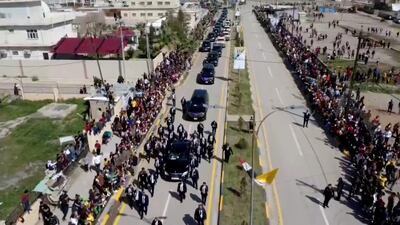
Pope Francis arrives to hold a mass at the Grand Immaculate Church, in the town of Qaraqosh. Reuters -

An Iraqi security force officer guards as people wait to greet Pope Francis in the town of Qaraqosh. Reuters -

Children with flags wait for Pope Francis to arrive at a meeting with the Qaraqosh community at the Church of the Immaculate Conception. AP Photo -
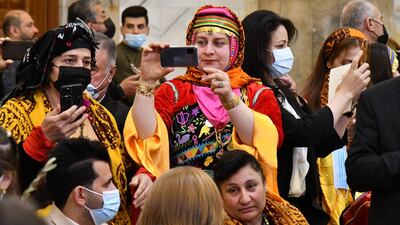
People wait for Pope Francis before his arrival inside the Syriac Catholic Church of the Immaculate Conception, in the predominantly Christian town of Qaraqosh (Baghdeda). AFP -
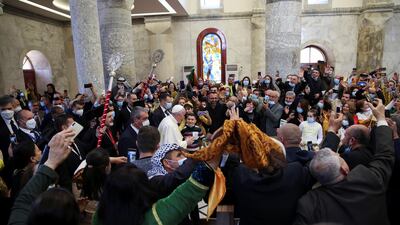
Pope Francis arrives to hold a prayer at the Grand Immaculate Church in the town of Qaraqosh. Reuters -

Pope Francis sits down before holding a prayer at the Grand Immaculate Church in the town of Qaraqosh. Reuters -
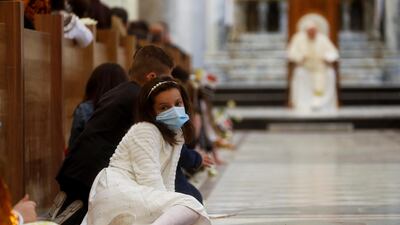
A girl sits down before Pope Francis holds a prayer at the Grand Immaculate Church in the town of Qaraqosh. Reuters -

Ignatius Joseph III Yunan, Syriac Catholic Patriarch of Antioch, reads from a book as Pope Francis listens while on the throne at the Syriac Catholic Church of the Immaculate Conception. AFP


Francis called for the protection of Iraq's Christian communities, whose numbers have dropped to roughly a third of the 1.5 million who lived in the country before the 2003 US-led invasion that toppled Saddam Hussein, mainly as a result of persecution.
But Iraq's other troubles quickly overshadowed the atmosphere of hope and joy brought by his visit.
In April, a fire caused by an oxygen tank explosion inside a Covid-19 isolation ward in a hospital on Baghdad’s outskirts claimed at least 82 lives, highlighting the problems faced by the healthcare system and other public services in Iraq: mismanagement, corruption, and political wrangling.
Nearly three months later, another inferno in a coronavirus ward in the southern city of Nasiriyah killed at least 92 people.
-

A fire ripped through and destroyed a Covid-19 unit at a hospital in Nasiriyah, Iraq. -

More than 90 people died in the fire that destroyed much of a hospital in Nasiriyah, Iraq. -

The exact cause of the blaze at Al Hussein hospital is not clear, but local media reports suggested it broke out after an oxygen tank exploded. -

Witnesses described fire crews battling the blaze in a Covid-19 ward as it spread quickly through the building. -

A view of the damage caused by the fire at Al Hussein hospital in Nasiriyah. -
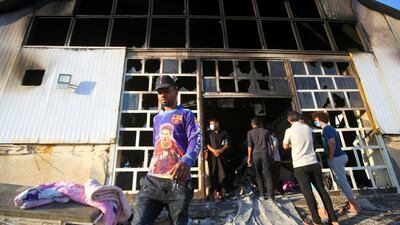
People inspect the damage after a fire at a hospital in the city of Nasiriyah in southern Iraq. At least 92 people were killed while dozens were injured. -
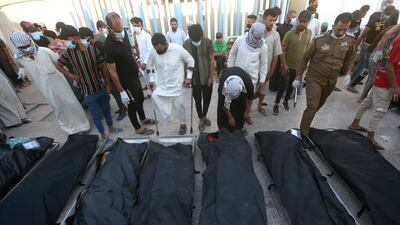
Initial police reports suggest an oxygen tank explosion in the hospital's Covid-19 ward caused the fire. -
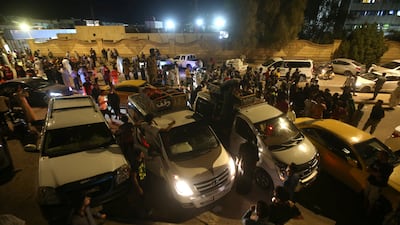
Health sources said the death toll could rise because many patients were still missing. -
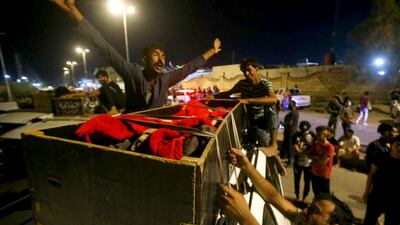
Angry relatives of patients gathered in front of the hospital where they clashed with police. -
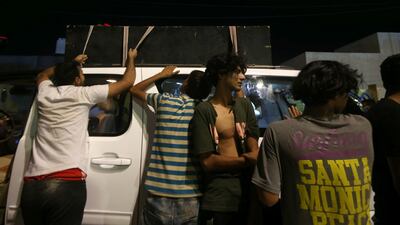
Iraqi President Barham Salih condemned the corruption and mismanagement that he said led to the catastrophe. -
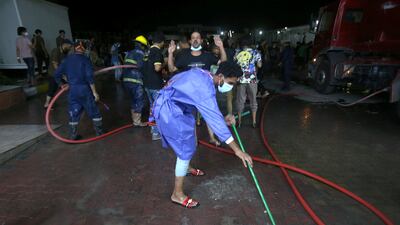
Iraqi Prime Minister Mustafa Al Kadhimi ordered the suspension and arrest of health and civil defence managers. -
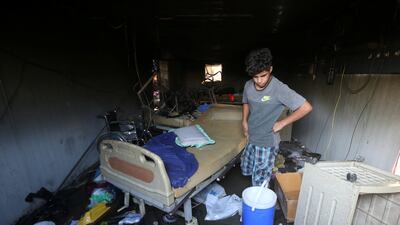
Iraq's healthcare system is struggling to cope with the coronavirus crisis, which has killed 17,592 people and infected more than 1.4 million. -
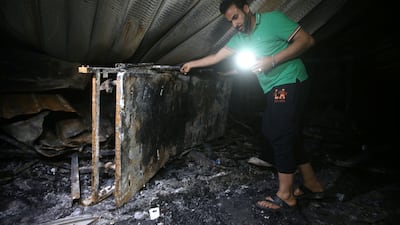
There is little left to salvage after the catastrophic blaze. -
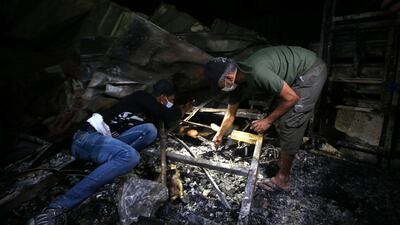
Search operations continued after the fire was brought under control, but thick smoke made work difficult. -
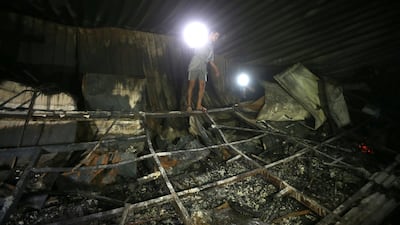
'I heard a big explosion inside the coronavirus wards and then fire erupted very quickly,' said Ali Muhsin, a hospital guard who helped to carry injured patients away from the fire.


In July, an ISIS suicide bomber hit another market in Baghdad, killing at least 35 shoppers on the eve of Eid Al Adha. The extremist group staged attacks throughout the year in different parts of the country.
The summer brought a succession of heatwaves with temperatures around 50°C. A combination of climate change, acute water shortages caused by the damming of rivers in Turkey and Iran, and rising salinity levels in the soil have created an environmental crisis that threatens Iraq's food security.
On October 10, millions of Iraqis cast their ballots in early national elections demanded by the pro-reform, youth-led protest movement that began two years earlier in response to rampant corruption, poor services, and a lack of jobs.
Although the major political players retained control, a handful of independent politicians and newly formed parties were able to enter parliament thanks to changes in the electoral laws demanded by the protests movement.
Followers of Iraq’s populist Shiite cleric Moqtada Al Sadr emerged as clear winners with 73 seats in the 329-seat parliament. His main rival, the Fatah Alliance of politicians affiliated with Iran-backed Shiite militias, won only 17 seats, compared with 45 in 2018.
The political wrangling over the results among rival Shiite groups spilt over into violent street protests.
Two protesters were killed and more than 100 protesters and security personnel wounded in early November, raising tensions between the Iran-backed militias and prime minister Mustafa Al Kadhimi.
A few days later, Mr Al Kadhimi escaped unharmed after a drone attack on his official residence in the Green Zone, in the first assassination attempt on an Iraqi prime minister since 2003. There was no claim of responsibility and an investigation is continuing.
Meanwhile, the Supreme Federal Court is reviewing claims of electoral fraud filed by the Shiite militias and allied political parties.
As challenging as 2021 was, the past 12 months also brought some positive news for Iraqis.
The country welcomed home more than 17,000 ancient artefacts retrieved from the US and other countries, celebrated as a triumph in its long-running fight against cultural theft.
The priceless relics, some dating as back as far as 4,000 years, include a rare clay tablet that bears a portion of the Epic of Gilgamish.
In their efforts to tap vast natural resources, Iraq signed a $27 billion deal with France’s Total that includes four projects to develop an oilfield, produce gas, build large energy infrastructure and generate solar energy.
The country took its first steps in transitioning to clean energy, awarding several deals to build solar energy plants.
And for the first time in decades, Iraq regained some of its regional influence in an attempt to ease tensions and boost cooperation.
Baghdad hosted several meetings between Iran and Saudi Arabia as well as a regional summit in coordination with France that was attended by the UAE, Egypt, Jordan, Qatar, Kuwaiti, Iran, and Turkey.

