Live updates: Follow the latest news on Israel-Gaza
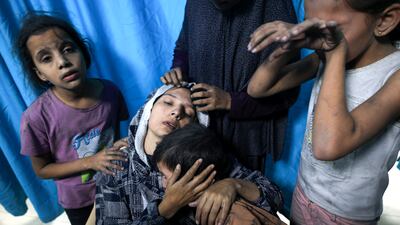
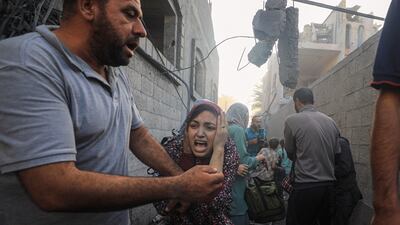
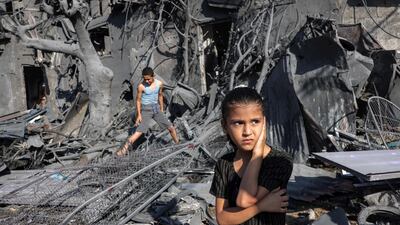
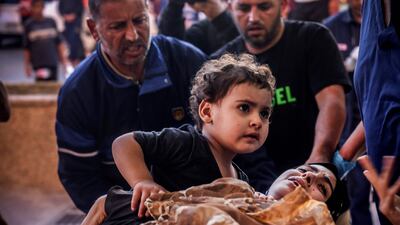
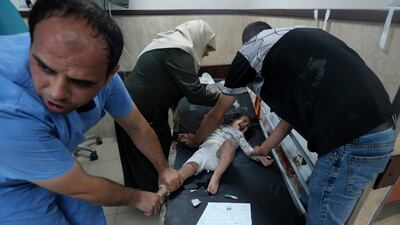
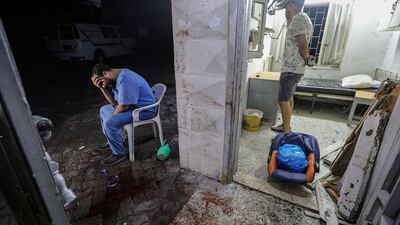
Little Marah cries on the surgery table in a hospital in the ravaged Gaza Strip as doctors try to save her injured right ear. Despite the pain, she still hopes it's just a dream.
“I want to ask you something,” she says, struggling to speak clearly. “Is this a dream, or is this real?” The doctor responds by telling her that she is okay. But the answer isn't enough.
“I know I am alive. But is this a dream? Or is this a reality?”
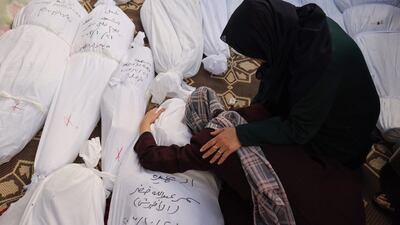
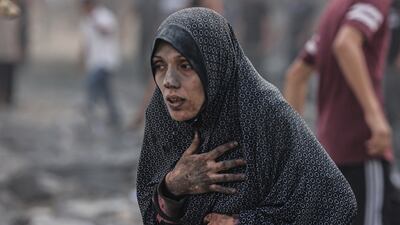
Two months of relentless Israeli strikes and fighting following the Hamas attacks on Israel on October 7, have killed more than 16,200 Palestinians in the coastal enclave, including over 7,000 children.
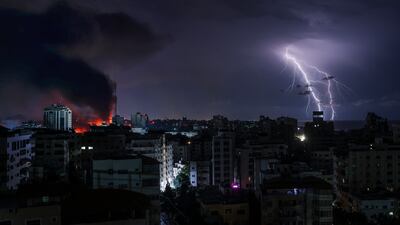
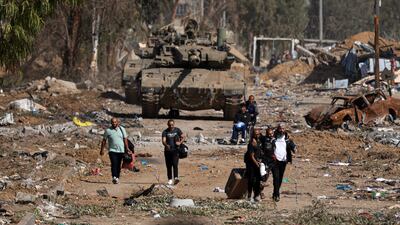
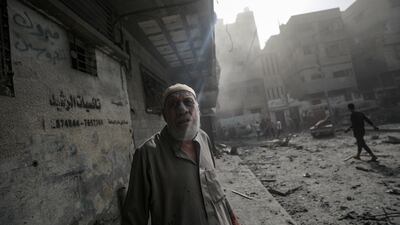
Entire neighbourhoods have been destroyed, and the heavy bombardment has reduced Gaza city, the centre of the enclave, to an “unlivable” condition.
The city's mayor Yahya Al Sarraj told The National that public areas, residential buildings, libraries, schools, shelters, parks, green areas, cultural venues, children’s centres – “everything that made people happy” have been destroyed, turning Gaza into a “wasteland”.
“It is so severe. It is unbelievable,” Mr Al Sarraj said of the Strip that covers a mere 365 square kilometres and is often compared to an open-air prison due to Israel’s control of its borders and seas.
The 65-year-old mayor, who took charge in 2019, explained that he had seen many wars in Gaza but not one “quite as deadly” as the current one.
“It is horrific what has happened to the city in just 60 days. The scale of destruction they unleashed on a city inhabited by people is beyond imagination.”
The two-month-long war has been dubbed as one of the most “destructive” wars in the Israeli-Palestinian conflict. According to the UN’s humanitarian office, at least 45 per cent of all homes have been damaged or destroyed by the Israeli attacks.
Israel’s military campaign after Hamas’ attacks, which killed about 1,200 people, has pushed the city’s 2.3 million people into a “humanitarian abyss”.
Israel cut off water and electricity to Gaza, which the UN and international aid agencies described as a “collective punishment”.
Gaza does not look like a city under war. It is more like an Israeli destruction machine was unleashed on the city. There is nothing left."
Yahya Al Sarraj,
Gaza Mayor
Mr Al Sarraj said the one-week truce under a Qatar-negotiated prisoner and hostage exchange deal that ended on December 1 gave the civic body the first opportunity to assess the extent of damage to Gaza city.
What they saw was “indescribable”, according to the mayor, who has lost his own home.
“Gaza does not look like a city under war. It is more like an Israeli destruction machine was unleashed on the city. There is nothing left.”
No water to drink
On November 24, when the temporary truce was announced and the guns fell silent, the first task of Gaza city's emergency response committee was to supply water to the besieged population.
“We lost almost 90 per cent of our water resources in the bombing. Water wells cannot be operated as we don’t have the fuel to run generators,” Mr Al Sarraj explained.
Overflowing sewage due to untreated waste is polluting the city and creating a health hazard for people who are already living under constant bombardment.
“The main waste water lagoon is already full. These lagoons will flood into houses unless we clear it,” he said.
With the halt of essential services and the lack of clean drinking water, the city is facing a health disaster with the fear of the imminent spread of diseases.
“It will be a catastrophe,” emphasised the mayor.
The World Health Organisation has warned that there could be more deaths in Gaza from disease than from bombs and missiles.
With the resumption of fighting, Israeli forces are pushing ahead with their ground incursion and bombardment of southern and central Gaza.
Thousands of families are once more fleeing fighting as Israel steps up its attacks on the cities of Khan Younis and Deir Al Balah.
Mr Al Sarraj said the municipality is struggling to deliver the basic services as fighting continues.
He said two solid waste dumping stations have been on fire for the past two weeks due to Israeli missiles igniting those areas.
“The fires have been raging for the past 15 days, rendering neighbourhoods uninhabitable.”
The municipality's fire fighting equipment was destroyed during the conflict, making extinguishing the blazes impossible.
“We lost around 75 medium and heavy equipment and machinery as well 12 of our employees,” he added.
'Never lived through such hardship'
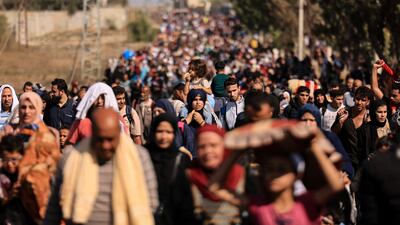
With the bombardment moving from one area to another, hundreds of thousands of Gazans fled their homes and took shelter in schools and hospitals, sleeping in classrooms and X-ray rooms.
Among those is Haj Omar Al Astal, who described his life and that of his family as “hell on earth” as they left their southern hometown of Khan Younis, which was once declared a safe haven by Israeli forces but is now the target of its fiercest aggression.
The family were forcibly displaced from their homes in Satr in northern Khan Younis earlier this week. Israeli forces pelted them with leaflets warning them to evacuate before rolling their tanks into the southern part of the enclave, which had been declared a safe zone when the attack on Gaza started two months ago.
With virtually nowhere to go, more than 80 people have been pushed to Al Mawasi, a narrow agricultural and fishing strip of coastal land one kilometre wide and 14 kilometres long. “I've never lived through such hardship,” 74-year-old Mr Al Astal told The National, tears welling up in his eyes.
According to the UN humanitarian office OCHA, 1.93 million Gazans have been internally displaced – more than 81 per cent of the enclave’s population.
In the wilderness of Al Mawasi, some of the men replaced the cucumber greenhouses with four tents, and erected wooden structures covered in fabric to build a makeshift outhouse.
A mound of stones and some wood they collected as they walked away from their homes has become their kitchen. A plastic container that they filled from a nearby agricultural well is the only water they have; a little flour and some canned goods are their only food.
Ahmed Haidar, his wife, mother, and two young daughters narrowly escaped the bombardment of a neighbouring house in the centre of Khan Younis, fleeing his home just as Israeli tanks rolled in, metres away.
Residents of Gaza city have been displaced four times in the past 60 days, ultimately joining a growing number of internally-displaced people seeking refuge in Al Mawasi.
Having walked for hours, a vehicle heading their way gave them a lift to this barren part of the besieged strip. They spent the night on the street, using plastic bags they found along the way to shield themselves from the rain and dropping temperatures.
“We are in a hell that no human can endure,” Mr Haidar told The National.
Even animals are not safe
Mr Al Sarraj explained the devastating impact of the Israeli bombardment on Gaza, saying even animals in the local zoo were not spared.
“We lost more than 60 per cent of the animals; they were starved to death after caretakers were forced to abandon them.”
The animals included hyenas, wolves, foxes, donkeys, dogs, birds, and monkeys, discovered by zoo workers when they returned during the temporary truce.
“We have a lion, which is a big attraction in the zoo, and luckily, he survived, though he has not eaten anything in three weeks.”
The mayor said the zoo workers tried their best to feed the surviving animals with whatever was available.
“But where is the food and water?” he asked.
This article was written in collaboration with Egab.

Key facilities
- Olympic-size swimming pool with a split bulkhead for multi-use configurations, including water polo and 50m/25m training lanes
- Premier League-standard football pitch
- 400m Olympic running track
- NBA-spec basketball court with auditorium
- 600-seat auditorium
- Spaces for historical and cultural exploration
- An elevated football field that doubles as a helipad
- Specialist robotics and science laboratories
- AR and VR-enabled learning centres
- Disruption Lab and Research Centre for developing entrepreneurial skills
About Karol Nawrocki
• Supports military aid for Ukraine, unlike other eurosceptic leaders, but he will oppose its membership in western alliances.
• A nationalist, his campaign slogan was Poland First. "Let's help others, but let's take care of our own citizens first," he said on social media in April.
• Cultivates tough-guy image, posting videos of himself at shooting ranges and in boxing rings.
• Met Donald Trump at the White House and received his backing.
COMPANY PROFILE
Name: HyperSpace
Started: 2020
Founders: Alexander Heller, Rama Allen and Desi Gonzalez
Based: Dubai, UAE
Sector: Entertainment
Number of staff: 210
Investment raised: $75 million from investors including Galaxy Interactive, Riyadh Season, Sega Ventures and Apis Venture Partners
What is Bitcoin?
Bitcoin is the most popular virtual currency in the world. It was created in 2009 as a new way of paying for things that would not be subject to central banks that are capable of devaluing currency. A Bitcoin itself is essentially a line of computer code. It's signed digitally when it goes from one owner to another. There are sustainability concerns around the cryptocurrency, which stem from the process of "mining" that is central to its existence.
The "miners" use computers to make complex calculations that verify transactions in Bitcoin. This uses a tremendous amount of energy via computers and server farms all over the world, which has given rise to concerns about the amount of fossil fuel-dependent electricity used to power the computers.
Tips to avoid getting scammed
1) Beware of cheques presented late on Thursday
2) Visit an RTA centre to change registration only after receiving payment
3) Be aware of people asking to test drive the car alone
4) Try not to close the sale at night
5) Don't be rushed into a sale
6) Call 901 if you see any suspicious behaviour
Company%20profile
%3Cp%3E%3Cstrong%3EName%3A%3C%2Fstrong%3E%20JustClean%3Cbr%3E%3Cbr%3E%3Cstrong%3EBased%3A%20%3C%2Fstrong%3EDubai%20with%20offices%20in%20other%20GCC%20countries%3Cbr%3E%3Cbr%3E%3Cstrong%3ELaunch%20year%3A%3C%2Fstrong%3E%202016%3Cbr%3E%3Cbr%3E%3Cstrong%3ENumber%20of%20employees%3A%3C%2Fstrong%3E%20160%2B%20with%2021%20nationalities%20in%20eight%20cities%3Cbr%3E%3Cstrong%3E%3Cbr%3ESector%3A%3C%2Fstrong%3E%20online%20laundry%20and%20cleaning%20services%3Cbr%3E%3Cbr%3E%3Cstrong%3EFunding%3A%20%3C%2Fstrong%3E%2430m%20from%20Kuwait-based%20Faith%20Capital%20Holding%20and%20Gulf%20Investment%20Corporation%3C%2Fp%3E%0A
Central%20Bank's%20push%20for%20a%20robust%20financial%20infrastructure
%3Cul%3E%0A%3Cli%3ECBDC%20real-value%20pilot%20held%20with%20three%20partner%20institutions%26nbsp%3B%3C%2Fli%3E%0A%3Cli%3EPreparing%20buy%20now%2C%20pay%20later%20regulations%26nbsp%3B%3C%2Fli%3E%0A%3Cli%3EPreparing%20for%20the%202023%20launch%20of%20the%20domestic%20card%20initiative%26nbsp%3B%3C%2Fli%3E%0A%3Cli%3EPhase%20one%20of%20the%20Financial%20Infrastructure%20Transformation%20(FiT)%20completed%3C%2Fli%3E%0A%3C%2Ful%3E%0A
Mercer, the investment consulting arm of US services company Marsh & McLennan, expects its wealth division to at least double its assets under management (AUM) in the Middle East as wealth in the region continues to grow despite economic headwinds, a company official said.
Mercer Wealth, which globally has $160 billion in AUM, plans to boost its AUM in the region to $2-$3bn in the next 2-3 years from the present $1bn, said Yasir AbuShaban, a Dubai-based principal with Mercer Wealth.
“Within the next two to three years, we are looking at reaching $2 to $3 billion as a conservative estimate and we do see an opportunity to do so,” said Mr AbuShaban.
Mercer does not directly make investments, but allocates clients’ money they have discretion to, to professional asset managers. They also provide advice to clients.
“We have buying power. We can negotiate on their (client’s) behalf with asset managers to provide them lower fees than they otherwise would have to get on their own,” he added.
Mercer Wealth’s clients include sovereign wealth funds, family offices, and insurance companies among others.
From its office in Dubai, Mercer also looks after Africa, India and Turkey, where they also see opportunity for growth.
Wealth creation in Middle East and Africa (MEA) grew 8.5 per cent to $8.1 trillion last year from $7.5tn in 2015, higher than last year’s global average of 6 per cent and the second-highest growth in a region after Asia-Pacific which grew 9.9 per cent, according to consultancy Boston Consulting Group (BCG). In the region, where wealth grew just 1.9 per cent in 2015 compared with 2014, a pickup in oil prices has helped in wealth generation.
BCG is forecasting MEA wealth will rise to $12tn by 2021, growing at an annual average of 8 per cent.
Drivers of wealth generation in the region will be split evenly between new wealth creation and growth of performance of existing assets, according to BCG.
Another general trend in the region is clients’ looking for a comprehensive approach to investing, according to Mr AbuShaban.
“Institutional investors or some of the families are seeing a slowdown in the available capital they have to invest and in that sense they are looking at optimizing the way they manage their portfolios and making sure they are not investing haphazardly and different parts of their investment are working together,” said Mr AbuShaban.
Some clients also have a higher appetite for risk, given the low interest-rate environment that does not provide enough yield for some institutional investors. These clients are keen to invest in illiquid assets, such as private equity and infrastructure.
“What we have seen is a desire for higher returns in what has been a low-return environment specifically in various fixed income or bonds,” he said.
“In this environment, we have seen a de facto increase in the risk that clients are taking in things like illiquid investments, private equity investments, infrastructure and private debt, those kind of investments were higher illiquidity results in incrementally higher returns.”
The Abu Dhabi Investment Authority, one of the largest sovereign wealth funds, said in its 2016 report that has gradually increased its exposure in direct private equity and private credit transactions, mainly in Asian markets and especially in China and India. The authority’s private equity department focused on structured equities owing to “their defensive characteristics.”
COMPANY%20PROFILE%20
%3Cp%3E%3Cstrong%3ECompany%20name%3A%20%3C%2Fstrong%3ENomad%20Homes%3Cbr%3E%3Cstrong%3EStarted%3A%20%3C%2Fstrong%3E2020%3Cbr%3E%3Cstrong%3EFounders%3A%20%3C%2Fstrong%3EHelen%20Chen%2C%20Damien%20Drap%2C%20and%20Dan%20Piehler%3Cbr%3E%3Cstrong%3EBased%3A%3C%2Fstrong%3E%20UAE%20and%20Europe%3Cbr%3E%3Cstrong%3EIndustry%3C%2Fstrong%3E%3A%20PropTech%3Cbr%3E%3Cstrong%3EFunds%20raised%20so%20far%3A%3C%2Fstrong%3E%20%2444m%3Cbr%3E%3Cstrong%3EInvestors%3A%3C%2Fstrong%3E%20Acrew%20Capital%2C%2001%20Advisors%2C%20HighSage%20Ventures%2C%20Abstract%20Ventures%2C%20Partech%2C%20Precursor%20Ventures%2C%20Potluck%20Ventures%2C%20Knollwood%20and%20several%20undisclosed%20hedge%20funds%3C%2Fp%3E%0A
MATCH INFO
Uefa Champions League final:
Who: Real Madrid v Liverpool
Where: NSC Olimpiyskiy Stadium, Kiev, Ukraine
When: Saturday, May 26, 10.45pm (UAE)
TV: Match on BeIN Sports
The Voice of Hind Rajab
Starring: Saja Kilani, Clara Khoury, Motaz Malhees
Director: Kaouther Ben Hania
Rating: 4/5
The%C2%A0specs%20
%3Cp%3E%3Cstrong%3EEngine%3A%3C%2Fstrong%3E%20Dual%20synchronous%20electric%20motors%20%20%0D%3Cbr%3E%3Cstrong%3EPower%3A%20%3C%2Fstrong%3E646hp%0D%3Cbr%3E%3Cstrong%3ETorque%3A%20%3C%2Fstrong%3E830Nm%0D%3Cbr%3E%3Cstrong%3ETransmission%3A%20%3C%2Fstrong%3ETwo-speed%20auto%20(rear%20axle)%3B%20single-speed%20auto%20(front)%20%0D%3Cbr%3E%3Cstrong%3EPrice%3A%20%3C%2Fstrong%3EFrom%20Dh552%2C311%3B%20Dh660%2C408%20(as%20tested)%0D%3Cbr%3E%3Cstrong%3EOn%20sale%3A%20%3C%2Fstrong%3Enow%3C%2Fp%3E%0A
THE SPECS
Engine: 3.6-litre V6
Transmission: eight-speed automatic
Power: 285bhp
Torque: 353Nm
Price: TBA
On sale: Q2, 2020
COMPANY%20PROFILE
%3Cp%3E%3Cstrong%3ECompany%3A%20%3C%2Fstrong%3EGrowdash%0D%3Cbr%3E%3Cstrong%3EStarted%3A%20%3C%2Fstrong%3EJuly%202022%0D%3Cbr%3E%3Cstrong%3EFounders%3A%20%3C%2Fstrong%3ESean%20Trevaskis%20and%20Enver%20Sorkun%0D%3Cbr%3E%3Cstrong%3EBased%3A%20%3C%2Fstrong%3EDubai%2C%20UAE%0D%3Cbr%3E%3Cstrong%3EIndustry%3A%20%3C%2Fstrong%3ERestaurant%20technology%0D%3Cbr%3E%3Cstrong%3EFunding%20so%20far%3A%3C%2Fstrong%3E%20%24750%2C000%0D%3Cbr%3E%3Cstrong%3EInvestors%3A%20%3C%2Fstrong%3EFlat6Labs%2C%20Plus%20VC%2C%20Judah%20VC%2C%20TPN%20Investments%20and%20angel%20investors%2C%20including%20former%20Talabat%20chief%20executive%20Abdulhamid%20Alomar%2C%20and%20entrepreneur%20Zeid%20Husban%3C%2Fp%3E%0A
Specs
Engine: Dual-motor all-wheel-drive electric
Range: Up to 610km
Power: 905hp
Torque: 985Nm
Price: From Dh439,000
Available: Now
The specs
Engine: 77.4kW all-wheel-drive dual motor
Power: 320bhp
Torque: 605Nm
Transmission: Single-speed automatic
Price: From Dh219,000
On sale: Now
Read more from Aya Iskandarani
States of Passion by Nihad Sirees,
Pushkin Press
Company%20profile
%3Cp%3E%3Cstrong%3EName%3A%20%3C%2Fstrong%3EPurpl%3C%2Fp%3E%0A%3Cp%3E%3Cstrong%3ECo-founders%3A%20%3C%2Fstrong%3EKarl%20Naim%2C%20Wissam%20Ghorra%2C%20Jean-Marie%20Khoueir%3C%2Fp%3E%0A%3Cp%3E%3Cstrong%3EBased%3A%20%3C%2Fstrong%3EHub71%20in%20Abu%20Dhabi%20and%20Beirut%3C%2Fp%3E%0A%3Cp%3E%3Cstrong%3EStarted%3A%20%3C%2Fstrong%3E2021%3C%2Fp%3E%0A%3Cp%3E%3Cstrong%3ENumber%20of%20employees%3A%20%3C%2Fstrong%3E12%3C%2Fp%3E%0A%3Cp%3E%3Cstrong%3ESector%3A%20%3C%2Fstrong%3EFinTech%3C%2Fp%3E%0A%3Cp%3E%3Cstrong%3EFunding%3A%20%3C%2Fstrong%3E%242%20million%26nbsp%3B%3C%2Fp%3E%0A
How to help
Send “thenational” to the following numbers or call the hotline on: 0502955999
2289 – Dh10
2252 – Dh 50
6025 – Dh20
6027 – Dh 100
6026 – Dh 200
Family reunited
Nazanin Zaghari-Ratcliffe was born and raised in Tehran and studied English literature before working as a translator in the relief effort for the Japanese International Co-operation Agency in 2003.
She moved to the International Federation of Red Cross and Red Crescent Societies before moving to the World Health Organisation as a communications officer.
She came to the UK in 2007 after securing a scholarship at London Metropolitan University to study a master's in communication management and met her future husband through mutual friends a month later.
The couple were married in August 2009 in Winchester and their daughter was born in June 2014.
She was held in her native country a year later.
THE BIO
Ms Davison came to Dubai from Kerala after her marriage in 1996 when she was 21-years-old
Since 2001, Ms Davison has worked at many affordable schools such as Our Own English High School in Sharjah, and The Apple International School and Amled School in Dubai
Favourite Book: The Alchemist
Favourite quote: Failing to prepare is preparing to fail
Favourite place to Travel to: Vienna
Favourite cuisine: Italian food
Favourite Movie : Scent of a Woman
The Vines - In Miracle Land
Two stars
MATCH INFO
Newcastle 2-2 Manchester City
Burnley 0-2 Crystal Palace
Chelsea 0-1 West Ham
Liverpool 2-1 Brighton
Tottenham 3-2 Bournemouth
Southampton v Watford (late)
Brahmastra%3A%20Part%20One%20-%20Shiva
%3Cp%3E%3Cstrong%3EDirector%3A%20%3C%2Fstrong%3EAyan%20Mukerji%3C%2Fp%3E%0A%3Cp%3E%3Cstrong%3EStars%3A%20%3C%2Fstrong%3ERanbir%20Kapoor%2C%20Alia%20Bhatt%20and%20Amitabh%20Bachchan%3C%2Fp%3E%0A%3Cp%3E%3Cstrong%3ERating%3A%3C%2Fstrong%3E%202%2F5%3C%2Fp%3E%0A
Company%C2%A0profile
%3Cp%3E%3Cstrong%3ECompany%20name%3A%20%3C%2Fstrong%3Eamana%3Cbr%3E%3Cstrong%3EStarted%3A%20%3C%2Fstrong%3E2010%3Cbr%3E%3Cstrong%3EFounders%3A%3C%2Fstrong%3E%20Karim%20Farra%20and%20Ziad%20Aboujeb%3Cbr%3E%3Cstrong%3EBased%3A%20%3C%2Fstrong%3EUAE%3Cbr%3E%3Cstrong%3ERegulator%3A%20%3C%2Fstrong%3EDFSA%3Cbr%3E%3Cstrong%3ESector%3A%20%3C%2Fstrong%3EFinancial%20services%3Cbr%3E%3Cstrong%3ECurrent%20number%20of%20staff%3A%20%3C%2Fstrong%3E85%3Cbr%3E%3Cstrong%3EInvestment%20stage%3A%20%3C%2Fstrong%3ESelf-funded%3Cbr%3E%3C%2Fp%3E%0A