


Sudan’s ruling military and a major pro-democracy coalition have signed a milestone agreement hailed by the international community to restore the country’s democratic transition that was upended when the generals seized power 13 months ago.
The "framework" agreement lays out the powerful military's withdrawal from politics, a move the country's top generals confirmed when they addressed the signing ceremony held on Monday at the Republican Palace in central Khartoum.
The deal was negotiated by the military and the Forces for Freedom and Change (FFC).
The modest ceremony was attended by representatives of the foreign powers that mediated between the two sides in months of secret negotiations. These included the UN, the African Union, the US, Saudi Arabia and the UK.
The agreement was welcomed by the Quad and Troika, groupings that include Norway, Saudi Arabia, the UAE, the UK and the US.
They said it was "an essential first step toward establishing a civilian-led government and defining constitutional arrangements to guide Sudan through a transitional period culminating in elections."
Their joint statement urged Sudan's stakeholders to place national interests above narrow political interests.
-
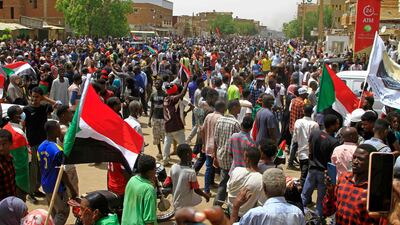
Sudanese protesters demonstrate against military rule in Omdurman, Khartoum's twin city. AFP -
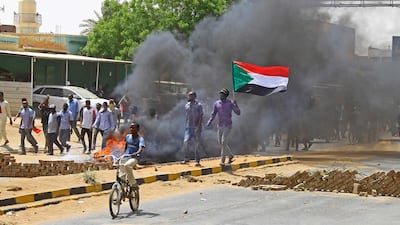
Obscured by smoke, protesters march. AFP -
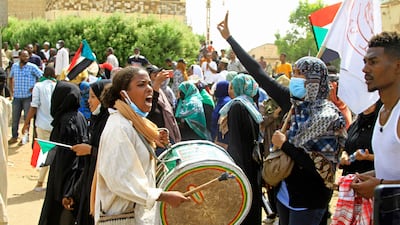
They beat drums and call for an end to military rule. AFP -
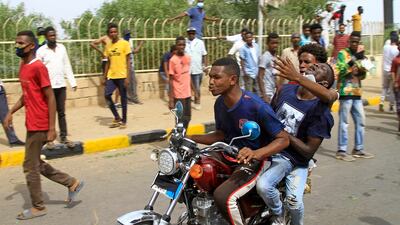
A wounded man is taken away by motorbike. AFP -
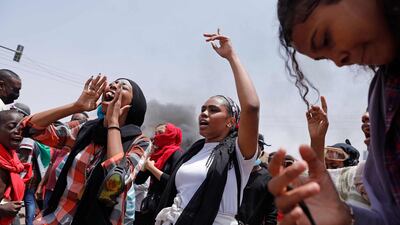
Protesters angry at the military's seizure of power in October chant slogans. AFP -
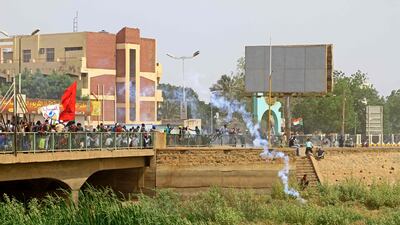
Security forces fire tear gas. AFP -
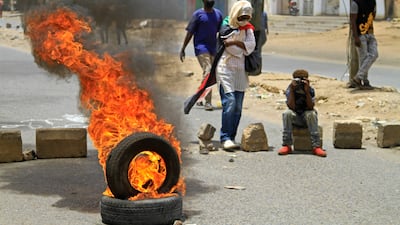
Flames leap as protesters burn tyres. AFP -
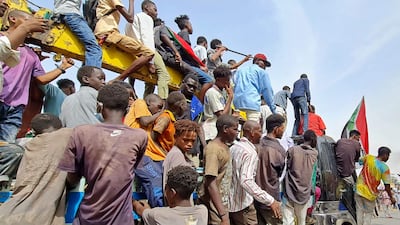
Demonstrators on the move in Khartoum's northern Bahari district. AFP -
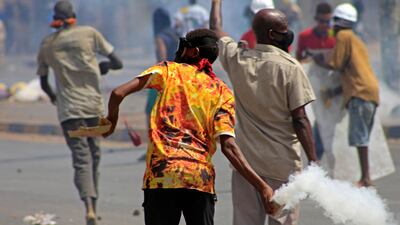
They clash with security forces in Bahari. AFP -

A show of hands in Khartoum. AP -
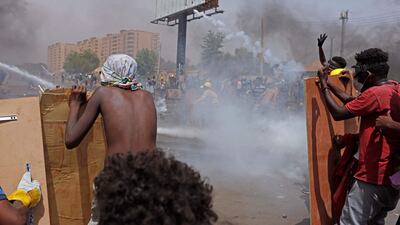
Shields raised, protesters face water cannon and tear gas. AFP -
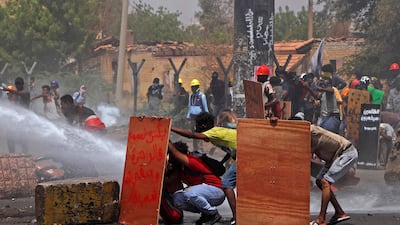
They hide from jets of water fired by security forces. AFP -
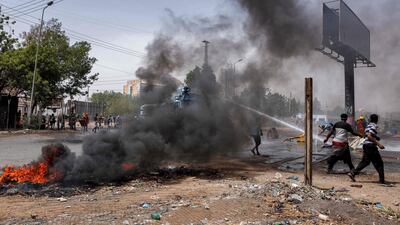
Violence flares in the centre of Khartoum. AFP -
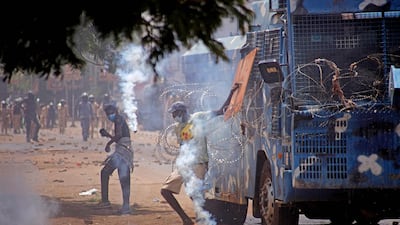
A makeshift wooden shield offers little protection from tear gas. AFP -

Protesters advance towards a security forces armoured personnel carrier. AFP -
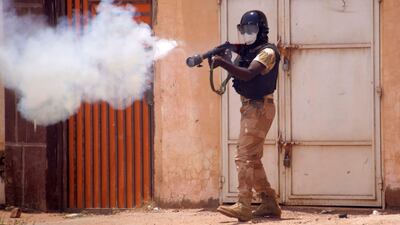
Tear gas is fired at protesters. AFP -
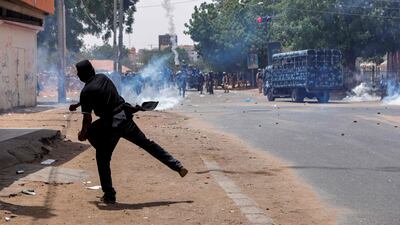
But this demonstrator threw a tear gas canister back at security forces. AFP -
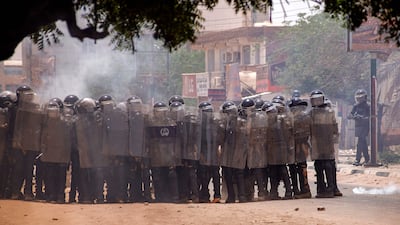
A phalanx of riot police, with shields raised. AFP -
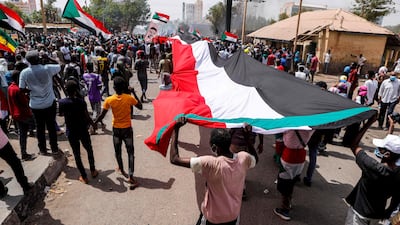
Draped in the national flag, demonstrators march against military rule. AFP -

Tear gas canisters fly amid clashes in central Khartoum. AFP


Egypt, Sudan's ally neighbour to the north, also welcomed the agreement.
Outside the Nile-side palace in central Khartoum, the Sudanese capital was quiet with many shops closed and little traffic on the streets.
Signing the document from the civilian side were representatives of about 30 political parties, associations, professional unions and rebel groups that are either members of the FFC coalition or have separately embraced the plan.
Army chief Gen Abdel Fattah Al Burhan and Gen Mohamed Hamdan Dagalo, his deputy on the ruling, military-led Sovereign Council, signed the document for the military.
The framework agreement provides for a civilian-led government to lead the country during a 24-month transitional period that will begin once a prime minister is sworn in and followed by free elections.
It also provides for the exclusion of the military from politics and the creation of an assembly to act as a parliament during the transitional period. A defence and security council is to be created and led by the civilian prime minister and include top military officers and leaders of the intelligence security services.
Addressing the ceremony, Gen Al Burhan repeated a slogan often chanted by protesters opposed to military rule, saying soldiers must return to their barracks, affirming his resolve to pull the military out of politics.
"The departure of the military from politics is final," said Gen Al Burhan, who led last year's coup. "The army will be transformed into a constitutional institution that is subject to the law, the constitution and democratic institutions."
He, however, warned civilian politicians against meddling in the "technical affairs" of the armed forces and appealed to them to leave the military to formulate the policies required to protect Sudan's national security.
The military's role, he explained, will be restricted to defending Sudan against "outside threats."
Gen Dagalo, also addressing the ceremony, said the October 25, 2021 coup was a “political mistake” that allowed “counterrevolutionary groups” to make a comeback, and also stressed that the military must withdraw from politics.
"The withdrawal of the military from politics is necessary to establish a sustainable democratic regime," he said. 'This requires building a strong national army and undertaking deep reforms."
-
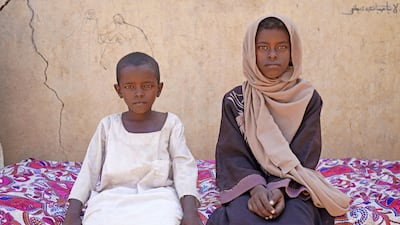
Zahra Hussein (R), a nine-year-old Sudanese girl who dropped out of school for financial reasons, poses for a picture with her brother at their home in the village of Ed Moussa in Sudan's eastern state of Kassala, on September 27, 2022. - There are nearly seven million children in Sudan who no longer go to school, a victim of what aid agencies have warned is a "generational catastrophe". Children in the country have for years faced mounting difficulties gaining access to proper education, especially in rural areas. Sudan is already one of the world's poorest countries, plagued by political instability, droughts, hunger and conflict, with an adult literacy rate of only around 60 percent according to the World Bank. AFP -
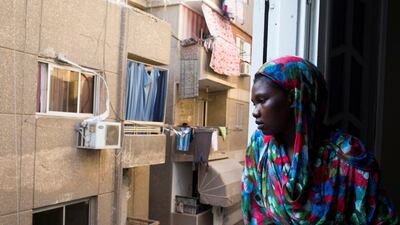
Abukk Sebit, 25, looks from her balcony after working to help financially her family in Sudan, at Ain Shams district area in Cairo, Egypt September 13, 2022. Reuters -
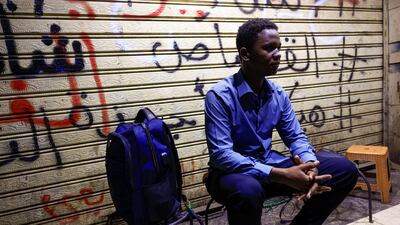
Mostafa waits for the bus before leaving for Egypt in Khartoum, Sudan September 24, 2022. Reuters -
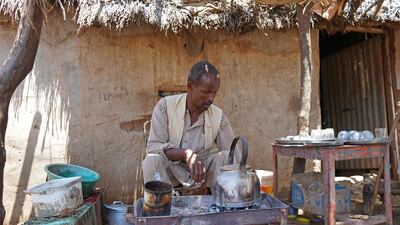
Abdalla Ibrahim, the Sudanese owner of a coffee shop and father of seven, looks on as he sits behind a pot on a fire in the village of Gosla in Sudan's eastern state of Kassala, on September 27, 2022. There are nearly seven million children in Sudan who no longer go to school, a victim of what aid agencies have warned is a "generational catastrophe". Children in the country have for years faced mounting difficulties gaining access to proper education, especially in rural areas. Sudan is already one of the world's poorest countries, plagued by political instability, droughts, hunger and conflict, with an adult literacy rate of only around 60 percent according to the World Bank. AFP -
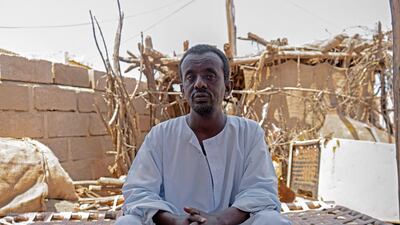
Othman Abubakr, a Sudanese day labourer who has nine children, poses for a picture in the village of Wad Sharifai in Sudan's eastern state of Kassala on September 27, 2022. There are nearly seven million children in Sudan who no longer go to school, a victim of what aid agencies have warned is a "generational catastrophe". Children in the country have for years faced mounting difficulties gaining access to proper education, especially in rural areas. Sudan is already one of the world's poorest countries, plagued by political instability, droughts, hunger and conflict, with an adult literacy rate of only around 60 percent according to the World Bank. AFP -
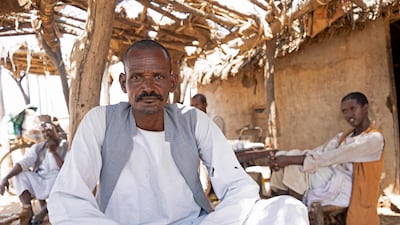
Ohaj Soliman, a 43-year-old Sudanese day labourer who put his children to work, poses for a picture during an interview with AFP in the village of Gosla in Sudan's eastern state of Kassala, on September 27, 2022. There are nearly seven million children in Sudan who no longer go to school, a victim of what aid agencies have warned is a "generational catastrophe". Children in the country have for years faced mounting difficulties gaining access to proper education, especially in rural areas. Sudan is already one of the world's poorest countries, plagued by political instability, droughts, hunger and conflict, with an adult literacy rate of only around 60 percent according to the World Bank. AFP -
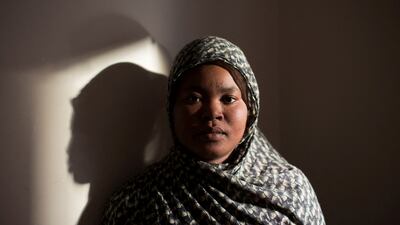
Malaz Al-Bakr Ibrahim, 23, who has worked as a babysitter in Egypt since 2020 because of the economic and political situation in Sudan, poses for a photograph at Ain Shams district area in Cairo, Egypt September 13, 2022. Reuters -
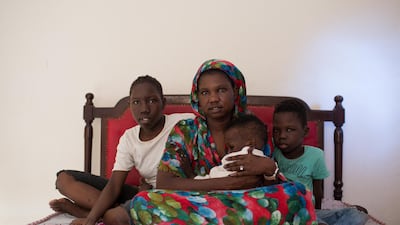
Abukk Sebit, 25 years old, poses with her children after working to help her family in Sudan financially at Ain Shams district area in Cairo, Egypt September 13, 2022. Reuters -
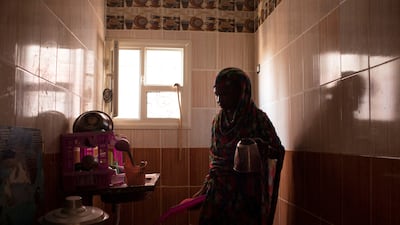
Abukk Sebit, 25 years old, prepares food before going to work to help her family in Sudan financially at Ain Shams district area in Cairo, Egypt September 13, 2022. Reuters -
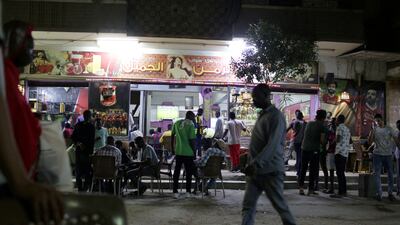
General view of a Sudanese coffee shop, where the number of Sudanese clients has increased in recent years after the economic and political conditions in their country deteriorated, at Ain Shams district area in Cairo, Egypt September 13, 2022. Reuters -

Sudanese protesters rally against the October 2021 military coup which has led to deaths and scores of arrests of demonstrators, in Khartoum, Sudan, Monday, February 28, 2022. Since the coup, more than 80 people, mostly young men, have been killed and over 2,600 others injured in the protests, according to a Sudanese medical group. AP Photo -
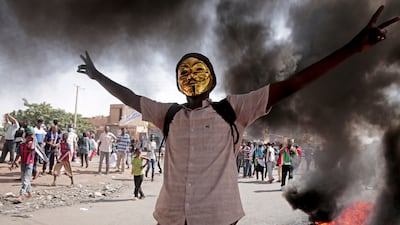
A man flashes the victory sign during a protest to denounce the October 2021 military coup, in Khartoum, Sudan, Jan. 9, 2022. Since the coup, security forces launched a deadly crackdown on protesters. Many activists were taken from their homes or snatched from the streets, according to documents he provided to The Associated Press. Around 80 people, mostly young men, were killed and over 2,200 others were wounded in the protests since the coup, according to a Sundanese medical group. AP Photo -
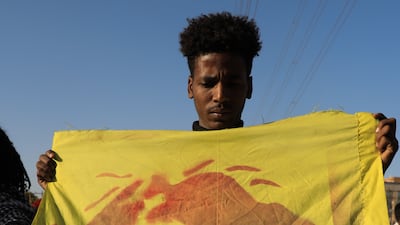
A Sudanese protester holds a painting of a person who reportedly died in a previous rally during a protest, in Khartoum, Sudan, 20 January 2022. Sudanese protesters rallied against the killing of at least 70 protests in crackdown against pro-democracy since the beginning of the military coup on 25 October 2021. The protest was organized as the US Assistant Secretary of State Molly Phee and US special envoy for the Horn of Africa David Satterfield visit Khartoum to meet separately with pro-democracy activists and military leaders to put an end to the crisis in the country. EPA -
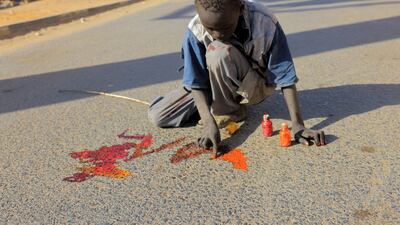
A boy draws on the street in front of a barricade during a two-day general strike and civil disobedience campaign in response to demonstrators' deaths against military takeover on October 25, 2021, in Khartoum, Sudan January 18, 2022. Reuters -

A Sudanese demonstrator waves a national flag during a protest against the October 2021 military coup, in the capital Khartoum, on January 13, 2022. The demonstrations which converged from several parts of Khartoum came only days after the United Nations launched a bid to facilitate talks between Sudanese factions. AFP -
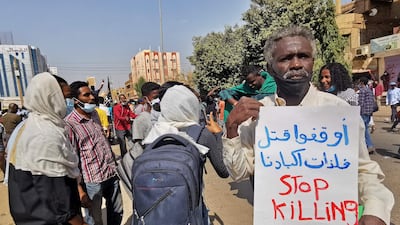
Sudanese protesters take to the streets of the capital Khartoum as they rally against the October 2021 military coup, on January 13, 2022. The demonstrations which converged from several parts of Khartoum came only days after the United Nations launched a bid to facilitate talks between Sudanese factions. AFP -
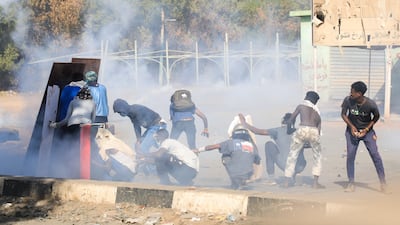
Sudanese protesters take cover as security forces fire tear gas during clashes with security forces at an anti-coup protest, in Khartoum, Sudan, 09 January 2022. Security forces fired tear gas to disperse protesters gathering in Khartoum and attempting to march towards the presidential palace, as part of the continuing protesting movement against a military coup in October 2021. The protest was organized a day after the UN envoy for Sudan said the international group will invite different parties for talks in Sudan to end the crisis. EPA -
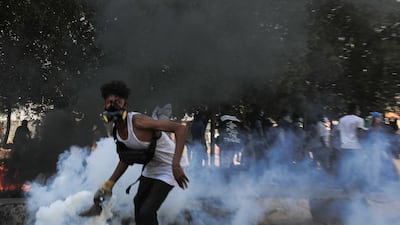
A Sudanese protester attempts to throw back a tear gas canister during clashes with security forces at an anti-coup protest, in Khartoum, Sudan, 09 January 2022. Security forces fired tear gas to disperse protesters gathering in Khartoum and attempting to march towards the presidential palace, as part of the continuing protesting movement against a military coup in October 2021. The protest was organized a day after the UN envoy for Sudan said the international group will invite different parties for talks in Sudan to end the crisis. EPA -
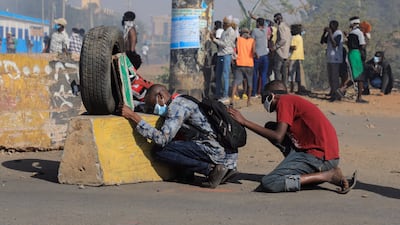
Sudanese protesters take cover during clashes with security forces at an anti-coup protest, in Khartoum, Sudan, 09 January 2022. Security forces fired tear gas to disperse protesters gathering in Khartoum and attempting to march towards the presidential palace, as part of the continuing protesting movement against a military coup in October 2021. The protest was organized a day after the UN envoy for Sudan said the international group will invite different parties for talks in Sudan to end the crisis. EPA -
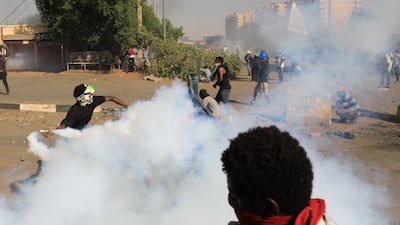
Sudanese protesters take cover as security forces fire tear gas during clashes with security forces at an anti-coup protest, in Khartoum, Sudan, 09 January 2022. Security forces fired tear gas to disperse protesters gathering in Khartoum and attempting to march towards the presidential palace, as part of the continuing protesting movement against a military coup in October 2021. The protest was organized a day after the UN envoy for Sudan said the international group will invite different parties for talks in Sudan to end the crisis. EPA


The agreement, roughly based on a draft transitional constitution presented by the Sudanese Bar Association, leaves for later discussions two thorny issues: the reform of the armed forces and transitional justice.
“It's not ideal, but it is an important step on the civilian and democratic path,” UN representative in Sudan Volker Perthes, told the ceremony after the signing.
“The next phase requires a broad dialogue with youths, martyrs' families, political forces and peace partners to form a credible government to deal with the political, security and economic challenges,” he said.
The agreement, first announced on Friday, has not been met with the vehement opposition most people in Sudan had expected. Boycotting Monday's ceremony was the Resistance Committees, the neighbourhood-based, pro-democracy group that has spearheaded anti-military protests in the past year. The group has recently been splintered.
Also absent was the hard-line Communist party, a long-time fixture in Sudan's complex political landscape with a limited but hard-core following among intellectuals.
Activists say many Sudanese are desperate for political stability in hopes that it will ease their economic hardship.
Sudan's economy has been devastated since the joint military-civilian administration was toppled by the generals in October last year.
The vast nation of 44 million people now faces three-digit inflation with soaring food and fuel prices, as well as lengthy power cuts and high unemployment.
The economic crisis, the worst in living memory, was deepened when the West and international financial agencies such as the World Bank suspended billions of dollars worth of aid and debt forgiveness after the military takeover.
On Monday, the US and its partners said they would offer Sudan a sizable aid package once a civilian-led transitional government takes office.
The coup sparked a wave of street protests in which at least 120 were killed and more than 6,000 injured at the hands of the security forces. A security vacuum following the coup allowed outbreaks of deadly ethnic and tribal clashes in Sudan's outlying regions, leaving hundreds dead and forcing tens of thousands to flee their homes.
The deal, which was read out in full in Monday's ceremony, spoke of lofty goals that could prove difficult to realise. Ironically, they echo a historic agreement between the military and the FFC in August 2019 that underpinned a unique, albeit fragile, military-civilian government that took the reins of the nation after months of political tumult.
Sudan has been ruled by the military for most of the nearly 70 years since independence in 1956, with power-hungry generals toppling democratically elected governments.
Neither the generals nor civilian politicians have resolved Sudan’s many chronic problems. These include ruinous civil wars, ethnic and religious rivalries, the uneven distribution of wealth and a lack of political inclusion.
The deal stipulates the integration into the army of former rebels whose groups signed a peace deal with the military in October 2020 as well as the powerful Rapid Support Forces, RSF, a once-notorious militia that fought on the government’s side during the civil war in the western region of Darfur in the 2000s.
Gen Dagalo, Gen Al Burhan's deputy on the Sovereign Council, commands the RSF.
In general terms, the deal declares Sudan a federal and democratic state with a parliamentary system. The Sudan envisioned in the document also enshrines peaceful politics and the rejection of all forms of violence, extremism and military coups.
It denounces any breach of constitutional legitimacy or undermining of the democratic system.

