


The drone attack aimed at Prime Minister Mustafa Al Kadhimi's residence in Baghdad's Green Zone was also an attack on the symbol of political power in Iraq, analysts have said.
The brazen strike in the heavily fortified area, they said, was carried out by militias bankrolled by Iran whose political counterparts were humiliated in the October elections and stand no chance of having a say in choosing the next prime ministerial candidate.
Iraq's militias, they said, want to prolong a climate of fear in a country where murderers frequently go unpunished.
The incident, which has drawn condemnation from around the world, did not come as a shock to many Iraqis who have long complained about lack of accountability – with no convictions and arrests made for the many crimes committed against dozens of political activists and experts over the past two years.
“The militias are telling Mr Al Kadhimi clearly that you can’t rein us in and the proof is this attack,” Ahmed Al Abyad, a national security analyst based in Baghdad, told The National. “They don’t want a state of law or political parties. They want a state of militias.”
“Only the militias, as well as the army, have drone capabilities. The use of drones is strictly controlled by the army and subject to many rules and regulations. The only difference is that the militias are using the bird’s-eye technology for malicious purposes. As ISIS used them for terrorism, these militias are doing exactly the same thing now.”
Mr Al Kadhimi escaped the assassination attempt by an armed drone unharmed, weeks after a general election disputed by Iran-backed militia groups.
Three drones were used in the attack, including two that were intercepted and downed by security forces, while a third drone hit the residence in the Green Zone where government buildings and foreign embassies are based.
Security sources told The National the drones used in the assault on the prime minister’s residence were similar to Iranian-made drones that have been used during previous attacks in Iraq.
-
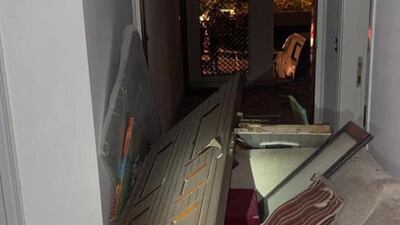
The damage inside the home of Iraqi Prime Minister Mustafa Al Kadhimi after a drone attack at the heavily fortified Green Zone in Baghdad. EPA -
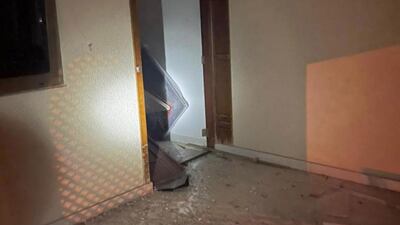
The Iraqi military announced that Mr Kadhimi's home was attacked with an explosive-laden drone in a 'failed assassination attempt'. Several of the prime minister's guards were injured. EPA -
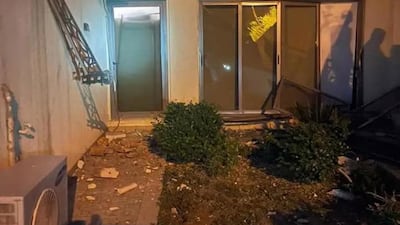
Two drones were shot down while a third hit Mr Al Kadhimi's residence before heading for the south-western, Shiite-dominated Hurriyah district, officials said. EPA -
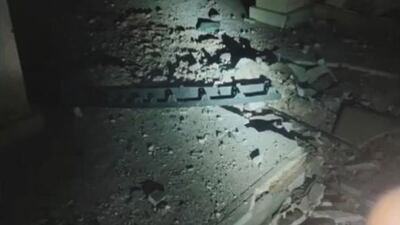
The failed assassination attempt came after pro-militia groups staged protests in the Iraqi capital against the results of last month's elections. EPA -
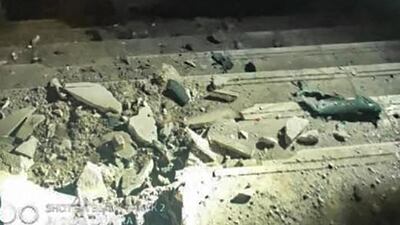
Soon after the attack, Mr Al Kadhimi appeared in a video on his Twitter account and said he was safe. EPA -
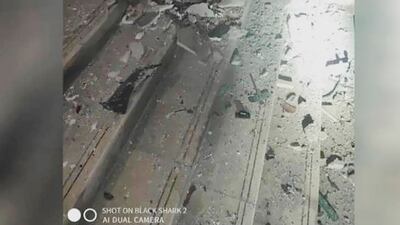
The attack was a major escalation amid tensions sparked by the refusal of Iran-backed militias to accept the parliamentary election results. AP -
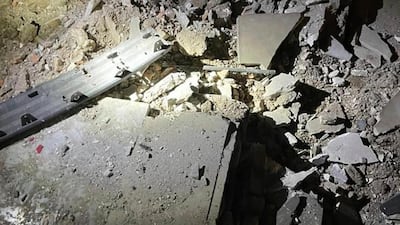
The UAE condemned the attack in the strongest terms. AP -
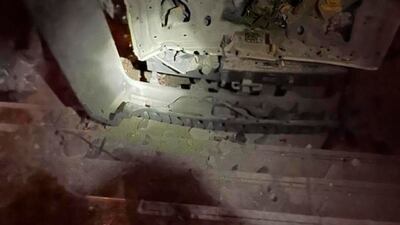
Supporters of parties that lost in the elections have been threatening Mr Al Kadhimi for weeks. AP


The attack came two days after violent clashes in Baghdad between government forces and supporters of Iran-backed political parties, when they lost dozens of seats in the 329-seat parliament after an early election on October 10.
Two members of the Iran-backed Asaib Ahl Al Haq died in the turmoil and more than 100 protesters were injured. The protesters accused Mr Al Kadhimi of ordering government forces to use live ammunition.
He denied this and asked a high-profile delegation led by top military leaders and the interior minister to visit the movement’s leaders to stop any possible escalation.
Asaib is designated as a terrorist organisation by the US State Department and is seen as a violent proxy for Iran’s Revolutionary Guard, which has also been sanctioned by Washington.
“The visit paid by senior Iraqi officials to Asaib leader Qais Al Khazali in his house demonstrates how powerful and influential his movement has become in Iraq,” Ihsan Al Shimiri, an Iraqi political analyst, told The National.
“Shortly afterwards, the attack targeted Mr Al Kadhimi's residence because the militias were simply provoked. They want to get Mr Al Kadhimi out of the political equation as he has emerged as a potential compromise candidate for a second term in office. But they also want to tell the new prime minister that you will remain under our hegemony and you should toe our line.”
Asked whether Iraq needs to pursue the rampant militias with a "hugs, not bullets" non-confrontational policy, like the one used in Mexico against cartels to reduce murder rates, a senior member of the politburo of the populist Shiite cleric Moqtada Al Sadr said the country needs statecraft and independence in decision-making.
"As long as Iran and the US keep meddling in Iraq's affairs, the country will offer more bullets and no hugs," he said, asking not be named because of the post-election tensions.
Mr Al Kadhimi appeared in a video published by his office on Sunday chairing a meeting with top security commanders to discuss the drone strike, calling it a “cowardly terrorist attack against the Iraqi state by criminal armed groups”.
Asaib blamed the attack on the prime minister on a “third party linked to intelligence services” and called for the setting up of a technical committee to investigate it.
But Abu Ali Al Askari, a spokesman for the Iran-backed Kataeb Hezbollah in Iraq, was blunt and outspoken in a social media post circulated widely.
“I would call on [Mr Al Kadhimi] to stop his indulgence in self-victimisation. We don’t buy this talk anymore. According to our solid information, no one in Iraq is willing to lose a single drone to target [his residence],” Mr Al Askari said on the Telegram app.
The unrest highlights the deep fractures in Iraq’s political mosaic.
The election results came as a surprise to many observers, although the 41 per cent turnout was the lowest since 2005. The Sadrist bloc won 73 seats and the vote witnessed the rise of independents and the parties supporting the 2019 mass protests against corruption, rampant militias and socioeconomic ills at the expense of highly influential political blocs.
'Militias call the shots in Iraq'
The progress of the Sadrist movement came at the expense of other Shiite forces, some linked to the Popular Mobilisation factions. Some accuse these forces of being responsible for killing anti-government demonstrators in late 2019, which led to a decline in their public popularity.
The Al Fateh coalition led by Hadi Al Amiri is the most prominent of these losing forces, as it secured only 14 seats, a significant regression from the great success it achieved in the 2018 elections, in which it came second by obtaining 47 seats.
Among the losers is the third major Shiite faction, which calls itself the "National Force of the State Coalition". This alliance, which won four seats only, is led by Ammar Al Hakim and former prime minister Haider Al Abadi.
But the power struggle is the least of the worries for many ordinary Iraqis.
They struggle with their own daily problems, including unemployment, chronic power shortages and crumbling infrastructure, in a country that sits on enormous oil reserves.
“Why should I vote and for whom?” said Ali Hamed, a 28-year-old who graduated with an engineering qualification in 2016 and works as a delivery driver at a shawarma shop to eke out a living.
“You know that sectarianism-based political quotas and the weapons dictate the course in Iraq. Everyone now knows that the militias call the shots in Iraq.”

