

As December 31 comes closer, people around the world gather to welcome a fresh year while bidding farewell to the one that has passed, something many will be happy to do this time around.
While parties and fireworks are among the most familiar ways to celebrate, countless cultures mark the moment with their own distinctive customs.
From meaningful rituals to joyful celebrations, here are some of the most unique New Year’s traditions observed around the world.
Seven meals for strength, Estonia
In Estonia, New Year’s Day is all about abundance. Tradition says people should eat seven, nine or even 12 meals throughout the day – numbers considered lucky in Estonian folklore. Each meal is believed to add strength and good fortune for the coming year, symbolising prosperity, vitality and plenty.
Of course, most people only have a bite or small serving of each meal rather than full feasts, but the sentiment remains the same: welcoming the year with generosity, fullness and gratitude.
Smashing pomegranates, Turkey

In Turkey, the pomegranate is more than just a fruit; it is considered a powerful symbol of luck, prosperity and abundance. As the New Year arrives, many families smash a pomegranate on the doorstep of their home, believing the bursting seeds will usher in good fortune for the months ahead.
The more seeds that scatter, the greater the blessings are thought to be, representing hopes for wealth, health and happiness. With its deep red colour symbolising life and vitality, the pomegranate remains a meaningful and visually striking way for many in Turkey to welcome a fresh start.
Right foot first, Argentina
In Argentina, many people make sure to start the year on the right foot, literally. As midnight passes, it is customary to ensure that the first step taken into the New Year is with the right foot, a symbolic gesture believed to encourage positive beginnings, good luck and success.
This small but meaningful act reflects a cultural belief that the way you step into the year can influence how it unfolds, setting an optimistic tone from the very first moment of January.
Water tossing, Cuba
Cubans believe that throwing a bucket of dirty water out of their homes at midnight represents the act of washing away bad luck, misfortunes and negative energies accumulated over the past year. This gesture is meant to start the year afresh, filled with positive energy and hope for better fortunes ahead.
In preparation for this ritual, homes are thoroughly cleaned, with every corner mopped and swept until spotless. The water used during the cleaning is saved and flung into the street at midnight, marking the release of old troubles and a clean slate for the year ahead.
Hanging onions, Greece
The tradition of hanging onions in Greek culture is deeply rooted in symbolism and ritual. Onions, revered since ancient Greece for their ability to sprout even when neglected, represent rebirth, fertility and regeneration.
Hanging an onion on the door is believed to promote personal growth and prosperity for the household in the coming year. This ritual often takes place after the New Year's Day church service, when families bring home an onion and hang it near the entrance to welcome new beginnings and ward off negativity.
Serving 12 spherical fruits, the Philippines

On New Year’s Eve, families in the Philippines make sure to serve 12 spherical fruits, which are believed to represent prosperity because they're round. As for the lucky number, each fruit represents one month of the year. The fruits usually take centre stage at the table during the midnight meal.
The 108 bell chimes, Japan
At midnight on December 31, 108 bells ring out all over Japan. The practice is called Joya-no-Kane and the bells are rung by Buddhists. The number of chimes represents what is known in Buddhism as the “earthly desires”. If you're in Japan, you can witness the bells toll on TV or hear them on the radio.
Banging pots and pans, Ireland

As the clock strikes midnight around the world, many people take to the streets to ring in the New Year by banging pots and pans. The tradition is carried out across the world, from the UK to Australia, although it is widely believed that the tradition originated in Ireland. The action is said to ward off evil spirits and negativity, paving the way for a happy and positive year ahead.
Calennig, Wales
Though this tradition isn’t particularly popular in the modern world, there was a time when this Welsh gift-giving rite was as beloved as Christmas Day itself. From dawn until about noon on New Year’s Day, children would go door-to-door in a game that shares some similarities with trick or treat. Singing or relaying rhymes on doorsteps, they would be rewarded with gifts of copper coins or sweets. The word calennig refers to an apple or orange skewered with cloves and dried fruit. These would be carried by the children as a symbol of good luck, and later displayed in their family homes.
Setting fire to wishes, Armenia
We all know to make a wish as the clock strikes 12 on New Year’s Eve, but in some parts of the world, they don’t just make a wish, they consume it. In a tradition traced back to Russia, some families write their wishes for the New Year on scraps of paper, which they then set on fire and put in their glass of drink. It is then customary to drink the ashes as the clock strikes its 12th chime. This custom is also commonplace in Armenia.
Cutting apples, the Czech Republic

As the New Year approaches, people in the Czech Republic traditionally cut an apple in two, to predict how the year ahead might look. Should the core be surrounded by the shape of a star, you are in for a good and lucky year ahead. If the core is in the shape of a cross, you could be in for a treacherous 12 months.
Vasilopita cake, Cyprus
In Cyprus, a New Year is ushered in with cake. In the Greek Orthodox religion, January 1 is the name day of Saint Basil, or Ayios Vasilios, who is the saint associated with Father Christmas, as opposed to Saint Nicholas in the western tradition. And so, on the first of the year, a cake named in his honour, the “vasilopita”, is served, in a tradition that is also observed across Greece, the Balkans and parts of Eastern Europe.
In days gone by, the cake was cut by the head of the family, in the presence of loved ones, and was meant to bring blessings into the home. Hidden within the sweet treat, which is crafted from a variety of different doughs, depending on individual family traditions, is a coin. Whoever gets the slice containing that little trinket is supposed to be granted good luck for the rest of the year.
Chair-jumping, Denmark
As the clock strikes midnight in Denmark, it is tradition to stand on a chair and jump down to the floor. By spending the last moments of the year with your feet off the ground, the Danes believe you can jump into the New Year fresh, leaving any negativity and bad vibes in the year just elapsed.
Hogmanay, Scotland
-
Edinburgh's Torchlight Procession kick-starts Edinburgh’s Hogmanay celebrations - the largest New Year party in the UK. Courtesy TCSPR / Ian Georgeson -
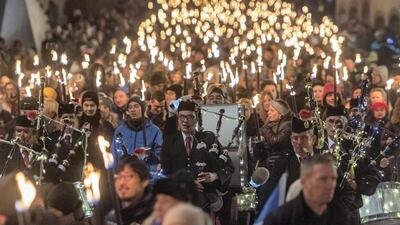
Revellers stroll through Edinburgh's Old Town during the Hogmanay Torchlight Procession. Courtesy TSCPR / Ian Georgeson -
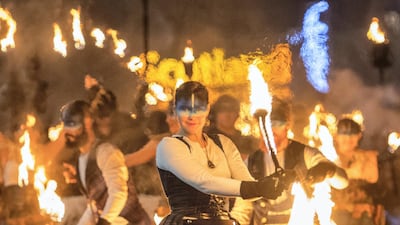
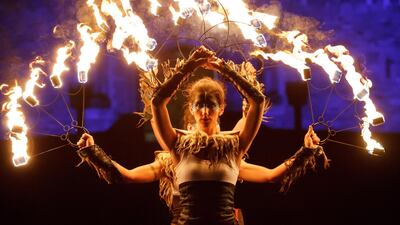
Edinburgh's Torchlight Procession includes dancers, performers and more. Courtesy TCSPR /Ian Georgeson -
The Torchlight Procession travelled down the city's Royal Mile towards Holyrood Park in Scotland's capital. EPA/ROBERT PERRY -
Edinburgh's Torchlight Procession stems from ancient Winter Solstice celebrations. EPA/ROBERT PERRY -
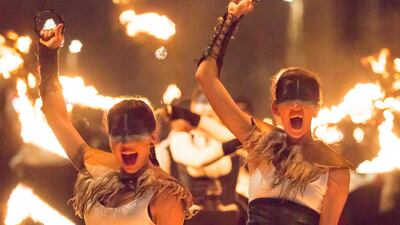
More than 40,000 people descended upon Scotland's capital city to join the Hogmanay celebrations on Monday, December 30, 2019. EPA/ROBERT PERRY -

The Edinburgh Torchlight Procession marks the start of three days of Hogmanay celebrations in Scotland. Courtesy TCSPR / Ian Georgeson -
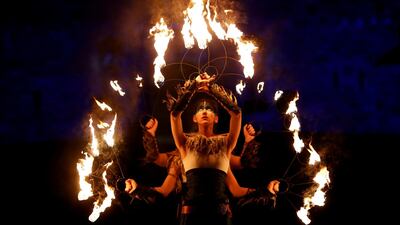
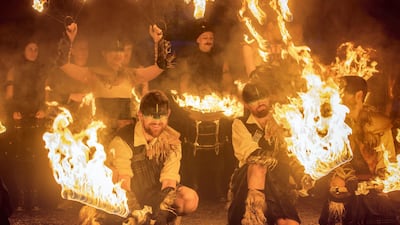
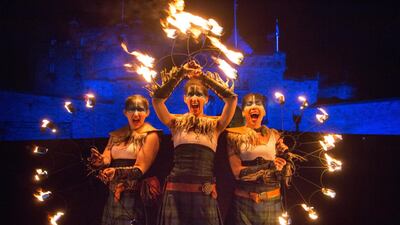
Fire artists pose in front of Edinburgh Castle in advance of Edinburgh's Hogmanay torchlight procession down the Royal Mile in Edinburgh, Scotland. REUTERS/Russell Cheyne -
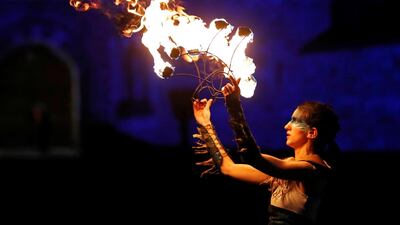
A member of PyroCeltica poses in front of Edinburgh Castle in advance of Edinburgh's Hogmanay Torchlight Procession down the Royal Mile in Edinburgh, Scotland, Britain, December 30, 2019. REUTERS/Russell Cheyne -
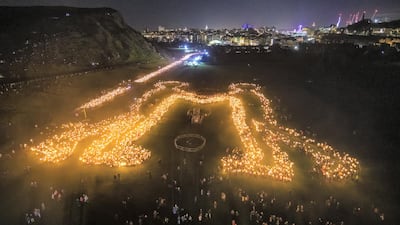
The Torchlight Procession culminated in Holyrood Park where a sign of friendship is created by torchbearers. Courtesy www.edinburghshogmanay.com


Hogmanay is the Scottish word for the last day of the year. Many believe it dates back to the 8th century when the Vikings invaded Scotland. These raiders would celebrate the winter solstice with huge fire-burning parties. In Scotland's northern Shetland Isles, the annual Up-Helly-Aa fire festival continues this tradition, but across the rest of the country it has become Hogmanay.
The celebration also gained prominence when religious leaders expelled Christmas across Scotland due to religious divides. With Christmas banned for nearly 400 years, many people simply made Hogmanay the bigger celebration.
When the clock strikes midnight, people greet each other with traditional toasts such as “Lang may yer lum reek”. This is Scots for 'long will your chimney smoke', and is a wish for good fortune.
Auld Lang Syne, a poem by Scotland's most famous poet Robert Burns, has become the soundtrack for New Year around the world. At every Scottish ceilidh or Hogmanay party, people gather in a circle to link arms and belt out the lyrics after the clock strikes 12.
Eating 12 grapes, Spain

In the minute before midnight on New Year's Eve, people in Spain traditionally eat 12 grapes. The custom is thought to bring luck and good fortune for the year ahead, as well as ward off any evil spirits that may be lurking. New Year's grape-eating is also commonplace in Latin America and Indonesia.
Wave-jumping, Brazil
If you head to the shoreline on one of Brazil's many beautiful beaches at the countdown to midnight on New Year's Eve, you will probably see many people wading in the shallows, preparing to enter the New Year with the custom of jumping over seven waves – one for each day of the week. In doing so, Brazilians pay honour to Yemoja, goddess of the sea, in the hopes of getting in her good books for the year ahead. It is also commonplace to bring offerings such as jewellery and flowers, to leave at the shoreline.
Carrying an empty suitcase, Latin America
In Latin America, revellers with wanderlust see in the New Year by carrying an empty suitcase on a stroll around their block. It is thought the act is enough to ensure the year ahead will be filled with travel and adventure. People have also taken to racing with empty suitcases, too, in a bid to speed things along.
A midnight kiss, Germany
Derived from German folklore, it is tradition for people in the much of the western world to share a kiss at midnight. The custom has been around since the 4th century, and it is thought the kiss will bring both you and your beloved shared good fortunes for the year ahead.

