Before 1979: Ties between the states were established in 1929, but relations were strained over differences matters including Iran’s recognition of Israel.
1979: Iran’s revolution established a theocratic republic, which caused tensions with Saudi Arabia as the new leadership criticised the kingdom.
1980s: With Saudi Arabia supporting Baghdad in the Iran-Iraq War, the relationship reached its nadir but the countries kept official channels open.
1987: On July 31, Iranian-led demonstrators were involved in dealy violence with Saudi security forces during Hajj. In response, crowds attacked the Saudi embassy in Tehran, leading Riyadh to cut the number of Iranians permitted to undertake the pilgrimage and sever ties fully in April 1988. Iran did not permit citizens to take part in Hajj for three years.
1989: Towards the end of the Iran-Iraq War, King Fahd urged Iraq to accept the UN Security Council resolution to impose a ceasefire and in 1989, Iranian president Hashemi Rafsanjani announced that indirect talks were being held with Riyadh to improve relations.
1991: Iran and Saudi Arabia condemned Iraq’s invasion of Kuwait, improving relations, which were officially restored in 1991. Saudi authorities allowed 115,000 Iranians to attend Hajj that year and invited 5,000 relatives of those killed in the 1987 violence.
Saudi Arabia welcomed the US-led opposition to Iraq’s invasion of Kuwait, while Iran was neutral.
1996: On June 23, a lorry bomb outside the US barracks in Dhahran, Saudi Arabia, killed 19 soldiers and hurt hundreds. The US blamed Iran, but Saudi Arabia did not openly do so.
1997: Saudi Arabia’s then Crown Prince Abdullah bin Abdulaziz and foreign minister Prince Saud bin Faisal attend the Organisation of Islamic Co-operation, helping to improve ties.
1998: Iranian President Mohammad Khatami visited Saudi Arabia, marking the first presidential-level visit between the two countries.
1999: Spurred by Opec co-operation, ties improved further under Mr Khatami, who again visited Saudi Arabia and stayed five days, with the sides discussing economic, security and cultural matters. The meetings helped pave the way for the 2001 Saudi-Iranian security agreement. King Fahd urged other Gulf states to improve relations with Iran and said it was in the interest of the region that ties were strong.
2011: Washington accused Iran of trying to assassinate US envoy and later foreign minister Adel Al Jubeir.
2011: Iran and Saudi Arabia backed different sides in Syria’s growing civil war and in various movements that formed the Arab uprisings.
2012: In response to international sanctions on Iran over nuclear enrichment, the kingdom offered to offset lost oil supplies by increasing output.
2015: When two Iranian teenage pilgrims undertaking Hajj accused Saudi police of harassment, 80 Iranian MPs presented a bill to the government demanding action and hundreds demonstrated in Iran. Saudi foreign minister Prince Saud bin Faisal said the government would act and the Interior Ministry announced the accused had been fired and referred to court.
2015: A crush during Hajj led to the deaths of hundreds of worshippers and left hundreds more injured, many of them Iranian. Saudi officials called for a ban on Iranians.
2015: With the Houthi rebels taking over large parts of Yemen, Saudi Arabia intervened at the request of the internationally recognised government. The Saudi government and other regional powers accused Iran of supporting the rebels with rockets and arms. As the conflict deepened, Houthis attacked border points and sent drones to the kingdom.
2016: Iran refused to allow citizens to take part in Hajj following the crush the previous year and tensions flared over quotas.
2016: Saudi Arabia executed Shiite cleric Nimr Al Nmr after he was convicted of seeking foreign meddling in the kingdom and attempting to take up arms against the state. The execution sparked mass protests in Iran and an attack on the Saudi embassy in Tehran. Riyadh to cut ties.
2018: When the US withdrew from the Joint Comprehensive Plan of Action, Saudi Arabia welcomed the decision to withdraw while Iran criticised it.
2019: Iran-backed Houthis claimed responsibility for a drone attack on Saudi oil facilities that caused major damage and threatened global supplies. Some experts suggested Iran was responsible. The incident led to heightened tensions.
2021: Iran and Saudi Arabia held their first direct talks since the execution of Al Nimr. Hosted by Iraq, neither country confirmed the talks, which were reported to have focused on the conflict in Yemen and the crisis in Lebanon. Four rounds of talks would be held between April and September.
Tehran later said it “welcomed dialogue” with Riyadh but did not confirm that direct talks had occurred. Saudi Foreign Minister Prince Faisal bin Farhan visited Oman amid reports that Muscat was seeking to host Saudi-Iranian talks too.
2022: Iran pulled out of talks ahead of a planned fifth round without giving a reason, a day after mass executions in Saudi Arabia that activists said included 41 Shiites. Iraq's then-caretaker Prime Minister Mustafa Al Kadhimi attempted to restart the dialogue with a visit to Saudi Arabia and then Iran, but there is no subsequent news of further negotiations. His successor, Mohammed Shia Al Sudani, visited Iran and was reported to have raised the issue of resuming talks with Saudi Arabia.
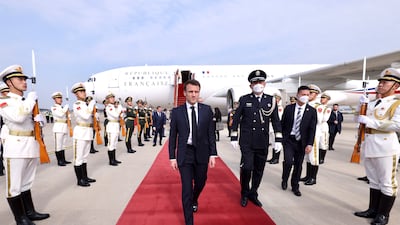
2023: Saudi Arabia and Iran announced in Beijing that they would fully restore diplomatic relations within two months, following talks in China's capital that began on March 6. Weeks later, Saudi Arabia and Iran agreed to resume flights at the first meeting between the kingdom's Foreign Minister Prince Faisal bin Farhan and his Iranian counterpart Hossein Amirabdollahian in China since the announcement of resuming ties.

The more serious side of specialty coffee
While the taste of beans and freshness of roast is paramount to the specialty coffee scene, so is sustainability and workers’ rights.
The bulk of genuine specialty coffee companies aim to improve on these elements in every stage of production via direct relationships with farmers. For instance, Mokha 1450 on Al Wasl Road strives to work predominantly with women-owned and -operated coffee organisations, including female farmers in the Sabree mountains of Yemen.
Because, as the boutique’s owner, Garfield Kerr, points out: “women represent over 90 per cent of the coffee value chain, but are woefully underrepresented in less than 10 per cent of ownership and management throughout the global coffee industry.”
One of the UAE’s largest suppliers of green (meaning not-yet-roasted) beans, Raw Coffee, is a founding member of the Partnership of Gender Equity, which aims to empower female coffee farmers and harvesters.
Also, globally, many companies have found the perfect way to recycle old coffee grounds: they create the perfect fertile soil in which to grow mushrooms.
Real estate tokenisation project
Dubai launched the pilot phase of its real estate tokenisation project last month.
The initiative focuses on converting real estate assets into digital tokens recorded on blockchain technology and helps in streamlining the process of buying, selling and investing, the Dubai Land Department said.
Dubai’s real estate tokenisation market is projected to reach Dh60 billion ($16.33 billion) by 2033, representing 7 per cent of the emirate’s total property transactions, according to the DLD.
How much sugar is in chocolate Easter eggs?
- The 169g Crunchie egg has 15.9g of sugar per 25g serving, working out at around 107g of sugar per egg
- The 190g Maltesers Teasers egg contains 58g of sugar per 100g for the egg and 19.6g of sugar in each of the two Teasers bars that come with it
- The 188g Smarties egg has 113g of sugar per egg and 22.8g in the tube of Smarties it contains
- The Milky Bar white chocolate Egg Hunt Pack contains eight eggs at 7.7g of sugar per egg
- The Cadbury Creme Egg contains 26g of sugar per 40g egg
COMPANY%20PROFILE
%3Cp%3E%3Cstrong%3ECompany%20name%3A%3C%2Fstrong%3E%20Revibe%20%0D%3Cbr%3E%3Cstrong%3EStarted%3A%3C%2Fstrong%3E%202022%0D%3Cbr%3E%3Cstrong%3EFounders%3A%3C%2Fstrong%3E%20Hamza%20Iraqui%20and%20Abdessamad%20Ben%20Zakour%20%0D%3Cbr%3E%3Cstrong%3EBased%3A%3C%2Fstrong%3E%20UAE%20%0D%3Cbr%3E%3Cstrong%3EIndustry%3A%3C%2Fstrong%3E%20Refurbished%20electronics%20%0D%3Cbr%3E%3Cstrong%3EFunds%20raised%20so%20far%3A%3C%2Fstrong%3E%20%2410m%20%0D%3Cbr%3E%3Cstrong%3EInvestors%3A%20%3C%2Fstrong%3EFlat6Labs%2C%20Resonance%20and%20various%20others%0D%3C%2Fp%3E%0A
Mercer, the investment consulting arm of US services company Marsh & McLennan, expects its wealth division to at least double its assets under management (AUM) in the Middle East as wealth in the region continues to grow despite economic headwinds, a company official said.
Mercer Wealth, which globally has $160 billion in AUM, plans to boost its AUM in the region to $2-$3bn in the next 2-3 years from the present $1bn, said Yasir AbuShaban, a Dubai-based principal with Mercer Wealth.
“Within the next two to three years, we are looking at reaching $2 to $3 billion as a conservative estimate and we do see an opportunity to do so,” said Mr AbuShaban.
Mercer does not directly make investments, but allocates clients’ money they have discretion to, to professional asset managers. They also provide advice to clients.
“We have buying power. We can negotiate on their (client’s) behalf with asset managers to provide them lower fees than they otherwise would have to get on their own,” he added.
Mercer Wealth’s clients include sovereign wealth funds, family offices, and insurance companies among others.
From its office in Dubai, Mercer also looks after Africa, India and Turkey, where they also see opportunity for growth.
Wealth creation in Middle East and Africa (MEA) grew 8.5 per cent to $8.1 trillion last year from $7.5tn in 2015, higher than last year’s global average of 6 per cent and the second-highest growth in a region after Asia-Pacific which grew 9.9 per cent, according to consultancy Boston Consulting Group (BCG). In the region, where wealth grew just 1.9 per cent in 2015 compared with 2014, a pickup in oil prices has helped in wealth generation.
BCG is forecasting MEA wealth will rise to $12tn by 2021, growing at an annual average of 8 per cent.
Drivers of wealth generation in the region will be split evenly between new wealth creation and growth of performance of existing assets, according to BCG.
Another general trend in the region is clients’ looking for a comprehensive approach to investing, according to Mr AbuShaban.
“Institutional investors or some of the families are seeing a slowdown in the available capital they have to invest and in that sense they are looking at optimizing the way they manage their portfolios and making sure they are not investing haphazardly and different parts of their investment are working together,” said Mr AbuShaban.
Some clients also have a higher appetite for risk, given the low interest-rate environment that does not provide enough yield for some institutional investors. These clients are keen to invest in illiquid assets, such as private equity and infrastructure.
“What we have seen is a desire for higher returns in what has been a low-return environment specifically in various fixed income or bonds,” he said.
“In this environment, we have seen a de facto increase in the risk that clients are taking in things like illiquid investments, private equity investments, infrastructure and private debt, those kind of investments were higher illiquidity results in incrementally higher returns.”
The Abu Dhabi Investment Authority, one of the largest sovereign wealth funds, said in its 2016 report that has gradually increased its exposure in direct private equity and private credit transactions, mainly in Asian markets and especially in China and India. The authority’s private equity department focused on structured equities owing to “their defensive characteristics.”
Tell Me Who I Am
Director: Ed Perkins
Stars: Alex and Marcus Lewis
Four stars
Stage results
1. Julian Alaphilippe (FRA) Deceuninck-QuickStep 4:39:05
2. Michael Matthews (AUS) Team BikeExchange 0:00:08
3. Primoz Roglic (SLV) Jumbo-Visma same time
4. Jack Haig (AUS) Bahrain Victorious s.t
5. Wilco Kelderman (NED) Bora-Hansgrohe s.t
6. Tadej Pogacar (SLV) UAE Team Emirates s.t
7. David Gaudu (FRA) Groupama-FDJ s.t
8. Sergio Higuita Garcia (COL) EF Education-Nippo s.t
9. Bauke Mollema (NED) Trek-Segafredo s.t
10. Geraint Thomas (GBR) Ineos Grenadiers s.t
Results
%3Cp%3E%0D%3Cstrong%3EElite%20men%3C%2Fstrong%3E%0D%3Cbr%3E1.%20Amare%20Hailemichael%20Samson%20(ERI)%202%3A07%3A10%0D%3Cbr%3E2.%20Leornard%20Barsoton%20(KEN)%202%3A09%3A37%0D%3Cbr%3E3.%20Ilham%20Ozbilan%20(TUR)%202%3A10%3A16%0D%3Cbr%3E4.%20Gideon%20Chepkonga%20(KEN)%202%3A11%3A17%0D%3Cbr%3E5.%20Isaac%20Timoi%20(KEN)%202%3A11%3A34%0D%3Cbr%3E%3Cstrong%3EElite%20women%3C%2Fstrong%3E%0D%3Cbr%3E1.%20Brigid%20Kosgei%20(KEN)%202%3A19%3A15%0D%3Cbr%3E2.%20Hawi%20Feysa%20Gejia%20(ETH)%202%3A24%3A03%0D%3Cbr%3E3.%20Sintayehu%20Dessi%20(ETH)%202%3A25%3A36%0D%3Cbr%3E4.%20Aurelia%20Kiptui%20(KEN)%202%3A28%3A59%0D%3Cbr%3E5.%20Emily%20Kipchumba%20(KEN)%202%3A29%3A52%3C%2Fp%3E%0A
The%20Iron%20Claw
%3Cp%3E%3Cstrong%3EDirector%3A%3C%2Fstrong%3E%20Sean%20Durkin%C2%A0%3C%2Fp%3E%0A%3Cp%3E%3Cstrong%3EStarring%3A%3C%2Fstrong%3E%20Zac%20Efron%2C%20Jeremy%20Allen%20White%2C%20Harris%20Dickinson%2C%20Maura%20Tierney%2C%20Holt%20McCallany%2C%20Lily%20James%3C%2Fp%3E%0A%3Cp%3E%3Cstrong%3ERating%3A%3C%2Fstrong%3E%204%2F5%3C%2Fp%3E%0A
Brief scoreline
Switzerland 0
England 0
Result: England win 6-5 on penalties
Man of the Match: Trent Alexander-Arnold (England)
What's in the deal?
Agreement aims to boost trade by £25.5bn a year in the long run, compared with a total of £42.6bn in 2024
India will slash levies on medical devices, machinery, cosmetics, soft drinks and lamb.
India will also cut automotive tariffs to 10% under a quota from over 100% currently.
Indian employees in the UK will receive three years exemption from social security payments
India expects 99% of exports to benefit from zero duty, raising opportunities for textiles, marine products, footwear and jewellery
Pari
Produced by: Clean Slate Films (Anushka Sharma, Karnesh Sharma) & KriArj Entertainment
Director: Prosit Roy
Starring: Anushka Sharma, Parambrata Chattopadhyay, Ritabhari Chakraborty, Rajat Kapoor, Mansi Multani
Three stars