
As the Iran war continues to shape the regional security environment, the resilience of urban infrastructure across the Gulf is being tested in new ways. For the region’s rapidly advancing smart cities, this is no longer a theoretical concern. It is a design challenge that must be addressed from the outset.
Abu Dhabi has already emerged as a global leader in this space, ranking among the top five cities worldwide in the 2025 IMD Smart City Index, reflecting its progress in safety, digital services and urban innovation.
Across the UAE and wider Gulf region, cities are being reimagined at an unprecedented pace. From large-scale developments in Abu Dhabi and Dubai to emerging smart city initiatives across Saudi Arabia and beyond, the ambition is clear. These are not simply urban expansion projects but long-term investments in digitally connected, resilient and future-ready environments. In this context, public safety systems are no longer stand-alone components. They are foundational to how smart cities function.
Integrated security
Modern cities depend on a wide network of interconnected systems, from transport and utilities to environmental monitoring and digital services. Public safety infrastructure sits at the centre of this, enabling real-time visibility, co-ordinated response, and the protection of people and assets.
In the UAE, this approach is already visible. Smart surveillance, intelligent traffic management and integrated command centres are helping authorities monitor urban environments more effectively and respond to incidents with greater speed and precision.
In Dubai, integrated intelligent traffic systems have already improved incident monitoring by more than 60 per cent and reduced response times by up to 30 per cent. These capabilities are not only improving safety outcomes but also supporting broader goals around efficiency, sustainability and quality of life. However, the effectiveness of these systems depends heavily on how they are designed and integrated from the outset.
Fragmented systems
As cities become more complex, the risks associated with fragmented or proprietary systems become more pronounced. When security infrastructure is deployed in silos or built around closed technology, it limits the ability to share data, co-ordinate responses and adapt to new requirements.
In a stable environment, these limitations may go unnoticed. In more dynamic or uncertain conditions, they can quickly become critical vulnerabilities. Recent developments in the region have demonstrated how quickly operating conditions can shift. For city operators and planners, this reinforces the need for systems that can evolve, integrate and respond without requiring costly or time-consuming overhauls.
Fragmentation not only creates operational inefficiencies but also introduces long-term financial and strategic risks. Systems that cannot integrate easily with new technology often require replacement or complex retrofitting, increasing life cycle costs and limiting the ability to scale.
Open standards
This is where open standards play a critical role. By enabling interoperability between vendors, open standards create a flexible foundation that allows cities to integrate new technology as it emerges, while avoiding dependence on any single provider.
Rather than locking cities into a single vendor or technology stack, open standards allow for a more modular and adaptable approach. This is particularly important in a region where cities are evolving rapidly and where new technology, from AI-enabled analytics to advanced sensors, is being introduced continuously.
Open standards also support greater collaboration among stakeholders. Security systems can connect more effectively with transport networks, emergency services and broader city management platforms, enabling a more co-ordinated and intelligent approach to public safety.
Designing for resilience
Historically, many infrastructure decisions have been driven by cost and immediate functionality. While these remain important considerations, the current environment is shifting priorities towards resilience and long-term value.
Public safety systems must be designed not only to perform under normal conditions but also to adapt under pressure. This includes the ability to integrate new data sources, support evolving threat landscapes and maintain continuity even when external conditions are disrupted.
For developers and city planners, this requires a change in mindset. Security infrastructure should not be treated as a stand-alone component or a late-stage addition. It should be embedded into the design of smart cities from the outset, with interoperability and scalability as core principles.
-

The Museum of the Future in Dubai has joined forces with the Roads and Transport Authority to give visitors a glimpse of what lies ahead for travellers. The 'Tomorrow, Today' exhibition features cutting edge concepts such as jetpacks, medical drones and autonomous vehicles. All photos: RTA -

The newly opened Museum of the Future and its partner Dubai's Roads and Transport Authority will give visitors a look at how travel and services like health care and education will fit together in a smart city concept. -

The exhibition from Museum of the Future and Dubai RTA will put a surprising spin on modes of travel that most of us use every day. -
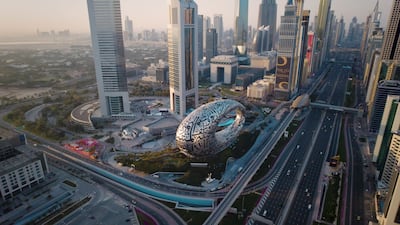
The Museum of the Future and RTA's 'Tomorrow, Today' exhibition will introduce visitors to a dynamic wireless charging system for electric vehicles and buses in motion using shaped magnetic field in resonance technology. -
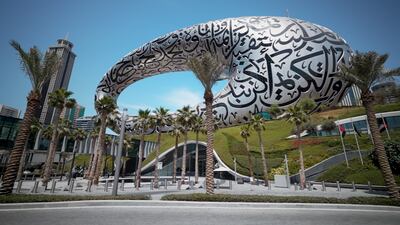
Highlights of the 'Tomorrow, Today' exhibition from the Museum of the Future and Dubai RTA include transport prototypes that use artificial intelligence and machine learning -

In keeping with the Museum of the Future's mission to put innovation to work for a better tomorrow, it and Dubai RTA will offer concepts for greener, more sustainable mass transport systems from developers around the world.


Public safety
Expectations of urban environments are also evolving. Residents, businesses and investors increasingly expect cities to provide safe, seamless and digitally enabled experiences. For businesses operating within these cities, particularly in sectors such as finance, logistics and technology, the reliability and adaptability of infrastructure are key considerations. Cities that can demonstrate robust, integrated and future-ready systems are more likely to attract investment and support long-term economic growth. Therefore, public safety becomes not only a security requirement but also a competitive differentiator.
Next generation of Gulf cities
The Gulf has already established itself as a global leader in smart city development. The next phase of this evolution will depend on how effectively these cities can integrate and scale their digital infrastructure.
The scope of this opportunity is significant, with the global smart cities market projected to grow from $952 billion last year to $6.3 trillion by 2034.
Open standards provide a practical pathway to achieving this. By enabling interoperability, reducing complexity and supporting long-term adaptability, they help ensure that investments made today remain relevant in the years to come.
As the region continues to navigate an increasingly complex operating environment, the ability to build cities that are not only smart but also resilient will become even more important. Public safety infrastructure, underpinned by open standards, will play a central role in this transformation. The cities that succeed will be those designed not only for efficiency, but for continuity, adaptability and long-term resilience in an increasingly unpredictable world.
Leo Levit is chairman of international physical security standards organisation, ONVIF

