


Vaccine inequality is getting worse as people become complacent about Covid-19, former prime minister Gordon Brown has said.
Mr Brown repeated his call for governments to share the burden of funding vaccines, treatments, testing and personal protection equipment around the world.
He told an Oxfam podcast that it was “short-sighted to take such a narrow view of national self-interest” in which rich countries vaccinate only their own citizens.
This would prolong a “mutating crisis” that could cost them trillions of pounds in loss of trade, economic activities, companies failing and jobs, Mr Brown said.
“This will bite back even those countries that have a big vaccination programme,” he said.
He criticised the fact that vaccination rates in rich countries stand at 75 per cent, compared with 11 per cent across Africa.
“We need a vaccine patent waiver and technology transfer," Mr Brown said. "What’s happened in Africa is as bad as what happened under colonial rule.
“Africa has been deprived of vaccines but also of the ability to manufacture its own vaccines, because it does not have the patents to do so.”
-
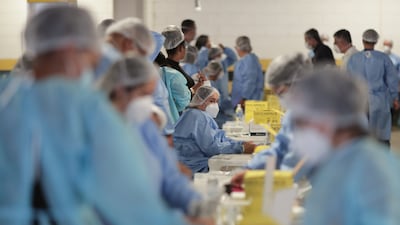
Health workers collect swab samples at a newly opened Covid-19 test centre at Maracana Stadium in Rio de Janeiro, Brazil. EPA -
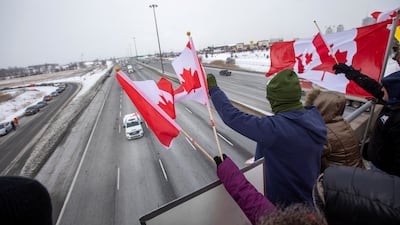
People in Toronto show their support for lorry drivers on their way to Ottawa to protest against cross-border vaccine mandates. Reuters -
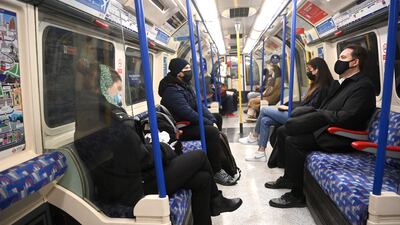
Passengers on an underground train in London. Although it is no longer legally compulsory to wear masks in indoor venues, some rail companies in England still require passengers to wear face coverings. EPA -
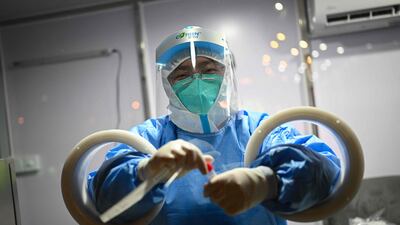
A health worker holds a swab sample collected from a member of the media before the start of the 2022 Winter Olympics in Beijing. AFP -

A House of Fraser department store, which closed down during the coronavirus outbreak, on Oxford Street in London. AP -
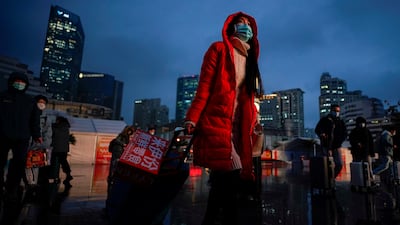
Crowds of people wait for the train at a railway station in Shanghai during the Chinese New Year travel rush. Reuters -
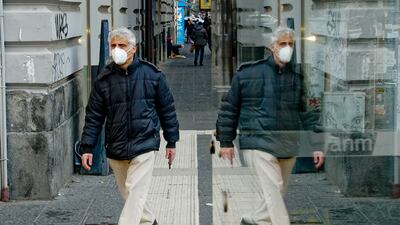
Naples, Italy. More EU countries now require people to wear FFP2 multi-layered face masks outdoors to curb the spread of the more contagious Omicron coronavirus strain. EPA -
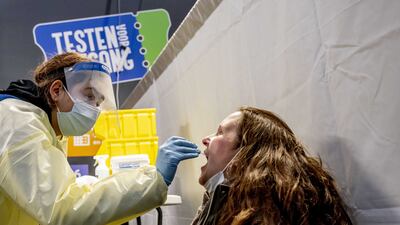
A health worker collects a swab sample at a Covid-19 test centre in Rotterdam, the Netherlands. EPA -
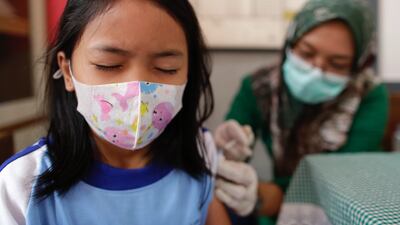
A pupil receives a dose of the Sinovac vaccine at a primary school in Tangerang, Indonesia. EPA -
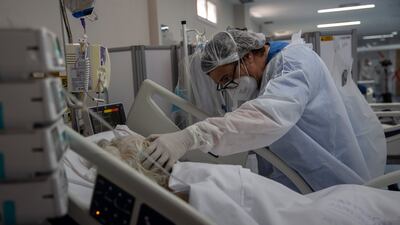
A health worker treats a Covid-19 patient in the intensive care unit of a hospital in Marica, Brazil. AP -
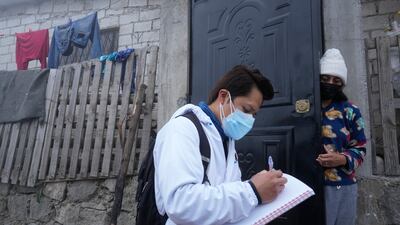
A doctor prescribes medicine for a person infected with Covid-19, in Quito, Ecuador. AP -
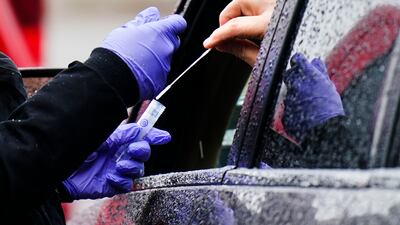
A driver places a swab into a vial at a drive-through test centre in Darby, Pennsylvania. AP -
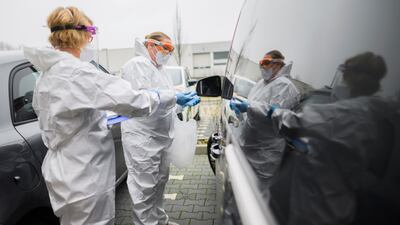
Medics take a swab from a patient outside a doctor's office in Laatzen, Germany. AP -
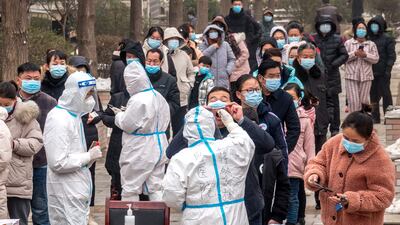
Residents undergo nucleic acid tests at a Covid-19 test centre in Anyang, China. AFP -
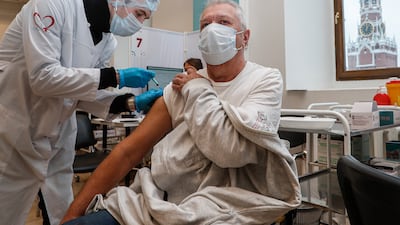
A man receives a shot of Russia's Sputnik V vaccine in Moscow. EPA -
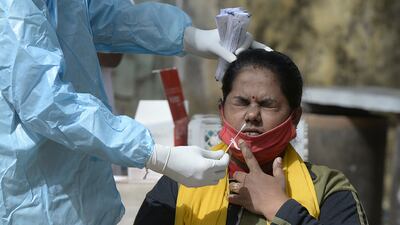
A health worker collects a swab sample at a government hospital in Hyderabad. AFP -

A health worker collects a swab sample from a member of the media before the start of the 2022 Winter Olympics in Beijing. AFP -
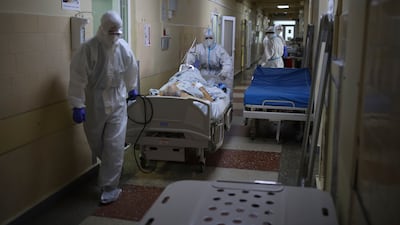
Medics transfer a Covid-19 patient at a hospital in Krasnodar, Russia. AP


Mr Brown said the most urgent and immediate priority in tackling Covid-19, and sending more vaccines to people especially in developing countries, was money.
“People are dying now because we can’t get enough vaccines and equipment and therapeutics to them quickly enough," he said. "We have to solve the problem now and that requires proper funding.
“People have become complacent about Covid. Our global health funds are fast running out of money. Vaccine inequity is getting worse.”

