


The Middle East will experience more frequent "extreme rainfall events" due to climate change, researchers say. A report into the regional impact of global warming has predicted increasingly intense monsoons, stronger storms and ever more extreme temperatures this century.
By comparing results from a number of recent studies, researchers have built a picture of how climate change will affect various regions, from the equator to the poles, in the years to come. The study was published in Frontiers in Science.
The UAE, where parts of Dubai received more than 250mm of rain in 24 hours in May – double the amount that typically falls in a year – will experience more extreme rainfall, said the report's lead author, Prof Matthew Collins, of the UK's University of Exeter.
"The concern for the Middle East in general is it is already pretty dry and arid with extreme temperatures. But climate change will also increase the potential for extreme rainfall events," he told The National. "The Middle East is a region where you don’t see many extreme rainfall events. They are not really set up for having these."
In tropical and subtropical regions, including Bangladesh, India, Egypt, Morocco and Tunisia, similar dramatic increases in rainfall are expected to lead to more intense monsoon seasons in areas where 60 per cent of the world’s population live. This will result in increased flooding, landslides and reduced agricultural yields.
There will also be more frequent and stronger El Nino events, which will lead to more extreme temperatures worldwide, affecting crop harvests, reducing people's ability to work outdoors and increasing mortality in vulnerable populations.
"If you increase the average temperature, you also increase the extreme temperature" said Prof Collins. "If you had high heat and also humidity, this also affects people outside working in fields. It also affects mortality in older people and so on."
In the mid-latitudes, including China, Japan, parts of the US, northern Germany and Poland, and southern parts of the UK, high-resolution climate models suggest a potential strengthening of storms in north-western Europe. This raises the risk of extreme weather, including high winds, flooding and threats to infrastructure.
Over the poles, an increasing amount of precipitation will fall as rain, destabilising melting ice and increasing already rising sea levels. But changes at the poles are not confined to those regions. “Polar amplification, which refers to the phenomenon in which the poles warm faster than the rest of the planet, can influence weather patterns in the mid-latitudes, potentially altering storm tracks,” researchers said.
Climate tipping points – in pictures
-
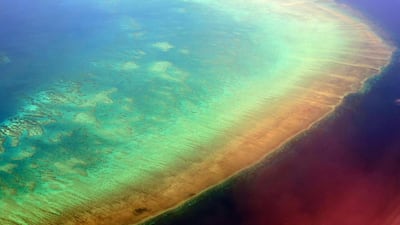
An aerial shot of the Great Barrier Reef in Australia, showing parts of the reef that has been subjected to coral bleaching. -

A house located on land that has been deformed by permafrost thaw at a former airfield in Churapcha, Russia. Reuters -

Native vegetation has been cut down to give space for eucalyptus plantations in the Setubinha region in Brazil. AFP -
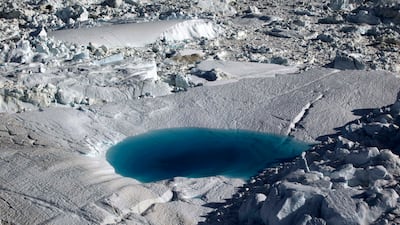
A large melt pool forms in the Ilulissat ice fjord below the Jakobshavn Glacier at the fringe of the Greenland ice sheet. AP -
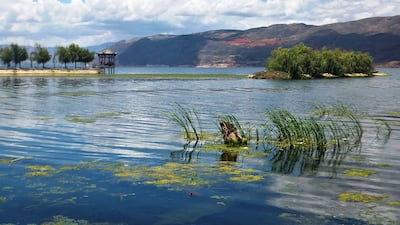
Lake Erhai in China has become eutrophic (where an entire body of water becomes enriched with nutrients and minerals) which caused algal growth that destroyed other life. Photo: Ronan O'Connell -
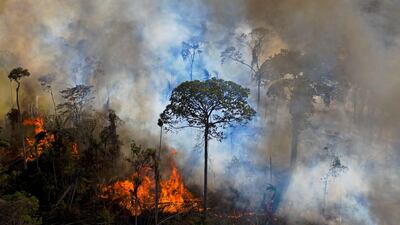
Deforestation in Para state, Brazil. AFP -
Moai statues in Easter Island, Chile, were damaged after a wildfire. Reuters


“We are constantly advancing our understanding of climate change, particularly its regional aspects, to inform policies aimed at adaptation," said Matthew Collins, of the University of Exeter, first author of the report.
"More investment and research is needed into climate modelling, with higher resolution data, new machine-learning techniques and models to improve the simulation of complex climate phenomena at both global and regional levels, the researchers say. Regional information is essential for preparing for these extreme events.
"Even if we reduce greenhouse-gas emissions today to zero, we would still be having the climate change we’re having today. So we need to think about adapting ourselves. If there are increasing storms, you need to build sea defences and things like that. With extremes of temperature, you need to think about when you’re building buildings, how you will take that into account."

