
Dubai has climbed five places to rank as the seventh most-expensive city in the world for the ultra-wealthy this year, driven by a strong rise in property prices, according to a new report.
The city is also the fourth most costly in the Europe, Middle East and Africa region for the affluent to lead a luxury lifestyle, the study by Swiss private bank Julius Baer revealed.
The emirate is now a “firm challenger” to the “traditional bastions of wealth” in the EMEA such as London, Monaco and Zurich, despite only a marginal 1 per cent increase in average local currency prices, the Julius Baer Global Wealth and Lifestyle Report 2025 said.
The index looked at a basket of 20 goods and services that affluent consumers buy and use ranging from property, watches and jewellery to lawyers and MBAs.
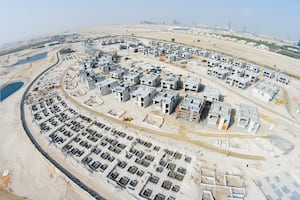
While prices of most of those have remained stable in the last year in Dubai, there has been a strong rise in big ticket items, such as cars (up 13 per cent) and residential property (up 17 per cent), which have affected the overall cost of living for wealthy people, the research showed.
“The prime property market has been growing rapidly, as affluent individuals are drawn by the high-quality residences on offer – a trend that has seen cities like London facing stiffer competition,” the report said.
“The fact that buyers get more than twice the square footage for their money compared to London has not gone unnoticed.”
Last year, Dubai’s real estate market saw “exceptional growth”, with property sales values rising 27 per cent year-on-year, it added.
The number of millionaires living in Dubai has doubled in the past decade, making it one of the world’s fastest-growing wealth hubs, an April report by New World Wealth for investment migration advisory company Henley & Partners showed.
Dubai now has 81,200 millionaires, 237 centimillionaires (whose wealth is in the hundreds of millions) and 20 billionaires. The previous year, there were 72,500 millionaires, 212 centimillionaires and 15 billionaires, the data showed.
In the past decade, there has been a 102 per cent increase in the number of millionaires in Dubai.
Singapore retained its position as the most expensive city for HNWIs globally this year, followed by London, which moved into second place. Hong Kong, Monaco and Zurich round out the top five spots. Shanghai ranked sixth and Dubai was in seventh place. New York, Paris and Milan filled the remaining spots in Julius Baer’s list of top 10 most expensive cities for the ultra-wealthy.
The momentum of millionaires relocating to Dubai, that began during the pandemic, is predicted to continue. The net inflow is destined to pass that of all other countries, according to Julius Baer.
“On its current upwards trajectory, it may not be a surprise to see Dubai vying for a spot on the podium in coming years. Though the cost of living well in the emirate may be swelling, along with the number of HNW residents, its attractiveness appears to remain undimmed,” the Swiss bank said.
In the Middle East, there was a high appetite for both experiential and material goods among wealthy residents. The region’s HNWIs focused on hotels, designer men’s clothing, fine dining, smartphones and high-end women’s handbags, the report revealed.
Globally, the prices of the basket of goods and services declined by 2 per cent globally, pointing to reduced luxury consumption. While the price of services fell modestly by 0.2 per cent, cost of goods declined by 3.4 per cent on average.
A key driver was a fall in technology prices across all regions. In contrast, prices of business class flights, watches and school fees have risen sharply, the report found.
Watch: Dubai's millionaires double as London drops down wealth list
It also found “profound shifts” in the attitudes and behaviours of HNWIs worldwide. Amid growing geopolitical tension and economic uncertainty, affluent people are increasingly balancing the desire to enjoy life today with long-term planning for the future.
“Financial longevity has become a critical concern, with the majority of respondents indicating they would adjust their wealth strategies if faced with longer life expectancies,” Julius Baer said.
“HNWIs in Asia-Pacific, the Middle East and Latin America continue to embrace higher risk levels and diversify portfolios in line with personal values and emerging global trends. In the Middle East, real estate (18 per cent) and equities (13 per cent) emerged as the preferred asset classes for HNWIs in the last year.”

Dubai Bling season three
Cast: Loujain Adada, Zeina Khoury, Farhana Bodi, Ebraheem Al Samadi, Mona Kattan, and couples Safa & Fahad Siddiqui and DJ Bliss & Danya Mohammed
Rating: 1/5
'Cheb%20Khaled'
%3Cp%3E%3Cstrong%3EArtist%3A%20%3C%2Fstrong%3EKhaled%3Cbr%3E%3Cstrong%3ELabel%3A%20%3C%2Fstrong%3EBelieve%3Cbr%3E%3Cstrong%3ERating%3A%3C%2Fstrong%3E%204%2F5%3C%2Fp%3E%0A
ALRAWABI%20SCHOOL%20FOR%20GIRLS
%3Cp%3ECreator%3A%20Tima%20Shomali%3C%2Fp%3E%0A%3Cp%3EStarring%3A%C2%A0Tara%20Abboud%2C%C2%A0Kira%20Yaghnam%2C%20Tara%20Atalla%3C%2Fp%3E%0A%3Cp%3ERating%3A%204%2F5%3C%2Fp%3E%0A
Mercer, the investment consulting arm of US services company Marsh & McLennan, expects its wealth division to at least double its assets under management (AUM) in the Middle East as wealth in the region continues to grow despite economic headwinds, a company official said.
Mercer Wealth, which globally has $160 billion in AUM, plans to boost its AUM in the region to $2-$3bn in the next 2-3 years from the present $1bn, said Yasir AbuShaban, a Dubai-based principal with Mercer Wealth.
“Within the next two to three years, we are looking at reaching $2 to $3 billion as a conservative estimate and we do see an opportunity to do so,” said Mr AbuShaban.
Mercer does not directly make investments, but allocates clients’ money they have discretion to, to professional asset managers. They also provide advice to clients.
“We have buying power. We can negotiate on their (client’s) behalf with asset managers to provide them lower fees than they otherwise would have to get on their own,” he added.
Mercer Wealth’s clients include sovereign wealth funds, family offices, and insurance companies among others.
From its office in Dubai, Mercer also looks after Africa, India and Turkey, where they also see opportunity for growth.
Wealth creation in Middle East and Africa (MEA) grew 8.5 per cent to $8.1 trillion last year from $7.5tn in 2015, higher than last year’s global average of 6 per cent and the second-highest growth in a region after Asia-Pacific which grew 9.9 per cent, according to consultancy Boston Consulting Group (BCG). In the region, where wealth grew just 1.9 per cent in 2015 compared with 2014, a pickup in oil prices has helped in wealth generation.
BCG is forecasting MEA wealth will rise to $12tn by 2021, growing at an annual average of 8 per cent.
Drivers of wealth generation in the region will be split evenly between new wealth creation and growth of performance of existing assets, according to BCG.
Another general trend in the region is clients’ looking for a comprehensive approach to investing, according to Mr AbuShaban.
“Institutional investors or some of the families are seeing a slowdown in the available capital they have to invest and in that sense they are looking at optimizing the way they manage their portfolios and making sure they are not investing haphazardly and different parts of their investment are working together,” said Mr AbuShaban.
Some clients also have a higher appetite for risk, given the low interest-rate environment that does not provide enough yield for some institutional investors. These clients are keen to invest in illiquid assets, such as private equity and infrastructure.
“What we have seen is a desire for higher returns in what has been a low-return environment specifically in various fixed income or bonds,” he said.
“In this environment, we have seen a de facto increase in the risk that clients are taking in things like illiquid investments, private equity investments, infrastructure and private debt, those kind of investments were higher illiquidity results in incrementally higher returns.”
The Abu Dhabi Investment Authority, one of the largest sovereign wealth funds, said in its 2016 report that has gradually increased its exposure in direct private equity and private credit transactions, mainly in Asian markets and especially in China and India. The authority’s private equity department focused on structured equities owing to “their defensive characteristics.”
More from Aya Iskandarani
Bullet%20Train
%3Cp%3E%3Cstrong%3EDirector%3A%3C%2Fstrong%3E%20David%20Leitch%3Cbr%3E%3Cstrong%3EStars%3A%3C%2Fstrong%3E%20Brad%20Pitt%2C%20Aaron%20Taylor-Johnson%2C%20Brian%20Tyree%20Henry%2C%20Sandra%20Bullock%3Cbr%3E%3Cstrong%3ERating%3A%3C%2Fstrong%3E%203%2F5%3C%2Fp%3E%0A
How to protect yourself when air quality drops
Install an air filter in your home.
Close your windows and turn on the AC.
Shower or bath after being outside.
Wear a face mask.
Stay indoors when conditions are particularly poor.
If driving, turn your engine off when stationary.
Abu Dhabi GP schedule
Friday: First practice - 1pm; Second practice - 5pm
Saturday: Final practice - 2pm; Qualifying - 5pm
Sunday: Etihad Airways Abu Dhabi Grand Prix (55 laps) - 5.10pm
More from Neighbourhood Watch:
From Zero
Artist: Linkin Park
Label: Warner Records
Number of tracks: 11
Rating: 4/5
AL%20BOOM
%3Cp%20style%3D%22text-align%3Ajustify%3B%22%3E%26nbsp%3B%26nbsp%3B%26nbsp%3BDirector%3AAssad%20Al%20Waslati%26nbsp%3B%3C%2Fp%3E%0A%3Cp%20style%3D%22text-align%3Ajustify%3B%22%3E%0DStarring%3A%20Omar%20Al%20Mulla%2C%20Badr%20Hakami%20and%20Rehab%20Al%20Attar%0D%3Cbr%3E%0D%3Cbr%3EStreaming%20on%3A%20ADtv%0D%3Cbr%3E%0D%3Cbr%3ERating%3A%203.5%2F5%0D%3Cbr%3E%0D%3Cbr%3E%3C%2Fp%3E%0A
Who was Alfred Nobel?
The Nobel Prize was created by wealthy Swedish chemist and entrepreneur Alfred Nobel.
- In his will he dictated that the bulk of his estate should be used to fund "prizes to those who, during the preceding year, have conferred the greatest benefit to humankind".
- Nobel is best known as the inventor of dynamite, but also wrote poetry and drama and could speak Russian, French, English and German by the age of 17. The five original prize categories reflect the interests closest to his heart.
- Nobel died in 1896 but it took until 1901, following a legal battle over his will, before the first prizes were awarded.
Global state-owned investor ranking by size
|
1.
|
United States
|
|
2.
|
China
|
|
3.
|
UAE
|
|
4.
|
Japan
|
|
5
|
Norway
|
|
6.
|
Canada
|
|
7.
|
Singapore
|
|
8.
|
Australia
|
|
9.
|
Saudi Arabia
|
|
10.
|
South Korea
|
Avatar: Fire and Ash
Director: James Cameron
Starring: Sam Worthington, Sigourney Weaver, Zoe Saldana
Rating: 4.5/5
Company profile
Company: Rent Your Wardrobe
Date started: May 2021
Founder: Mamta Arora
Based: Dubai
Sector: Clothes rental subscription
Stage: Bootstrapped, self-funded
Company profile
Company: Eighty6
Date started: October 2021
Founders: Abdul Kader Saadi and Anwar Nusseibeh
Based: Dubai, UAE
Sector: Hospitality
Size: 25 employees
Funding stage: Pre-series A
Investment: $1 million
Investors: Seed funding, angel investors
F1 drivers' standings
1. Lewis Hamilton, Mercedes 281
2. Sebastian Vettel, Ferrari 247
3. Valtteri Bottas, Mercedes 222
4. Daniel Ricciardo, Red Bull 177
5. Kimi Raikkonen, Ferrari 138
6. Max Verstappen, Red Bull 93
7. Sergio Perez, Force India 86
8. Esteban Ocon, Force India 56
The Sand Castle
Director: Matty Brown
Stars: Nadine Labaki, Ziad Bakri, Zain Al Rafeea, Riman Al Rafeea
Rating: 2.5/5
