

The UK has turned into a global laughing stock, as the country's politicians behave as though they are running one of those banana republics they used to scorn.
In August, Christopher Dembik, Saxo Bank’s head of macro analysis, said the UK was “looking like an emerging market country” and all it needed was a currency crisis to seal the deal.
Within weeks, former chancellor Kwasi Kwarteng’s disastrous mini-budget had not only sunk the pound, but also his ministerial career and that of Prime Minister Liz Truss, making her the shortest ever incumbent at only 44 days.
In the past four months, the UK has had four chancellors and three home secretaries.
Rishi Sunak will become the UK’s third prime minister in less than two months after rival Penny Mordaunt withdrew from the contest on Monday, a day after Boris Johnson also pulled out.
_____________
Watch: Liz Truss resigns
The International Monetary Fund, EU and US President Joe Biden have poured scorn on the UK, but they should resist the temptation to gloat.
While the UK has made serious mistakes, it is at the mercy of economic and political problems that threaten many other countries — and it could be their turn next.
Political instability, trade disruptions, an energy crisis and rocketing inflation are rattling the UK, but the backlash has been overdone, says Ian Lance, co-fund manager of Temple Bar Investment Trust.
“The doom-mongering has reached levels rarely seen before, but the reality is not nearly as scary. The UK has the second-lowest ratio of debt to GDP [gross domestic product] and headline inflation is below the eurozone average.”
The UK’s debt is 88 per cent of GDP, according to the IMF. In Canada, the debt-to-GDP ratio is 102 per cent, rising to 113 per cent in France, 126 per cent in the US, 151 per cent in Italy and 262 per cent in Japan.
In September, UK inflation rose to 10.1 per cent, but it is at 10.9 per cent across the EU.
The UK, the US, Europe and Japan have all spent the past 12 or so years carrying out a gigantic economic experiment, “which appears to have failed”, says Mr Lance.
“Interest rates have been kept at artificially low levels by central banks, who also printed money, stoking up bubbles in equities, bonds and housing.”
They doubled down by running massive fiscal deficits during the Covid-19 pandemic, which, combined with post-lockdown supply shortages, has driven inflation to today’s 40-year high, he says.
Central bankers are belatedly tightening, popping all the asset bubbles they had created, Mr Lance says. “Bond yields are now going up everywhere and equity markets are coming down.”
Mr Kwarteng’s mistake was to announce £43 billion ($48.9bn) of unfunded tax cuts on top of a £150bn energy support package at a time when markets were already nervous.
_________________
Cost of living crisis in the UK — in pictures
-

People demonstrate in central London against the rising cost of living. EPA -

Former British prime minister Boris Johnson said workers should accept a pay cut to avoid spiralling inflation. AFP -
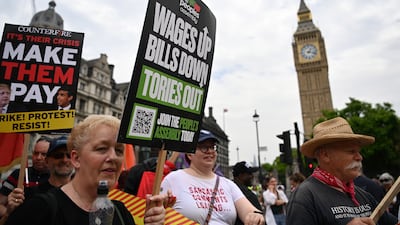
Inflation in the UK hit an annual rate of 9.1 per cent in May. EPA -

The British government told workers they cannot expect pay rises to keep up with the increasing cost of living. EPA -
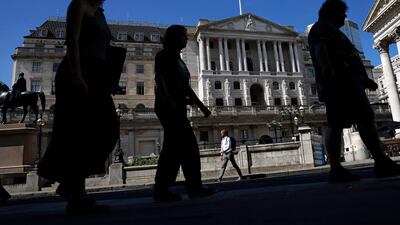
The Bank of England, which says it can do nothing to stop the sharp increase in prices, is raising rates at an unprecedented rate. AFP -

The UK was also brought to standstill by the biggest rail strike in 30 years this week, with 40,000 RMT union members walking out in a row over a below-inflation pay offer. PA -
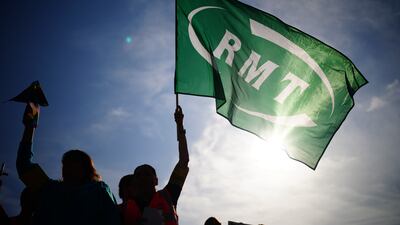
The RMT picket line outside Bristol Temple Meads station. PA -
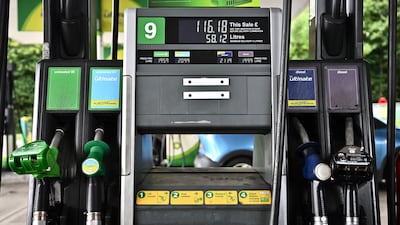
The cost of petrol continues to rise. AFP -
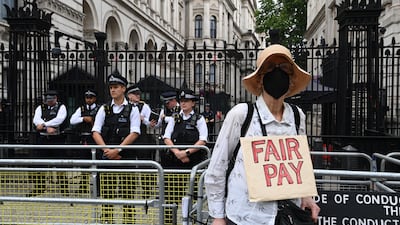
A protester demonstrates outside Downing Street. EPA -

Volunteers in Bradford, northern England, prepare food parcels at the Bradford Central Foodbank. More and more people are visiting the centre. AFP


Others are keeping their heads down but the bond vigilantes may come for them soon enough.
Europe remains exposed to the war in Ukraine and an energy shock, while the euro is vulnerable.
The European Central Bank will be forced to raise interest rates aggressively to curb inflation, even though “the economic outlook is dreadful and a recession looms”, warns Jan von Gerich, chief analyst of fixed income at Nordea Markets.
Vijay Valecha, chief investment officer at Century Financial, also expects further tightening, which could put pressure on vulnerable eurozone members such as debt-ridden Italy.
“This could be a major risk factor for Italian assets as the country could fall into a recession,” Mr Valecha says. “This could impact government revenues even further, spiking its borrowing costs.”
Italy also faces huge political uncertainty after the election of far-right leader Giorgia Meloni and her coalition allies, he says.
Reflecting this risk, yields on Italian 10-year bonds are now 4.852 per cent, almost double that of Germany’s 2.474 per cent. This is notably higher than the 10-year UK gilt yield, which stands at 3.99 per cent.
Trouble is also brewing in Japan, whose “monetary policy is now a major risk factor for global markets”, Mr Valecha says.
The yen is “depreciating at an unprecedented pace”, having fallen 31.13 per cent against the US dollar so far this year. Even the pound has “only” fallen 21.34 per cent this year.
Japan is the only country in the world with a dovish monetary policy, as it battles to escape its long-running deflationary spiral, Mr Valecha says.
“Things are now getting dicey as yen depreciation is raising the price of imported goods and hitting the pockets of its senior citizens.”
If the Bank of Japan reverses policy, global yields could rise sharply since it could be forced to sell US Treasuries to defend the yen.
“That could be a major catastrophe for global risk assets since it is the last major buyer of US Treasury bonds,” Mr Valecha says.
China is also “in deep trouble” due to global central bank tightening and its zero-Covid policy, says Fawad Razaqzada, market analyst at City Index.
“It even decided to postpone, without giving a reason, the release of its third-quarter growth and industrial production figures. This does not look good and investors fear the world’s second-largest economy may have performed even poorer than expected.”
The US is protected by the double safety net of the world's reserve currency and energy self-sufficiency, but that has not stopped the S&P 500 from falling into bear market territory.
European strategist at Raymond James Investment Services
The US Federal Reserve is aggravating the world's problems by increasing interest rates and shrinking its balance sheet by $95bn a month through quantitative tightening.
Economist Mohamed El Erian, chief economic adviser at Allianz, has warned the Fed will “probably break something” as it scrambles to tame sky-high inflation.
Liquidity is the “lifeblood” of the US bond market but it has dried up to levels not seen even during the Covid-19 pandemic turmoil in March 2020, warns Jeremy Batstone-Carr, European strategist at Raymond James Investment Services.
This has driven up the dollar, hit global share and bond prices, and now threatens to become a self-reinforcing spiral.
The fiscal medicine could be more dangerous than the inflationary disease, as it risks triggering a “liquidity crunch”, Mr Batstone-Carr says.
The Fed may soon have to “row back on its hawkish policy”, he says.
“Are we approaching an important inflection point, the point where systemic central banks, like it or not, are forced to intervene to head off disaster? Markets seem to think so.”
This week’s UK Chancellor, Jeremy Hunt, is battling to convince those same markets that his country’s debt and deficit are under control, warning that tax and spending measures could prove “eye-watering”.
Others also face tough decisions unless central bankers ease up on quantitative tightening, but this could also be an opportunity for brave investors, Mr Lance says.
“The best periods of investment performance come in the aftermath of uncertainty similar to that of now.”

