

For close to 80 years, the US dollar has been the world’s global reserve currency.
More than 60 per cent of the foreign currency reserves sitting in banks all over the world are in US dollars while 40 per cent of global trade is transacted in the greenback, which compares to the US's 10 per cent overall share of global trade.
This situation affords the US an enormous advantage in the world economy. Unlike other countries, the US does not have to hold reserves of the US dollar that it can sell on the open market to support its own currency should it start to fall, nor does it have to hold vast amounts of the greenback to meet its foreign obligations.
Instead, should the US come up a little short on its foreign bills, it can simply print more money. And print more money it has done. Dollar-based debt now stands at more than $13 trillion worldwide, leading to an inflationary situation that has reverberated around the globe over the past year.
However, as inflation rises, the value of the dollar falls, and as the value of the dollar falls, so does its position as the world’s reserve currency.
The threat of the latter has pushed the US Federal Reserve to aggressively raise interest rates in 2022. This has served to defend the dollar, whose current strength against the euro and the pound is at historic highs.
Money, FX and power
The strength of the dollar isn’t all economics — it also gives the US outsize political influence. This was keenly felt in Russia recently, where more than $600 billion of US dollar reserves were effectively frozen by the US.
While the US has major allies in this particular piece of brinkmanship, the ability of the US to crush economies at the flick of a pen is an increasing concern for developing countries.
In March, a coalition of Eurasian countries agreed on the need for a new, commodity-backed global reserve currency, while in June, the Brics group of Brazil, Russia, India, China and South Africa also called for the end of US dollar dominance.
In both cases, motions were unsurprisingly led by Russia, with Foreign Minister Sergey Lavrov repeatedly calling time on the dollar. China has also made no secret of its intention for the yuan to become the world’s reserve currency — it has been Beijing’s publicly stated plan since 2009.
While this is not an unfeasible scenario for the yuan, based on the size of China’s economy, it is made impossible as the government continues to apply strict controls over the currency.
Indeed, the only global fiat currency that has a chance of replacing the dollar is the euro, which currently accounts for about 20 per cent of global foreign currency reserves. Ironically, a lack of fiscal harmony across the region is the primary hindrance here.
Crypto: decentralised, objective and free
However, neither the yuan nor the euro would be an optimal solution for Russia or anyone outside of Europe or China.
As we have seen with US dollar, the country that wins this currency game can wield an enormous amount of power in global politics and few want to see that power return to Europe — less still to an authoritarian regime.
_______________
Cryptocurrencies — in pictures
-
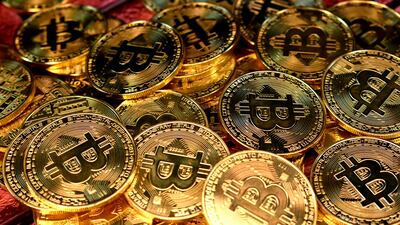
The crypto market, which includes currencies such as Bitcoin, pictured, has lost $2 trillion of its value in six months. Unsplash -
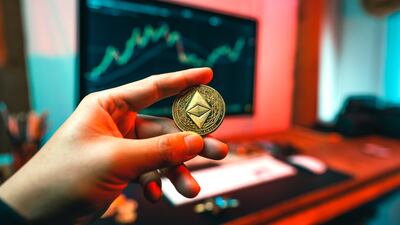
The price of Ethereum, the second largest cryptocurrency by market size, has fallen by 70 per cent this year. Investors and analysts are watching to see if it will dip below $1,000. Unsplash -
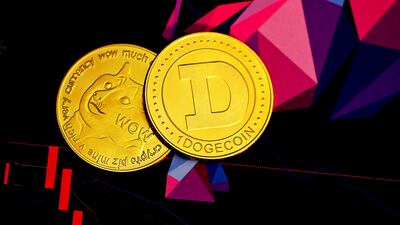
Dogecoin, supported by Elon Musk, is about 90 per cent down from May last year, yet it is outperforming Bitcoin and Ethereum in the current crash. Unsplash -
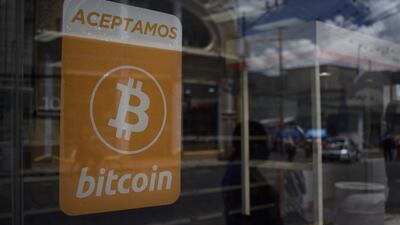
The government of El Salvador has invested $105 million in Bitcoin. President Nayib Bukele's embrace of the cryptocurrency as legal tender is being questioned as the market crashes. Getty -
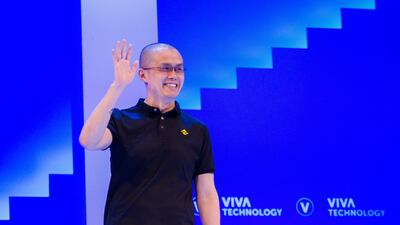
Changpeng Zhao, founder of crypto exchange giant Binance, has compared the current market turmoil to the dotcom bubble of the early 2000s. Still, the company is aggressively pursuing licensing in international jurisdictions and introducing new products. Getty -
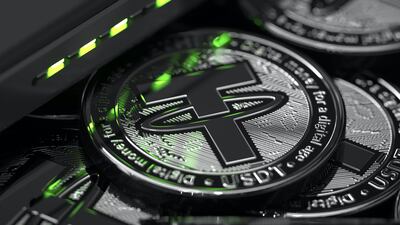
Tether is the biggest issuer of stablecoins, a type of cryptocurrency pegged to a traditionally stable asset like the US dollar. Most stablecoins are meant to maintain a constant price of $1 and are backed by real reserve funds, making it easy to convert crypto investments into cash. But Tether's financial statements show that may not be true, leaving the issuer and its investors vulnerable. Unsplash -

The recent crypto crash can in part be attributed to the collapse of TerraUSD, a stablecoin pegged to the US dollar through algorithms and linked to a "sister" cryptocurrency named Luna. When the price of Luna plummeted, TerraUSD also fell, creating a “death spiral” to practically zero for both coins. Unsplash -

On June 12 crypto lender Celsius Network said it had paused customer withdrawals, saying it needed “to stabilise liquidity and operations”. Investors are still waiting, with no signs that the current meltdown will let up. Getty


Rather, it is the cryptocurrency sector that offers the greatest promise as the home of the world’s new global reserve currency.
Decentralised and not subject to any single government’s policies or sanctions, cryptocurrency is the world’s first truly objective mode of value and exchange that — if allowed — can cross all borders.
As long as it resists the type of centralised control that compromises fiat currencies, cryptocurrency as a global reserve offers an economic and political opportunity perhaps unrivalled throughout history.
founder of Laguna Labs
Countries such as El Salvador and Iran are already experimenting in the arena, with the latter recently approving the use of cryptocurrency for imports to mitigate the US sanctions.
In a world where countries can’t be controlled by one major economy, we could find the playing field for trade levelled entirely.
Some will argue this could be dangerous.
Ultimately, however, we are moving into a globalised, digital-first world in which it will be very difficult for the US to maintain its global control.
Rather than fall into a situation in which it has none at all, it would perhaps befit the US and its regulators to come to the table and legislate for a world in which cryptocurrency takes a prominent position.
Stefan Rust is the founder of Laguna Labs, a blockchain development house, and former chief executive of bitcoin.com

