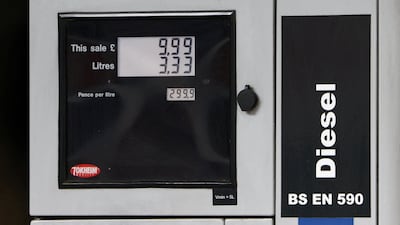

The problem is well-known – the world is desperate for diesel. Two major wars have disrupted the delivery of this indispensable industrial fuel. But as presidents beg and bargain, is there really any solution?
At the start of the year, it was already clear that diesel could be a problem. The world seemed to have ample crude oil, but the capacity of refineries – which convert crude into diesel, petrol, jet fuel and all the other vital petroleum products – was relatively limited.
Numerous refineries have closed down recently – about 30-32 out of nearly 100 operating in Europe since 2009, and six out of eight in Australia this century. Contrary to propaganda, this is not because of “net-zero” carbon policies – it is mostly because they had high energy costs, faced declining domestic markets, and were simply outcompeted by large, ultra-modern new refineries in the Middle East, Nigeria, China and India. Nevertheless, the loss of this capacity left a hole.

The war in the Gulf has seized on that pre-existing weakness. Over the past few years, the Gulf countries have built or upgraded several massive, modern refining complexes – at Yanbu, Rabigh and Jazan on the Saudi Red Sea coast, Duqm in south-eastern Oman, Ruwais in Abu Dhabi, Bapco in Bahrain, and Al Zour in Kuwait. Most of these have focused on producing diesel and jet fuel that meet the EU’s strict quality standards.
Refining bottleneck
Iran and its allies in Yemen and Iraq have attacked these refineries with drones and missiles, with disruption continuing. For instance, while Bapco is now back to about three-quarters of full operations, Jazan remains shuttered. Even more importantly, the refineries cannot export freely because of the continuing strikes in the Strait of Hormuz.
The loss of medium-gravity Middle Eastern crude, with a high diesel yield, has affected refineries elsewhere. US output has increased, but its light crude is more suited for petrol and petrochemical feedstocks.
While the US escorts and the shuttle schemes have restored Gulf crude flows nearly to prewar levels, refined oil is harder to protect — it is more flammable and comes in smaller parcels. Bigger, better and more sustainable ways to float petroleum products out of the war-zone are badly needed.
Nevertheless, French President Emmanuel Macron, facing domestic unrest, visited all of the Gulf countries bar Oman, last week, securing commitments from the UAE, Saudi Arabia and Bahrain to supply more diesel.
Refineries elsewhere have been running flat-out for months. They will either have to go into maintenance or risk unplanned breakdowns. India has increased diesel exports, running at nearly 750,000 barrels per day this month, the highest since the war began. But it will probably not be able to go much higher.
Lorries carrying goods out of the Gulf to avoid the Strait of Hormuz are a source of unexpected diesel demand. Put these factors together, and average US diesel prices have risen to $6.18 per gallon, from $3.48 at the beginning of this year. In the UAE, diesel cost Dh2.55 per litre in January and Dh4.80 per litre this month.
Russian diesel
But Washington’s ire has fallen less on Tehran than on Kyiv. Ukraine has indeed mounted an ever-more-effective, long-range assault against Russian refineries. Russia used to export about 1 million barrels per day of the fuel. This has fallen almost to zero; it has turned to its ally Belarus to send it diesel.
Now the White House has proudly proclaimed a suspension of sanctions to allow the US to import 2.25 million barrels of Russian diesel, with further volumes to follow from next month. On November 7, the first vessel, carrying a measly 300,000 barrels, less than a tenth of what the US consumes every day, should arrive in New York.
In return, the US has put pressure on Ukraine to cease its attacks. But after a brief pause from October 10, Kyiv has since hit the St Petersburg refinery. Officials from Russia’s largest oil company, Rosneft, were quoted by Bloomberg as privately admitting it was unsustainable to keep repairing the damaged plants.
If anything, President Vladimir Putin’s eagerness to reach a deal on diesel shows how much the Ukrainian attacks are hurting. That may encourage the Ukrainians to redouble their efforts.
Unless Russia does indeed get its refineries running again, this is not new diesel – it is simply supplies that would otherwise have gone to someone else. It represents only about 7 per cent of the global deficit.
Can China help?
So if Russia isn’t the answer, what is?
Maybe China could help? It has the only major refining complex that is both unaffected by war and running below capacity. But after US President Donald Trump met China's President Xi Jinping on September 24, and asked for more diesel, Beijing responded by actually banning fuel exports.
On Thursday, Mr Trump invoked the Defence Production Act, allowing public money and expedited approvals to support refining and pipeline projects. But these will be too late or too small to make much difference. US refining margins are wildly profitable now – any company that can make more or switch output to diesel is already doing so.
To a limited extent, refineries can shift between products. But making flights or petrol more costly to relieve some stress on diesel would not help the economy, US politics or European politics.
A mooted US diesel export ban seems off the table for now, after European nations agreed to release some strategic stocks. These are again too small to change the game, and burning them now risks deepening a winter crunch. Home heating oil, chemically very similar to diesel, is still used in significant quantities in Germany, France and parts of the US.
Promising solutions
So if more supply isn’t on the table, what about demand? Here, the solutions are more promising, although it would have been better to start eight months ago.
China has in recent years greatly strengthened its energy resilience by building fully electrified high-speed rail. During the crisis, this has allowed it to cut back on flights, saving jet fuel – another close relative of diesel. China has steadily switched its city buses and lorries to natural gas, and then to battery power.
Swapping heavy diesel vehicles for electric vehicles could be done quite quickly in other countries. Unlike in other regions, diesel cars are popular in Europe – offering huge savings if replaced with battery-electric or hybrid models. Emergency programmes of insulation and solar heating could reduce the need for heating oil.
Diesel for temporary or distributed generators — for example, those at mines, construction sites, telecom towers and off‑grid tourist areas — can be replaced with solar panels and battery packs. Such generators are a mainstay of electricity supply across much of Africa and several Middle Eastern countries, but are costly, noisy and polluting.
These are not instant solutions, but they do not take three or four years, as new refineries or pipelines do. If the US goes back to full-scale war against Iran, diesel will again be in the front line. Instead of scratching around for small supply-side solutions, the strategic choice is to save on consumption, whenever and wherever possible.

