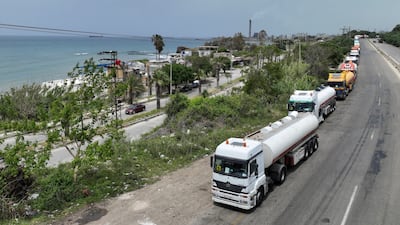
Iraq is expecting to begin transporting crude oil via a route to be provided by Syria starting in mid-October, a development that is expected to boost its energy exports that have been hampered by flare-ups in the Strait of Hormuz amid the war in Iran.
The crude products will be moved to a port in the Mediterranean Sea using lorries after Iraq requested assistance from Syrian authorities, Bloomberg reported on Friday, citing Yousef Qiblawy, chief executive of the state-owned Syrian Petroleum.
The agreement between Baghdad and Damascus is “almost done”, and the Iraqi oil exports are expected to “start as soon as possible ... hopefully, by mid-October the first chain of trucks with crude will come to Syria”, he said.
The impending move follows a similar energy trade-related co-ordination between the two Middle East nations in late September, in which Iraq began importing petrol through Syria.
In April, Syria became the main route for Iraqi fuel oil exports, partially compensating for the disruption to shipments caused by the war in Iran. At least 2.1 million tonnes of Iraqi fuel oil have also flowed by lorry to Syria's Baniyas since then.
An Iraqi Oil Ministry official had told The National that the first cargo of imported petrol, comprising 32,000 tonnes, was being unloaded at the Baniyas refinery, to be transported to Iraq on lorries.
Since the Iran war broke out in February, Iraq has been facing one of its most serious economic and security situations.
Opec's second-largest producer depends on oil for at least 90 per cent of its revenue. Most of its exports – about 3.3 million barrels a day before the war – crossed the Strait of Hormuz after leaving its southern Basra terminals.
The agreements between Iraq and Syria also mark a significant deepening of ties as Baghdad deals with disruption to its trade through the Strait of Hormuz, and as the US pushes for closer relations between the two countries.
The strait, through which about a fifth of the world's energy exports passed before the war, remains a flashpoint in the eight-month conflict.
The seven-day moving average for crude exports from the Gulf was 18.3 million barrels per day on September 30, compared to the average 18 million bpd that passed through the region in the 12 months before the Iran war began, according to the ship-tracking firm Kpler. The figures include shipments through the Strait of Hormuz, the Red Sea and by other methods.
Iraq is a major crude oil producer, but faces petrol shortages because of problems with its refineries and the management of its energy infrastructure. Last Sunday, the state-owned Iraqi Oil Tankers Company transported two million barrels of its own crude beyond the Strait of Hormuz for the first time in decades.
The move was intended to shift part of Iraq's oil exports from the existing free-on-board Basra port model to transit the strait and take advantage of better sale and pricing opportunities, director general Ali Qais said, adding that the company is also in talks to buy specialised crude tankers “as soon as possible and to compete with regional peers”.