

In the Great Frost of 1709, the wine froze in the glasses of French king Louis XIV in his palace at Versailles. The “Little Ice Age”, at its chilliest in the 16th and 17th centuries, may have been in part caused by the mass annihilation of people in the Americas during European colonisation, and the regrowth of the Amazon rainforest across abandoned farmlands. After the Cop30 talks in the Brazilian city of Belem concluded on Saturday, we face climate peril the other way, as deforestation drives global heating.
The last two Cop events, held in the UAE and Azerbaijan, were criticised for being hosted by major fossil fuel exporters. Brazil is also a large and growing oil exporter.
But its climate impact is even more pronounced in terms of deforestation: it clears the largest area of forest globally, and it, Indonesia and the Democratic Republic of Congo contribute 57 per cent of global emissions from land-use.

Overall, the global food system produces about 30 per cent of global greenhouse gas emissions, a large part of that from land clearance. The unabated use of fossil fuels is the main contributor to climate change, but there is no chance of limiting global warming to the level of 1.5°C or 2°C above pre-industrial levels targeted by 2015’s Paris Agreement without also zeroing-out deforestation.
As host of this year’s UN climate gathering, Brazil was acutely aware of this dilemma. While intense equatorial rains threatened to drown out the voices of speakers, Cop30 reached agreement on the Tropical Forest Forever Facility, which has so far attracted commitments of $6.6 billion. The TFFF was first put forward by Brazilian representatives at Cop28 in Dubai. It aims to pay low- and middle-income nations for protecting or restoring their tropical forests.
France and other EU members set up a $2.5 billion initiative to conserve the Congo Basin, the world’s second-biggest rainforest. There was strong support for the rights of indigenous people. More problematically, Brazil won backing for its goal of quadrupling output of “sustainable fuels”.
Preserving and restoring rainforests and other rich, carbon-storing habitats such as mangroves, is an essential part of climate protection. Conversely, dangerous feedback loops could doom hopes of achieving climate stability.
Land has long been an overall sink for carbon dioxide. The growth of plants, the absorption of organic matter into soils, the weathering of rocks, remove more carbon from the atmosphere than land emits. But this sink dwindled almost to zero in 2023 and 2024. Unusually hot El Nino conditions, wildfires, droughts and the expanding range of tree-eating beetles combined with more logging in northern forests to belch out carbon.
The situation improved this year. But worsening climate change will further weaken the land’s ability to take up carbon over time. Some studies suggests that half of the Amazon rainforest could collapse by mid-century, converting to drier savannah. That would be a tragedy for its unequalled richness of plant and animal life, and for its indigenous people.
Brazil’s performance has improved markedly in recent years. After President “Lula” da Silva became president, deforestation dropped by nearly a third into 2024. Previous president Jair Bolsonaro was closely associated with the “ruralista” lobby, which promoted forest clearance for ranching, agriculture, logging and mining. Cattle farming, which also contributes copious amounts of the powerful greenhouse gas methane, is a particular offender.
But like other key tropical states, the South American nation still faces the complex politics of big business interests, poor farmers and the difficulty of policing exploitation of vast, remote areas.
War-torn, poor countries with very weak central governments, such as the DRC, have a yet greater problem. The amounts of money they would receive from the TFFF would be substantial, but it will not be easy to ensure it goes to the right people, in a way that empowers local communities and frees them from a choice of deforestation, displacement or destitution.
Biofuels, though included in the basket “sustainable”, are a case study in unintended consequences. Brazil is a leader in the production and use of biofuels, mostly ethanol from sugar cane, as a substitute for petrol. Given Brazil’s very suitable growing environment, sugar cane ethanol has a favourable emissions profile, unlike that made from corn in the US, for instance.
But biodiesel, made from soybeans, threatens further expansion of growing areas into the Amazon. Palm oil plantations in Indonesia and Malaysia have had a disastrous effect on converting rich rainforests into monocultures, endangering iconic species such as the orangutan, and promoting the burning of carbon-heavy peat deposits. In general, unless done with very careful safeguards, promoting crops for fuel will push farming elsewhere.
Carbon credits too have been touted as part of the solution – allowing polluters to offset their emissions by paying to preserve carbon in forests or other ecosystems. But they have had a rough few years, hit by allegations of over-counting, eco-colonialism, and insufficient buffers against forest fires. Even if their forest preservation is impeccable, they still face the problem of displacing land use to unprotected areas.
-

Flooding in the Al Barsha area of Dubai. Chris Whiteoak / The National -
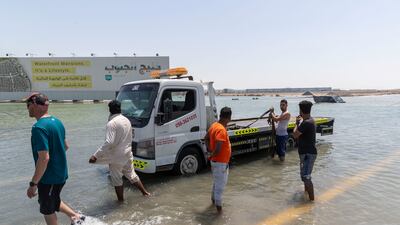
Vehicles being recovered near Al Maktoum airport in Dubai. Antonie Robertson / The National -

Flooding in the Al Barsha area of Dubai. Chris Whiteoak / The National -
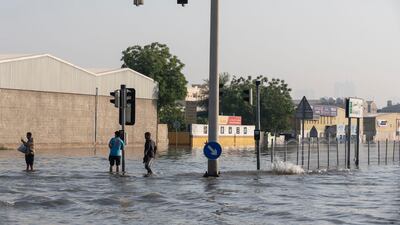
Flooding along Sheikh Zayed Road in Dubai. Antonie Robertson / The National -
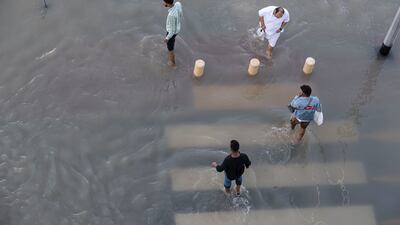
Flooding along Sheikh Zayed Road in Dubai. Antonie Robertson / The National -

Cars move through floodwater in Al Qudra, Dubai. Chris Whiteoak / The National -

Flooding on Dubai's Al Khail Road. Chris Whiteoak / The National -
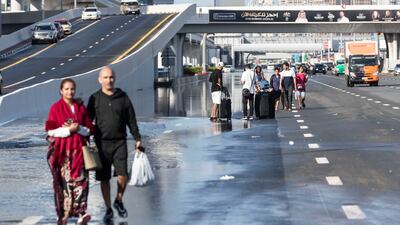
People abandon their cars on Sheikh Zayed Road due to heavy rain. Antonie Robertson/The National -

Flooding on Al Khail Road. Chris Whiteoak / The National -
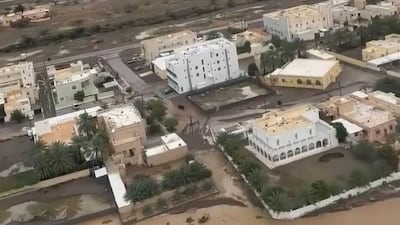
Flooding in Oman. Photo: Royal Oman Police -

A damaged car in Derna, Libya. Reuters -
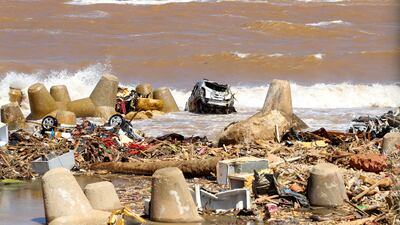
A destroyed vehicle in Derna. AFP -

Abdul Salam Ibrahim Al-Qadi walks on rubble in front of his house, searching for his missing father and brother, in Derna. Reuters -

An aerial view of the destruction in Derna. Reuters -
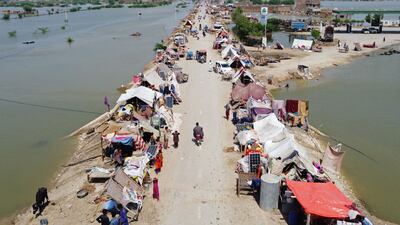
Flood-affected people taking refuge in a makeshift camp after heavy monsoon rains in Jaffarabad district of Balochistan province. AFP -
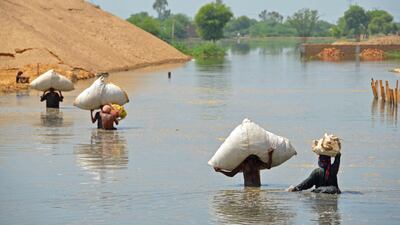
Internally displaced flood-affected people shift husk for their animals in a flood-hit area following heavy rains in Dera Allah Yar in Balochistan. AFP -
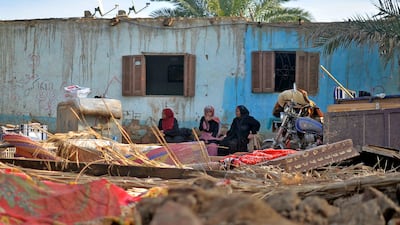
The aftermath of flooding in Egypt's southern city of Aswan, 920 kilometres south of the capital. AFP -

The Nile River from the top of Famine Stela, or Rock of Starvation, Egypt. Reuters -

Volunteers search for people in need following heavy rainfall in east Mosul, Iraq, in March 2020. Reuters -

People clean up after floods in Duhok, Iraq, on March 19. Reuters


Fixing the deforestation problem is crucial even for arid Middle Eastern countries. They have their own carbon-rich ecosystems to protect − notably mangroves − as well as ambitious tree-planting programmes. They are exposed to the risks of climate breakdown that could come with a collapse in land-based carbon sinks.
And, without cynically trying to shift responsibility for global warming from fossil fuels to land-use, the net-zero aspirations implied by the Paris Agreement require ecosystems to take up carbon to compensate for some past and continuing residual emissions. The Amazon may be a long way from the Gulf, but its climate influence stretches far through space and time.

