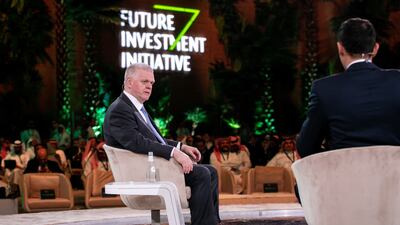
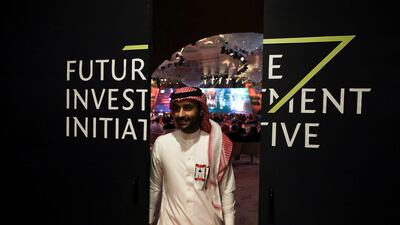
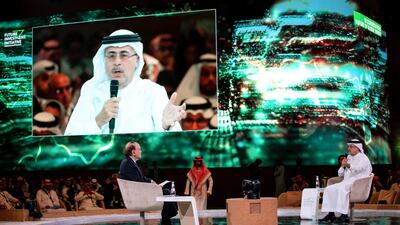
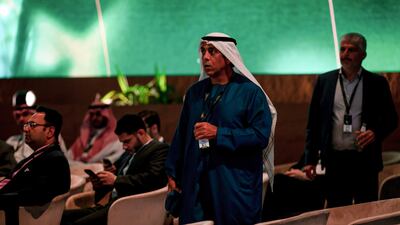
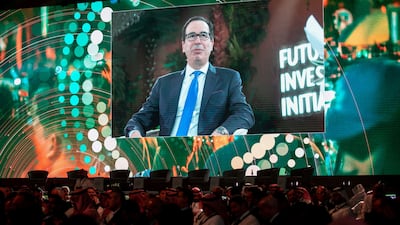
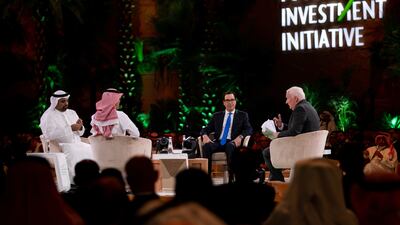
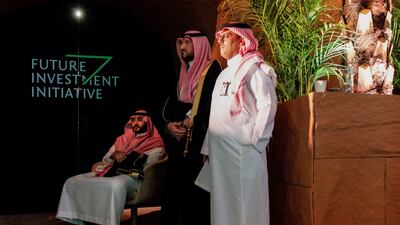
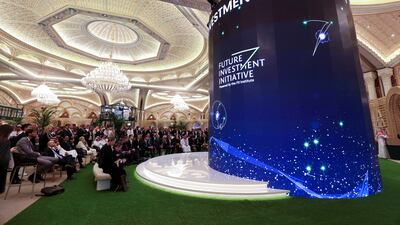
A screen broadcasts Khaldoon Al Mubarak, chief executive officer of Mubadala Investment Company, addressing the Future Investment Initiative in Riyadh. Bloomberg

World's energy supply challenges are due to under-investment, Mubadala CEO says


  • English
  • Arabic

Many of the global energy supply challenges are the result of under-investment in oil and gas infrastructure, while Russia’s war in Ukraine and the coronavirus pandemic have been catalysts in amplifying those problems, the Future Investment Initiative heard on Tuesday.

The energy crisis existed before “black swan events that impacted every country”, however, among the root causes of the crisis was the inability of financiers, investment institutions and many of the energy companies to invest, Khaldoon Al Mubarak, managing director and chief executive of Mubadala Investment Company, told the forum in Riyadh.

Such investment would have helped to alleviate "a big part of the problem we're dealing with today”, he told delegates at a panel discussion.

The so-called cancel culture in its push to speed up energy transition curtailed investments in the sector, consequences of which are visible in form of the energy supply challenges.

“Three years ago, in this country, if you were at this conference, the word hydrocarbon was just, you know, evil,” he said.

“I feel strongly that the climate challenge is the biggest challenge” but the energy transition is taking place and hydrocarbons are part of the solution, he said.

Mr Al Mubarak’s comments were echoed by Indian billionaire Mukesh Ambani, who said “supplies of ample and affordable conventional energy are still required over the long term”.

Reliance is “busy” setting up the “the world’s most integrated” complex of new energy giga-factories in Jamnagar, in the western Indian state of Gujarat, Mr Ambani, chairman of Indian conglomerate Reliance Industries, said in a pre-recorded video address at the FII.

“This will provide supply security, unparalleled cost advantage and the ability to capture chain margins with maximum recycling,” he said.

“Reliance will also invest in energy storage systems to complement solar power generation."

Maintaining investment in oil and gas is critical for energy security and economic progress as current market dynamics do not reflect underlying fundamentals and long-term demand growth, Dr Sultan Al Jaber, Minister of Industry and Advanced Technology, said at the Energy Intelligence Forum in London earlier this month.

The global oil and gas industry requires more than $600 billion of investment annually to keep up with the growing demand for energy, even as the world transitions to cleaner forms of energy, Dr Al Jaber, who is also group chief executive of Abu Dhabi National Oil Company, said last year.

In May, energy ministers of the UAE and Saudi Arabia also called for increased investment in the industry and collective action amid supply concerns due to Russia’s war in Ukraine.

_________________________

Saudi Arabia's Future Investment Initiative 2022 - in pictures

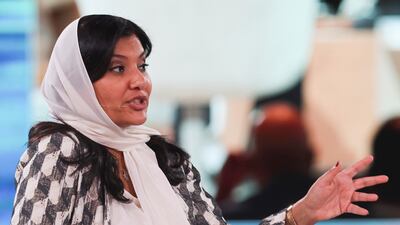
  • Saudi Arabia's ambassador to the US, Princess Reema bint Bandar, speaks at the Future Investment Initiative conference in Riyadh. Reuters
    Saudi Arabia's ambassador to the US, Princess Reema bint Bandar, speaks at the Future Investment Initiative conference in Riyadh. Reuters
  • Noel Quinn, chief executive of HSBC Holdings Plc, speaks during a panel session on day two. Bloomberg
    Noel Quinn, chief executive of HSBC Holdings Plc, speaks during a panel session on day two. Bloomberg
  • Kamal Bahamdan, chief executive of Safanad Ltd. Saudi Arabia hopes the FII will put Riyadh on the map as a global destination for deals. Bloomberg
    Kamal Bahamdan, chief executive of Safanad Ltd. Saudi Arabia hopes the FII will put Riyadh on the map as a global destination for deals. Bloomberg
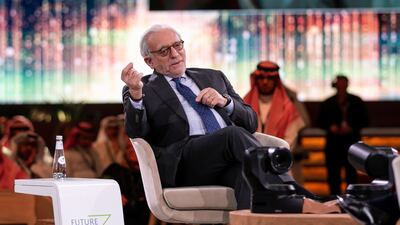
  • Nelson Peltz, founder of Trian Fund Management, on day two of the conference in Riyadh. Bloomberg
    Nelson Peltz, founder of Trian Fund Management, on day two of the conference in Riyadh. Bloomberg
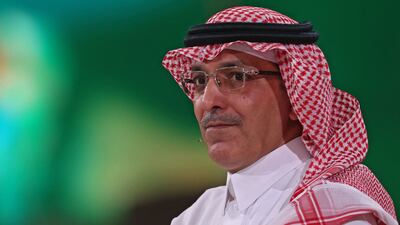
  • Saudi Minister of Finance Mohammed Al Jadaan speaks during a panel event. AFP
    Saudi Minister of Finance Mohammed Al Jadaan speaks during a panel event. AFP
  • A man in the mirror at the conference in Riyadh. Reuters
    A man in the mirror at the conference in Riyadh. Reuters
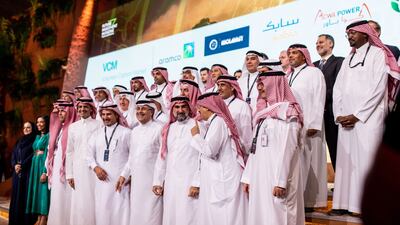
  • Amin Nasser, chief executive of Saudi Aramco, front row fourth right, and Yasir Al Rumayyan, governor of the Public Investment Fund, front row third right, during day two of the conference. Bloomberg
    Amin Nasser, chief executive of Saudi Aramco, front row fourth right, and Yasir Al Rumayyan, governor of the Public Investment Fund, front row third right, during day two of the conference. Bloomberg
  • Amin Nasser, chief executive of Saudi Aramco, right, during a panel session. Bloomberg
    Amin Nasser, chief executive of Saudi Aramco, right, during a panel session. Bloomberg
  • Yasir Al Rumayyan, governor of the Public Investment Fund, centre right, at the conference in Riyadh. Bloomberg
    Yasir Al Rumayyan, governor of the Public Investment Fund, centre right, at the conference in Riyadh. Bloomberg
  • Omar Abdulla Al Futtaim, chief executive of Al-Futtaim Group, arrives at a panel session on day two. Bloomberg
    Omar Abdulla Al Futtaim, chief executive of Al-Futtaim Group, arrives at a panel session on day two. Bloomberg
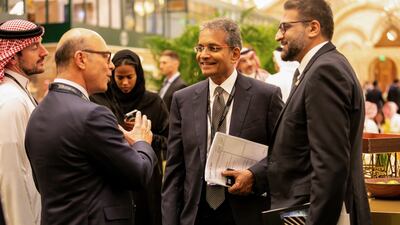
  • David Grover, chief executive officer of Roshn Real Estate Co, centre, speaks to conference attendees. Bloomberg
    David Grover, chief executive officer of Roshn Real Estate Co, centre, speaks to conference attendees. Bloomberg
  • Steven Mnuchin, former US treasury secretary, appears onscreen during a panel session. Bloomberg
    Steven Mnuchin, former US treasury secretary, appears onscreen during a panel session. Bloomberg
  • Nabeel Alamudi, president of Olayan Financing Co, on day two of the conference in Riyadh. Bloomberg
    Nabeel Alamudi, president of Olayan Financing Co, on day two of the conference in Riyadh. Bloomberg
  • Sheikh Salman bin Khalifa Al Khalifa, Bahrain's Finance Minister, left, and Mr Mnuchin, second right, during a panel session. Bloomberg
    Sheikh Salman bin Khalifa Al Khalifa, Bahrain's Finance Minister, left, and Mr Mnuchin, second right, during a panel session. Bloomberg
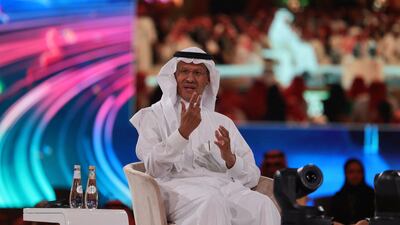
  • Saudi Energy Minister Prince Abdulaziz bin Salman at the annual Future Investment Initiative conference. AFP
    Saudi Energy Minister Prince Abdulaziz bin Salman at the annual Future Investment Initiative conference. AFP
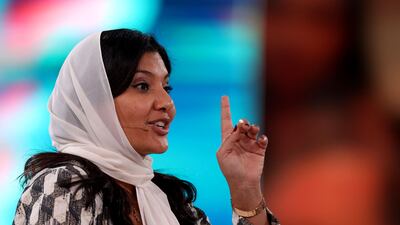
  • Princess Reema bint Bandar, Saudi ambassador to the US. AFP
    Princess Reema bint Bandar, Saudi ambassador to the US. AFP
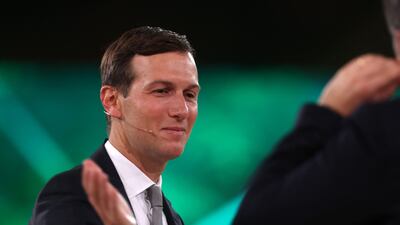
  • Jared Kushner, Donald Trump's son in law and founder of global investment firm Affinity Partners, was present. AFP
    Jared Kushner, Donald Trump's son in law and founder of global investment firm Affinity Partners, was present. AFP
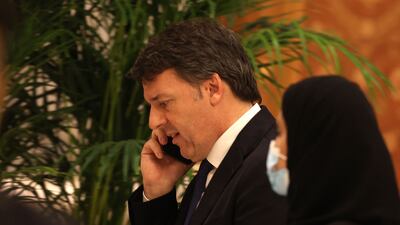
  • Former Italy prime minister Matteo Renzi. AFP
    Former Italy prime minister Matteo Renzi. AFP
  • Saudi Arabia hopes the FII will put Riyadh on the map as a global destination for deals. Bloomberg
    Saudi Arabia hopes the FII will put Riyadh on the map as a global destination for deals. Bloomberg
  • Saudi Arabia also hopes to increase domestic investment through the event. Bloomberg
    Saudi Arabia also hopes to increase domestic investment through the event. Bloomberg
  • Paddy Padmanathan of ACWA Power, centre. Bloomberg
    Paddy Padmanathan of ACWA Power, centre. Bloomberg
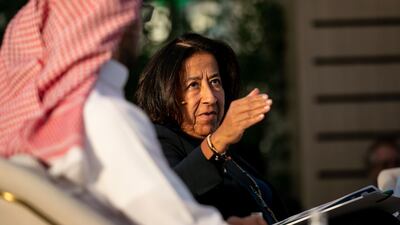
  • Lubna Olayan, chairman of Olayan Financing, speaks during a panel session. Bloomberg
    Lubna Olayan, chairman of Olayan Financing, speaks during a panel session. Bloomberg
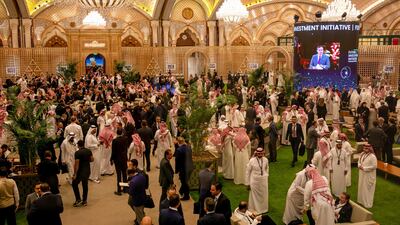
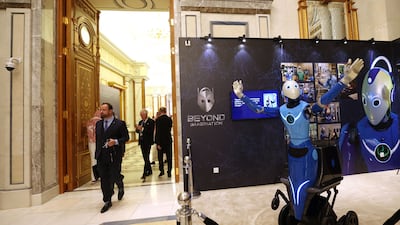
  • A busy FII conference hall between sessions. Bloomberg
    A busy FII conference hall between sessions. Bloomberg
  • Jeannette zu Furstenberg, founding partner of La Famiglia venture capital fund, centre. Bloomberg
    Jeannette zu Furstenberg, founding partner of La Famiglia venture capital fund, centre. Bloomberg
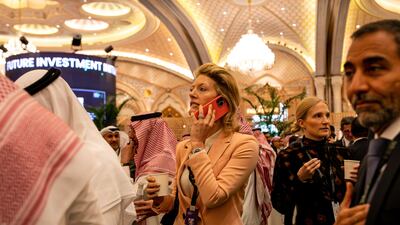
  • Another busy concourse at the event. Bloomberg
    Another busy concourse at the event. Bloomberg
  • Omar Alsenayen of Jeddah Central Development Company, centre. Bloomberg
    Omar Alsenayen of Jeddah Central Development Company, centre. Bloomberg
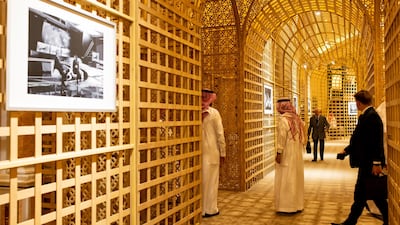
  • The opening ceremony of the FII conference on a digital screen in the lobby of the Exhibition and Conference Centre at the Ritz Carlton Hotel in Riyadh. Reuters
    The opening ceremony of the FII conference on a digital screen in the lobby of the Exhibition and Conference Centre at the Ritz Carlton Hotel in Riyadh. Reuters
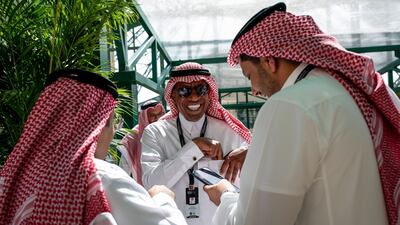
  • Arriving at the conference. AFP
    Arriving at the conference. AFP
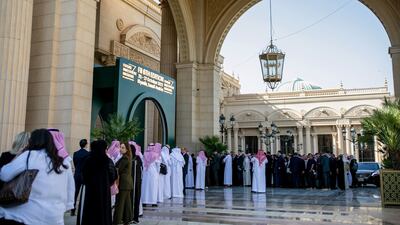
  • The queue at the entrance of the FII conference. Bloomberg
    The queue at the entrance of the FII conference. Bloomberg

_________________________

Oil and gas will account for more than 50 per cent of the global energy mix by 2045 and will continue to play an important role, even as the world pivots towards cleaner forms of energy, Opec's late secretary general Mohammad Barkindo said in March.

Opec countries produce about 40 per cent of the world's crude oil.

Mr Al Mubarak said the effect of the “anomalous black swan” events was remarkable and the world was still coming to grips with repercussions.

“[We] cannot deny we are in a very difficult crisis from a global perspective,” he said.

“In my view, it takes, on many occasions, a crisis to work yourself out of it, and to start resetting some of the issues that created the crisis to start with."

Whether the world economy goes into a recession or not, from a global perspective a reset is absolutely necessary, and “I think it’s going to be happening within the next 12 to 24 months”, he added.

From the policy perspective, governments need to be “more practical to start with”, in a bid to better manage the current headwinds, Yasir Al Rumayyan, governor of the kingdom’s sovereign wealth fund, Public Investment Fund, told delegates.

“The difference between corporations and governments most of the time is that corporations to large extents, use data, information, analysis to come to [a] conclusion.

“The problem that I see most of the time with most of the governments is they're starting with a certain ideology and this ideology will come to a final recommendation and then they will work back.

“What I'm trying to say here, the more practical we are at addressing the problems that we have, we can have the right solutions.”

Domestically, the PIF, which manages more than $620bn in assets and invests on behalf of the kingdom, is following its mandate to plunge $40bn to $50bn annually into Saudi Arabia's economy.

The fund is "looking at its bottom line … looking at the economic multiplier, what good these projects will do to the economy [and] what kind of jobs it will create”, Mr Al Rumayyan added.


How to watch Ireland v Pakistan in UAE

When: The one-off Test starts on Friday, May 11
What time: Each day’s play is scheduled to start at 2pm UAE time.
TV: The match will be broadcast on OSN Sports Cricket HD. Subscribers to the channel can also stream the action live on OSN Play.

Ten tax points to be aware of in 2026

1. Domestic VAT refund amendments: request your refund within five years

If a business does not apply for the refund on time, they lose their credit.

2. E-invoicing in the UAE

Businesses should continue preparing for the implementation of e-invoicing in the UAE, with 2026 a preparation and transition period ahead of phased mandatory adoption. 

3. More tax audits

Tax authorities are increasingly using data already available across multiple filings to identify audit risks. 

4. More beneficial VAT and excise tax penalty regime

Tax disputes are expected to become more frequent and more structured, with clearer administrative objection and appeal processes. The UAE has adopted a new penalty regime for VAT and excise disputes, which now mirrors the penalty regime for corporate tax.

5. Greater emphasis on statutory audit

There is a greater need for the accuracy of financial statements. The International Financial Reporting Standards standards need to be strictly adhered to and, as a result, the quality of the audits will need to increase.

6. Further transfer pricing enforcement

Transfer pricing enforcement, which refers to the practice of establishing prices for internal transactions between related entities, is expected to broaden in scope. The UAE will shortly open the possibility to negotiate advance pricing agreements, or essentially rulings for transfer pricing purposes. 

7. Limited time periods for audits

Recent amendments also introduce a default five-year limitation period for tax audits and assessments, subject to specific statutory exceptions. While the standard audit and assessment period is five years, this may be extended to up to 15 years in cases involving fraud or tax evasion. 

8. Pillar 2 implementation 

Many multinational groups will begin to feel the practical effect of the Domestic Minimum Top-Up Tax (DMTT), the UAE's implementation of the OECD’s global minimum tax under Pillar 2. While the rules apply for financial years starting on or after January 1, 2025, it is 2026 that marks the transition to an operational phase.

9. Reduced compliance obligations for imported goods and services

Businesses that apply the reverse-charge mechanism for VAT purposes in the UAE may benefit from reduced compliance obligations. 

10. Substance and CbC reporting focus

Tax authorities are expected to continue strengthening the enforcement of economic substance and Country-by-Country (CbC) reporting frameworks. In the UAE, these regimes are increasingly being used as risk-assessment tools, providing tax authorities with a comprehensive view of multinational groups’ global footprints and enabling them to assess whether profits are aligned with real economic activity. 

Contributed by Thomas Vanhee and Hend Rashwan, Aurifer

Lexus LX700h specs

Engine: 3.4-litre twin-turbo V6 plus supplementary electric motor

Power: 464hp at 5,200rpm

Torque: 790Nm from 2,000-3,600rpm

Transmission: 10-speed auto

Fuel consumption: 11.7L/100km

On sale: Now

Price: From Dh590,000

New schools in Dubai
APPLE IPAD MINI (A17 PRO)

Display: 21cm Liquid Retina Display, 2266 x 1488, 326ppi, 500 nits

Chip: Apple A17 Pro, 6-core CPU, 5-core GPU, 16-core Neural Engine

Storage: 128/256/512GB

Main camera: 12MP wide, f/1.8, digital zoom up to 5x, Smart HDR 4

Front camera: 12MP ultra-wide, f/2.4, Smart HDR 4, full-HD @ 25/30/60fps

Biometrics: Touch ID, Face ID

Colours: Blue, purple, space grey, starlight

In the box: iPad mini, USB-C cable, 20W USB-C power adapter

Price: From Dh2,099

Founder: Ayman Badawi

Date started: Test product September 2016, paid launch January 2017

Based: Dubai, UAE

Sector: Software

Size: Seven employees

Funding: $170,000 in angel investment

Funders: friends

Updated: October 26, 2022, 7:04 AM