

The closure of Carrefour stores across the Middle East could be down to financial factors, growing competition and a push for localisation, according to analysts.
The French retailer said it had ceased operations in Kuwait on Tuesday, after closing its stores in Bahrain on Sunday. It left Oman in January and Jordan in November.
Its regional franchise operator, Dubai-based Majid Al Futtaim, has introduced grocery brand HyperMax across the sites Carrefour closed.

Majid Al Futtaim told The National: “At present, there are no immediate plans to expand HyperMax across other markets.”
The company continuously reviews its businesses “to stay agile and responsive to evolving market dynamics”, it added. “In response to a growing demand for locally sourced products and services in a number of our markets, Majid Al Futtaim has launched HyperMax – an independently owned and operated grocery retailing brand.”
Majid Al Futtaim also said that HyperMax’s aim is to bring “fresh and affordable locally-sourced products” to its customers in Jordan, Oman, Bahrain and Kuwait.
“Carrefour has not been doing well in the region, given strong competition from players such as Lulu who have expanded strategically recently,” said Rabia Yasmeen, global insights manager for e-commerce at data analytics company Euromonitor International.
While there could be other factors such as shifts towards e-commerce and discounted options, the markets for these are small in countries like Oman and Bahrain, she said.
“It seems they are making these decisions considering financial profitability and contribution of these markets to their sales in the region,” she added.
Majid Al Futtaim’s shift to HyperMax in Oman, Jordan, and Bahrain probably reflects a desire for greater autonomy in branding and operations, said John Katsos, visiting lecturer at Cork University business school and a professor at the American University of Sharjah.
“It also comes at a moment when some western brands face consumer boycotts linked to political issues, including solidarity with Palestine. By moving towards a home-grown brand, Majid Al Futtaim can insulate itself from these pressures while tailoring more directly to regional consumers,” Dr Katsos said.
The Carrefour brand has come under pressure from the Boycott, Divestment, Sanctions (BDS) movement over its partnership with retailers that operate within illegal Israeli settlements. The issue has gained greater attention during Israel's war on Gaza and its atrocities in the occupied territories.
The movement claimed that Carrefour's decision to leave Jordan was largely a result of its global campaign to boycott the brand, which began in December 2022.
Long partnership
Majid Al Futtaim, the Middle East's largest mall operator, brought Carrefour to the region in 1995. In May 2013, the company also bought a 25 per cent minority stake from Carrefour Group in its hypermarket business for €530 million. At the same time, the Dubai company extended its exclusive franchise partnership with Carrefour until 2025.
Carrefour said in April that it had renewed its franchise agreement with Majid Al Futtaim, with the deal including more than 400 shops in 20 countries, covering the Middle East, Egypt, East Africa and Georgia.
-
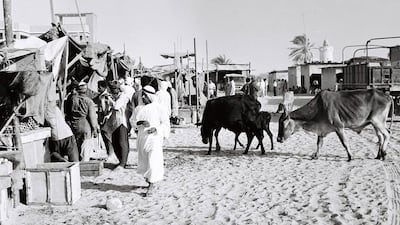
-
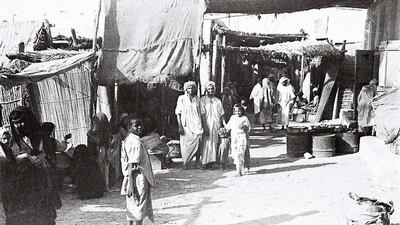
Yasser Elsheshtawy, an associate professor of architecture at UAE University, noted on the Alrroya website that the old souq ‘was popular with city residents’. Courtesy Al Ittihad -

The old souq was frequented even by tourists who thought of its spaces and walkways as a representation of an authentic Arabian souq. Courtesy Al Ittihad -
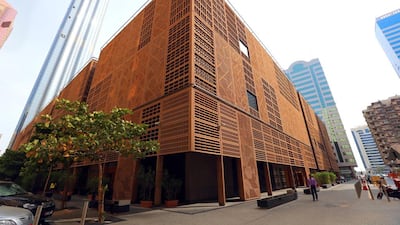
Abu Dhabi’s The Souq: Central Market is part of a larger development. Ravindranath K / The National -
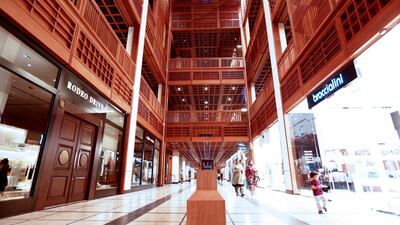
The Souq: Central Market, opened in 2010 and is a modern development that purports to be a historic souq. Fatima Al Marzooqi / The National -
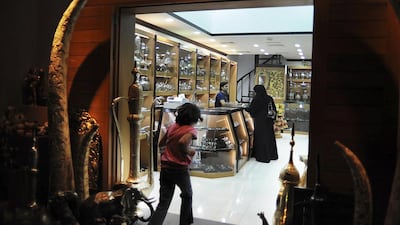
The Souq: Central Market has space for 250 units over three floors. Delores Johnson / The National -
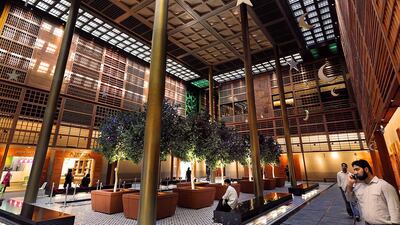
The atrium on the ground floor of The Souq: Central Market. Delores Johnson / The National -
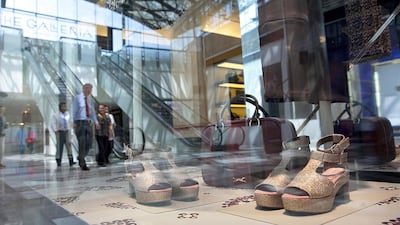
The Galleria, a new luxury mall on Al Maryah Island, opened this year. Silvia Razgova / The National -
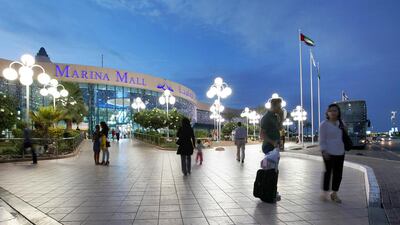
Marina Mall was one of the first malls to open in Abu Dhabi. Rich-Joseph Facun / The National -

Shoppers at Marina Mall in Abu Dhabi. Rich-Joseph Facun / The National -
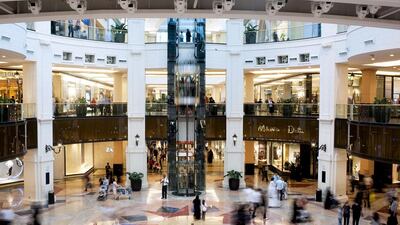
The Mall of the Emirates in Dubai is one of the world’s most profitable shopping centres. Sarah Dea / The National


The group said at the time that it intended to open 10 more markets, mainly in Africa, the Middle East and Asia, as part of its strategic plan Carrefour 2026.
Majid Al Futtaim currently holds the exclusive rights to operate Carrefour across 12 markets in the Middle East, Africa and Asia, with a network of more than 390 shops, according to its website.
Carrefour continues to be a strong global brand and Majid Al Futtaim has also spent “significant energy” in localising, with even the regional logo different from the parent company, said Sandeep Ganediwalla, partner in Middle East for Redseer Strategy Consultants.
“It is a multi-decade strategic partnership, so any change would not have been knee-jerk and will be driven by consumer needs,” he said.
But for any strategic partnership to work, the benefits derived should be greater than the cost.
“Local consumer cultural sensitivities have evolved significantly over the last few years with customers preferring local brands over international ones on many occasions. At the same time, Majid Al Futtaim has developed strong executional muscle for the grocery business, not just in offline channels but also has been innovating on their online channel.”
Majid Al Futtaim is currently growing the portfolio of its HyperMax shops, with six more locations announced in Bahrain, adding to 44 in Jordan and Oman. The plan with HyperMax is to support local supply chains, it said.
Majid Al Futtaim also operates Supeco, a low-cost hybrid grocery retail model that combines a traditional supermarket with a wholesale warehouse, across 17 sites in Egypt.
“It's important to remember that Majid Al Futtaim was the regional franchisee of Carrefour – so closure of Carrefour stores is not equal to Majid Al Futtaim exiting grocery retail in these markets,” said Ms Yasmeen.
“HyperMax appears to be just a rebrand under the local Majid Al Futtaim management of these [Carrefour] stores.”
Will the UAE be next?
Neither Majid Al Futtaim nor Carrefour have revealed future plans for other shops in the region.
But according to Dr Katsos, since Carrefour is a “flagship brand with deep roots” in the UAE, an “immediate replacement seems unlikely”.
“The UAE retail market is one of the most competitive in the region, and long-standing brands like Carrefour have built strong trust with consumers. Replacing such a brand always carries risks, particularly in a market as global and brand-conscious as the UAE,” he said.

“A more probable scenario is a dual-brand strategy – maintaining Carrefour while growing HyperMax – so Majid Al Futtaim can capture the benefits of both global recognition and local independence.”
The fact that Majid Al Futtaim was only rebranding in select markets shows it is a considered exercise, added Mr Ganediwalla.
“Any new market such as the UAE, which is larger, will go through similar decision making,” he said. “Having said that, such rebranding is not without precedence … Majid Al Futtaim successfully localised its cinemas business in 2011 – it rebranded the Cinestar Cinemas chain to its own Vox Cinemas concept.”
Changing market
The retail sector across the Middle East and North Africa is expanding, especially in the Gulf, where sales are projected to grow at 4.6 per cent annually to reach $386.9 billion in 2028, from $309.6 billion in 2023, Alpen Capital said in a report last year.
The growth is expected to be supported by an increase in population, rise in per capita income and boost in tourism activities.
The retail value of the UAE market alone, excluding sales tax, grew 4.1 per cent annually to reach $62.4 billion last year, according to data from Euromonitor.
“We are seeing a clear shift in consumer behaviour across the region, particularly among its large working-age population, towards healthier, organic and locally grown food in the years following the pandemic,” said Sameena Ahmad, managing director at Alpen Capital.
However, cost and convenience have also become decisive factors in choosing a primary grocery retailer, reflecting both inflationary pressures and changing lifestyles.
“This shift is reinforced by the rapid growth of online food delivery, quick-commerce platforms and cloud kitchens, with apps such as Amazon, Careem, and Talabat setting new benchmarks for speed and accessibility,” Ms Ahmad said.
“While this trend has raised questions about the future of physical stores, bricks-and-mortar outlets remain relevant, though their role is evolving into experiential spaces that complement digital convenience.”
For customers, everything is a consideration these days – value in terms of price and quality, convenience and variety, according to Ms Yasmeen.
“Third-party apps are converging these factors on one platform – giving consumer the choice, convenience and also value with the promotion offers or subscription services. Dark stores and quick commerce are also changing consumer expectation,” she said.
“I do see more stores closing given rise of e-commerce platforms.”

